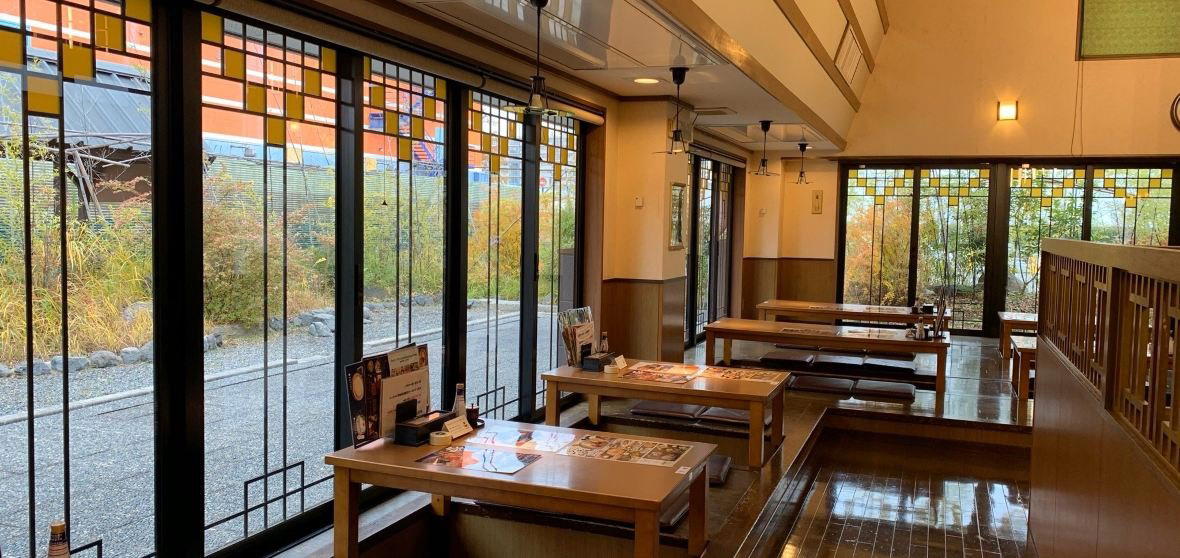
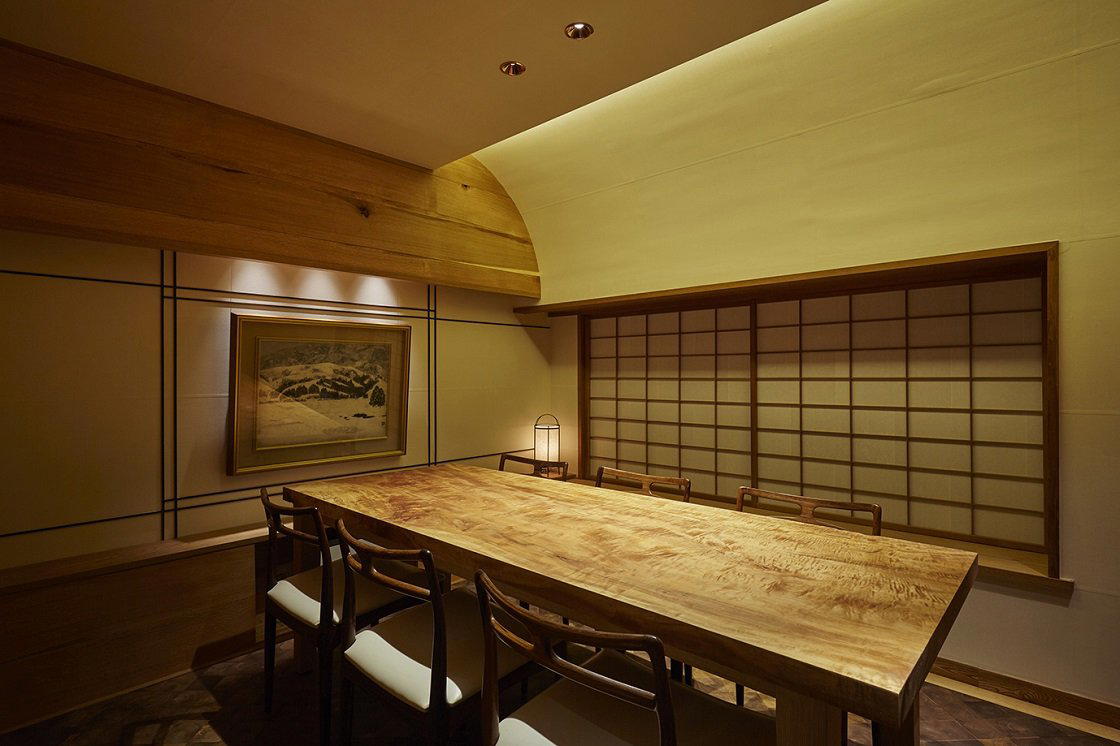
Michelin Plate · Tabelog 100 #78
Our verdict
At Kamado, wood-fired cooking bridges Italian and Japanese traditions inside a single tasting format. The meal opens with rice cooked in a traditional kamado stove and closes with pasta, with the hearth anchoring every course between. A Michelin Plate holder in both 2024 and 2025, it sits at the accessible end of Osaka's contemporary dining scene without abandoning culinary ambition.

Pearl is the En Primeur Club membership app, where members save venues, book tables and use the concierge.

The menu
What to order
- Kamado-style Rice
- Pasta
Fire as a Unifying Principle
Walk into any serious contemporary restaurant in Osaka and you encounter a city that takes the act of eating more seriously than almost anywhere else in Japan. Osaka's dining culture has long prized directness over ceremony: flavour before formality, technique in service of taste. Kamado operates squarely inside that tradition, but it arrives at it through an unusual angle. The wood fire here is not a finishing flourish or a design statement, it is the conceptual spine around which an entire Italian-Japanese fusion menu is organised.
The kamado itself, a traditional wood-fired clay stove, gives the restaurant both its name and its opening ritual. Before anything else arrives, a bowl of freshly cooked rice comes directly from the stove. It is a grounding gesture: something ancient and domestic set at the threshold of a contemporary tasting format. From that point, the meal moves through wood-fired cooking with a palette that swings between Italian and Japanese, closing on a dish of pasta. The pottery used to present each course was fired in a wood-fuelled kiln as well, extending the through-line from cooking method to tableware. Few restaurants in Osaka commit so visibly to a single technical concept across so many layers of the experience.
Where Kamado Sits in Osaka's Contemporary Scene
Osaka's fine dining tier has fractured into increasingly distinct groups over the past decade. At the leading, restaurants like HAJIME (French, Innovative) at ¥¥¥¥ and La Cime (French) at ¥¥¥¥ compete for Michelin stars at the two and three-star level, drawing international audiences prepared to spend accordingly. Below them sits a larger, more contested band of ¥¥¥ restaurants that includes kaiseki houses such as Kashiwaya Osaka Senriyama and Taian, both three-star properties operating within classical Japanese formats. Kamado occupies a different position inside that same price band: it is contemporary, cross-cultural, and anchored to a cooking technique rather than to a national cuisine tradition. That puts it alongside venues like RiVi and Rooots Nakanoshima in a cohort of Osaka restaurants that resist easy categorisation.
Michelin awarded it a Plate in both 2024 and 2025, a recognition that signals quality cooking without the star-level pressure and pricing that accompanies a starred listing. For Osaka visitors building a multi-night itinerary, that positioning is meaningful: Kamado offers a documented level of quality at a price point that allows space in the budget for a starred meal elsewhere.
The Italian-Japanese fusion format it works within has precedents across the Kansai region and beyond. akordu in Nara draws on European fine dining foundations within a Japanese setting, and Tosara in Osaka approaches similar territory from a different direction. What Kamado adds to that conversation is the specificity of the wood-fire constraint: the technique does not shift course by course, and that discipline gives the menu a coherence that broadly labelled fusion restaurants often lack.
The Booking Experience: What to Know Before You Go
Kamado's operational details are not publicly consolidated in the way they are for higher-profile Osaka restaurants. For restaurants in this tier and format in Japan, Tableall and Omakase.com cover a meaningful share of available inventory, and Pocket Concierge handles some of the more allocation-style bookings.
The broader pattern for Osaka's ¥¥¥ contemporary restaurants is that seats fill faster than their price tier might suggest. Demand at this level tends to be driven by informed local diners and returning international visitors rather than first-time tourists, which means availability does not improve dramatically in shoulder seasons the way it might at tourist-facing venues. Building a two-week lead time into planning is a reasonable baseline; for specific dates around Japanese public holidays or the autumn and spring travel peaks, four to six weeks is safer.
For visitors approaching Osaka's dining scene from other Japanese cities, it is worth noting the competitive density of the region. Harutaka in Tokyo and Gion Sasaki in Kyoto represent the depth of high-end dining available within a short rail journey of Osaka. Goh in Fukuoka adds another node in what is, for serious diners, a sensible west-Japan circuit. Kamado fits logically into an Osaka stop on that kind of itinerary, a dinner that does something genuinely specific with its format, at a price point that does not dominate the entire trip's dining budget.
Contemporary fusion restaurants in other cities offer a useful frame for setting expectations. César in New York City and Jungsik in Seoul both operate in the space where fine dining technique meets cross-cultural reference points. Kamado's distinction within that broader category is that wood fire imposes a physical constraint the kitchen cannot soften with technique alone, it creates a specific set of flavour conditions and an observable logic to the meal that more abstract fusion formats do not always provide.
Visitors to Osaka with time to extend beyond the meal itself should consult our full Osaka restaurants guide, our full Osaka hotels guide, our full Osaka bars guide, our full Osaka wineries guide, and our full Osaka experiences guide for fuller coverage of what the city offers across price tiers and categories. For further regional context, 1000 in Yokohama and 6 in Okinawa represent the geographic spread of Japan's contemporary dining scene beyond the major centres.
Know Before You Go
- Cuisine: Contemporary, Italian-Japanese fusion, wood-fired cooking throughout
- Price range: ¥¥¥
- Recognition: Michelin Plate 2024 and 2025
- Guest rating:
- Booking: No confirmed direct booking channel; use third-party platforms such as Tableall, Pocket Concierge, or Omakase.com
- Planning lead time: Two to four weeks for standard dates; four to six weeks around public holidays and peak travel seasons
- Dress code: Not confirmed; smart casual is standard for this price tier in Osaka
- Location: Osaka, Japan
What Regulars Order at Kamado
The meal at Kamado follows a fixed format rather than an à la carte selection, so the question of what to order resolves itself before you arrive. The structure is set: the kamado-cooked rice opens the evening, wood-fired preparations carry through the middle courses, and a pasta dish brings the meal to a close. The continuity of the wood-fire technique across courses means the kitchen's hand is visible in each plate, the hearth's heat and smoke character thread through both the Japanese and Italian registers of the menu, which is what gives the format its internal consistency. For diners coming from kaiseki traditions, the closing pasta may read as a deliberate inversion of expectations; for those more familiar with Italian tasting formats, the opening rice functions similarly. Regulars who return tend to do so for the coherence of that arc rather than for any single dish, and the tableware, pottery fired in the same wood-fuelled kilns, reinforces that the experience is designed as a whole. The Michelin Plate recognition in consecutive years reflects that the kitchen executes the concept with sufficient consistency to warrant a formal note.
Frequently asked questions
What cuisine category does Kamado fall under?
What distinctions does Kamado have?
Kamado has received recognition including: A wood fire blazes in a kamado, or traditional wood-fired stove. Echoing the shop’s name, the meal begins with a bowl of freshly cooked rice straight from the kamado. The style is fusion of Italian and Japanese cuisine, with wood-fired cook….
What do regulars order at Kamado?
There is no à la carte menu at Kamado, the kitchen runs a fixed format that begins with rice cooked directly in the wood-fired kamado stove and closes with a pasta course, the Italian bookend to an otherwise Japanese-rooted progression. Between those two anchors, wood-fired meat over open embers forms the structural centrepiece of the meal. The pottery used to serve each course is itself kiln-fired, which means the format extends beyond the food into the objects that carry it.
What's the price range at Kamado?
Pricing at Kamado is listed as ¥¥¥.
Quick Comparison
A quick peer check to anchor this venue’s price and recognition.
| Venue | Cuisine | Price | Awards | Notes |
|---|---|---|---|---|
| KamadoThis venue (the venue you are viewing) | Wood-fired Japanese-Italian Fusion | $100–150 | Michelin Plate · Tabelog 100 #78 | Not listed |
| HAJIME | Avant-Garde Japanese Fine Dining | $300–500 | 3 Michelin Stars · World's 50 Best #83 | French, Innovative |
| La Cime | Modern French with Japanese Ingredients | $150–200 | 2 Michelin Stars · World's 50 Best #13 | French |
| Kashiwaya Osaka Senriyama | Seasonal Kaiseki Omakase | $200–300 | 3 Michelin Stars · La Liste Top Restaurants | Japanese |
| Taian | Traditional Japanese Kaiseki Omakase | $150–200 | 3 Michelin Stars · La Liste Top Restaurants | Kaiseki, Japanese |
| Fujiya 1935 | Modern Japanese with European influences | $100–150 | 2 Michelin Stars · La Liste Top Restaurants | Innovative |
Recognition history
Dated appearances from independent guides and award organizations, with the underlying list record or original source where available.
Michelin Plate
Michelin
Tabelog 100 #78 · No. 78
Tabelog · Tabelog 100 - Italian - WEST - 2025
Full recognition history (4 entries)
Michelin Plate
Michelin
Michelin Plate
Michelin