On Severinstraße in Cologne's Südstadt, Ramen Kagetsu occupies the practical middle ground between the city's growing ramen scene and the broader German appetite for Japanese street food formats. The address puts it squarely in a residential neighbourhood known more for corner bars and local bakeries than destination dining, which shapes both the crowd and the atmosphere inside.
Pearl is the En Primeur Club membership app — saves, bookings, and concierge access live there. Same editors, same standards.
- Address
- Severinstraße 57b, 50678 Köln, Germany
- Phone
- +4922157070893
- Website
- ramenkagetsu.de
- Directions
- Get directions
 Saves & bookings on Pearl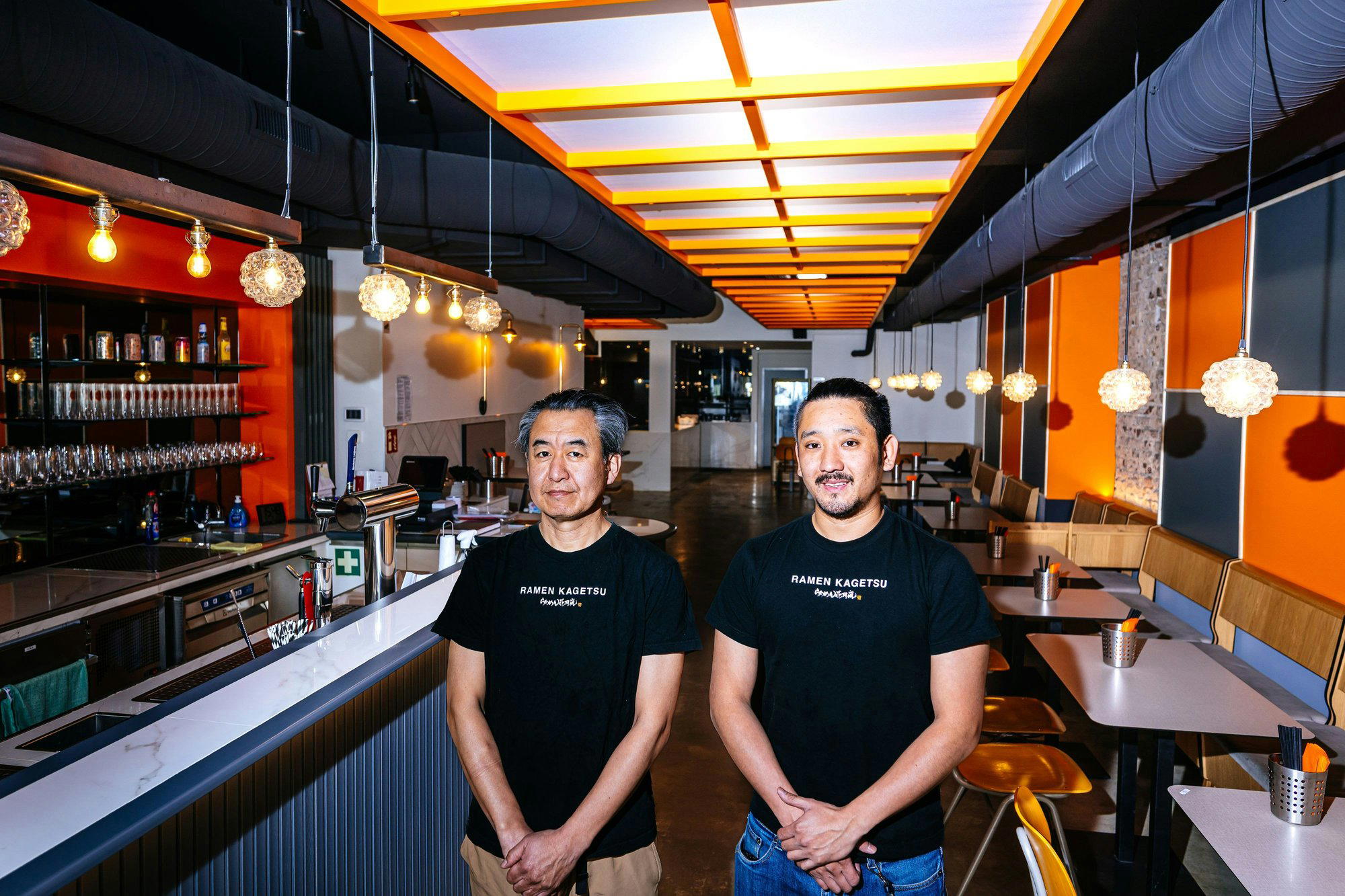
Severinstraße and the Südstadt Ramen Context
Cologne's relationship with Japanese food has historically skewed formal. The city's Japanese dining presence has long been anchored by sit-down restaurants serving a mix of expat communities and German diners with a taste for sushi and izakaya formats. Ramen, as a standalone category, arrived later and with less infrastructure than in Berlin or Hamburg, where specialist shops had already established queue culture and broth-nerd regulars by the early 2010s. That slower build means Cologne's ramen scene in the mid-2020s is still finding its shape, with a handful of operators working out which formats and price points make sense for the local market.
Ramen Kagetsu is a Japanese ramen restaurant at Severinstraße 57b, 50678 Köln, Germany, in Cologne's Südstadt. The neighbourhood attracts long-term residents alongside younger professionals who have moved south of the city centre in search of lower rents and a less tourist-facing daily life. That demographic mix shows up in how the local dining scene operates: places that work here tend to do so on repeat custom rather than passing trade, and the expectations around value are calibrated differently from, say, the streets closer to the Dom.
What the Format Signals About the Experience
Across Germany's ramen category, the operating models divide roughly into two camps. The first is the high-production, large-footprint chain format, often with standardised broth and a ticketing or buzzer system to manage volume. The second is the smaller, independently run shop where the cooking is more variable and the atmosphere reflects a single operator's decisions rather than a franchise manual. Ramen Kagetsu reads from its address and neighbourhood profile as belonging to the second camp, the kind of place where the physical space is modest and the draw is consistency of product rather than designed experience.
That distinction matters when planning a visit. Smaller, independently run ramen shops in German cities tend to operate with limited covers and can fill quickly during peak lunch and dinner windows, particularly on weekends. The practical implication is that arriving without a plan during busy periods carries a meaningful risk of waiting or not getting in at all. Ramen Kagetsu is walk-in friendly, so mid-week or off-peak visits are the easiest. For comparison, specialist ramen counters in Hamburg and Düsseldorf with similar footprints regularly see waits of 20 to 40 minutes on Friday and Saturday evenings.
Cologne's Broader Japanese Dining Tier
To place the restaurant accurately, it helps to understand where ramen sits within Cologne's wider Japanese food offer. At the formal end, Cologne has ZEN Japanese Restaurant operating at the €€ tier with a broader menu that spans multiple Japanese cooking traditions. Ramen shops typically operate below that price tier, trading on faster service and simpler formats rather than the extended dining occasion. This is not a disadvantage; it reflects what the format is designed to do. A well-executed bowl of ramen at a credible independent shop in a German city in 2024 will run between €12 and €18 depending on specification, which positions it as an accessible daily-frequency option rather than a considered occasion.
That price tier also means the restaurant operates in a different competitive frame from Cologne's fine dining circuit. Places like Ox & Klee, La Cuisine Rademacher, La Société, Le Moissonnier Bistro, and maiBeck represent the city's €€€€ tier, where tasting menus and extended service formats carry the experience. The restaurant is not competing in that space. It is serving a different purpose in the city's food map, one that is no less useful for being more casual.
The German Ramen Scene as Reference Point
For readers who want to benchmark the restaurant against Germany's wider Japanese dining offer, the country's most decorated Japanese-influenced kitchens operate in a completely different register. Aqua in Wolfsburg and JAN in Munich draw on Japanese technique within European fine dining frameworks, as do Schwarzwaldstube in Baiersbronn and CODA Dessert Dining in Berlin. Further afield, Vendôme in Bergisch Gladbach, ES:SENZ in Grassau, Victor's Fine Dining by christian bau in Perl, Waldhotel Sonnora in Dreis, Restaurant Haerlin in Hamburg, and Schanz in Piesport represent the country's Michelin-level tier where Japanese influence shows up as precision and restraint applied to European produce. None of that is relevant to what the restaurant is doing. The comparison is only useful to confirm that ramen shops and fine dining restaurants are answering entirely different questions for the diner, and that the metrics applied to one do not transfer to the other.
Internationally, the same principle applies. Le Bernardin in New York City and Atomix in New York City operate at the far end of the precision-dining spectrum. A neighbourhood ramen shop in Cologne is a different category of decision entirely, calibrated for different needs and a different budget.
Planning a Visit: What to Know Before You Go
The practical realities of visiting the restaurant are shaped by its format and location. Severinstraße is accessible from central Cologne without difficulty; the Südstadt is well-served by tram lines running south from the centre. The walk from the nearest stop to the address is short. For visitors staying in central Cologne hotels, the neighbourhood is reachable in under 15 minutes by public transport, making it a viable option for a casual lunch or early dinner without significant planning overhead.
What requires more thought is timing. As noted above, independently run ramen shops at this scale in German cities tend to fill during predictable windows: weekend lunchtimes, Friday and Saturday evenings, and on days when weather pushes people indoors. The restaurant is walk-in friendly, so advance planning is minimal. Arriving before peak service windows and avoiding Saturday evenings without a confirmed booking is one reliable approach.
Standing Among Peers
Comparable venues nearby, for context on price, style, and recognition.
| Venue | Cuisine | Price | Notes |
|---|---|---|---|
| Ramen KagetsuThis venue — the venue you are viewing | Japanese Ramen | $$ | Not listed |
| Nobiko | Vegan Japanese Udon Noodle Bar | $$ | Kalk |
| Shima Bistro | Creative Japanese Fusion | $$ | Neustadt/Nord |
| Ikigai | Japanese BBQ All-You-Can-Eat | $$ | Altstadt/Nord |
| Akira | Authentic Japanese Sushi & Bento | $$ | Altstadt/Nord |
| Miyu | Modern Asian Fusion Sushi | $$ | Neuehrenfeld |
Continue exploring
More in Cologne
Restaurants in Cologne
Browse all →
Bars in Cologne
Browse all →

Hotels in Cologne
Browse all →

At a Glance
- Minimalist
- Casual Hangout
Current opening hours
- Monday
- 11:30 AM–10 PM
- Tuesday
- 11:30 AM–10 PM
- Wednesday
- 11:30 AM–10 PM
- Thursday
- 11:30 AM–10 PM
- Friday
- 11:30 AM–10 PM
- Saturday
- 12–10 PM
- Sunday
- 12–9 PM
Hours can change for holidays and private events. Last verified .
Sober canteen-style atmosphere with no-frills vibe.