
Kaeru Shokudo belongs to Tokyo’s serious low-cost curry tier: small counter, daytime rhythm, and repeat Tabelog Curry 100 recognition rather than luxury signals. The Ikebukuro-area address makes sense for travelers who understand that some of the city’s sharper meals happen at lunch, with limited seats and a format built around speed, focus, and scarcity.
Pearl is the En Primeur Club membership app — saves, bookings, and concierge access live there. Same editors, same standards.
- Address
- 3 Chome-6-1 Ikebukuro, Toshima City, Tokyo 170-0014, Japan
- Phone
- +818068906894
- Website
- twitter.com
 Saves & bookings on Pearl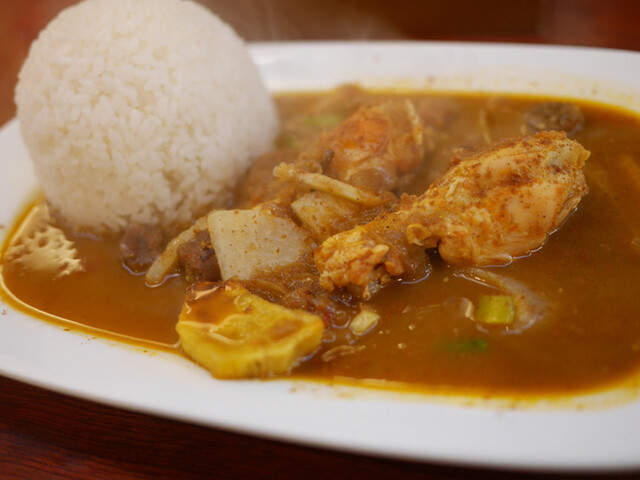
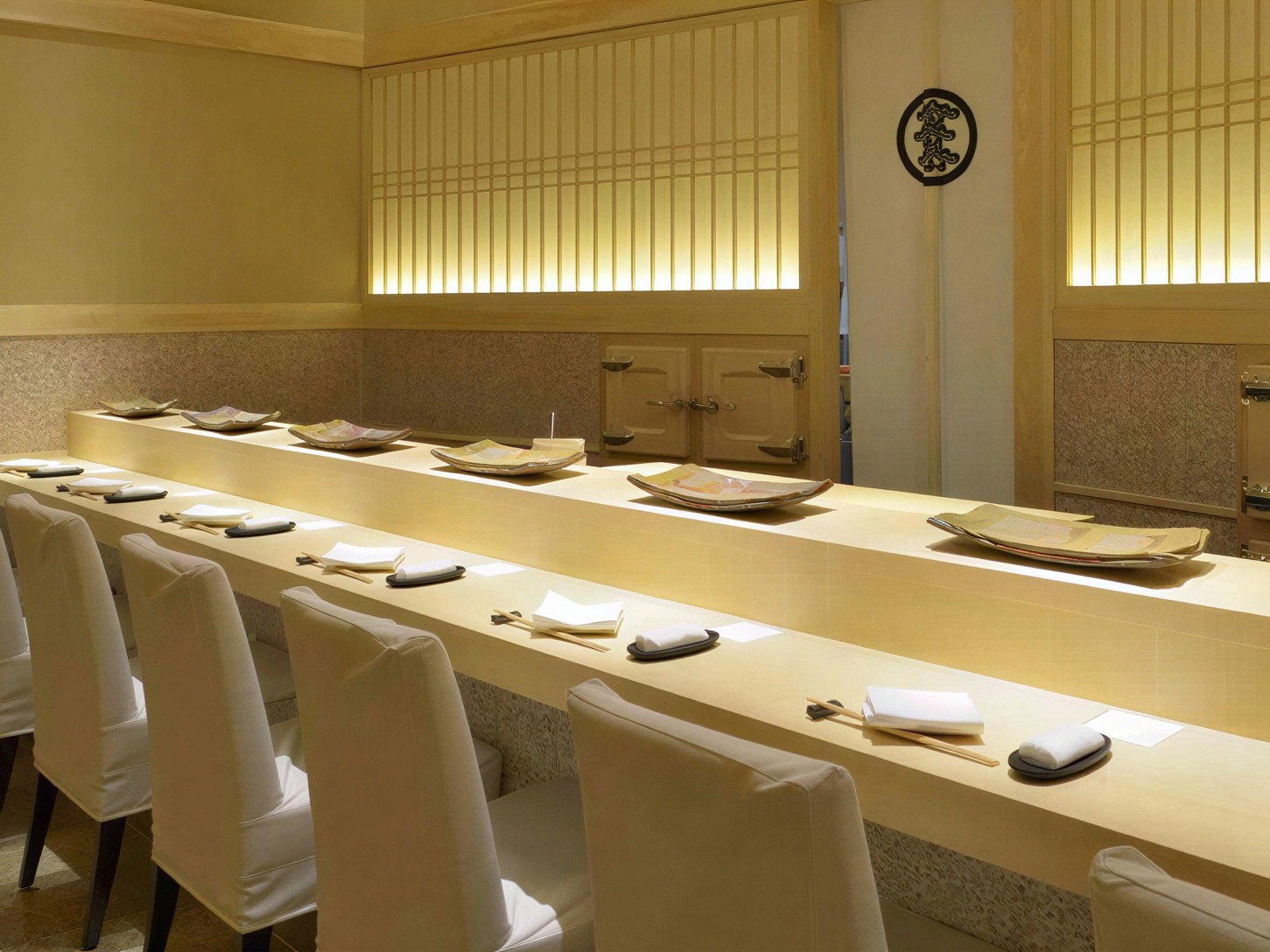
Approaching a seven-seat counter in Tokyo changes the meal before the first order: no lounge pacing, long evening arc, or performance of abundance. Curry culture in the city often works this way, with compact shops turning lunch into a specialist format rather than a casual fallback. Kaeru Shokudo sits in that tradition, valuing concentration over breadth.
Tokyo’s curry scene has moved beyond the old binary of chain katsu curry and home-style roux. The city now supports small operators across Japanese curry, spice curry, South Asian references, café hybrids, and plate-lunch formats. In that field, recognition from Tabelog’s Curry 100 Tokyo list in 2024 matters because it places a small Ikebukuro-area counter inside a crowded category, not because it makes the room a luxury destination.
A daytime curry counter, not an evening restaurant in miniature
Read Kaeru Shokudo through Tokyo’s lunch-versus-dinner split. Dinner often carries the pressure of reservations, set menus, drinking, and table time. Lunch rewards speed, turnover, restraint, and a casual price ceiling. This format belongs to lunch: a counter meal with a finite daily rhythm, where value depends on arriving for a focused plate rather than a long social meal.
That matters for travelers. A lunch-only curry counter asks less of the wallet and more of the schedule. It fits an itinerary around Ikebukuro, Kanamecho, or the west side of central Tokyo better than a cross-town evening plan. The absence of a dinner identity is not weakness; it is category logic. Tokyo has many restaurants that expand as the day goes on. Specialist curry shops often contract, with the strongest signal in tightly controlled service.
The seven counter seats place it closer to Tokyo’s micro-restaurant culture than to larger casual dining rooms. Comparison helps: Kasei Curry occupies a similar low-price curry bracket in Tokyo, while 3 Chome no Curry Ya San is useful for travelers mapping curry across the city rather than chasing one famous address. By contrast, PIZZA BORSA and Viva la Burger show how Tokyo’s casual specialist scene extends beyond curry, with narrow menus and modest pricing doing serious work across categories.
Why curry holds its own in a city obsessed with precision
Curry in Tokyo is often underestimated by visitors arriving with sushi, tempura, ramen, and yakitori fixed in the itinerary. That is a category mistake, not a taste one. Japanese curry has its own grammar: rice proportion, sauce texture, spice balance, plate temperature, garnish discipline, and the quiet question of whether the kitchen aims for comfort, heat, sweetness, bitterness, or aromatic lift. Better small shops need no ceremony to make those choices legible.
Kaeru Shokudo’s Tabelog Curry 100 appearances, including the Tokyo 2024 selection and earlier selections across multiple years, give the counter a public recognition trail beyond ordinary neighborhood convenience. The 3.73 score reinforces this in a Japanese review culture where small decimal shifts can carry real weight. Awards and ratings do not describe flavor alone, but they identify where locals and curry-focused diners have paid sustained attention.
The secondary category, cake, is also telling. Tokyo’s small curry rooms often borrow from café culture: compact spaces, daytime hours, solo diners, and a rhythm closer to a personal lunch habit than a restaurant occasion. That hybrid energy is part of the city’s charm. A curry counter can sit beside dessert associations without confusion. The point is not maximal choice; it is a daytime register where curry, coffee-shop pacing, and solo dining coexist.
For a broader Tokyo food itinerary, this stop should sit between larger commitments. A traveler might pair curry research with yakitori at 124. KAGURAZAKA (Yakitori), casual visual café culture at 2D Cafe, or a different neighborhood meal such as 12/10 Shinjuku ten. The comparison is not cuisine equivalence. It is about how Tokyo rewards tightly defined formats, whether skewers, curry, café food, or seafood at . 鮪と炭火焼き うお炭 秋葉原店.
Planning around scarcity without turning lunch into a project
The practical reading is simple: treat the meal as a limited daytime counter, not a flexible restaurant booking. Rice is served until it runs out, making the opening stretch of service safer. Payment is cash-oriented; cards, electronic money, and QR code payments are not accepted. The counter is non-smoking, private rooms are not part of the format, and the setting suits solo diners or pairs better than groups.
Location matters because curry shops rarely justify a full-day detour alone. Fold the restaurant into a Toshima or Ikebukuro plan, especially if the day already points toward Kanamecho. Travelers building a wider city map can use Our full Tokyo restaurants guide for dining context, then branch into Our full Tokyo hotels guide, Our full Tokyo bars guide, Our full Tokyo wineries guide, and Our full Tokyo experiences guide for the rest of the trip architecture.
The same logic applies beyond Tokyo. Japan’s compact specialist rooms appear in many cities and categories, from [Curry Senmon Ten] Maruyama Kyoju. in Sapporo to [ki:] in Kyoto.cafe in Osaka.know in Kumamoto, (Shoku) Vietnam in Kawasaki, and -Grilled beef Sukiyaki- KAMAKURA TANUKIAN 鎌倉 たぬき庵 in Kamakura. Even outside Japan, focused casual formats such as Jōdo Saké Bar in Los Angeles and Onigiri Time in Pasadena show how narrow menus can travel when disciplined.
The restaurant’s appeal is precise rather than grand. It belongs to the Tokyo meal category that asks for punctuality, cash, and a willingness to let lunch be the main event for half an hour. For travelers who understand that distinction, the counter gives a clear reading of how seriously Tokyo treats everyday curry.
Reputation Context
Comparable venues at the same tier.
| Venue | Cuisine | Price | Notes |
|---|---|---|---|
| Kaeru ShokudoThis venue — the venue you are viewing | Japanese Curry Counter | $ | Not listed |
| Kuromatsu Honpo Sogetsu | Traditional Japanese Wagashi & Dorayaki Shop | $ | Kita |
| Kamu Nabi | Classic Ramen Shop | $ | Bunkyō |
| BROWNIE | Japanese Curry / Yoshoku | $ | Chiyoda |
| Inaniwa Udon to Meshi Kaneko Hannosuke Koredo chuuou nihonbashimuro ten | Inaniwa udon and tempura rice bowls | $ | Chūō |
| Imagawayaki Kashiwaya | Traditional imagawayaki & Japanese sweets stand | $ | Setagaya |
Recognition history
Dated appearances from independent guides and award organizations, with the underlying list record or original source where available.
Tabelog 100 #5 · No. 5
Tabelog · Tabelog 100 - Curry - TOKYO - 2024












At a Glance
- Cozy
- Intimate
- Solo
- Casual Hangout
- After Work
- Chefs Counter
- Standalone
Current opening hours
- Monday
- Closed
- Tuesday
- 11:30 AM–3 PM
- Wednesday
- 11:30 AM–3 PM
- Thursday
- 11:30 AM–3 PM
- Friday
- 11:30 AM–3 PM
- Saturday
- 11:30 AM–3 PM
- Sunday
- Closed
Hours can change for holidays and private events. Last verified .
A simple, cozy counter-only curry shop with just seven seats, a relaxed local feel, and a focus on solo or small-party diners rather than groups.