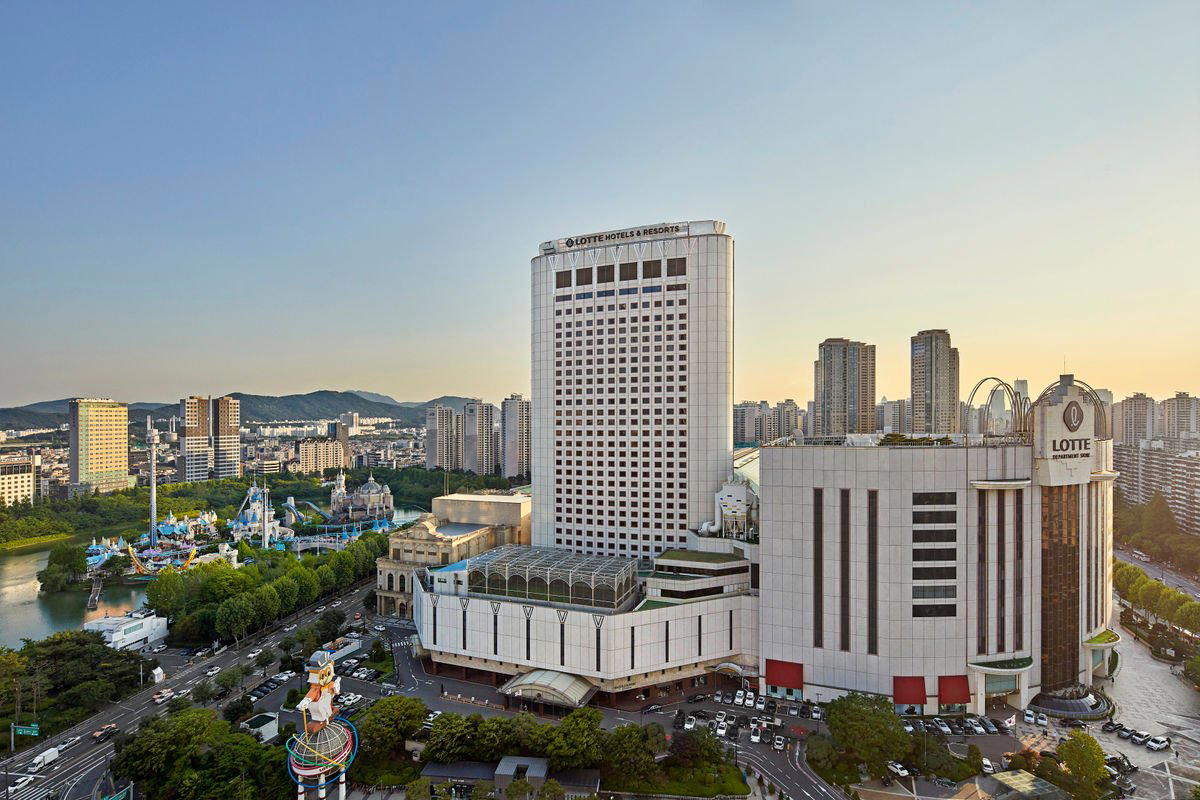
Jeongmyeon

Michelin Bib Gourmand
Our verdict
A back-to-back Michelin Bib Gourmand recipient in 2024 and 2025, Jeongmyeon operates in Seoul's Gwangjin District as a focused noodle specialist at the budget end of the city's recognised dining tier.

Pearl is the En Primeur Club membership app, where members save venues, book tables and use the concierge.
The menu
What to order
- White Noodle Soup (Baekmyeon)
- Red Noodle Soup (Hongmyeon)
A Bowl in Gwangjin
Hwayang-dong is not the district visitors typically associate with Seoul's decorated dining scene. The neighbourhood sits east of the Han River in Gwangjin, away from the gallery corridors of Itaewon and the high-spend tables of Gangnam. Yet the Michelin Guide's Bib Gourmand list, reserved for places that deliver quality food at prices that don't exceed a set threshold, has pointed here, to Neungdong-ro 13-gil, two years running. In 2024 and again in 2025, Jeongmyeon held that recognition, placing it in a tier where the guide's endorsement functions not as a marker of luxury but as a signal that something disciplined is happening with ingredients and technique at a price most diners can actually afford.
That context matters. In a city where the conversation around Korean fine dining tends to concentrate on operators like Gaon in Seoul or Kwon Sook Soo in Gangnam-gu, both of which operate at the ₩₩₩₩ end of the scale with starred recognition, Jeongmyeon occupies a different position entirely. It is a single-price-tier (₩) noodle restaurant earning repeat guide acknowledgement, which is a rarer category than the starred fine-dining tier in Seoul.
Noodles as a Discipline
In South Korean culinary tradition, the noodle house is not a casual afterthought. Naengmyeon, guksu, and their regional variants carry centuries of technique and regional identity: the buckwheat content of the noodle itself, the clarity and temperature of the broth, the proportion of vinegar and mustard set at the table. Sourcing is embedded in that tradition. The question of where grain comes from, how it is milled, and how quickly it is worked into dough is not a premium affectation, it is the baseline of quality in a category where the noodle is the dish.
Across East Asia, Michelin's Bib Gourmand list has consistently identified noodle specialists where this discipline around raw material is traceable in the final bowl. In China, A Niang Mian Guan in Shanghai and A Bing Bao Shan Mian in Hangzhou operate on a similar logic: the guide rewards the quality of the base ingredient and the consistency of execution, not table service or interior design. A Kun Mian in Taichung follows the same pattern. Jeongmyeon sits in that regional category of recognised specialists, where the noodle itself is the measure.
Seoul's Noodle Tier
Seoul's noodle scene distributes across several formats and price points. At the accessible end, long-standing neighbourhood shops carry local loyalty without any guide visibility. At the mid-tier, restaurants like Myeon Seoul and Seokyonanmyunbang have developed followings around specific noodle styles. Above that sits a small group of operators where guide recognition and ingredient provenance converge. Jeongmyeon now occupies that latter position.
The Bib Gourmand designation specifically filters out operations that have drifted toward premium pricing. A restaurant holding the recognition in consecutive years, 2024 and 2025, is demonstrating that the same sourcing and production approach is being maintained without a pricing correction upward. That is not the automatic outcome. Seoul's food costs and rent pressures are real, and the noodle category is not immune. Sustained Bib Gourmand status at a single (₩) price tier over two consecutive years implies a deliberate operational stance.
For broader context on where Jeongmyeon sits within the city's wider dining spread, from the ₩₩₩₩ contemporary Korean operators to informal street-adjacent restaurants, see our full Seoul restaurants guide. Those looking to balance an evening at a recognised noodle house with other neighbourhood experiences can also consult our full Seoul bars guide and our full Seoul experiences guide.
The Gwangjin Context
Hwayang-dong has developed its own dining identity over the past decade, partly driven by proximity to Konkuk University and the gradual movement of independent operators away from higher-rent districts. That shift has produced a neighbourhood with younger, format-focused restaurants sitting alongside older, utilitarian spots that have served the same food for decades. Jeongmyeon's location on Neungdong-ro 13-gil places it in this context: a working-neighbourhood address that carries none of the signalling of Itaewon or Apgujeong.
That address is also part of why the Bib Gourmand designation reads differently here than it would in Gangnam. The guide isn't identifying a neighbourhood success story in a wealthy district; it is pointing to a noodle specialist in a genuinely accessible part of the city, which reinforces what the Bib category is supposed to communicate: food worth seeking out, priced for regular attendance.
Other recognised Seoul noodle operations in the guide's orbit include Mimi Myeonga and Niroumianguan, as well as Tasty Cube. Each operates in a distinct noodle tradition or neighbourhood configuration, which reflects the breadth of the category across the city rather than convergence around a single style. For Korean noodle experiences outside Seoul, Mori in Busan and temple food traditions such as those represented at Baegyangsa Temple in Jangseong-gun offer regional contrasts. The Seoul hotels guide and Seoul wineries guide round out the broader trip planning picture.
What the Numbers Indicate
The two-year Bib Gourmand retention and the organic review accumulation point in the same direction: a restaurant that has not changed what it does in order to chase either a higher price point or a broader audience.
For comparison, the fine-dining tier in Seoul that includes operators like Gaon, Kwon Sook Soo, and contemporary Korean houses at the ₩₩₩₩ tier operates on an entirely different economic logic: tasting menus, reservation lead times of weeks or months, and price per head that reflects the full production infrastructure. Jeongmyeon functions in a different register.
Know Before You Go
- Address: Neungdong-ro 13-gil 88, Hwayang-dong, Gwangjin District, Seoul
- Price tier: ₩ (single-tier; among the most accessible price points in the Michelin Bib Gourmand category in Seoul)
- Recognition: Michelin Bib Gourmand 2024 and 2025
- Cuisine: Noodles
- Booking:; walk-in is the likely format, consistent with neighbourhood noodle house conventions in Seoul
- Hours: Not publicly listed, confirm locally before visiting
- Getting there: Gwangjin District is accessible via the Seoul Metro; Konkuk University station (Line 2 and Line 7) is the closest major interchange to the Hwayang-dong area
Frequently asked questions
Is Jeongmyeon better for a quiet night or a lively one?
Jeongmyeon sits on a side street in Hwayang-dong, a residential-leaning corner of Gwangjin District rather than a nightlife corridor. The Bib Gourmand designation signals a neighbourhood specialist built around the food itself, which tends to draw focused diners rather than crowds chasing atmosphere. If you want a low-key bowl without the noise of central Seoul, the address suits that.
What kind of recognition has Jeongmyeon received?
Jeongmyeon has received recognition including: Michelin Bib Gourmand (2025); Michelin Bib Gourmand (2024).
What do people recommend at Jeongmyeon?
What should I expect cuisine-wise at Jeongmyeon?
What's the pricing like at Jeongmyeon?
Pricing at Jeongmyeon is listed as ₩.
Where is Jeongmyeon located?
Jeongmyeon is located at South Korea, Seoul, Gwangjin District, Hwayang-dong, Neungdong-ro 13-gil, 88 정 면 1층, Seoul.
Is Jeongmyeon reservation-only?
No booking method, phone number, or website is listed for Jeongmyeon, which is common among Bib Gourmand noodle houses in Seoul that operate on a walk-in basis. Arriving early or outside peak meal hours is the practical approach, particularly given the venue's Michelin recognition driving demand beyond its immediate neighbourhood.
Where the Accolades Land
A quick peer reference to anchor this venue in its category.
| Venue | Cuisine | Price | Awards | Notes |
|---|---|---|---|---|
| JeongmyeonThis venue (the venue you are viewing) | Korean Noodle Soups | $10–20 | Michelin Bib Gourmand | Not listed |
| 7th Door | Modern Korean Fermentation Fine Dining | $100–150 | 1 Michelin Star · World's 50 Best #49 | Korean, Contemporary |
| Solbam | Contemporary Neo-Classical Korean | $200–300 | 1 Michelin Star · World's 50 Best #55 | Contemporary |
| Onjium | Modern Korean Royal Court Cuisine | Not listed | 1 Michelin Star · World's 50 Best #14 | Korean |
| L'Amitié | Classic French Fine Dining | $100–150 | 1 Michelin Star · La Liste Top Restaurants | French |
| Zero Complex | Modern French Neo-Bistro | $100–150 | 1 Michelin Star · La Liste Top Restaurants | Korean-French, Innovative |
Recognition history
Dated appearances from independent guides and award organizations, with the underlying list record or original source where available.
Michelin Bib Gourmand
Michelin
Full recognition history (2 entries)
Michelin Bib Gourmand
Michelin