Hwaro

Hwaro brings Korean live-fire dining to New York City, positioning itself within a growing tier of Korean restaurants that treat the grill not as a casual format but as a considered culinary framework. The menu architecture centers on charcoal cookery with the structure and intentionality that defines the city's more serious Korean dining addresses.
Pearl is the En Primeur Club membership app — saves, bookings, and concierge access live there. Same editors, same standards.
- Address
- 776 8th Ave., New York, New York State, 10036, USA
- Phone
- +1 646-650-8461
- Website
- hwaronyc.com
- Directions
- Get directions
 Saves & bookings on Pearl
Korean Live-Fire Dining in New York: Where Hwaro Sits
Hwaro is a Modern Korean Fine Dining Tasting Counter in New York City, with a price tier of $295 per person. Venues like Jua, bōm, and Atomix, the latter holding two Michelin stars, have collectively raised the bar for what Korean cuisine can argue at the upper end of the New York dining market. Hwaro sits within that conversation.
Where Koreatown addresses once dominated the category's critical coverage, newer arrivals have reframed Korean food as a vehicle for fine-dining ambition, fermentation-led technique, and premium sourcing. Hwaro enters that context, where a restaurant's position within that split matters as much as the food itself.
Menu Architecture: The Grill as Framework
The logic of a charcoal-grill format like Hwaro's is that the menu cannot hide behind a kitchen. Every decision, cut selection, aging, fat distribution, the grade and sourcing of the beef, is made visible at the table. In particularly considered Korean live-fire formats, the menu is structured so that the grill functions less like a communal cooking device and more like a final-stage cooking instrument controlled by the restaurant, not the guest. That distinction separates the higher-tier operations from the casual mainstream, and it is where Hwaro makes its argument.
In Seoul, restaurants like Mingles and Kwonsooksoo have demonstrated how Korean cooking can carry the same structural ambition as French tasting-menu formats while remaining rooted in Korean technique and ingredient logic. The translation of that ambition to New York has happened unevenly, but the restaurants doing it deliberately, Hwaro among them, tend to organize their menus around a progression rather than a selection. The ordering logic itself is editorial: it tells you something about how the kitchen thinks about flavor sequencing, protein weight, and the role of banchan as counterpoint rather than filler.
For a live-fire format specifically, menu architecture also means sourcing architecture. The credibility of a charcoal-grill restaurant rests on the quality and specificity of what goes over the fire. In the upper bracket of New York Korean dining, that has increasingly meant named beef programs, imported Jeju black pork, or dry-aged cuts that would not look out of place at a dedicated steakhouse. Hwaro operates in this environment, where the grill is a test of sourcing discipline as much as cooking skill.
The Korean Dining Tier in New York: Peer Context
To understand where Hwaro sits, it helps to map the broader field. At the leading, Atomix ($$$$ per person, two Michelin stars) operates as a tasting-menu restaurant that happens to draw on Korean flavors and technique. Jungsik New York holds two Michelin stars of its own and approaches Korean cuisine through a progressive, fine-dining lens. Below those, a cluster of restaurants, including Jeju Noodle Bar, Meju, and 8282, occupy a mid-tier that treats Korean food with creative seriousness without committing to the full tasting-menu format.
Hwaro fits closer to that mid-to-upper bracket than to the Koreatown casual end. Its live-fire format places it in a comparable set that is national as well as local: premium Korean barbecue restaurants have emerged across American cities, and the New York iteration of that format now competes on sourcing, service architecture, and the coherence of the dining experience rather than on price alone. For comparison, the kind of deliberate, experience-driven dining Hwaro represents sits in the same broader category as destination-format restaurants across other American cities, venues like Lazy Bear in San Francisco, Alinea in Chicago, or Providence in Los Angeles, which all treat the meal as a structured event rather than an open-ended service. Hwaro's ambitions, while expressed through a different format, belong to that same shift in how American restaurants frame the dining experience.
What Korean Live-Fire Reveals About a Restaurant's Priorities
There is an argument that charcoal-grill formats are one transparent test of a restaurant's values. A tasting menu can conceal weak sourcing behind technique; a grill format cannot. What goes over charcoal arrives at the table with its qualities exposed. This is why the leading Korean barbecue operations, whether in Seoul, Los Angeles, or New York, tend to invest heavily in the supply chain before they invest in the room. The room matters, but the cut matters more.
New York's upper-tier Korean restaurants have also pushed the banchan program further than it has gone elsewhere in the United States. At the serious addresses, banchan is not a statutory pre-meal sequence but a considered set of preparations that reflects fermentation practice, seasonal sourcing, and kitchen technique. It functions as the opening argument of the meal, and it is where a restaurant like Hwaro signals whether it is operating at the level its format implies.
For readers tracking the broader trajectory of Korean cuisine in American fine dining, venues like Hwaro sit within a movement that has produced particularly interesting dining arguments in the country over the past decade. The comparable set now includes nationally recognized names: The French Laundry in Napa, Blue Hill at Stone Barns in Tarrytown, Single Thread Farm in Healdsburg, Addison in San Diego, The Inn at Little Washington, Bacchanalia in Atlanta, and Emeril's in New Orleans all occupy the upper register of serious American dining. Korean restaurants are now part of that conversation in a way that was not true fifteen years ago, and Hwaro is one of the New York addresses making that argument.
Planning Your Visit
Hwaro sits within New York's more deliberate Korean dining tier, which means the practical considerations are different from a Koreatown drop-in. Reservations are the operative currency at this level of the market, the restaurants in this bracket that take walk-ins are the exception, and booking ahead by at least one to two weeks is a reasonable baseline for a first visit.
What It’s Closest To
Comparable venues nearby, for context on price, style, and recognition.
| Venue | Cuisine | Price | Notes |
|---|---|---|---|
| HwaroThis venue — the venue you are viewing | Modern Korean Fine Dining Tasting Counter | $$$$ | Not listed |
| COTE 550 | Korean Steakhouse | $$$$ | Midtown-Times Square |
| Jung Sik Dang | Modern Korean Fine Dining | $$$$ | Tribeca-Civic Center |
| Osamil | Modern Korean Gastropub | $$$ | Midtown South-Flatiron-Union Square |
| Unidentified Flying Chickens - JH | Korean Fried Chicken | $$ | Elmhurst |
| Tachi | Traditional Japanese Omakase | $$$$ | Hell's Kitchen |
Recognition history
Dated appearances from independent guides and award organizations, with the underlying list record or original source where available.
Michelin Plate
Michelin · 2026 Michelin Plate
Continue exploring
More in New York City
Restaurants in New York City
Browse all →
Bars in New York City
Browse all →
Hotels in New York City
Browse all →




At a Glance
- Intimate
- Elegant
- Sophisticated
- Special Occasion
- Date Night
- Chefs Counter
- Open Kitchen
- Local Sourcing
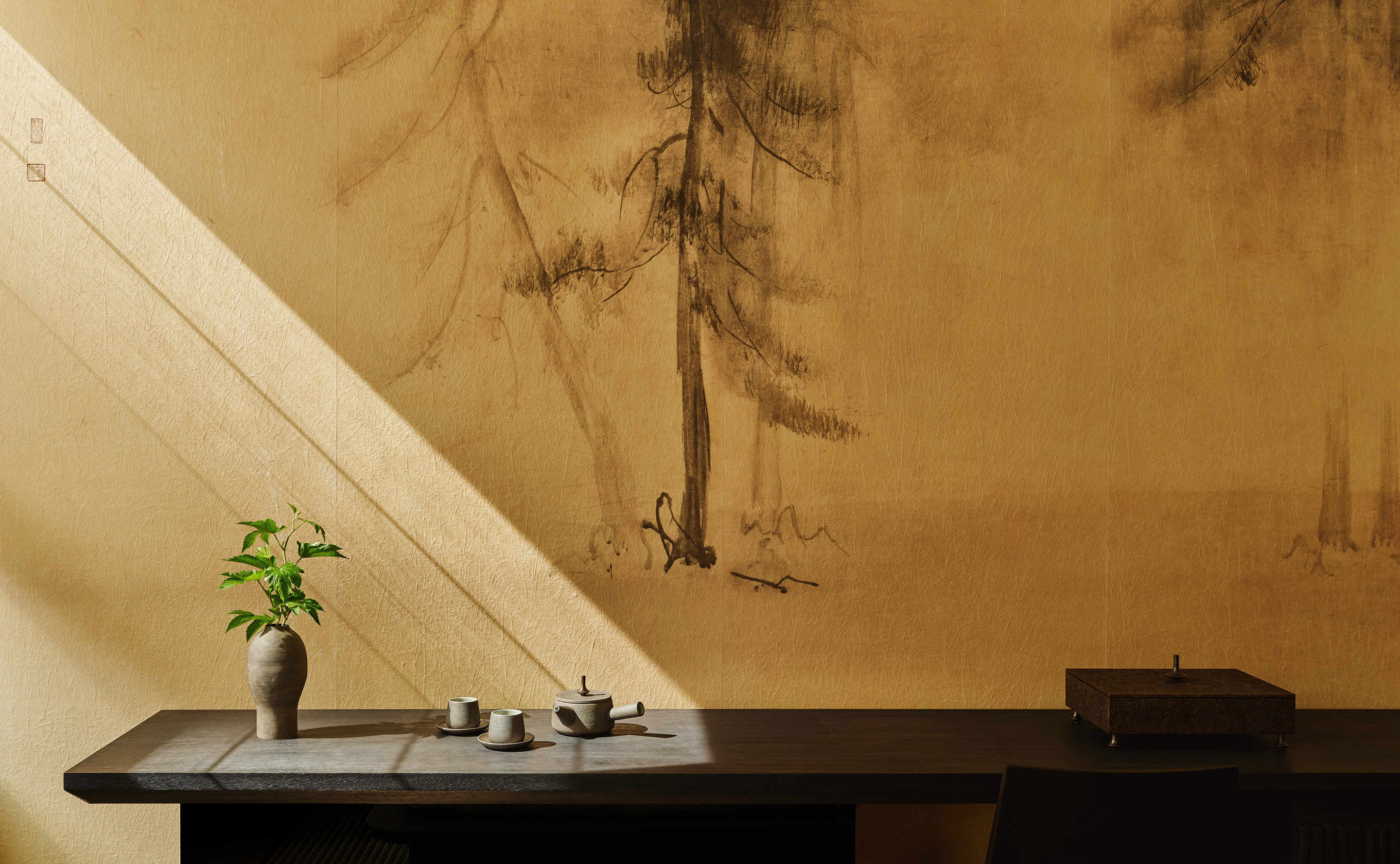
Intimate and secretive with quiet luxury aesthetic; soft lighting from the open kitchen, marble surfaces, and walls adorned with ceramics and mother-of-pearl inlays create a refined, contemplative dining environment.