
Michelin Bib Gourmand
Our verdict
A Michelin Bib Gourmand holder on Stanton Street in the Lower East Side, 8282 takes a solid Korean foundation and pushes it into deliberately unconventional territory. Dishes like burrata with rice cakes and gochujang chicken sit alongside house-made sweet potato soojebi and Iberico pork galbi, a menu built for sharing and for the kind of group table that argues, pleasantly, about what to order next.

Pearl is the En Primeur Club membership app, where members save venues, book tables and use the concierge.
The menu
What to order
- Dakgalbi Kimchi-Bap
- Boneless K.F.C.
- Gochujang Margarita
- Jjajang Bori-Bap
- Pork Galbi
- Grilled Octopus
Korean Cooking Off the Leash
The Lower East Side has always attracted restaurants that operate outside the comfort of category. 8282, on Stanton Street, belongs to that tradition in its own particular way: it holds a Michelin Bib Gourmand (2024) for a menu that takes Korean flavors as its structural base and then, with some frequency, ignores whatever is supposed to come next. Honey-infused vanilla cream finished with grated Parmesan. Burrata paired with rice cakes and gochujang-marinated chicken. These are not accidents or gimmicks but a working method, one that assumes the reader already understands what Korean cooking can do and is curious about what it has not yet tried.
The price tier here is modest by New York standards. The $$ positioning places 8282 in the same accessible bracket as neighborhood favorites rather than the tasting-menu circuit occupied by Atomix at $$$$ with two Michelin stars. The Bib Gourmand designation is, in Michelin's own framing, an acknowledgment of good cooking at reasonable prices, a different kind of recognition from a star, and in many ways a more practically useful one for a diner deciding where to spend a Tuesday night.
The Lower East Side as Ingredient
Korean dining in New York has widened considerably over the past decade. The traditional Koreatown corridor along 32nd Street remains the dense center of the scene, but a parallel track of Korean-influenced restaurants has spread across Manhattan and Brooklyn, places where Korean technique and pantry appear as one element among several rather than as a complete cuisine to be replicated. The LES has been a natural home for this kind of kitchen, where the neighborhood's layered immigrant history and its appetite for informal, sharing-format dining make it easier to introduce a plate of burrata alongside gochujang chicken without anyone asking for an explanation.
For comparison within the Korean dining ecosystem, Jua and bōm represent different points on the same spectrum, Korean identity expressed through forms that have absorbed other influences. Jeju Noodle Bar operates in the focused, single-dish discipline end of the range. Meju and Ariari occupy still other positions. 8282 sits at the more improvisational end: it is not trying to present a coherent Korean regional identity, but rather to use the Korean pantry as a creative starting point with no fixed destination.
Internationally, the Seoul restaurants driving the highest-end Korean conversation, Mingles and Kwonsooksoo, tend toward refined precision and classical Korean structure. The approach at 8282 is more aligned with what has happened to other national cuisines when transplanted to New York: a loosening of the original grammar, the introduction of borrowed vocabulary, and a resulting dialect that is neither the source nor fully something new.
What the Menu Actually Does
The Michelin notes that accompany the Bib Gourmand listing describe the kitchen's method more precisely than most venue copy: a solid foundation of Korean flavors used as a springboard into territory the menu has not mapped in advance. The dishes are designed to be shared, and the structure rewards tables that order broadly rather than conservatively.
Among the more grounded options, littleneck clams and house-made sweet potato soojebi arrive in a savory butter and pepper-tinged broth, a bowl that references Korean home cooking while adding enough technique to justify its placement on a restaurant menu. The Iberico pork galbi, rendered as grilled medallions resting in spicy red chili paste, is the kind of dish that demonstrates what happens when a quality cut of meat is understood through a Korean flavor framework rather than a Western one. Iberico pork is not a typical galbi protein; its fat content behaves differently than the short rib cuts standard to the preparation, and the kitchen's decision to use it suggests attention to sourcing over convenience.
The more experimental dishes, the burrata and rice cake combination, the Parmesan-dusted vanilla cream, occupy a different register. They are the kind of thing that reads as a mistake on paper and works, or does not, depending entirely on execution.
Why Ingredient Choices Tell the Story
The sourcing decisions visible in the menu are worth reading carefully. Iberico pork for a galbi preparation is a statement about priorities: it costs more, it is harder to source consistently, and it is not what the dish's Korean reference point requires. The same logic applies to the use of littleneck clams in a soojebi, a traditional hand-torn noodle soup that in most Korean home kitchens uses dried anchovies or a basic vegetable stock. Upgrading the protein while keeping the technique intact is a specific kind of editorial choice about where the money goes and what it signals.
This approach connects to a broader pattern in American restaurants that draw on immigrant culinary traditions: the sourcing tier gets raised, the technique stays honest to the original, and the resulting dish occupies a space that neither the source culture nor the mainstream fine-dining market would have produced alone. Places like Emeril's in New Orleans built careers on exactly this kind of elevation of regional source material. At different price points and formats, Lazy Bear in San Francisco, Alinea in Chicago, Single Thread Farm in Healdsburg, The French Laundry in Napa, and Providence in Los Angeles each represent their own version of this negotiation between source tradition and American kitchen ambition. 8282 is operating at a far more accessible price point than any of those, but the underlying logic is recognizable.
Planning a Visit
8282 is at 84 Stanton Street in the Lower East Side, a neighborhood where dinner tends to run late and the surrounding blocks offer enough bars and small venues to extend an evening without planning. The $$ price tier means a full shared-plates dinner for two, ordered with some range across the menu, stays well below the cost of comparable creative cooking at a higher-tier address. The Bib Gourmand recognition, awarded for 2024, confirms that the standard has been maintained recently enough to matter for a current visit.
For broader context on where 8282 fits within the city's dining options, see our full New York City restaurants guide. For accommodation near the Lower East Side, our New York City hotels guide covers the relevant options. Drinking before or after dinner in the neighborhood has its own logic, covered in our New York City bars guide. Additional city resources: wineries and experiences.
Frequently asked questions
What should I order at 8282?
The menu is built for sharing, so ordering across categories works better than anchoring to one section. The Michelin Bib Gourmand listing specifically calls out the littleneck clams and house-made sweet potato soojebi in a butter and pepper broth, and the grilled Iberico pork galbi in spicy red chili paste. The kitchen also runs combinations that resist easy categorization, burrata with rice cakes and gochujang-marinated chicken, honey-infused vanilla cream finished with grated Parmesan, so arriving with a willingness to follow the menu's logic pays off. The $$ price range means a broad order across the menu remains accessible for most budgets.
What price level is 8282?
Pricing at 8282 is listed as $$.
Where the Accolades Land
A quick peer reference to anchor this venue in its category.
| Venue | Cuisine | Price | Awards | Notes |
|---|---|---|---|---|
| 8282This venue (the venue you are viewing) | Modern Korean Anju & Banju | $30–50 | Michelin Bib Gourmand | Not listed |
| Le Bernardin | French Seafood Fine Dining | $300–500 | 3 Michelin Stars · World's 50 Best #13 | French, Seafood |
| Atomix | Modern Korean Tasting Menu | $300–500 | 2 Michelin Stars · World's 50 Best #7 | Modern Korean, Korean |
| Masa | Seasonal Hokkaido Tempura Omakase | $150–200 | Tabelog 100 #34 | Sushi, Japanese |
| Per Se | French Fine Dining Tasting Menu | $300–500 | 3 Michelin Stars · World's 50 Best #40 | French, Contemporary |
| Eleven Madison Park | Contemporary Plant-Based Fine Dining | $300–500 | 3 Michelin Stars · World's 50 Best #4 | French, Vegan |
Recognition history
Dated appearances from independent guides and award organizations, with the underlying list record or original source where available.
Michelin Bib Gourmand
Michelin
Full recognition history (2 entries)
Michelin Bib Gourmand
Michelin
Continue exploring
More in New York City
Restaurants in New York City
All restaurants in New York City →
Bars in New York City
All bars in New York City →







Details
- Lively
- Modern
- Cozy
- Trendy
- Intimate
- Casual Hangout
- Date Night
- Group Dining
- After Work
- Open Kitchen
- Standalone
- Craft Cocktails
- Small Plates
- Family Style
- Craft Cocktails
- Soju Based Drinks
- Vegetarian Friendly
Current opening hours
- Monday
- 5:30–10:30 PM
- Tuesday
- 5:30–10:30 PM
- Wednesday
- 5:30–10:30 PM
- Thursday
- 5:30–10:30 PM
- Friday
- 5:30–11:30 PM
- Saturday
- 5:30–11:30 PM
- Sunday
- 5:30–10:30 PM
Hours can change for holidays and private events. Hours as of .
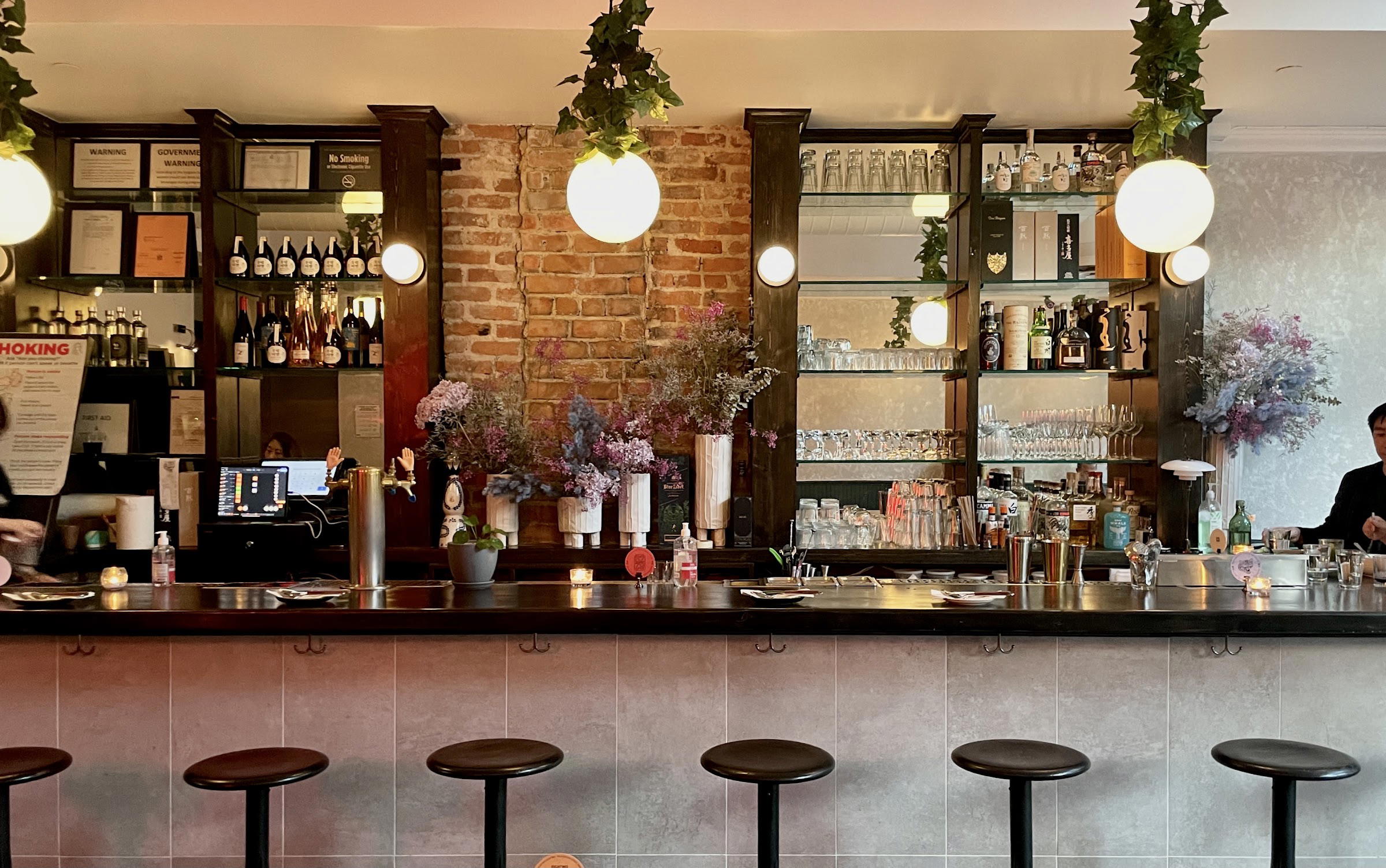
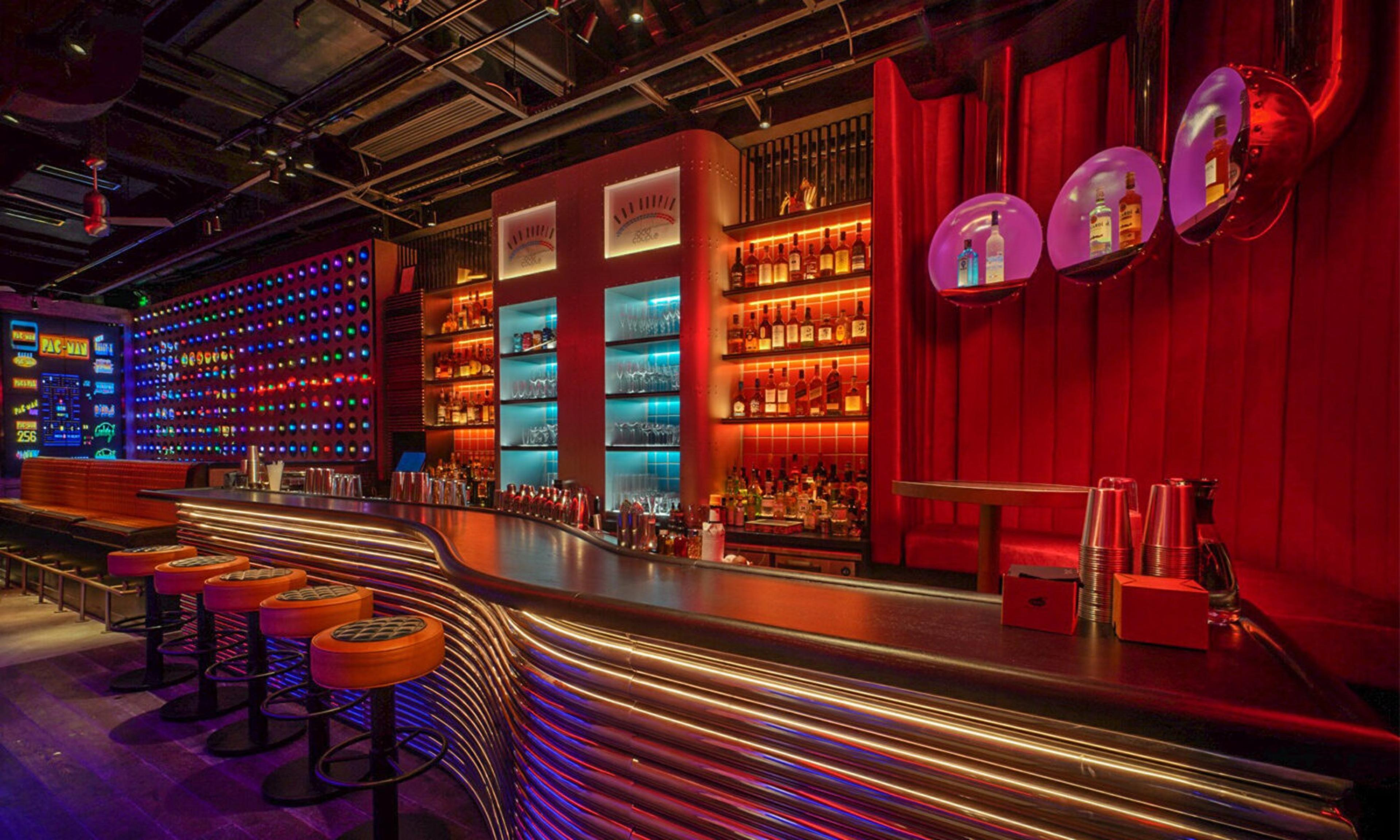
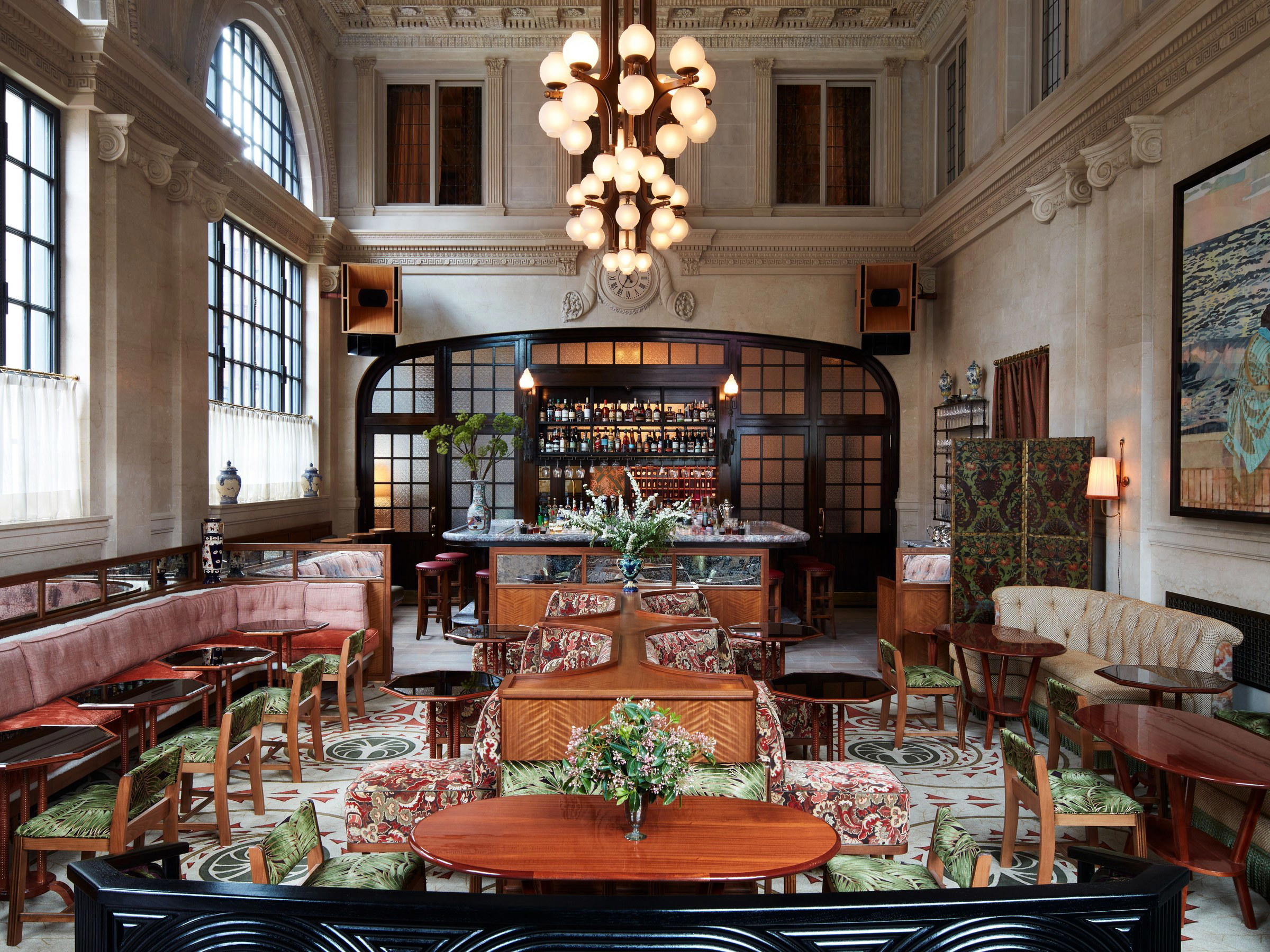
Lively and upbeat with K-pop playing, closely arranged tables fostering community interaction, sleek slate grey and white interior with a cozy bar area.