Tachi
Among New York City's omakase counters, Tachi operates in a format where the meal's architecture, its pacing, its silences, its sequencing, is the main event. Positioned alongside the city's most focused Japanese dining rooms, it draws comparison to Masa in its counter-led discipline. For those already familiar with the city's high-end sushi tier, Tachi represents a specific kind of commitment to the ritual itself.
 Discover on Pearl
Pearl is the En Primeur Club membership app — saves, bookings, and concierge access live there. Same editors, same standards.
- Address
- 339 W 44th St, New York, NY 10036
- Phone
- (347) 913-2585
- Website
- tachinyc.com
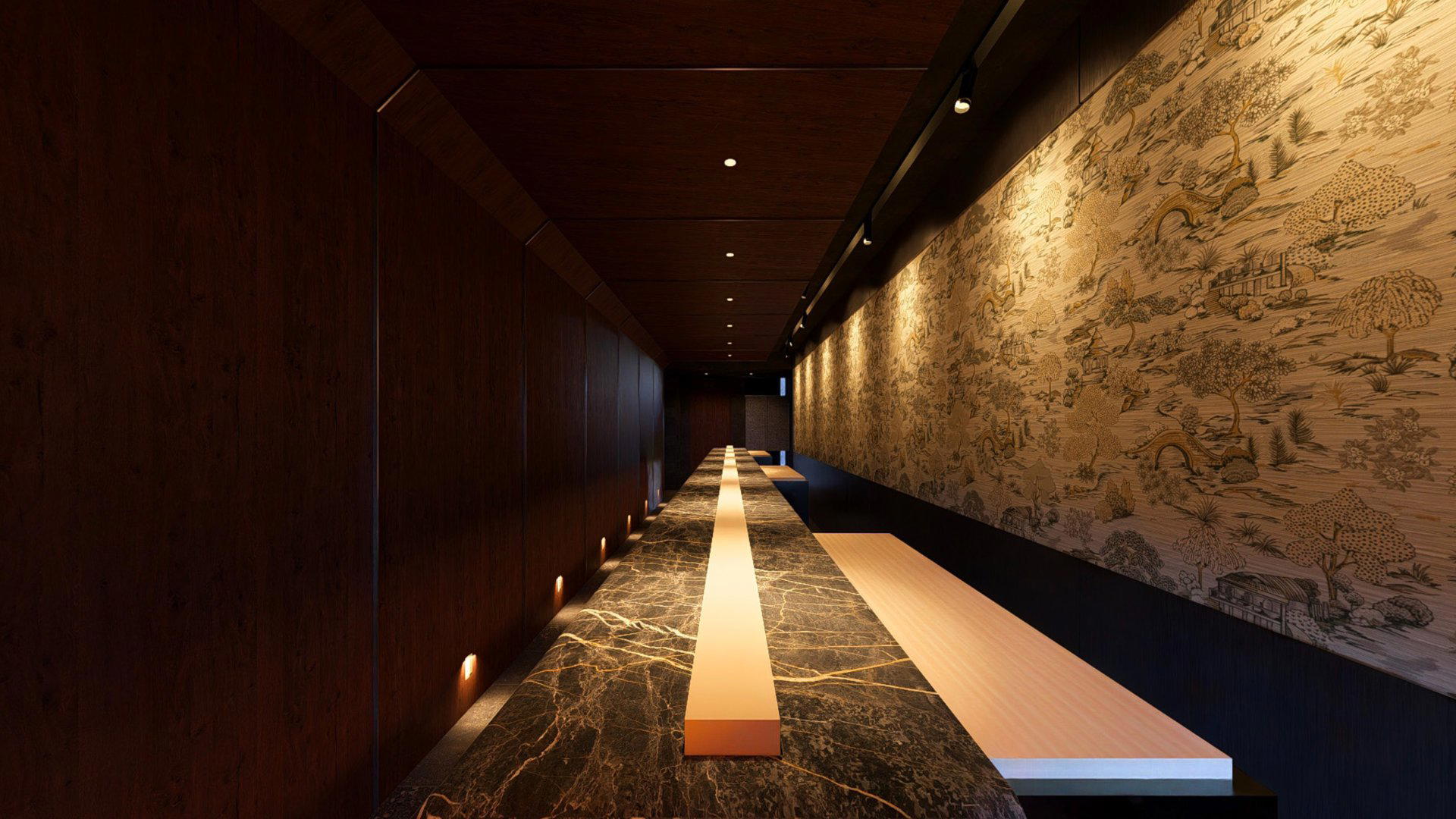
The Counter as Theater: Omakase Dining in New York City
New York's omakase scene has undergone a quiet but decisive sorting in the past decade. What was once a niche format reserved for a few Japanese-owned counters in Midtown has expanded, fractured, and restratified. Today the city supports several distinct tiers: accessible neighborhood omakase in the $80–$150 range, mid-market counters running closer to $200–$250, and a leading bracket of counters where the meal, the room, and the ritual together price at or above $300 per person. Tachi is a New York City restaurant serving Traditional Japanese Omakase at 339 W 44th St, with a recommended reservation policy and a price tier of about $48 per person.
The counter-style Japanese dining room imposes its own grammar on a meal. There is no à la carte menu to browse, no negotiation over courses, no decision fatigue. The chef determines the sequence, the pacing, and the proportion. The diner's role is to be present, to watch, to receive, to respond. That inversion of the usual restaurant dynamic is not incidental to the omakase experience; it is the experience. Venues like Masa built their reputations precisely on the discipline of that format, at price points that signal seriousness before a single piece of fish arrives.
What the Ritual Demands
The dining ritual at a serious omakase counter asks things of its participants that most restaurant formats do not. Punctuality is not a courtesy, it is structural. A counter that seats eight cannot absorb a late arrival without disrupting the entire kitchen's timing. The meal moves as a unit. Conversation tends to drop to a register suited to the room: attentive, intermittently quiet, attuned to what is happening two feet away on the hinoki wood surface.
Pacing at this level is deliberately unhurried. A full omakase progression, through lighter, cleaner courses into richer, more complex preparations, then pulling back before the final rice course, typically runs between two and two and a half hours. That arc is not accidental. It mirrors the structure of traditional kaiseki in its attention to rhythm, even when the format is pure Edomae sushi. The sequence of lean fish before fatty fish, warm before cold, acid before richness, follows conventions refined over generations of Tokyo counter dining. New York counters that train through Japanese lineage tend to maintain that sequencing discipline; those that do not are usually the ones where the ritual feels imported rather than inhabited.
Among the city's reference points for that kind of inherited discipline, Atomix offers a useful comparison, not in cuisine, but in format commitment. Its modern Korean tasting menu operates with a similar insistence on pacing and intentionality, where each course arrives with context and the room is calibrated to support concentration. The parallel holds: what makes a tasting counter work at the top tier is not any single dish but the sustained intelligence of the sequence.
New York's Omakase Tier and Where Tachi Sits
The city's Japanese dining room has expanded rapidly since 2018. Dozens of new omakase counters have opened across Manhattan and Brooklyn, and the format has become almost crowded at the mid-market level. The upper bracket, however, remains constrained, by the cost of quality fish, by the scarcity of trained chefs, and by the physical reality that a serious counter holds fewer than twelve seats. These structural limits keep the top tier small and make it competitive for bookings in a way that larger restaurant formats are not.
Tachi enters that upper-bracket conversation. That is a meaningful distinction: the absence of confirmed Michelin recognition does not exclude a counter from serious consideration, particularly in a city where recognition lags operation by a year or more and where some of the most technically accomplished counters have operated quietly before receiving formal attention. For comparison, Per Se and Le Bernardin each occupied well-established reputations before their Michelin stars consolidated public perception, recognition followed excellence, not the reverse.
Nationally, the omakase format has found serious practitioners beyond New York. Lazy Bear in San Francisco and Single Thread Farm in Healdsburg demonstrate how counter-format dining, when applied with discipline to non-Japanese cuisines, produces similar results: intimate rooms, sequenced courses, no menu card, full trust in the kitchen. The format's spread reflects a broader shift in how premium dining defines itself, away from tablecloth formality and toward what might be called procedural intimacy. Smyth in Chicago and Blue Hill at Stone Barns occupy the same zone of trust-the-kitchen dining, each with a distinct idiom.
The Architecture of an Omakase Meal
Understanding what distinguishes one counter from another at the upper tier requires some fluency with the format's internal logic. Edomae sushi, the Tokyo tradition that underlies most serious American omakase, is not simply about ingredient quality, though sourcing matters enormously. It is about technique applied to time: how fish is aged, how rice is seasoned and tempered, how the knife work on a particular cut changes its texture and, by extension, its flavor. A piece of aged tuna prepared by a chef trained in that tradition is a fundamentally different object from the same fish at a less rigorous counter, even if the sourcing is comparable.
The rice is the most reliable indicator of a counter's seriousness. Shari, sushi rice, seasoned with aged red vinegar rather than white produces a warmer, more complex base that can support richer fish preparations without being overwhelmed. Getting the temperature right, serving each piece at body temperature rather than refrigerator cold, is a discipline that requires constant attention across a two-hour service. It is detail work, unglamorous and unforgiving, and it separates the counters that have genuinely absorbed the tradition from those that wear it as an aesthetic.
For readers whose reference points are the city's other high-commitment tasting formats, Eleven Madison Park offers a structural analogy: the meal is pre-designed, the pacing is controlled, and the decision to trust the kitchen is made at the booking stage, not at the table. The difference is that omakase compresses that trust into a smaller room and a more direct relationship between the person preparing the food and the person receiving it.
Broader Context: American Fine Dining's Counter Moment
The format that Tachi represents sits within a wider movement in American fine dining. Counter-format, chef-driven tasting menus have become the dominant mode of premium dining ambition from coast to coast. Providence in Los Angeles, Addison in San Diego, The French Laundry in Napa, and The Inn at Little Washington each represent a version of the same underlying proposition: that the most serious meal is one where the kitchen, not the diner, controls the arc. Internationally, venues like Atelier Moessmer Norbert Niederkofler in Brunico and Dal Pescatore in Runate have built equivalent reputations on sequenced, trust-led formats within their own culinary traditions.
What makes the Japanese counter version of this format distinct is its physical directness. There is no pass, no expediter, no server as intermediary. The chef hands you the piece. That compression of distance, between preparation and consumption, between the person responsible and the person eating, creates a quality of attention that no dining room layout with tables and chairs fully replicates. It is the format's core argument, and it is why, in a city that has every other kind of high-end dining covered, the serious omakase counter occupies a category of its own.
For more on where Tachi fits among the city's full range of high-end dining options, see our full New York City restaurants guide. Reference points for regional comparison include Frasca Food & Wine in Boulder and Emeril's in New Orleans, both of which demonstrate how different regional contexts shape what a premium dining commitment looks like outside the major coastal markets.
Planning Your Visit
Omakase counters at the upper tier of New York's Japanese dining scene require advance booking, typically several weeks out for weekend sittings and somewhat less for midweek. Arrival at or before the stated reservation time is expected, not optional, the meal begins as a group. Dietary restrictions that affect the progression of an omakase menu should be communicated at the time of booking rather than at the counter, as the chef designs the sequence in advance. The format is counter-only, which means the experience is consistent across all seats; there is no preferred position. Price at Tachi is about $48 per person, and reservations are recommended.
Quick Reference
Tachi, New York City, Traditional Japanese Omakase counter; reservations are recommended and pricing is about $48 per person.
At a Glance
Comparable venues nearby, for context on price, style, and recognition.
| Venue | Cuisine | Price | Notes |
|---|---|---|---|
| TachiThis venue — the venue you are viewing | $$$$ | ||
| Yoshoku | $$$$ | East Midtown-Turtle Bay, Kaiseki-inspired Japanese | |
| E Broadway | $$$$ | Chinatown-Two Bridges, Japanese Yakitori Omakase | |
| Zenkichi | Williamsburg, Modern Japanese Izakaya | $$$ | |
| Martiny’s | $$$$ | Financial District-Battery Park City, Japanese Cocktail Lounge | |
| Nikutei Futago | $$$$ | SoHo-Little Italy-Hudson Square, Osaka-style A5 Wagyu Yakiniku Tasting |
Continue exploring
More in New York City
Restaurants in New York City
Browse all →
Bars in New York City
Browse all →
Hotels in New York City
Browse all →


At a Glance
- Intimate
- Elegant
- Sophisticated
- Modern
- Special Occasion
- Date Night
- Celebration
- Chefs Counter
- Open Kitchen
- Sustainable Seafood
Intimate counter setting with dedicated focus on culinary precision and traditional sushi techniques; minimal seating creates an immersive chef-to-diner experience.