






1 Michelin Star · Star Wine List · James Beard Award Semi Finalist
Our verdict
America's only Michelin-starred Korean steakhouse, Cote occupies a dark, atmospheric room in the Flatiron District where tableside grills and dry-aged A5 Wagyu reframe what a steakhouse can be. The Butcher's Feast at $65 remains the entry point. Ranked No. 2 on Robb Report's 50 Best Steakhouses in North America 2025 and holding a Michelin star since 2024, it draws a global following without straying from its core premise.

Pearl is the En Primeur Club membership app, where members save venues, book tables and use the concierge.
The menu
What to order
- Butcher’s Feast
- A5 Wagyu Ribeye
Where Korean Barbecue and American Beef Culture Converge
The American steakhouse is one of the most codified dining formats in the country: white tablecloths, bone-in ribeyes, wedge salads, serious bourbon lists. It resists reinvention, partly by design. What has shifted meaningfully over the past decade is the arrival of Korean barbecue's communal grill logic into that tradition, not as fusion pastiche, but as a structural rewrite. Atomix, in Midtown, demonstrates what Korean fine dining looks like when it operates entirely on its own terms. Cote works differently: it occupies the exact intersection of the Korean grill-house and the American meat temple, and it does so at a price point and quality tier that forces comparison with the city's most serious steak programs.
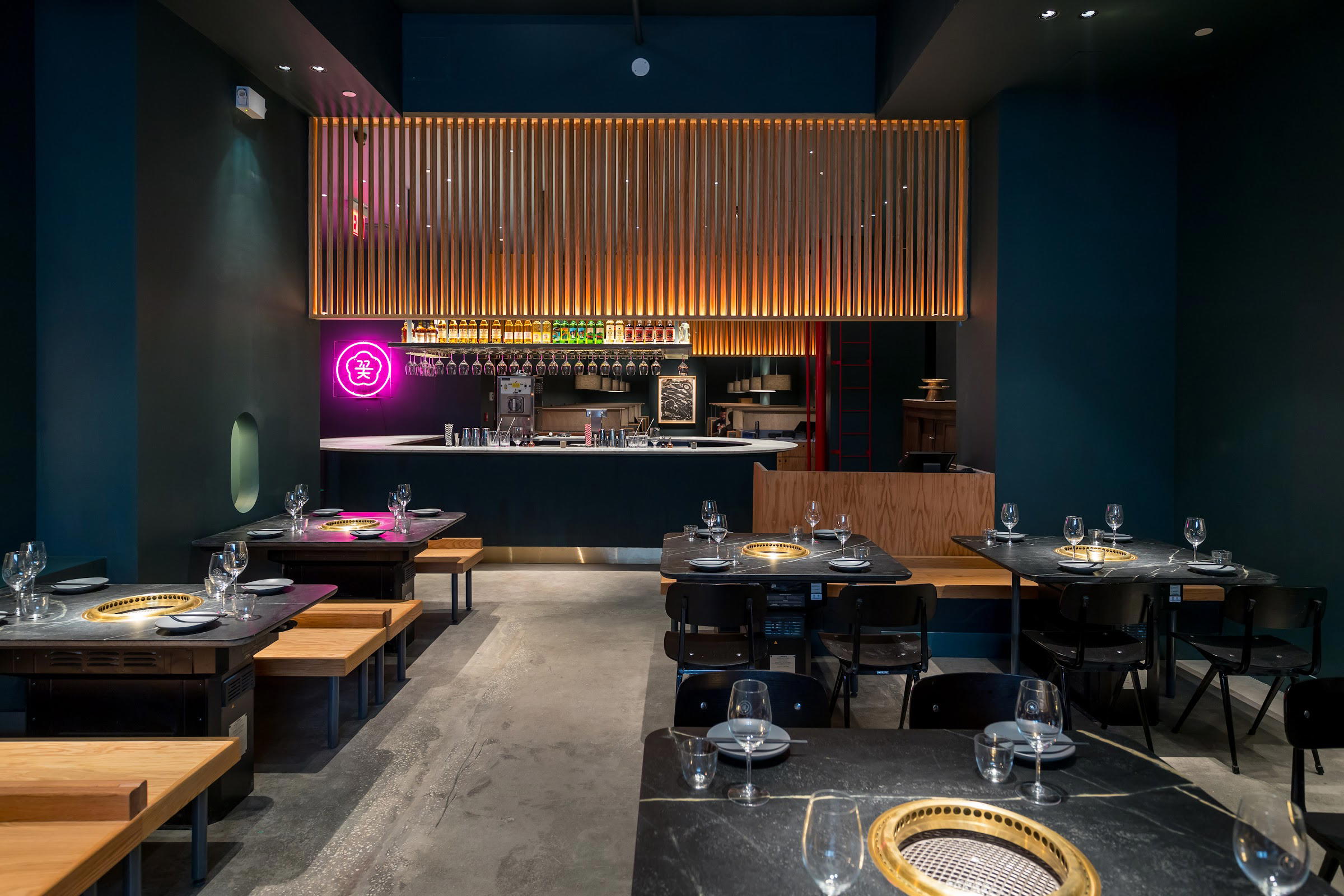
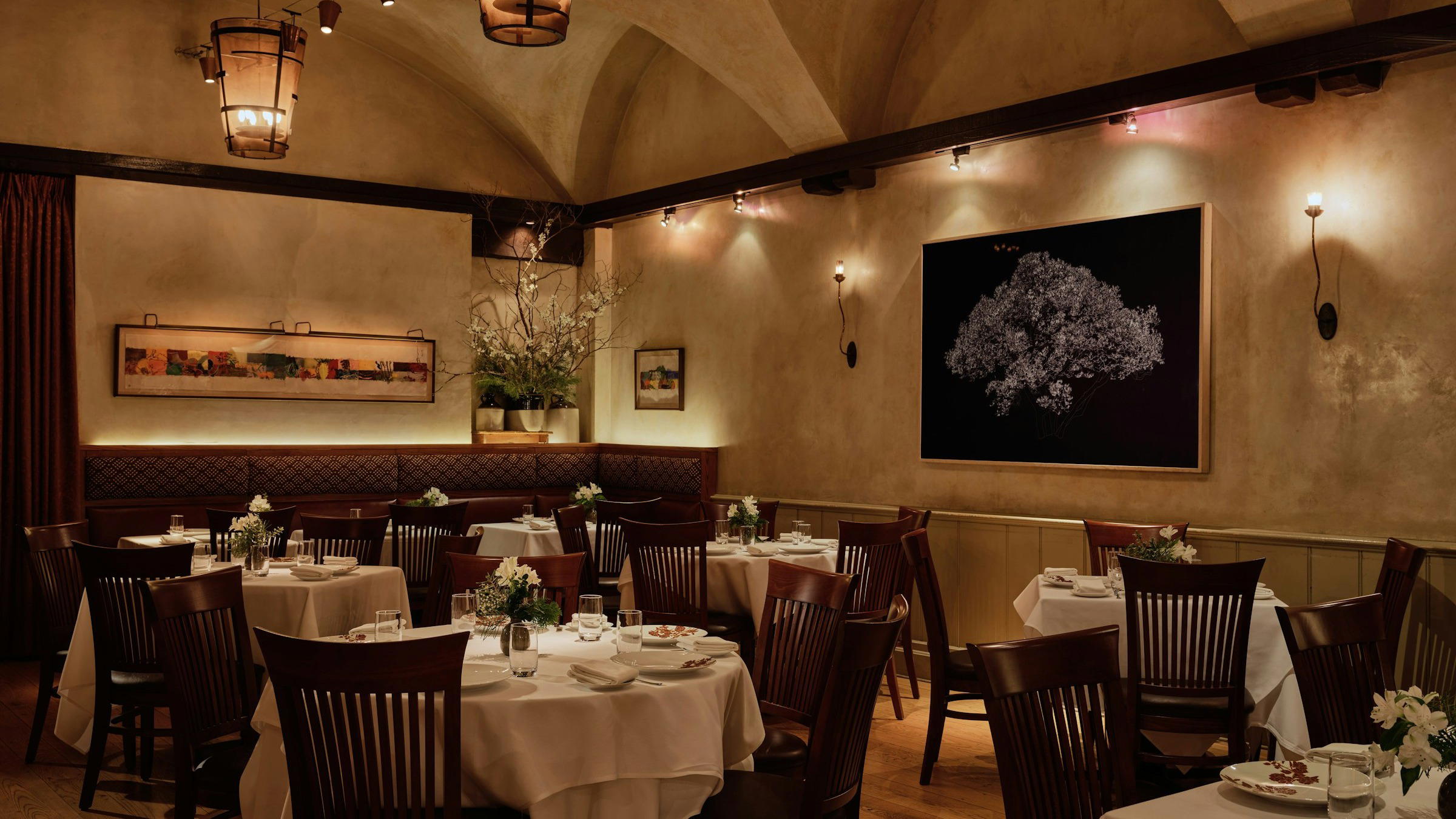
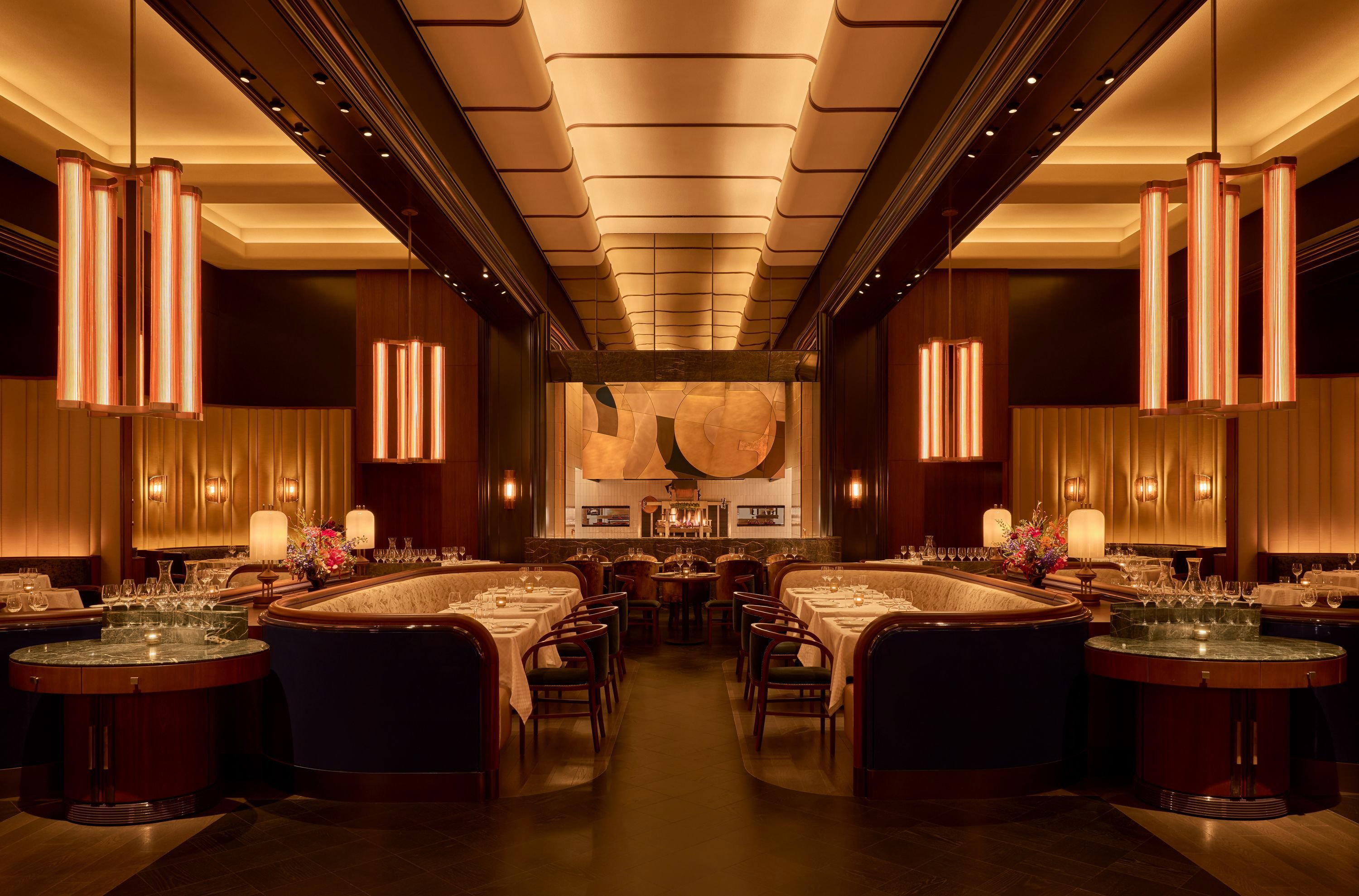
At 16 West 22nd Street in the Flatiron District, the room is dark and deliberately atmospheric, low lighting, smoke-scented air, the ambient sound of grills working across a full dining room. The smokeless in-table grill units are central to the spatial logic: each table is its own cooking station, staffed tableside, which means the room operates at a different register from the hushed reverence of, say, Eleven Madison Park or the counter-discipline of Masa. This is a loud, social, fire-forward dining environment. That is the point.
The Global Premium Beef Market, Served Tableside
The premium beef import market has changed the calculus of what a serious steakhouse stocks. A5 Miyazaki Wagyu from Japan now appears regularly across New York's top-tier beef programs, and the distinction between USDA Prime, American Wagyu (Wagyu-cross, typically Black Angus), and full-blood Japanese A5 matters considerably to the dining proposition. A5 is graded on a five-point Japanese Beef Marbling Standard scale; Miyazaki Prefecture has produced the winning cattle at Japan's National Wagyu Competitive Exhibition multiple times, making it among the most documented sources of full-blood Wagyu outside of Kobe itself.
Cote's beef program spans all three tiers: USDA Prime dry-aged in-house, American Wagyu, and A5 Japanese Miyazaki. The dry-aging room is visible to diners, a deliberate transparency that signals the seriousness of the operation. Dry-aged beef at this level requires controlled humidity, airflow, and consistent temperature management over weeks; the Maillard reaction that creates a proper crust on aged beef behaves differently from fresh-cut Prime, and the cooking precision demanded at tableside is correspondingly higher. The fact that grilling is performed by trained staff rather than left to the guest separates Cote from the casual Korean BBQ format, where self-grilling is the norm.
The editorial argument here is that Cote operates inside a global premium beef story, one in which Japanese A5 exports, Australian Wagyu imports, and American dry-aging programs all compete for the same high-spend diner. That Cote holds a Michelin star and ranks No. 2 on Robb Report's 50 Best Steakhouses in North America for 2025 while running a tableside grill format, typically associated with casual dining, represents a genuine category disruption. For context on how the premium steakhouse tier sits within New York's broader fine-dining structure, Le Bernardin and Per Se both hold three Michelin stars and operate in the $300-plus-per-head range with fixed tasting formats. Cote operates at $$$$, with the Butcher's Feast entry at $65, which places it accessibly within that tier.
The Butcher's Feast and How to Read the Menu
First-time visitors face a structurally direct decision: the Butcher's Feast at $65 delivers four selected cuts, an egg soufflé, and a spread of banchan that covers the table. Banchan, the Korean tradition of small shared side dishes including kimchi, pickled vegetables, and ssamjang dipping paste, serves a functional role here, providing acidity and fermented contrast to the fat content of premium beef. It is not a decorative gesture; the kimchi specifically interacts with the Wagyu's marbling in ways that reset the palate between cuts.
The progression from raw presentation to tableside grilling follows Korean BBQ protocol but with a precision more associated with tasting-menu kitchens. Cuts are shown raw before cooking, a practice that both educates the diner and signals provenance confidence. The server-executed grill technique means doneness and crust development are managed consistently, relevant when the ingredient cost of A5 Miyazaki makes overcooked beef an expensive error.
The Butcher's Feast structure also reflects a broader trend in premium casual dining: fixed entry-point formats that reduce menu anxiety while maintaining perceived value. At $65, it sits below comparable tasting-menu formats at Alinea in Chicago or Single Thread Farm in Healdsburg, where the format is more prescriptive and the price considerably higher.
Wine, Cocktails, and What Sits Downstairs
Cote's wine list runs to more than 1,200 labels, an scale that places it in the company of serious wine programs at restaurants where the list is a destination in itself. Opinionated About Dining, which scores restaurants through peer voting among industry professionals, ranked Cote No. 73 in North America in 2025 (up from No. 91 in 2024 and No. 83 in 2023), a consistent upward trajectory that reflects sustained recognition across multiple evaluation cycles.
The wine program reportedly carries value at lower price points, which in a $$$$ Manhattan environment means bottles in the $60 to $100 range alongside the prestige Burgundy and Bordeaux that anchor the list's upper tier. The pairing logic for Korean-inflected beef is less prescribed than at French fine dining restaurants, there is no house orthodoxy about which grape variety accompanies Wagyu, which makes the list genuinely exploratory rather than ceremonially correct.
Downstairs sits Undercote, a bar operating in the speakeasy-adjacent format that proliferated across New York in the 2010s. The city has largely moved on from the hidden-door theatrical model as a primary draw, and Undercote functions more as an extension of the Cote experience, cocktails and a more informal setting, than as a standalone destination. For the city's current cocktail scene, our full New York City bars guide maps the relevant programs by neighborhood.
Cote in the New York Fine Dining Picture
New York's top-tier restaurant set is unusually dense at the $$$$ price point, with multiple Michelin three-star programs and a critical apparatus, Michelin, Robb Report, Opinionated About Dining, the James Beard Foundation, that evaluates across radically different cuisines and formats simultaneously. Within that field, Cote occupies a category it has effectively defined: Michelin-starred Korean steakhouse, a designation it holds alone in the United States.
The expansion to Cote Miami and Singapore suggests a brand architecture rather than a single-location program, which is a notable shift for a restaurant of this type. The New York location remains the origin and the benchmark. International comparisons, such as 8½ Otto e Mezzo Bombana in Hong Kong, operate in similarly hybrid premium registers, though across different cuisines.
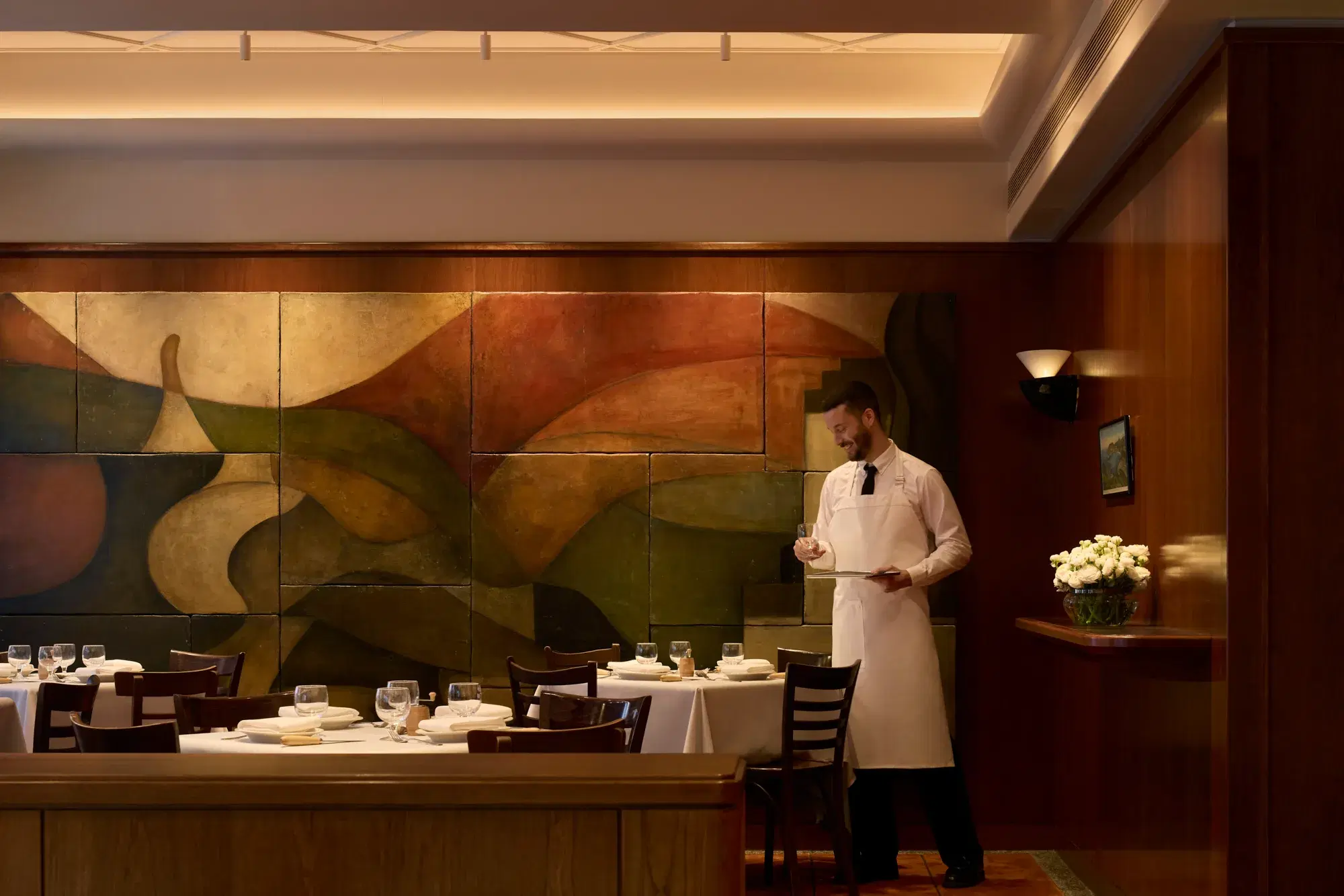
For readers building a New York itinerary around serious restaurants, our full New York City restaurants guide maps the landscape by cuisine and price tier. The hotels guide, wineries guide, and experiences guide cover the broader visit. For comparisons with other ambitious American programs, see Emeril's in New Orleans and Providence in Los Angeles.
Planning Your Visit
| Detail | Cote (NYC) | Atomix (NYC) | Le Bernardin (NYC) |
|---|---|---|---|
| Cuisine | Korean Steakhouse | Modern Korean | French Seafood |
| Michelin Stars | 1 Star (2024) | 2 Stars | 3 Stars |
| Price Range | $$$$ | $$$$ | $$$$ |
| Format | Tableside grill, à la carte + feast | Tasting menu | Tasting menu / à la carte |
| Hours | Mon–Sun 5 PM–11 PM (Thu–Sat to midnight) | Dinner only, closed Mon/Sun | Lunch and dinner, closed Sun |
| OAD Rank (2025) | #73 North America | Not listed | Not listed |
Cote opens at 5 PM seven days a week, with late service Thursday through Saturday running to midnight. The Flatiron District location places it within walking distance of the broader Madison Square Park dining cluster. Reservations are advised; the restaurant operates a consistent demand profile given its award visibility and single-city flagship status.
Frequently asked questions
What are the operating hours at Cote?
Hours at Cote: Monday 5 PM-11 PM Tuesday 5 PM-11 PM Wednesday 5 PM-11 PM Thursday 5 PM-12 AM Friday 5 PM-12 AM Saturday 5 PM-12 AM Sunday 5 PM-11 PM.
Does Cote have a Michelin star or similar recognition?
Cote has received recognition including: Cote has been self-described as a Korean Steakhouse, but it feels like so much more. For $65 you can opt for the butcher’s feast, which incorporates four selected cuts of A5 beef and a slew of accompa...; Opinionated About Dining Top Restau….
What's the best thing to order at Cote?
The Butcher's Feast at $65 is the most structured entry point: it delivers four selected cuts from Cote's USDA Prime and Wagyu lineup, an egg soufflé, and a full spread of banchan, all grilled tableside by your server. Ranked No. 2 on the Robb Report's 50 Best Steakhouses in North America for 2025 and holding a Michelin star since 2024, Cote's kitchen selects the cuts for you, which removes the guesswork and ensures a cross-section of the aging program.
Pricing, Compared
| Venue | Cuisine | Price | Awards | Notes |
|---|---|---|---|---|
| CoteThis venue (the venue you are viewing) | Korean Steakhouse | $50–100 | 1 Michelin Star · Star Wine List | Not listed |
| Le Bernardin | French Seafood Fine Dining | $300–500 | 3 Michelin Stars · World's 50 Best #13 | French, Seafood |
| Atomix | Modern Korean Tasting Menu | $300–500 | 2 Michelin Stars · World's 50 Best #7 | Modern Korean, Korean |
| Masa | Seasonal Hokkaido Tempura Omakase | $150–200 | Tabelog 100 #34 | Sushi, Japanese |
| Per Se | French Fine Dining Tasting Menu | $300–500 | 3 Michelin Stars · World's 50 Best #40 | French, Contemporary |
| Eleven Madison Park | Contemporary Plant-Based Fine Dining | $300–500 | 3 Michelin Stars · World's 50 Best #4 | French, Vegan |
Recognition history
Dated appearances from independent guides and award organizations, with the underlying list record or original source where available.
Michelin 1 Star
Michelin
Star Wine List
Star Wine List
James Beard Award Semi Finalist
James Beard Award
Opinionated About Dining Top Restaurants in North America Ranked #96
Opinionated About Dining
World's Best Steaks 101 Best Steak Restaurants #21
World's Best Steaks
Full recognition history (14 entries)
James Beard Award Semi Finalist
James Beard Award
Opinionated About Dining Top Restaurants in North America Ranked #73
Opinionated About Dining
World's Best Steaks 101 Best Steak Restaurants #10
World's Best Steaks
World's Best Steaks 50 Best Steakhouses in North America #2
World's Best Steaks
Michelin 1 Star
Michelin
Opinionated About Dining Top Restaurants in North America Ranked #91
Opinionated About Dining
Opinionated About Dining Top Restaurants in North America Ranked #83
Opinionated About Dining
World's Best Wine Lists Awards WBWL 2-Star
World's Best Wine Lists Awards
Robb Report 100 Greatest American Restaurants of the 21st Century #65
Robb Report
Continue exploring
More in New York City
Restaurants in New York City
All restaurants in New York City →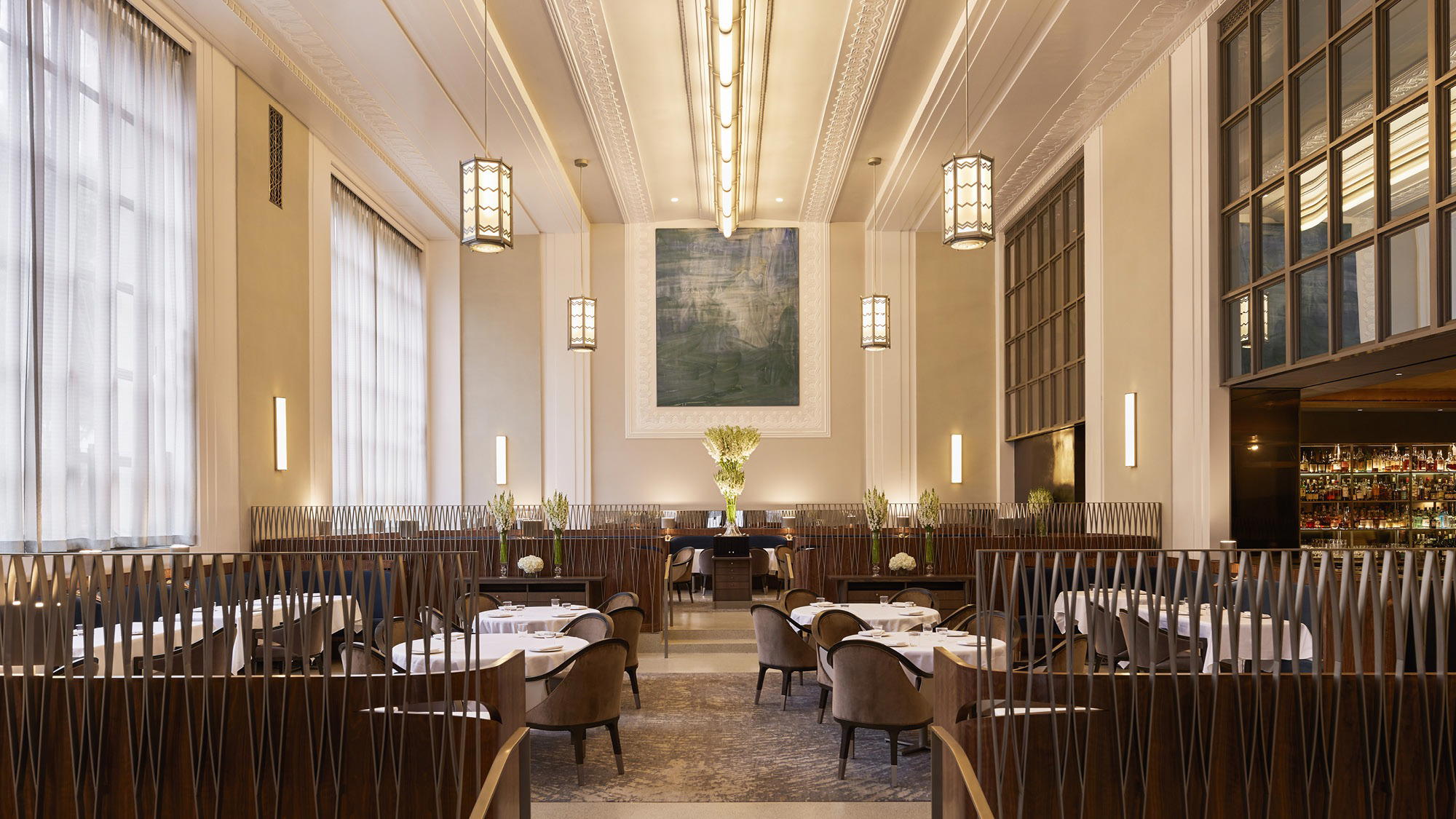
Bars in New York City
All bars in New York City →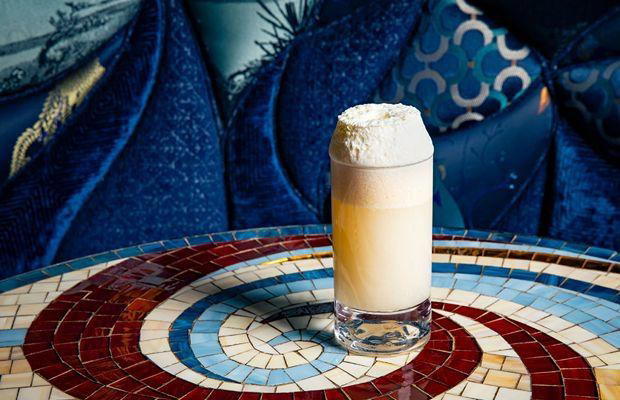






Cote
The wine
- Wine program
- Deep wine list
- Extensive wine list
- Craft cocktails
Details
- Trendy
- Sophisticated
- Elegant
- Lively
- Date Night
- Group Dining
- Special Occasion
- Open Kitchen
- Extensive Wine List
- Craft Cocktails
- A La Carte
Current opening hours
- Monday
- 5–11 PM
- Tuesday
- 5–11 PM
- Wednesday
- 5–11 PM
- Thursday
- 5 PM–12 AM
- Friday
- 5 PM–12 AM
- Saturday
- 5 PM–12 AM
- Sunday
- 5–11 PM
Hours can change for holidays and private events. Hours as of .
Dark, moody, and atmospheric with dim lights, sleek tables, and an upbeat, stylish vibe.