

1 Michelin Star
Our verdict
Behind sister restaurant Oiji Mi on West 19th Street, bōm operates as one of New York's more deliberately constructed Korean fine-dining counters, holding a Michelin star and an Opinionated About Dining ranking of #83 in North America (2025). The format centers on a marble counter with built-in barbecue grills, premium dry-aged beef cuts, and luxury supplements including uni, caviar, and truffle, stacked without apology into a tasting progression that runs Tuesday through Sunday evenings.

Pearl is the En Primeur Club membership app, where members save venues, book tables and use the concierge.
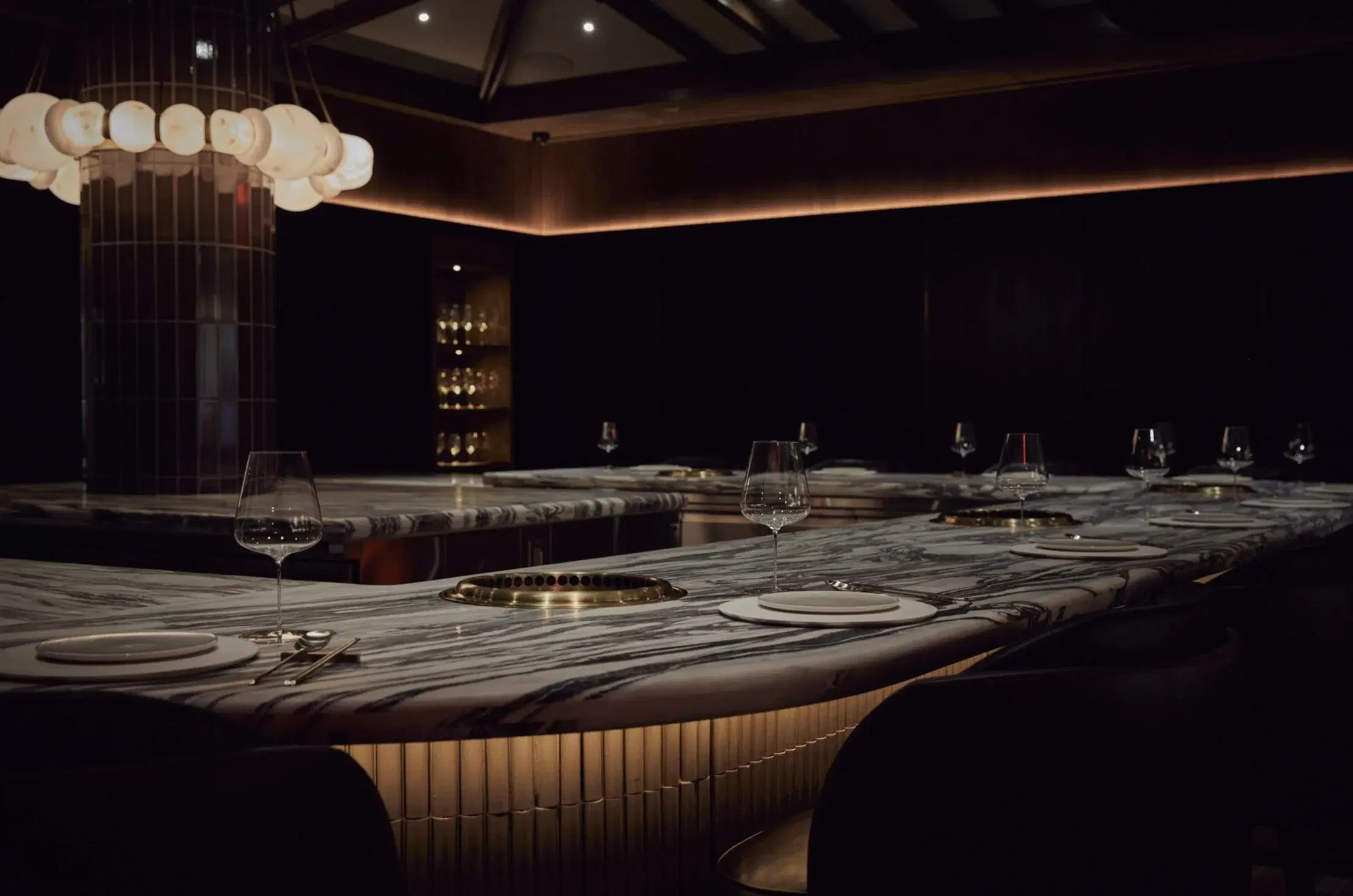
A Counter Built for Serious Eating
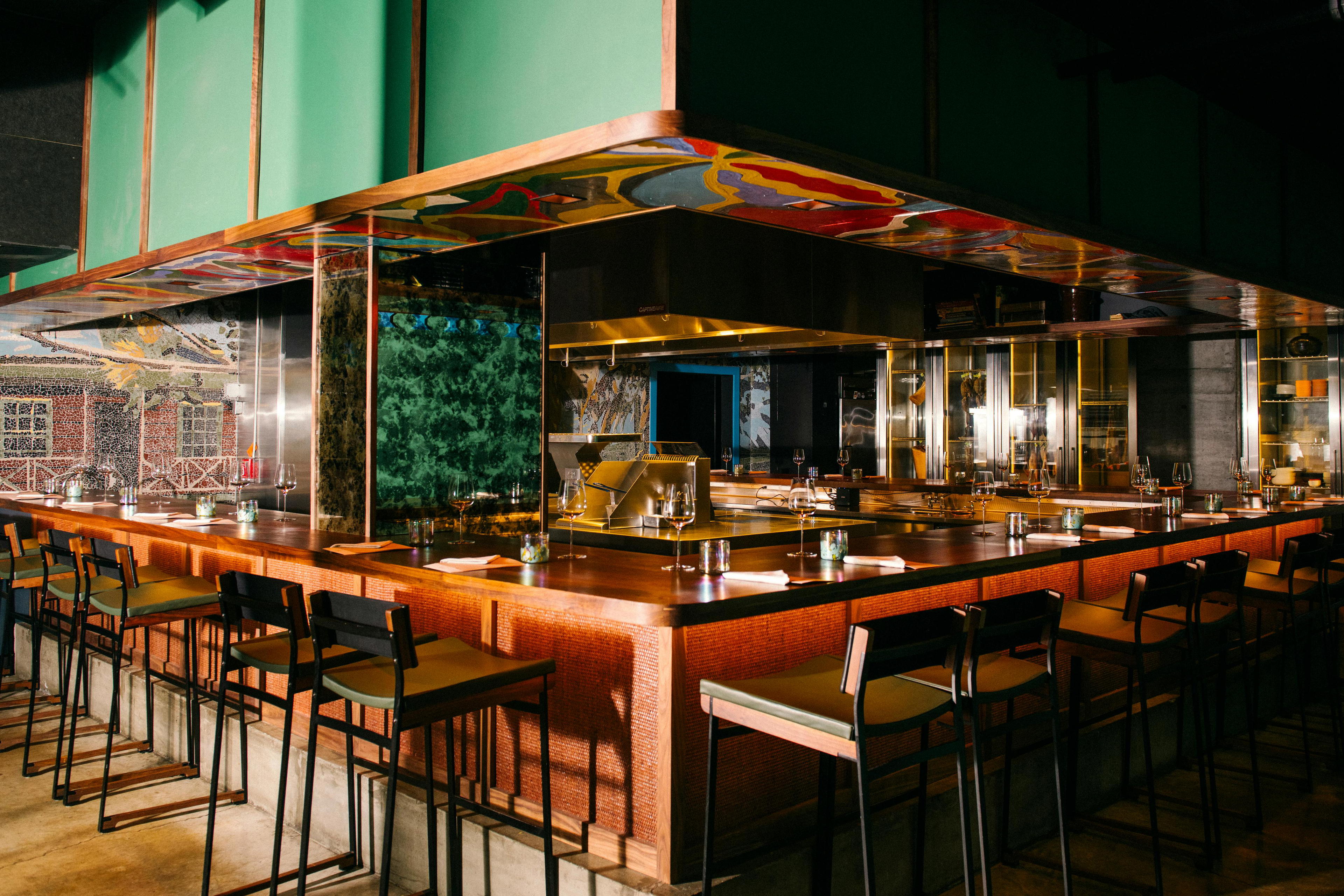
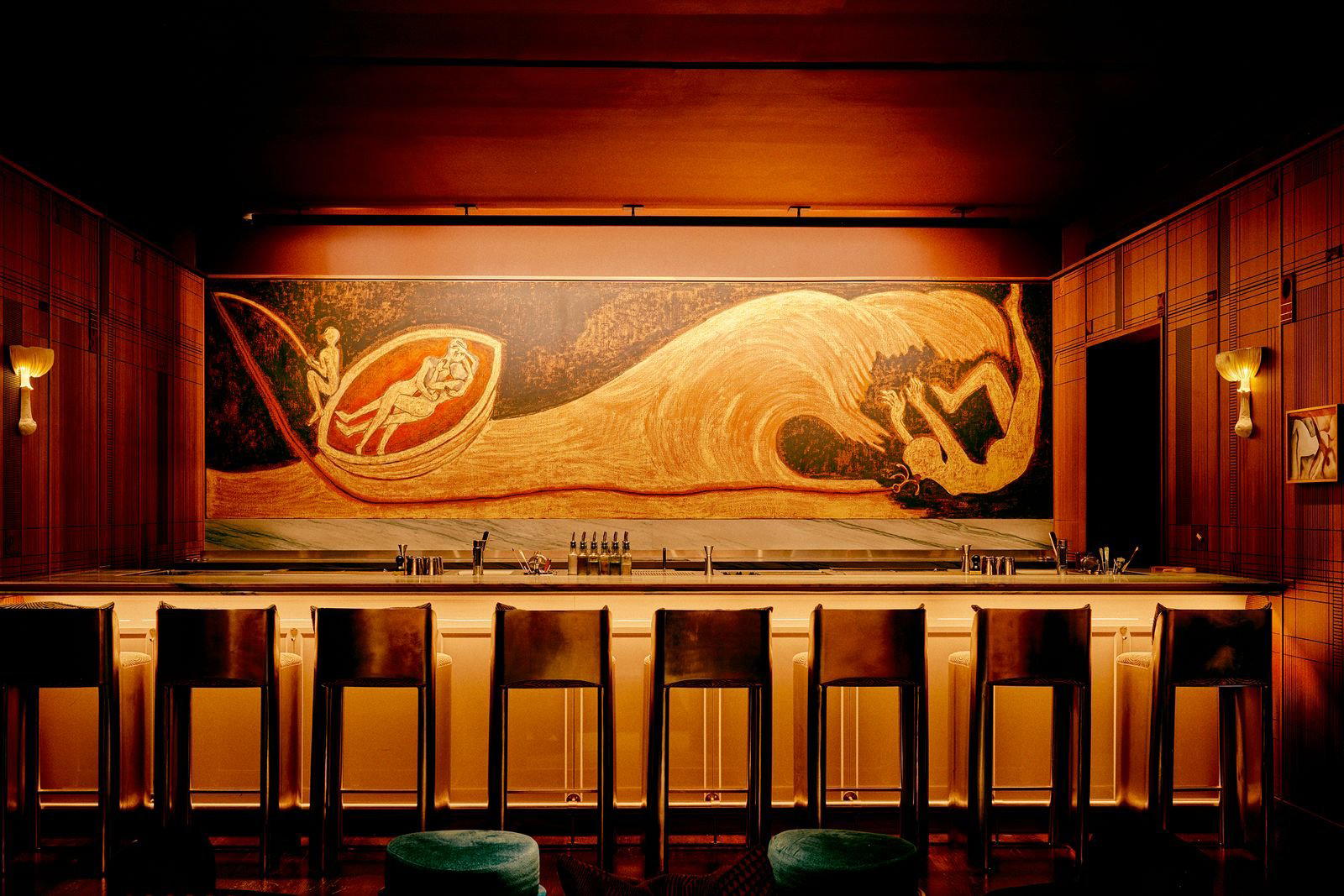
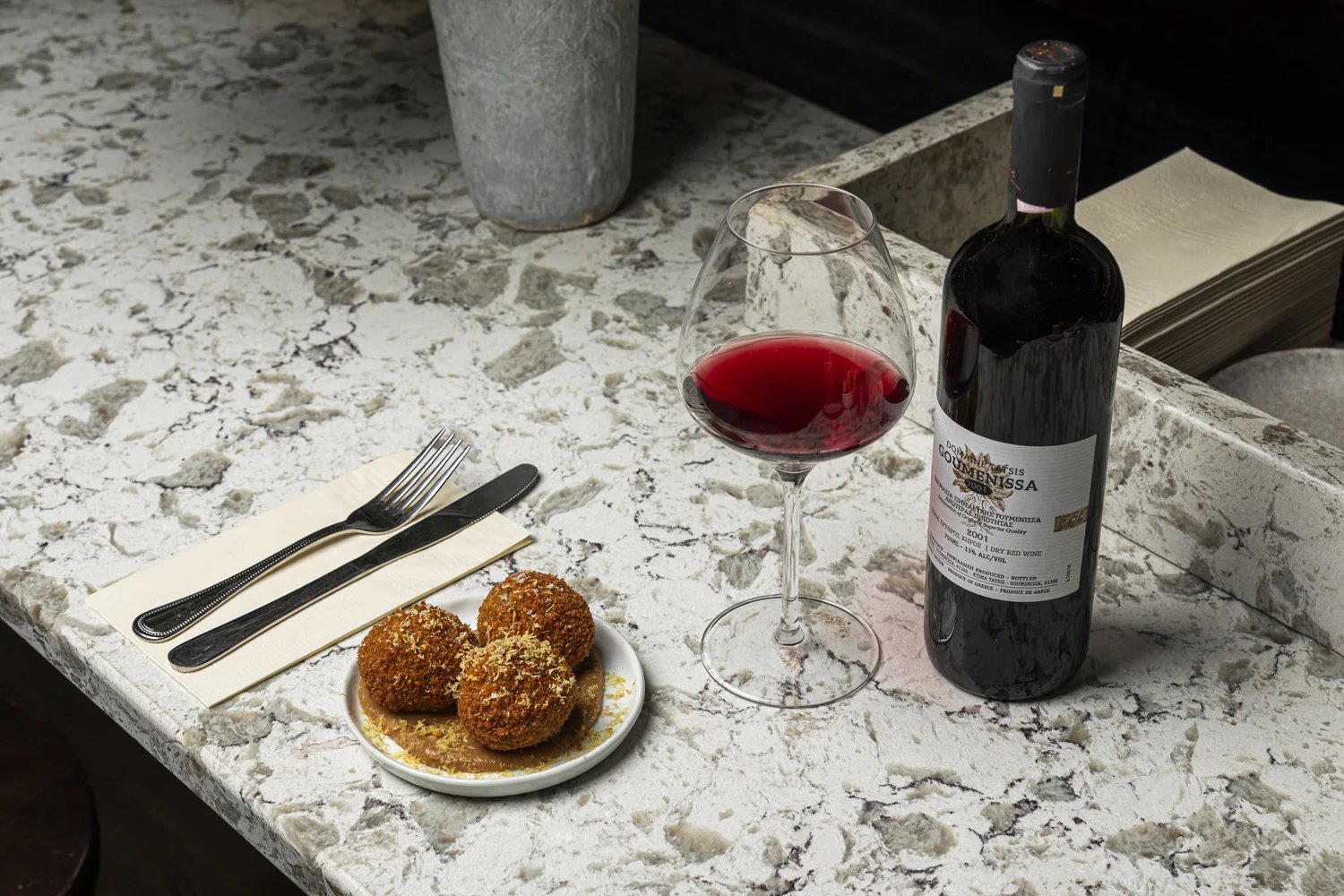
Flatiron's dining corridors have accumulated enough tasting-menu destinations that a new entry needs a clear identity to register. bōm, situated at 17 West 19th Street and tucked behind sister restaurant Oiji Mi, establishes its identity immediately through architecture: soaring ceilings, sharply dressed servers, and a spacious marble counter with built-in barbecue grills that quietly work throughout service. The grill element is not incidental. In full view of the counter, a dry-aging chamber holds premium beef cuts, tenderloin, short rib, ribeye, that move from chamber to grill to plate across the course of an evening. The physical setup communicates exactly what kind of restaurant this is before a single dish arrives.
That kind of spatial honesty is rarer than it sounds at the $$$$ tier. New York's premium dining scene has long leaned on theatrical misdirection, separating the production apparatus from the guest experience. bōm places both in the same room, which sharpens the sense that the cooking and the theater are the same thing.
Where bōm Sits in the New York Korean Fine-Dining Tier
Atomix holds two Michelin stars and operates on the technical tasting-menu model, with a scholarly approach to Korean culinary history. Jua works the wood-fire format with French-Korean technique. Jeju Noodle Bar anchors a more approachable register. Meju, 8282, and Ariari each stake out different corners of contemporary Korean cooking in the city. bōm operates at the top of that range, holding one Michelin star (2024) and rising from #179 to #83 on Opinionated About Dining's North America ranking between 2024 and 2025. That upward movement on OAD is a credible signal: the list is critic-weighted and not easily gamed by volume or sentiment.
Against the broader $$$$ New York field, where Le Bernardin, Per Se, Eleven Madison Park, and Masa set the ceiling, bōm occupies a position that is Michelin-recognized but not yet multi-starred. That distinction matters for value assessment. Single-star kitchens at the $$$$ price point often deliver cooking that competes with two-star peers, and the premium ingredient stack at bōm (wagyu, uni, caviar, truffle, crab) suggests the kitchen is pricing against quality of produce rather than simply against its own award tier.
For a Seoul-side reference point, the modern Korean counter tradition has international parallels at places like Mingles and Kwonsooksoo, both of which operate in a similarly restrained but ingredient-forward register. bōm reads as New York's contribution to that same conversation.
The Value Proposition: What the Price Point Buys
At the $$$$ level in New York, the question is never simply whether the food is good. The question is whether the gap between what you pay and what you receive is defensible against alternatives in the same bracket. A Michelin three-star meal at Per Se or The French Laundry in Napa commands a different kind of premium. So does the omakase model at Masa. bōm's competitive argument rests on a specific combination: a counter format with visible craft, a beef-forward but not beef-only menu, and a luxury supplement layer that most kitchens at this level distribute across the menu rather than concentrate.
The concentration of luxury ingredients at bōm is deliberate. Uni, caviar, truffles, and crab are not scattered as accents but are layered, the kitchen has, per documented service notes, no reluctance about stacking them. A croustade incorporating baesuk, jujube, and tofu demonstrates that the kitchen is also capable of restraint and textural complexity outside the premium-protein framework. Bone broth with radish, another documented highlight, works the opposite register: simple, direct, and technically demanding to get right. That range, from maximalist luxury stacks to minimal broth precision, is where the value argument becomes interesting. You are not paying purely for the cost of the ingredients; you are paying for a kitchen that can hold both registers in a single sitting.
Compared to West Coast counterparts, Lazy Bear in San Francisco, Single Thread Farm in Healdsburg, or Providence in Los Angeles, bōm's format is more counter-intimate and ingredient-specific. The barbecue grill component keeps the experience grounded in a Korean culinary tradition even as the surrounding tasting format aligns with contemporary American fine dining conventions.
Format and Flow
The counter at bōm is constructed for sustained attention. The built-in grills mean that the cooking is continuous and partially visible rather than arriving from a remote kitchen in completed form. Premium beef cuts, tenderloin, short rib, ribeye, move through the dry-aging chamber visible from the counter, a setup that functions as both transparency and theater. The progression is contemporary Korean in framing, with wagyu as the structural anchor and luxury supplements building around it.
Chef Brian Kim leads the kitchen. His presence at the counter level of New York's Korean fine-dining scene places bōm within a generation of Korean-American chefs reshaping how the cuisine operates at the top of the market. The broader pattern, seen at Atomix, Jua, and elsewhere, involves taking Korean ingredient and fermentation traditions and applying fine-dining counter discipline to them, rather than translating Korean dishes into European formats. bōm's dry-aging chamber and grill integration follows that logic: Korean barbecue refined in technique and ingredient but recognizable in its bones.
The dining room runs from 5:30 PM Tuesday through Saturday and opens slightly earlier at 5 PM on Sundays, with Mondays closed. That Tuesday-Sunday structure is consistent with high-end New York tasting menus, which typically close on Mondays to allow kitchen reset and sourcing.
Against the $$$$ Benchmark
The broader $$$$ dining tier in New York now includes formats as different as the traditional French brigade at Le Bernardin, the plant-based tasting progression at Eleven Madison Park, and the silent precision of Masa's sushi counter. What bōm adds to that range is a Korean fine-dining counter that keeps the grill and the luxury ingredient stack in the same room, in full view, without apology. That directness is a specific kind of value: you know what you are paying for, and the kitchen does not obscure it.
For context across other major American fine-dining markets, Emeril's in New Orleans and Alinea in Chicago each operate within established American fine-dining frameworks with strong regional identities. bōm operates in an analogous space for Korean cuisine in New York: a restaurant that uses a clear national culinary tradition as its foundation while pitching squarely at the highest tier of the American dining market.
The OAD jump from #179 to #83 in a single year suggests the kitchen is improving or, more likely, that its consistency has now been confirmed across enough critical visits to earn the higher placement. Either reading supports the same practical conclusion: this is a counter worth booking sooner rather than later, while it remains in the single-star bracket and before demand calcifies into the kind of lead times that two-star recognition typically produces.
Explore our full New York City restaurants guide for the wider field, or see our full New York City hotels guide, our full New York City bars guide, our full New York City wineries guide, and our full New York City experiences guide for planning the rest of your visit.
Know Before You Go
- Address: 17 W 19th St, New York, NY 10011
- Hours: Tuesday–Friday 5:30 PM–10 PM | Saturday 5:30 PM–10 PM | Sunday 5 PM–10 PM | Monday closed
- Price range: $$$$
- Awards: Michelin 1 Star (2024); Opinionated About Dining Leading Restaurants in North America #83 (2025)
- Format: Counter tasting menu with built-in barbecue grills; contemporary Korean with wagyu focus
- Location note: Behind sister restaurant Oiji Mi in the Flatiron District
Frequently asked questions
How much does it cost to eat at bōm?
Pricing at bōm is listed as $$$$.
When can I go to bōm?
Hours at bōm: Monday closed Tuesday 5:30 PM-10 PM Wednesday 5:30 PM-10 PM Thursday 5:30 PM-10 PM Friday 5:30 PM-10 PM Saturday 5:30 PM-10 PM Sunday 5 PM-10 PM.
What kind of recognition has bōm received?
bōm has received recognition including: Opinionated About Dining Top Restaurants in North America Ranked #83 (2025); This modern counter tucked behind sister restaurant Oiji Mi showcases contemporary Korean fare with a focus on wagyu beef. The space itself is a stunner with soari….
What should I order at bōm?
bōm runs as a set tasting-menu counter rather than à la carte, so the menu structure is fixed. The format is built around wagyu cuts, tenderloin, short rib, and ribeye, dry-aged on-site and seared at the counter's built-in grills. Beyond the beef, the kitchen layers luxury ingredients including uni, caviar, truffles, and crab, often in combination. The OAD Top 83 ranking in 2025 and Michelin star reflect a menu that covers more than a straightforward beef program.
The Short List
| Venue | Cuisine | Price | Awards | Notes |
|---|---|---|---|---|
| bōmThis venue (the venue you are viewing) | Modern Korean Tasting Menu | $200–300 | 1 Michelin Star | Not listed |
| Le Bernardin | French Seafood Fine Dining | $300–500 | 3 Michelin Stars · World's 50 Best #13 | French, Seafood |
| Atomix | Modern Korean Tasting Menu | $300–500 | 2 Michelin Stars · World's 50 Best #7 | Modern Korean, Korean |
| Masa | Seasonal Hokkaido Tempura Omakase | $150–200 | Tabelog 100 #34 | Sushi, Japanese |
| Per Se | French Fine Dining Tasting Menu | $300–500 | 3 Michelin Stars · World's 50 Best #40 | French, Contemporary |
| Eleven Madison Park | Contemporary Plant-Based Fine Dining | $300–500 | 3 Michelin Stars · World's 50 Best #4 | French, Vegan |
Recognition history
Dated appearances from independent guides and award organizations, with the underlying list record or original source where available.
Michelin 1 Star
Michelin
Opinionated About Dining Top Restaurants in North America Ranked #75
Opinionated About Dining
Full recognition history (5 entries)
Opinionated About Dining Top Restaurants in North America Ranked #83
Opinionated About Dining
Michelin 1 Star
Michelin
Opinionated About Dining Top Restaurants in North America Ranked #179
Opinionated About Dining
Continue exploring
More in New York City
More from Chef Brian Kim
Browse all →
Restaurants in New York City
All restaurants in New York City →
Bars in New York City
All bars in New York City →




Details
- Intimate
- Elegant
- Sophisticated
- Modern
- Date Night
- Special Occasion
- Celebration
- Chefs Counter
- Open Kitchen
- Extensive Wine List
- Tasting Menu
- Counter Dining
Current opening hours
- Monday
- Closed
- Tuesday
- 5:30–10 PM
- Wednesday
- 5:30–10 PM
- Thursday
- 5:30–10 PM
- Friday
- 5:30–10 PM
- Saturday
- 5:30–10 PM
- Sunday
- 5–10 PM
Hours can change for holidays and private events. Hours as of .
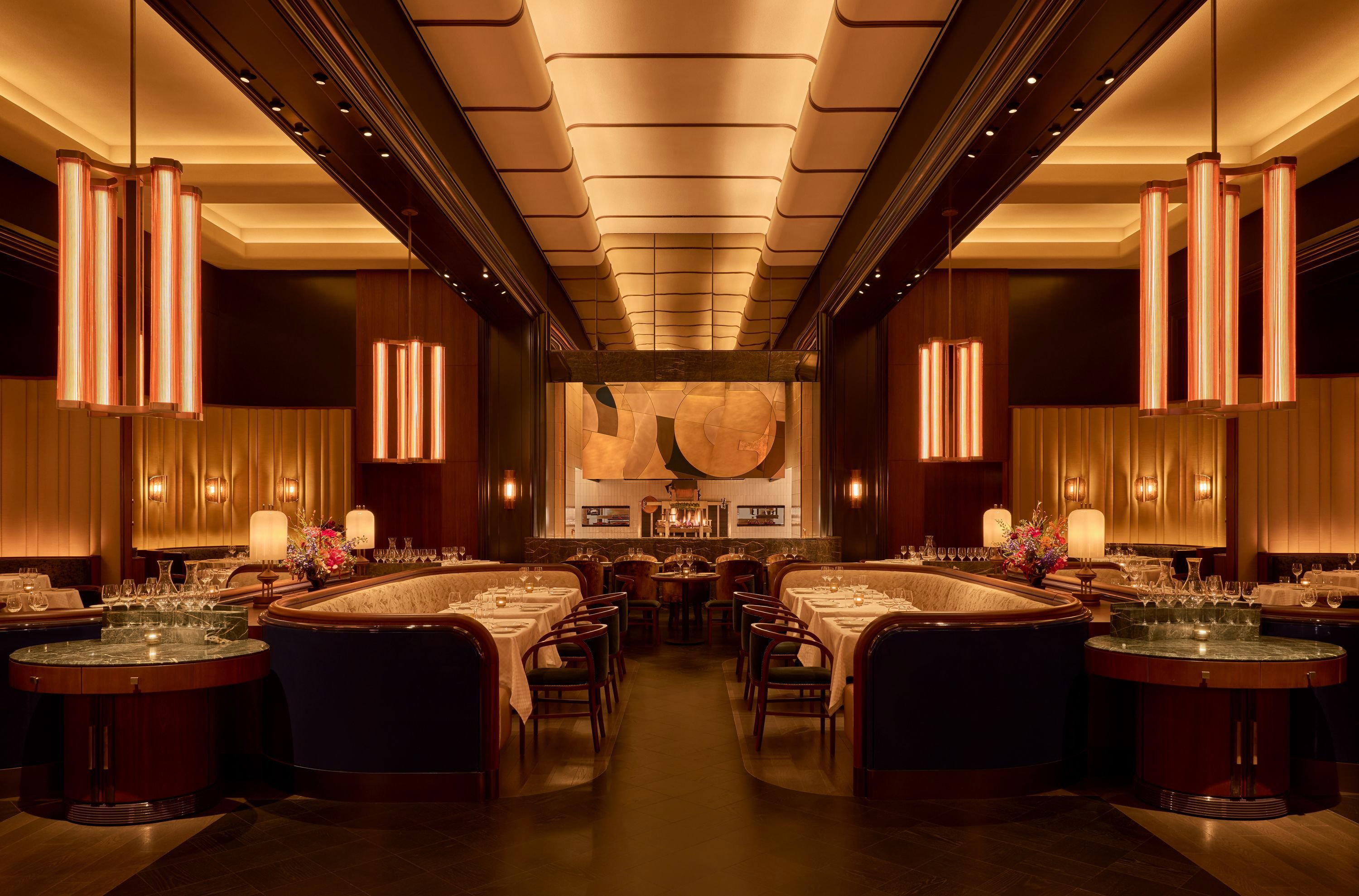
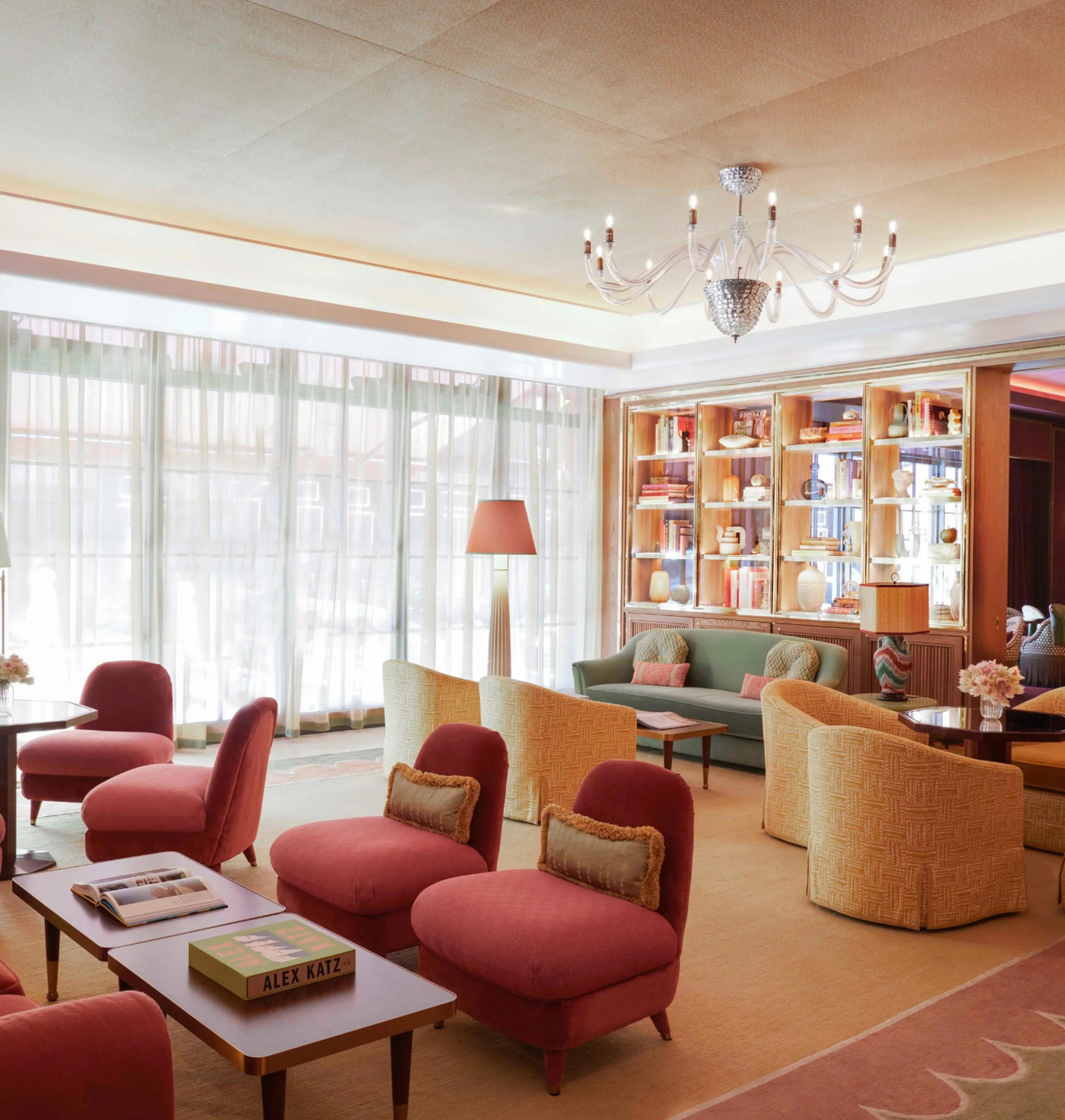
Intimate and theatrical with soaring ceilings, a spacious marble chef's counter, sharply dressed servers, and an interactive open-kitchen atmosphere balancing elegant fine dining with warm, polished service.