Our verdict
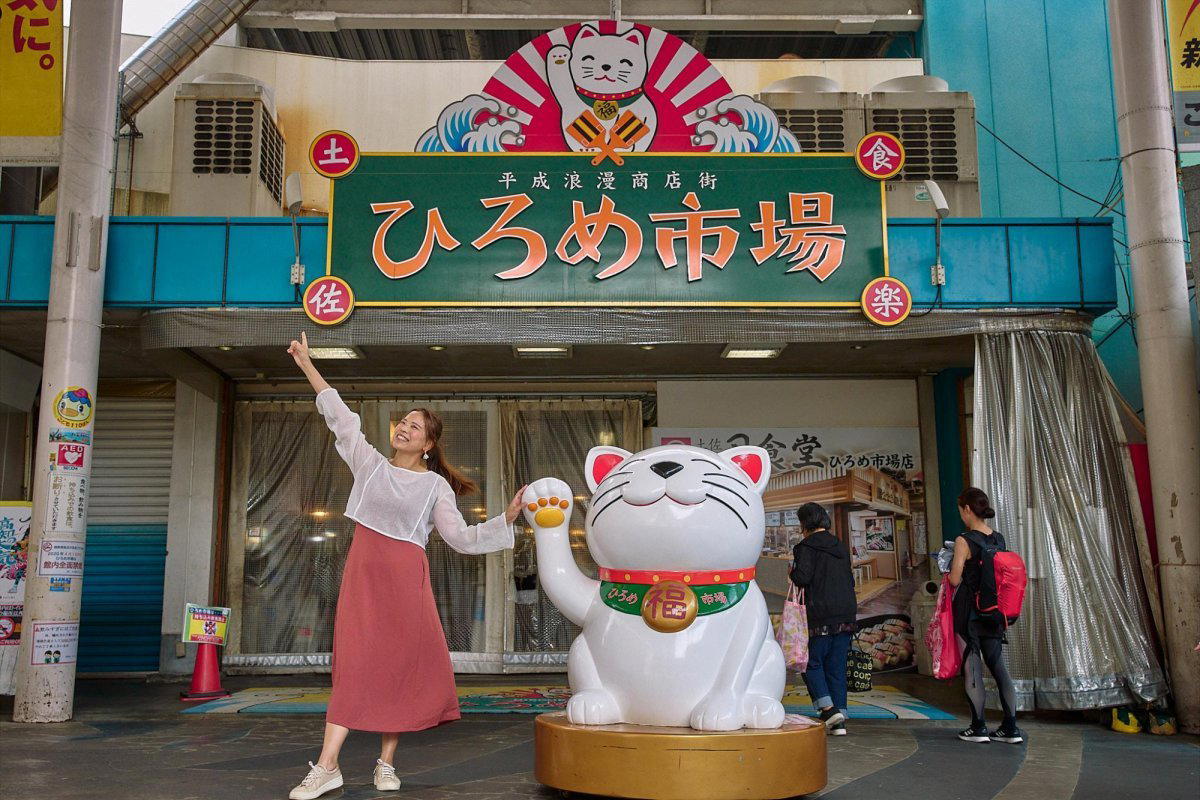
Hirome Market is Kochi's most democratic eating space: a covered indoor market where vendors sell fresh-caught Pacific fish, kaatsuo no tataki, and local produce to a crowd that ranges from fishermen to office workers. The sourcing is hyper-local, the atmosphere is loud and unhurried, and the case for visiting rests entirely on what Kochi's coastline puts on the plate.

Pearl is the En Primeur Club membership app — saves, bookings, and concierge access live there. Same editors, same standards.
- Address
- Kochi, Japan
- Directions
- Get directions
The menu
What to order
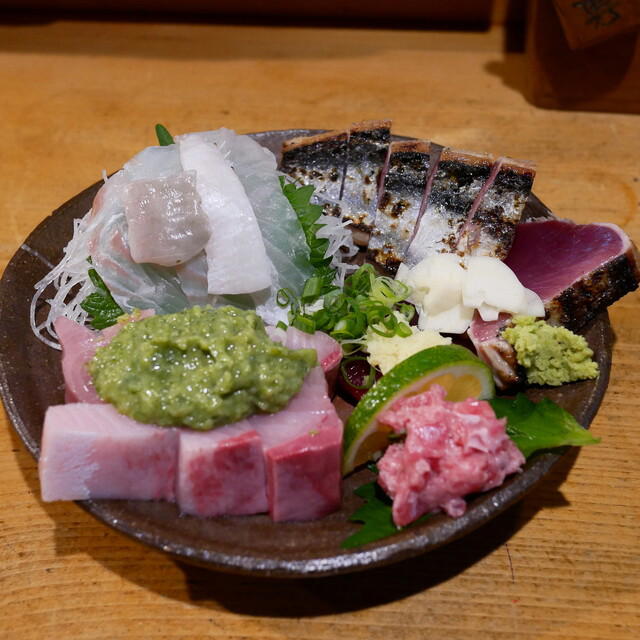
- Katsuo no tataki
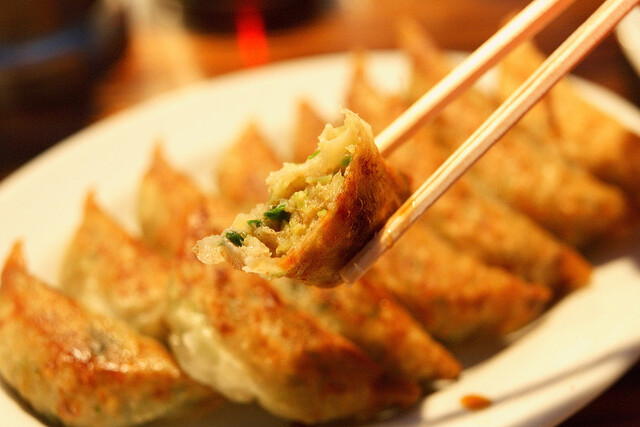
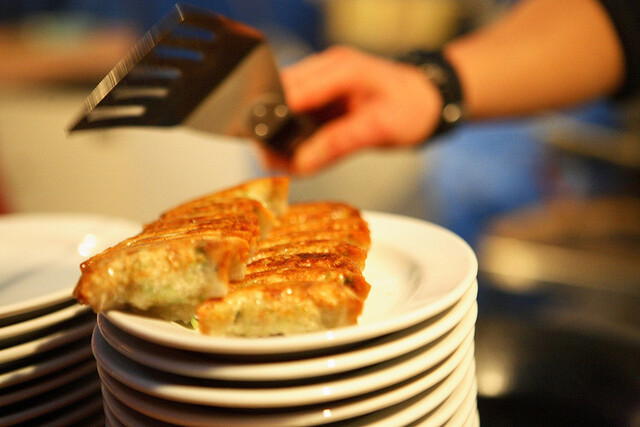
- Gyoza
Where Kochi's Coast Arrives on the Counter
Walk into Hirome Market on any weekday afternoon and the first thing you register is sound: the overlap of vendor calls, the scrape of plastic stools, cold beer cans cracking open, and the sustained hiss of something hitting a hot iron surface. The market occupies a single covered hall in central Kochi, and every design choice — communal tables, open vendor stalls, no reservations — communicates the same thing: this is a place for eating, not performing. In a city that sits on one of the most productive fishing coastlines in Japan, that directness is the point.
The Source Behind the Stall
Kochi Prefecture faces the Pacific along the Tosa Bay, and that geography shapes what appears in markets like Hirome more directly than any chef's philosophy could. The kuroshio current runs close to shore here, carrying warm water that supports bonito, yellowtail, mackerel, and a range of shellfish harvested by day-boat fishermen who sell into local markets the same morning. This is not coastal produce that has traveled cold-chain for forty-eight hours, the supply line is genuinely short, and it shows in texture and flavour in ways that require no specialist knowledge to recognise.
The defining product is kaatsuo no tataki, Kochi's contribution to the national canon of regional Japanese dishes. Bonito is seared directly over rice straw, a technique that chars the surface in seconds while leaving the interior almost raw, then sliced and served with grated ginger, garlic, and ponzu. The straw smoke is not decorative; it imparts a specific aromatic quality that cannot be replicated with a gas flame, and the tataki produced in Tosa has been acknowledged as the regional reference point for this preparation for generations. At Hirome, multiple vendors serve versions of this dish simultaneously, which makes the market a useful site for comparing stall to stall within the same tradition. For broader context on where Kochi's fish-forward cooking sits in the national picture, Harutaka in Tokyo and Gion Sasaki in Kyoto represent what happens when similar Pacific-sourced product enters highly controlled omakase environments, a useful comparison for understanding how the same raw material is treated at different points on the formality spectrum.
The Market Format as a Kochi Argument
Japan's premium dining culture has moved steadily toward small counters with curated formats and controlled pacing. Hirome operates as an explicit counterargument to that model. Vendors are independent, the tables are shared, and there is no tasting menu logic organising your meal. You order from whichever stall appeals, carry your food to a communal table, and eat alongside whoever happens to sit down next. The format produces a particular kind of sociability that is harder to find in cities where dining culture has been entirely absorbed into reservation-led, destination-restaurant circuits.
This positions Hirome in a different category from Kochi's more structured dining options. Brasserie 上洲, Canvas Restaurant & Pizzeria, and MIKI ドゥーブル each represent a more deliberate dining experience with defined menus and formal service structures. Hirome's value is different in kind rather than lesser in degree: it is where Kochi's ingredient culture is most legible without the mediation of a chef's editorial decisions. Tanaka-sengyoten Ryoshigoya and Kochi Izariya occupy a middle tier, offering seated service with local sourcing in more conventional restaurant formats. See our full Kochi restaurants guide for a complete map of how these options relate to each other across price and format.
Kochi in the National Regional Dining Conversation
Japan's regional food culture has attracted renewed attention as travellers move beyond the Tokyo-Kyoto-Osaka corridor in search of cuisines that remain genuinely local rather than domestically exported. Kochi sits at the far end of Shikoku island, a position that has preserved its food traditions partly through geographic friction. Prefectural cuisine here does not have the Michelin density of Fukuoka, represented at the high end by venues like Goh, or the kaiseki lineage of Kyoto. What it has is an unusually tight relationship between what the sea produces and what appears on the plate the same day.
That specificity is what makes markets like Hirome relevant to readers who also follow restaurants such as HAJIME in Osaka or akordu in Nara. Those venues operate at the opposite end of the formality range, but their sourcing logic, traceability, seasonality, minimal distance from producer to plate, is the same argument Hirome makes in a market context. For readers whose reference points extend to the Western premium seafood tradition, Le Bernardin in New York City is the canonical example of what happens when similar sourcing discipline is applied inside a three-Michelin-star structure. Hirome operates without that structure, and arguably communicates the sourcing case more directly because of it.
Other regional Japanese venues making comparable ingredient-led arguments in different formats include 一本木 能川制 in Nanao, 古代山乃 in Sapporo, 湖辺庵 in Takashima, 庄羽屋 in Nishikawa Machi, and Birdland in Sakai, each grounding their menu in the produce of a specific geography rather than a global supply chain. Atomix in New York City demonstrates what happens when that regional Korean sourcing logic is transplanted into a fine-dining context on the other side of the world, which makes it a useful reference point for understanding what is lost and gained in the translation.
Planning a Visit
Hirome Market is in central Kochi, within walking distance of Kochi Castle and the main tram lines that connect the city centre. No reservations are taken; the market operates on a first-come basis, and communal seating means there is almost always a place at a table even during peak periods. The practical approach is to arrive, identify which stalls are serving the product you want, order and pay at the counter, and find a seat. Beer, sake, and local shochu are available from dedicated drink vendors alongside the food stalls, and it is entirely normal to spend two or three hours working through multiple rounds from different vendors rather than treating it as a single-course stop. Weekday afternoons tend to be less crowded than weekend evenings, when the market fills with a broader mix of locals and visitors. The price point across most stalls is low relative to what comparable-quality seafood would cost in a Tokyo restaurant context, which is a function of the supply chain rather than a compromise on product.
Frequently asked questions
How does Hirome Market compare to other regional food markets in Japan?
Hirome operates on a shared-hall model closer to Fukuoka's Yanagibashi Rengo Market than to a traditional covered arcade market, with communal seating at the centre and stalls ringing the perimeter. What sets the Kochi version apart is the concentration of Tosa-specific produce: katsuo, Shimanto river fish, and local Tosaka-nori seaweed that don't appear with the same regularity in markets elsewhere in Japan. For travellers moving through the country's regional food scene, Hirome offers a format and a product set that are specific to this prefecture.
What dish is Hirome Market famous for?
Hirome Market is most closely associated with katsuo no tataki, Kochi's signature dish of flame-seared skipjack tuna served with garlic, ginger, and ponzu. Kochi Prefecture's position along Tosa Bay makes it Japan's most established source for katsuo, and the preparation style found here differs from how the dish appears elsewhere in Japan. Multiple stalls within the market offer their own version, making direct comparison straightforward.
Is Hirome Market reservation-only?
No reservations are taken at Hirome Market. Visitors arrive, select from the stalls operating on the day, and find seating in the shared central hall. Weekday afternoons are generally more manageable for seating than weekend evenings, when the market draws Kochi locals as well as travellers.
What is Hirome Market known for?
Hirome Market is Kochi's central communal food hall, where multiple independent vendors operate under one roof and diners share open seating. The format reflects a distinctly Kochi approach to eating out: informal, sociable, and built around fresh Tosa Bay produce. It functions as a working local market rather than a tourist attraction repurposed from one.
Can Hirome Market handle vegetarian requests?
The market's identity is built around Pacific seafood and Tosa meat dishes, so vegetarian options are limited rather than a structural feature of the offer. Some stalls carry vegetable-based side dishes and tofu preparations, but visitors with strict vegetarian requirements should not expect a dedicated selection. Kochi city has separate dining options better suited to plant-based diets.
Is eating at Hirome Market worth the cost?
Hirome Market sits at the informal end of the spending spectrum: individual stall dishes are priced as market food, not restaurant courses, and a full meal across several stalls typically costs well below what a sit-down Kochi restaurant would charge for equivalent produce. The value argument is primarily about access to Tosa Bay seafood at working-market prices rather than about budget dining in the abstract.
A Quick Peer Check
| Venue | Cuisine | Price |
|---|---|---|
| Hirome MarketThis venue — the venue you are viewing | Kochi Street Food Market with Seared Bonito | $10–20 |
| Brasserie ä¸æ³ | Seasonal Kaiseki | $100–150 |
| Canvas Restaurant & Pizzeria | Authentic Italian Wood-Fired Pizza | $10–20 |
| Kochi Izariya | Tosa Japanese Izakaya & Kaiseki | $500+ |
| å°äºº | Edomae Omakase | $50–100 |
| MIKI ドゥーブル | French Bistro | $10–20 |
Details
- Lively
- Energetic
- Well Known
- Casual Hangout
- Group Dining
- Late Night
- Open Kitchen
- Sake Program
- Beer Program
- Local Sourcing
- Small Plates
- A La Carte
- Sake
- Beer
- Vegetarian Friendly