
A compact Motomachi dumpling shop with counter seating, take-out, and Tabelog 100 Dumplings selections in 2021 and 2024, Gyoza Senmon Ten Akaman Motomachi ten sits in Kobe’s low-cost, high-turnover gyoza lane rather than its steakhouse economy. The appeal is value discipline: a narrow dumpling format, small-room efficiency, and recognition in a category where repetition matters.
Pearl is the En Primeur Club membership app — saves, bookings, and concierge access live there. Same editors, same standards.
- Address
- 1 Chome-11-10 Motomachidori, Chuo Ward, Kobe, Hyogo 650-0022, Japan
- Phone
- +81 78-331-8756
- Website
- akaman-gyoza.jimdofree.com
 Saves & bookings on Pearl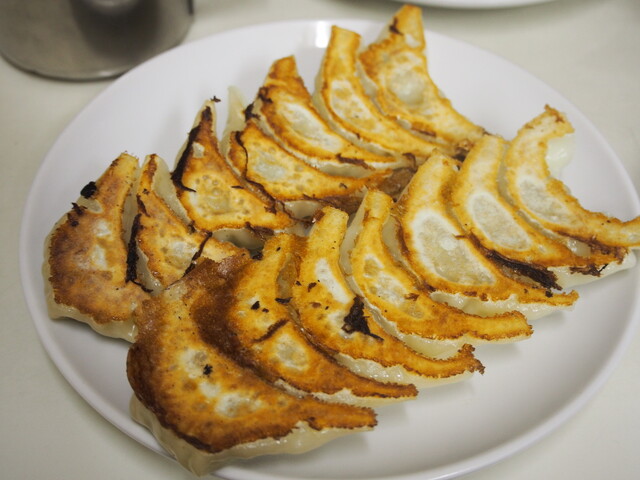
Motomachi’s food streets compress Kobe’s appetite into a few blocks: beef counters, coffee rooms, Chinatown grazing, and small shops built around a single repeatable craft. In that setting, gyoza has a different kind of luxury from Kobe beef. It is not about ceremony or spend; it is about a short menu, quick turnover, and whether a shop can make a humble plate feel worth crossing town for. Gyoza Senmon Ten Akaman Motomachi ten belongs to that practical Kobe tradition, a compact dumpling specialist where the format is the argument.
Kobe is often sold through beef, but the better way to read the city is by contrast. A visitor can move from teppan-focused rooms such as Aburi Niku Kobo Wakkoku Shinkobe ten or Aburi Niku Kobo Wakkoqu Kitano Sakamoto Ten to a dumpling counter and see two versions of the same city: one built around premium beef provenance, the other around repetition, speed, and small-ticket satisfaction. That second register is where Akaman Motomachi ten earns its place.
Motomachi gyoza as value, not spectacle
Japanese gyoza culture rewards focus. The category is narrow enough that small differences in wrapper, browning, filling balance, and service rhythm carry more weight than long menus. Akaman Motomachi ten has been selected for Tabelog 100 Dumplings in 2021 and 2024, a useful signal because it places the shop inside a national conversation about specialist dumpling addresses rather than general casual dining. Its Tabelog score is 3.51, but the more telling detail is the format: a 19-seat room, split between counter and table seating, with take-out available and no private rooms. This is not a lingering restaurant; it is a purpose-built gyoza stop.
The value proposition is unusually clear. Kobe has plenty of meals where the bill reflects beef branding, location, and extended service. Here, the logic is tighter: dumplings as the main event, a small room, no elaborate dining apparatus, and a price tier that keeps the experience closer to everyday eating than destination splurge. For travellers building a day around Motomachi, that matters. A plate of gyoza can sit between coffee at Akaneya Coffee Ten, a casual stop such as Akari, or a broader Kobe itinerary that also includes Ali's Halal Kitchen. The point is not to replace a full dinner; it is to spend appetite where the city is precise.
A small-room format for solo diners, families, and quick decisions
The room size shapes the experience before the first order. Nineteen seats in a dumpling specialist means the kitchen and dining room operate on a compact loop: order, cook, eat, clear. Counter seating also changes the social contract. Solo diners are not an afterthought, and families can use the room without the stiffness that comes with higher-ticket restaurants. The venue is non-smoking, children are welcome, and the occasion profile leans toward solo dining, friends, and family use. Those are not decorative details; they explain why the shop functions as part of local eating life rather than a staged travel moment.
Motomachi is especially good for this kind of stop because it sits between shopping, station movement, and Nankinmachi’s grazing culture. Kobe Beef Yakiniku Yazawa Nankinmachi Branch and Kobe beef Daichi represent another route through the neighbourhood, one tied to meat tourism and larger meals. Akaman Motomachi ten operates at the opposite scale. That contrast makes it useful for visitors who want Kobe without turning every meal into a premium beef decision.
The lack of chef-centric mythology is part of the appeal. No named chef is needed to make the argument. In Japan’s specialist-shop culture, credibility often comes from category discipline: doing one thing often enough, in a room small enough, that inconsistency has nowhere to hide. The Tabelog Dumplings selections give that discipline an external marker, while the seating count and take-out option explain the operational reality behind it.
How to place it within a Kobe eating day
Use this as a precision stop, not a long-format meal. Motomachi rewards pacing: coffee, dumplings, a market or arcade walk, then a more deliberate dinner elsewhere. For wider planning, Our full Kobe restaurants guide gives the city’s dining range, while Our full Kobe hotels guide, Our full Kobe bars guide, Our full Kobe wineries guide, and Our full Kobe experiences guide help turn a quick dumpling stop into a fuller day in the city.
The broader lesson travels beyond Kobe. Japan’s specialist casual restaurants often carry more editorial weight than their price suggests, much like focused addresses elsewhere: -Grilled beef Sukiyaki- KAMAKURA TANUKIAN 鎌倉 たぬき庵 in Kamakura for a narrow beef format. 鮪と炭火焼き うお炭 秋葉原店 in Tokyo for tuna and charcoal-grill focus.cafe in Osaka for café minimalism.know in Kumamoto for contemporary casual dining, (Shoku) Vietnam in Kawasaki for regional Vietnamese cooking, and [Curry Senmon Ten] Maruyama Kyoju. in Sapporo for curry specialization. Across the Pacific, the same logic appears in tight-format Japanese-adjacent rooms such as Jōdo Saké Bar in Los Angeles and Onigiri Time in Pasadena. The common thread is not luxury language. It is constraint, clarity, and the confidence to let a narrow format carry the meal.
For Kobe, that makes Akaman Motomachi ten a useful corrective. The city’s premium dining image can be expensive and beef-heavy; this address shows the other side of local appetite, where a small dumpling shop can earn national category recognition while remaining grounded in everyday use. That is the reason to pay attention.
Recognition, Side-by-Side
Comparable venues by cuisine and price in the same metro.
| Venue | Cuisine | Price | Notes |
|---|---|---|---|
| Gyoza Senmon Ten Akaman Motomachi tenThis venue — the venue you are viewing | Traditional Kobe gyoza specialist | $ | Not listed |
| ENISHI | Tantanmen ramen specialist | $ | Nada |
| Koga Ryuseimen | Ramen & Tsukemen | $ | Higashinada |
| Ichie An | Traditional Japanese soba | $ | .null |
| Stand Classic | Japanese standing bar (tachinomi) with a sake focus | $$ | Chūō |
| Yoshokuya Yuuki | Japanese yoshoku (Western-style comfort food) | $$ | Hyōgo |
Recognition history
Dated appearances from independent guides and award organizations, with the underlying list record or original source where available.
Tabelog 100 #10 · No. 10
Tabelog · Tabelog 100 - Dumplings - 2024
Continue exploring
More in Kobe
Restaurants in Kobe
Browse all →
Bars in Kobe
Browse all →



Hotels in Kobe
Browse all →


At a Glance
- Classic
- Lively
- Well Known
- Solo
- Casual Hangout
- After Work
- Late Night
- Standalone
- Historic Building
- Beer Program
- Street Scene
Current opening hours
- Monday
- 12–7 PM
- Tuesday
- 12–7 PM
- Wednesday
- Closed
- Thursday
- 12–7 PM
- Friday
- 12–7 PM
- Saturday
- 12–7 PM
- Sunday
- 12–7 PM
Hours can change for holidays and private events. Last verified .
A no-frills, old-school dumpling counter with quick turnover, bright functional lighting, and a bustling atmosphere centered entirely around plates of gyoza and beer.