Our verdict
Gyoza Ohsho is a fixture of the Shimbashi dining circuit, where office workers, late-shift salarymen, and the occasional tourist converge over pan-fried gyoza and fried rice in a format that has barely changed in decades. The chain's Shimbashi branch holds its ground in one of Tokyo's most transactional dining neighbourhoods, offering a no-reservation, counter-and-table setup that prioritises speed and repetition over ceremony.

Pearl is the En Primeur Club membership app, where members save venues, book tables and use the concierge.
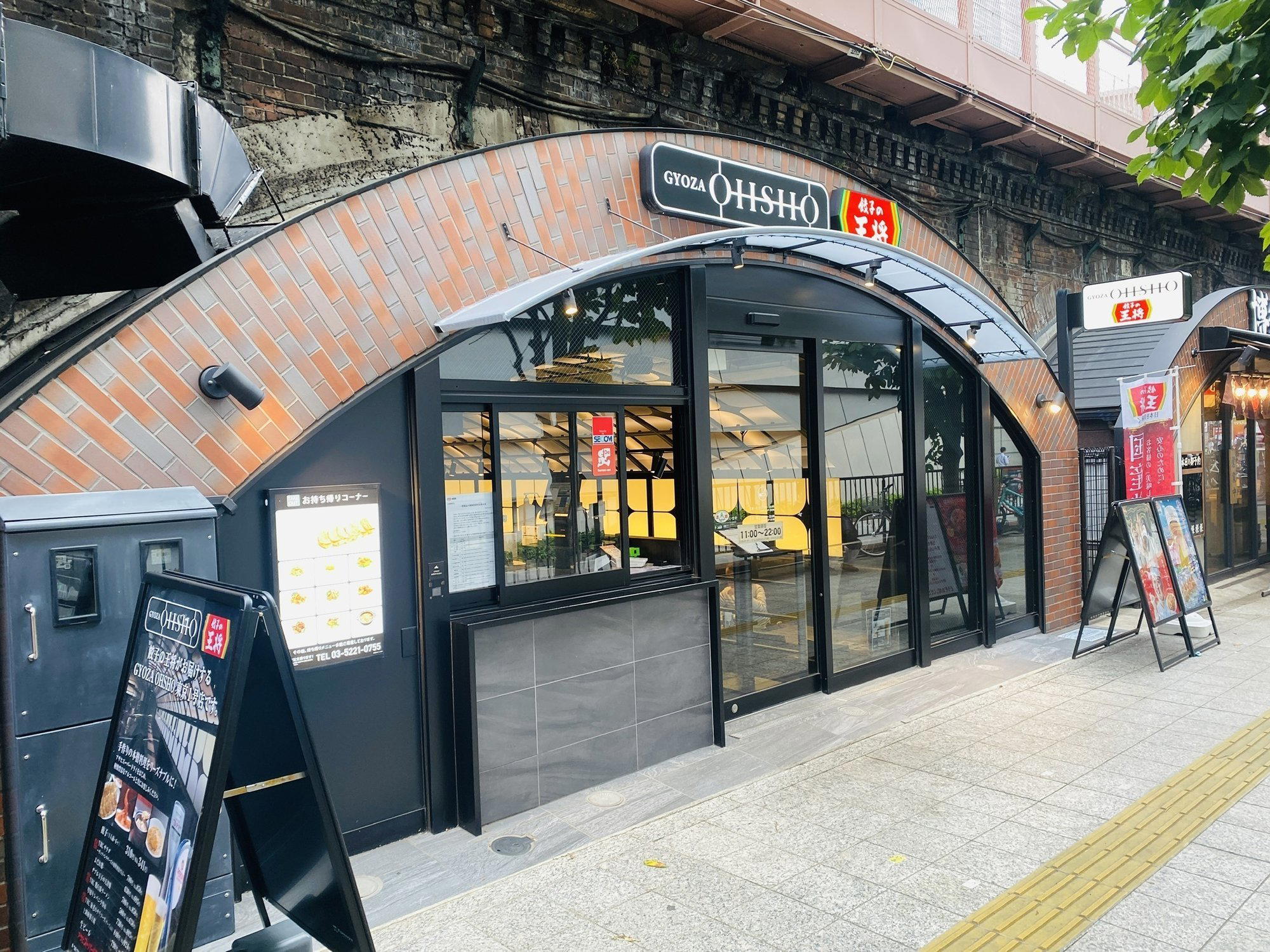
The Shimbashi Counter and What It Represents
Shimbashi, the neighbourhood where the Gyoza Ohsho at 新橋3-25-18 sits, runs on a particular economy: fast, affordable, and calibrated to the rhythm of office exits and last-train calculations. The izakayas, ramen shops, and gyoza counters here are not aspirational destinations. They are functional infrastructure for one of Tokyo's densest concentrations of salary workers, and they have been shaped by that pressure into something close to perfection on its own terms. A bowl of gyoza at a counter like this is not a statement about cuisine, it is a statement about how a city feeds itself at volume, at speed, and across decades.
Gyoza Ohsho, the Kyoto-founded chain that now operates well over 700 locations across Japan, belongs to a category of mass-market casual dining that Tokyo's premium food press tends to overlook entirely. That oversight is worth examining. While critics track which omakase counters have joined or departed the Michelin Guide, and while reservation systems for places like Harutaka or RyuGin remain competitive months out, the gyoza counter persists as a parallel institution, one that requires no booking, no dress consideration, and no prior knowledge to enter correctly.
How the Chain Has Shifted Over Time
Gyoza Ohsho was founded in Kyoto in 1967, and its early identity was built on Chinese-influenced gyoza and yakimeshi (fried rice) at a price point that working-class Japan could absorb without calculation. That founding logic has not fundamentally changed, but the chain has evolved in ways that reflect broader pressures on casual dining in Japan. Labour costs, ingredient sourcing, and the shift toward convenience-store competition have all left marks on how Ohsho operates its urban locations.
The evolution of the chain is most visible in its menu architecture. Where earlier decades were defined by a tight roster of dumplings and rice dishes, contemporary Ohsho menus carry a broader spread of stir-fry plates, soups, and seasonal additions that push toward a fuller meal rather than a snack stop. This mirrors a pattern seen across Japanese casual dining: the pressure to increase per-head spend without alienating the core customer who arrived for a plate of six gyoza and a beer.
The Shimbashi location sits inside this evolved version of the chain, a branch designed for a neighbourhood that demands efficiency but that also supports longer stays when the after-work crowd needs a second round. The format is recognisably Ohsho: open kitchen, counter seating, tables that turn at volume, and a laminated menu that does not require translation support from staff. That accessibility is structural, not accidental.
The Role of Gyoza in Tokyo's Casual Dining Order
Tokyo's dining scene is often described through its Michelin density, the city has held more stars than any other for extended periods, but that framing obscures how most of the city actually eats most of the time. The casual category, which includes gyoza specialists, ramen shops, curry houses, and tonkatsu chains, operates at a scale and frequency that the fine-dining tier cannot approach. Ohsho belongs to that daily-use layer, and its value is inseparable from its ubiquity and its price discipline.
The gyoza at an Ohsho counter is pan-fried on a flat iron surface, arriving with a crisped bottom and a soft, steam-finished leading, a preparation that the chain has standardised across its network without significant regional variation. The filling follows a pork-and-cabbage template that is the Japanese standard for the form, and it is the consistency of that template, rather than any particular innovation, that defines Ohsho's identity. This is a chain that has chosen depth in a narrow lane over breadth across many.
Contrast this with the direction taken by Tokyo's high-end Japanese dining tier. Kaiseki restaurants like RyuGin and French-influenced venues such as L'Effervescence and Sézanne compete on seasonality, sourcing narrative, and technique complexity. Ohsho competes on none of those axes.
Placing Shimbashi in Tokyo's Dining Geography
Shimbashi as a dining district occupies a different register from Ginza, which is a five-minute walk south, or from Roppongi, where venues like Crony operate at the intersection of innovation and expense. Shimbashi is the city's working spine, a place where the neon runs lower and the menus are posted in the window. An Ohsho here is not slumming, it is exactly where the neighbourhood's logic points.
For visitors moving between Tokyo's dining tiers, this location functions as a useful orienting point. Japan's casual dining culture, particularly the gyoza-and-fried-rice format, is a distinct tradition from the country's fine-dining output, and understanding both gives a more accurate picture of how urban Japan eats. The same city that sustains the reservation queues for Harutaka's omakase counter also sustains Ohsho's 700-location network, and the two systems are not in conflict. They serve different functions on different days for sometimes the same people.
Japan's casual dining geography extends well beyond Tokyo. Comparable mass-market dining cultures operate in Osaka, where HAJIME anchors the high end of a city with its own strong street-food tradition, and in Fukuoka, where Goh sits above a casual dining base of ramen and yatai stalls. Kyoto's dining order, anchored at the leading by venues like Gion Sasaki, also has its own parallel layer of affordable, high-frequency dining. Ohsho's Kyoto origin is not incidental to this pattern. For the wider Tokyo dining picture, our full Tokyo restaurants guide maps the full range from counter gyoza to omakase.
Know Before You Go
| Address | 新橋3-25-18, 港区, 東京都, 105-0004 |
| Neighbourhood | Shimbashi, Minato-ku, Tokyo |
| Booking | Walk-in only; no reservations required |
| Price tier | Casual; individual plates and rice dishes at budget-friendly prices |
| Leading timing | Weekday lunch hours and early evening before the after-work rush peaks |
| Getting there | Shimbashi Station (JR, Tokyo Metro Ginza Line, Asakusa Line, Yurikamome); short walk from any exit |
Frequently asked questions
What is the must-try dish at Gyoza Ohsho?
The pan-fried gyoza is the dish that defines the chain's identity across its network. The Ohsho preparation produces a crisped, flat-bottom skin with a soft upper shell, a result of the two-stage cook (sear then steam) that is standard across Japanese gyoza specialists. Yakimeshi (fried rice) is the conventional pairing, and the combination of the two covers the format's core logic. For visitors oriented toward Tokyo's higher-end dining, this represents a direct point of comparison with Chinese-influenced Japanese cooking in a mass-market format, as distinct from the seasonal kaiseki approach at venues like RyuGin or the French technique at Sézanne.
What is the ideal way to book Gyoza Ohsho?
No booking is required or available at this location. Ohsho operates as a walk-in counter, which is standard for this tier of casual Japanese dining. The Shimbashi branch draws a heavy office-worker crowd in the early evening on weekdays, so arriving before 18:00 reduces wait time at the door. This walk-in format places the venue in a different operational category from Tokyo's reservation-required restaurants, where demand is managed weeks or months in advance. For context on what those booking requirements look like at the city's other end of the dining spectrum, the Tokyo restaurants guide covers the full range.
How does Gyoza Ohsho's Shimbashi branch compare with the chain's other urban Tokyo locations?
Gyoza Ohsho operates multiple locations across the Tokyo metropolitan area, and the Shimbashi branch is positioned to serve a dense daytime and early-evening population of office workers rather than a residential catchment. This means the Shimbashi branch operates at higher throughput during weekday lunch and early dinner compared with suburban locations, and its menu and pace are calibrated accordingly. The chain's 700-plus location network across Japan means there is a high degree of menu and preparation consistency between branches, so the Shimbashi visit functions as a reliable proxy for the Ohsho format wherever you encounter it, from Tokyo to the chain's home city of Kyoto, where Gion Sasaki represents the opposite pole of that city's dining range.
Comparable Spots
A short peer table to compare basics side-by-side.
| Venue | Cuisine | Price | Awards | Notes |
|---|---|---|---|---|
| Gyoza Ohsho (餃子の王将)This venue (the venue you are viewing) | Japanese-Style Chinese Gyoza | $10–20 | Not listed | Not listed |
| Harutaka | Edo-Style Omakase Sushi | $200–300 | 3 Michelin Stars · World's 50 Best #76 | Sushi |
| L'Effervescence | Modern French with Japanese Influences | $200–300 | 3 Michelin Stars · World's 50 Best #69 | French |
| RyuGin | Modern Kaiseki | $500+ | 3 Michelin Stars · World's 50 Best #41 | Kaiseki, Japanese |
| Crony | Modern French with Japanese Influences | $150–200 | 2 Michelin Stars · World's 50 Best #34 | Innovative, French |
| Florilège | Modern French-Japanese Plant-Based Fine Dining | $50–100 | 2 Michelin Stars · World's 50 Best #31 | French |
Continue exploring
More in Tokyo
Restaurants in Tokyo
All restaurants in Tokyo →

Bars in Tokyo
All bars in Tokyo →

Details
- Lively
- Casual
- Casual Hangout
- Group Dining
- Late Night
- Beer Program
- Local Sourcing
- A La Carte
Casual and bustling atmosphere typical of a popular chain restaurant serving affordable Chinese dishes.