
Kameido Gyoza Honten belongs to Tokyo’s everyday dumpling culture rather than its luxury dining circuit: fast turnover, compact plates, and a room built around repetition. Its selection for Tabelog 100 Dumplings 2024, after appearances in 2019 and 2021, gives the address a measurable credential without changing the essential appeal: a focused gyoza stop in eastern Tokyo.
Pearl is the En Primeur Club membership app — saves, bookings, and concierge access live there. Same editors, same standards.
- Address
- 5 Chome-3-3 Kameido, Koto City, Tokyo 136-0071, Japan
- Phone
- +81 3-3681-8854
- Website
- kameido-gyouza.co.jp
 Saves & bookings on Pearl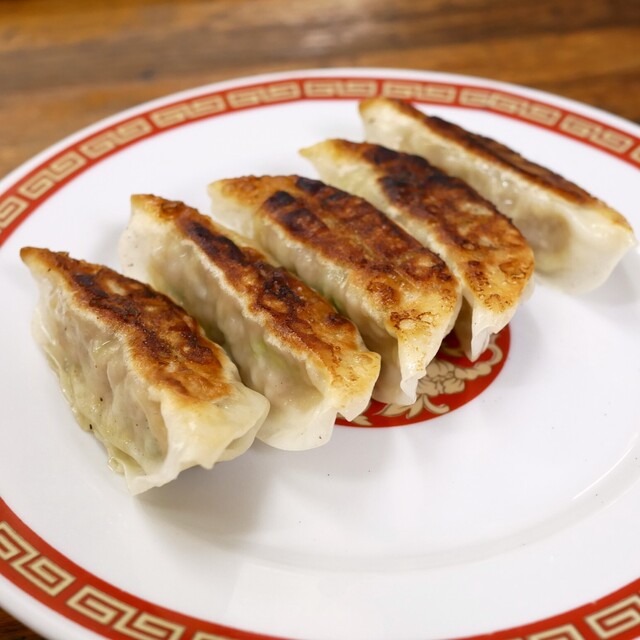
Approaching Kameido’s counter culture, the signal is rhythm rather than theatre: plates moving, orders repeating, a room built for quick decisions, not long contemplation. Tokyo’s dumpling specialists run on a logic distinct from sushi counters and kaiseki rooms. The pleasure is compressed, social, and often brief, closer to a standing soba stop or yakitori counter than a formal restaurant meal.
Kameido Gyoza Honten sits in that tradition with unusual clarity. The format is narrow, the category is dumpling, and the recognition is concrete: selection for Tabelog 100 Dumplings in 2024, with earlier selections in 2021 and 2019. That matters in Tokyo’s crowded gyoza field, split between ramen-adjacent side orders, Chinese-style dining rooms, beer-first neighborhood shops, and single-purpose specialists. This address belongs to the last group, where repetition is the argument.
Tokyo gyoza as a short-format meal, not a side order
Gyoza in Japan has a double identity. It came through Chinese culinary influence, then became a Japanese everyday staple: thinner skins, pan-fried surfaces, cabbage-forward fillings, and a strong association with beer, rice, and after-work eating. In many restaurants it is an accessory. At specialist shops it becomes the point, changing the meal’s meaning. The diner is not studying a long menu; the diner is entering a system.
That system makes daytime and evening meals feel different even when the core offer stays stable. Lunch rewards speed and value, turning on solo diners, office breaks, nearby shoppers, and people who want one thing done properly. Dinner shifts the same format toward drinking and repeat rounds, especially where sake, shochu, or other low-priced spirits sit alongside the dumplings. The food need not reinvent itself; the room’s social use changes around it.
Kameido also differs from higher-spend Tokyo meals. Shodai Yoshida, where the listed spend sits several tiers higher, shows how far the city’s casual and destination categories can diverge while both remain serious. Mesebaba, an Italian restaurant in Tokyo, belongs to another conversation: longer pacing, different expectations, and a Western dining frame. The dumpling specialist asks a narrower question and answers it quickly.
The Kameido argument: focus, turnover, and local gravity
Kameido sits east of central Tokyo’s luxury dining axis, and the geography matters. The neighborhood has a more workaday register than Ginza or Aoyama; food addresses here often earn loyalty through habit rather than spectacle. In that setting, a 40-seat dumpling room with counter seating and take-out fits the urban fabric. It does not slow the city down. It feeds the city at its own pace.
The Tabelog score of 3.51 gives context, not as a universal verdict but as a signal within Japan’s conservative review culture. In Tokyo, where respected neighborhood specialists can sit in the mid-3 range, the stronger trust marker is repeated Hyakumeiten selection. Tabelog category lists tend to reward consistency within a form; for dumplings, that means competing against deeply loved local counters and broader city names.
The lunch-versus-dinner divide is less about a separate menu than intent. Midday appeal is efficiency: a focused meal, minimal ceremony, and a price tier that keeps the visit casual. At night, the same plates become part of a looser drinking pattern. The drink list’s Japanese spirits and Chinese alcohol references push the room toward the older Tokyo habit of eating something salty, hot, and repeatable with modest pours, rather than building an evening around a tasting menu.
Families and groups change the tempo. Children are welcomed, though stroller handling is part of the practical reality, placing the shop closer to lived-in neighborhood dining than rarefied gastronomy. The absence of private rooms reinforces the point: communal casual eating, not a secluded appointment. Non-smoking status and wheelchair-accessible facilities make the format easier for travelers who may otherwise find small Tokyo counters opaque.
Where it fits in a Tokyo itinerary
For visitors building a Tokyo food itinerary, Kameido Gyoza Honten works as a corrective to reservation-led dining. Tokyo can make travelers over-plan: sushi counters, kappo rooms, cocktail bars, and hotel restaurants all encourage advance strategy. A dumpling specialist in Koto adds a different texture, especially when paired with other casual or neighborhood-led stops rather than another formal dinner.
The useful comparison is not only within dumplings. Coffee Dojo Samurai sits in a lower-spend Tokyo café bracket, Tandoor Bar Kamal 2 Go moves through casual Indian cooking, and L'INSIEME occupies a higher Italian spend tier. Together they show that Tokyo’s value is not confined to one cuisine or price band. A strong itinerary mixes these registers: a specialist counter, a café with local cadence, a regional Japanese format, and one or two higher-commitment meals.
Readers mapping broader Tokyo dining can use Our full Tokyo restaurants guide as the primary rail, then cross-check nearby formats such as . 鮪と炭火焼き うお炭 秋葉原店, 12/10 Shinjuku ten, 124. KAGURAZAKA (Yakitori), 2D Cafe, and 3 Chome no Curry Ya San. For wider trip structure, the city rails for Tokyo hotels, Tokyo bars, Tokyo wineries, and Tokyo experiences help separate meals from the rest of the itinerary.
Outside Tokyo, the same logic applies: choose places for the role they play, not only for fame. A regional route might include -Grilled beef Sukiyaki- KAMAKURA TANUKIAN 鎌倉 たぬき庵 in Kamakura.cafe in Osaka.know in Kumamoto, (Shoku) Vietnam in Kawasaki, [Curry Senmon Ten] Maruyama Kyoju. in Sapporo, and [ki:] in Kyoto. For Japanese food culture abroad, Jōdo Saké Bar in Los Angeles and Onigiri Time in Pasadena show how focused formats travel differently once they leave Japan.
The editorial case is simple: this is not the address to schedule as a grand finale. Place it where Tokyo often becomes more interesting, between destinations, when a specialist shop explains more about daily eating than another polished dining room could. Lunch emphasizes speed and cost discipline; evening gives the same format more room for drink and repetition. In both cases, the draw is a narrow category handled with enough consistency to earn repeated dumpling-category recognition.
In Context: Similar Options
Comparable venues in the metro at similar price points.
| Venue | Cuisine | Price | Notes |
|---|---|---|---|
| Kameido Gyoza HontenThis venue — the venue you are viewing | Old-school fried gyoza specialty shop | $ | Not listed |
| Tokyo Gyoza Ro Sangenjaya ten | Casual Gyoza & Izakaya Dishes | $ | Setagaya |
| Rairai Ken | Traditional Chinese gyoza & ramen shop | $ | Kōtō |
| 南方中華料理 南三 | Taiwanese | Not listed | Shinjuku |
| Ryumon | Gyoza-focused Chinese dumpling shop | $ | Ōta |
| Nihao | Chinese dumpling house (gyoza specialist) | $$ | Shibuya |
Recognition history
Dated appearances from independent guides and award organizations, with the underlying list record or original source where available.
Tabelog 100 #36 · No. 36
Tabelog · Tabelog 100 - Dumplings - 2024







At a Glance
- Lively
- Classic
- Well Known
- Solo
- Casual Hangout
- After Work
- Late Night
- Family
- Group Dining
- Standalone
- Local Sourcing
Current opening hours
- Monday
- 11 AM–8 PM
- Tuesday
- Closed
- Wednesday
- 11 AM–8 PM
- Thursday
- 11 AM–8 PM
- Friday
- 11 AM–8 PM
- Saturday
- 11 AM–8 PM
- Sunday
- 11 AM–8 PM
Hours can change for holidays and private events. Last verified .
Bright, cramped, and bustling with constant turnover, sizzling griddles, and stacks of gyoza plates; the atmosphere is old-school, casual, and focused entirely on eating quickly and leaving room for the next guests.