Our verdict
On Torstraße in Berlin's Mitte district, Gärtnerei occupies a quieter register than most of the city's high-profile dining rooms. The name, German for 'nursery' or 'market garden', signals something about orientation before a dish arrives. Among Berlin's creative fine-dining addresses, it sits in a tier defined by restraint and specificity rather than spectacle.

Pearl is the En Primeur Club membership app, where members save venues, book tables and use the concierge.

The menu
What to order
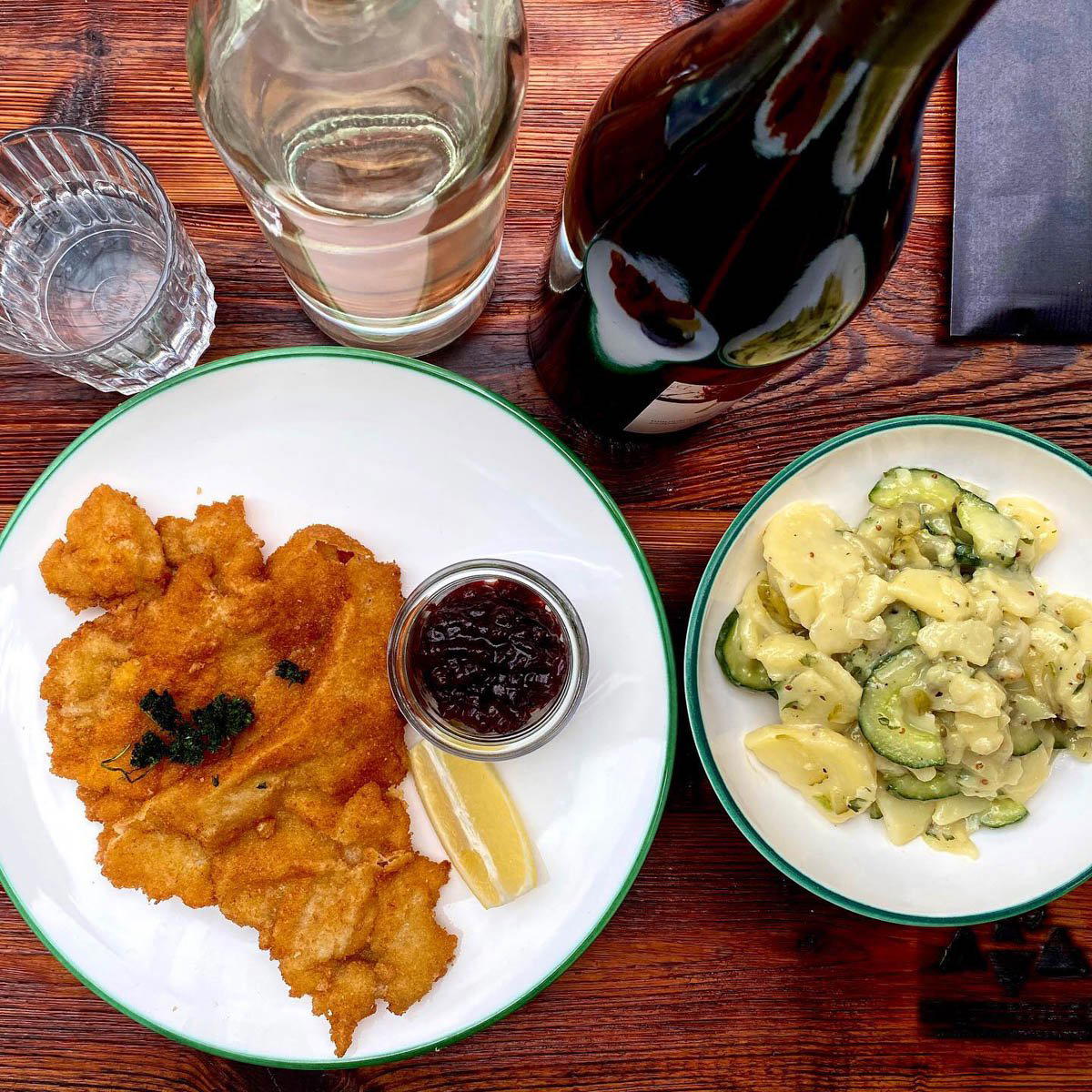
- Wiener Schnitzel vom Kalb
- Gärtner Schnitzel (Sellerie)
- Blumenkohl mit Avocado
Torstraße's Quieter Register
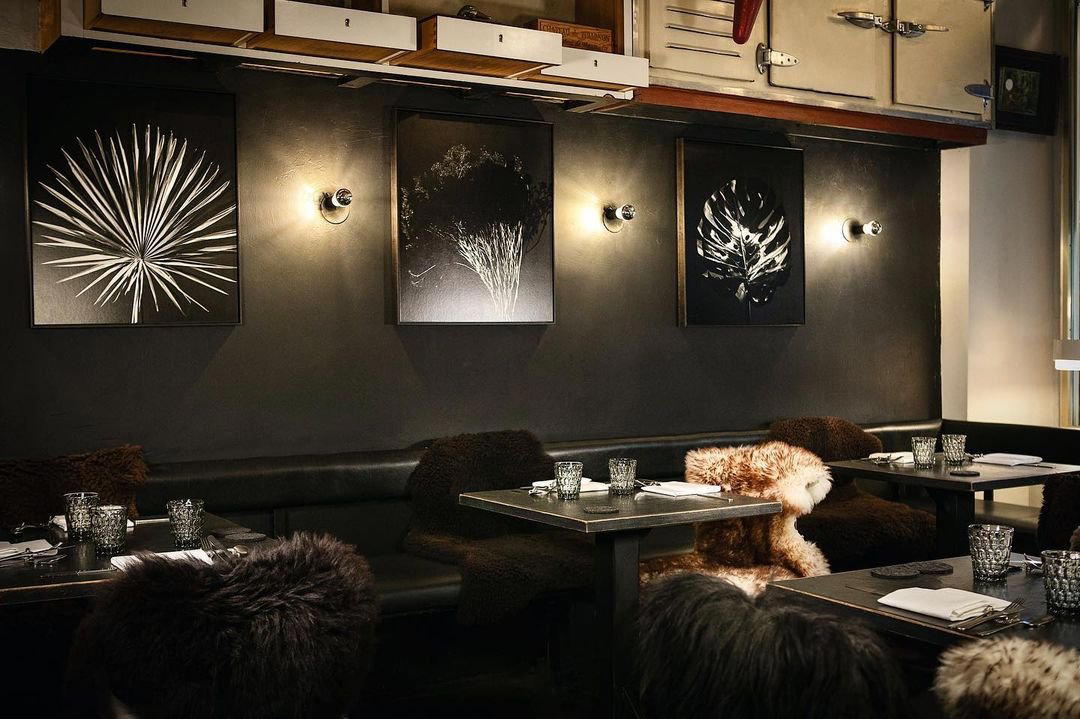
Berlin's fine-dining conversation has long centred on a handful of loudly credentialed addresses: the multi-Michelin rooms, the chef-as-brand projects, the tasting menus that arrive with printed essays. What gets less attention is the smaller cluster of restaurants that operate outside that promotional noise, places where the menu architecture does the talking and the room itself sets a tone closer to a working kitchen than a theatre. Gärtnerei, on Torstraße 179 in Mitte, occupies that quieter register.
The name translates from German as 'nursery' or 'market garden,' and that framing matters. In a city where restaurant names increasingly gesture toward abstraction or provocation, a name rooted in horticulture and cultivation implies a particular relationship with ingredients, one that starts further back in the supply chain than most menus acknowledge. That implication shapes how you read everything that follows.
What the Menu Structure Reveals
Menu architecture, at its most transparent, tells you what a kitchen believes about sequence, balance, and restraint. The broad shift in Berlin's serious dining rooms over the past decade has been away from the French-derived arc, amuse-bouches building toward a protein centrepiece, and toward menus that treat vegetables, fermentation, and regional produce as structural elements rather than accompaniments. Nobelhart & Schmutzig codified this approach in Berlin with its radically local ingredient sourcing, while Rutz built its reputation on a wine-forward menu that treats the glass as a co-equal to the plate. FACIL and CODA Dessert Dining represent further variations: the former a considered contemporary European room, the latter a format experiment that inverts the dessert-as-afterthought convention entirely.
Gärtnerei's name positions it within this broader current, the idea that a restaurant's organising principle should be visible in what it chooses to call itself. A market garden orientation suggests menus built from what is available and in season rather than from a fixed year-round identity. This is a structural choice with consequences: it demands either a kitchen capable of genuine improvisation or a sourcing network disciplined enough to make seasonality feel inevitable rather than effortful. In Berlin, where the seasons are genuinely pronounced and the surrounding Brandenburg region offers a credible agricultural hinterland, that kind of orientation is at least geographically plausible.
Berlin's Creative Tier: Where Gärtnerei Sits
Berlin's leading creative dining rooms now occupy a price tier that has converged with other major European capitals, though the city retains more diversity at the middle level than Paris or London. The addresses that draw sustained critical attention, Restaurant Tim Raue, Rutz, Nobelhart & Schmutzig, each have Michelin recognition and the booking lead times that come with it. Gärtnerei operates without the same public profile, which in Berlin's dining culture is not necessarily a liability. The city has a tradition of rewarding restaurants that resist the promotional cycle, and a Mitte address on Torstraße places it in a neighbourhood dense with residents who treat eating seriously without requiring a media occasion.
Against the comparison set, Gärtnerei's positioning is closer to Nobelhart & Schmutzig in its apparent orientation toward restraint, though it lacks that restaurant's documented sourcing manifesto and Michelin recognition. The operative distinction in Berlin's creative tier is between rooms that have formalised their identity through external validation and those that have not yet, or have chosen not to. Both can produce compelling meals; the difference is in how confidently you can book blind.
For context on how Germany's most credentialed kitchens structure their menus and sourcing at the three-Michelin-star level, Schwarzwaldstube in Baiersbronn, Aqua in Wolfsburg, and Waldhotel Sonnora in Dreis represent the country's most formally recognised rooms. At the two-star level, Vendôme in Bergisch Gladbach, Victor's Fine Dining by Christian Bau in Perl, ES:SENZ in Grassau, Schanz in Piesport, JAN in Munich, and Restaurant Haerlin in Hamburg each demonstrate how German fine dining calibrates technique, regionality, and menu length at that tier. Bagatelle in Trier is worth noting for its comparative positioning in a smaller German city. Internationally, menus built on a single structural logic, as at Le Bernardin in New York City or the communal-format Lazy Bear in San Francisco, illustrate how a clear organising principle translates to long-term identity.
Planning Your Visit
Gärtnerei is located at Torstraße 179, 10115 Berlin, in the Mitte district, within walking distance of Rosa-Luxemburg-Platz U-Bahn station. The table below positions it relative to Berlin peers on available logistics.
| Venue | Neighbourhood | Price Tier | Michelin Recognition | Booking Lead Time |
|---|---|---|---|---|
| Gärtnerei | Mitte (Torstraße) | Not confirmed | Not confirmed | Not confirmed |
| Nobelhart & Schmutzig | Mitte (Friedrichstraße) | €€€€ | 1 Michelin star | Several weeks |
| Rutz | Mitte | €€€€ | 2 Michelin stars | 4-8 weeks |
| FACIL | Tiergarten | €€€€ | 2 Michelin stars | 3-6 weeks |
| CODA Dessert Dining | Neukölln | €€€€ | 2 Michelin stars | Several weeks |
For a broader orientation across Berlin's dining districts, price tiers, and current openings, see our full Berlin restaurants guide.
Frequently asked questions
What's Gärtnerei's location?
Gärtnerei is located at Torstraße 179, 10115 Berlin, Germany, Berlin.
Is Gärtnerei in Berlin suitable for vegetarian or plant-forward tasting menus?
The name Gärtnerei, German for 'market garden' or 'nursery', signals a kitchen orientation toward produce-led cooking, which in Berlin's current creative tier often translates to strong vegetarian or vegetable-forward menu options. Whether a full vegetarian course is offered depends on the current menu at Torstraße 179, so contacting the restaurant directly before booking is advisable. Berlin's Mitte dining scene has seen a broad move toward plant-referenced menus at this level, and Gärtnerei fits that direction by name and concept.
What do people recommend at Gärtnerei?
Specific dish recommendations are tied to the kitchen's current menu, which shifts with the season, a pattern common to Berlin's more ambitious creative rooms. The menu architecture at Gärtnerei, based in Mitte at Torstraße 179, signals a focus on sequence and restraint rather than showpiece individual courses. Your best approach is to arrive without a fixed agenda: the kitchen's logic tends to be best experienced as a whole rather than cherry-picked.
How far ahead should I plan for Gärtnerei?
Berlin's stronger creative dining rooms now book out two to four weeks in advance at minimum, with tables at the more talked-about addresses stretching to six or eight weeks during peak periods. Gärtnerei's position on Torstraße in Mitte places it in a well-trafficked dining corridor, and demand at this tier of the city's scene has increased as Berlin's reputation for serious cooking has grown. Booking as early as your travel dates allow is the practical standard here.
A Tight Comparison
Comparable venues nearby, for context on price, style, and recognition.
| Venue | Cuisine | Price | Notes |
|---|---|---|---|
| GärtnereiThis venue (the venue you are viewing) | Modern German-Austrian Gastropub | $30–50 | Not listed |
| Restaurant Deutsche Oper | Sophisticated German Cuisine | $50–100 | Charlottenburg, Sophisticated German Cuisine |
| FOREIGN AFFAIRS | Authentic Austrian | Not listed | Mitte, Authentic Austrian |
| Panama | Modern German | Not listed | Tiergarten, Modern German |
| Gut Kerkow Bio-Metzgerei | Organic German Butcher Lunch | $10–20 | Mitte, Organic German Butcher Lunch |
| Restauration 1840 | Traditional German Cuisine | $30–50 | Mitte, Traditional German Cuisine |