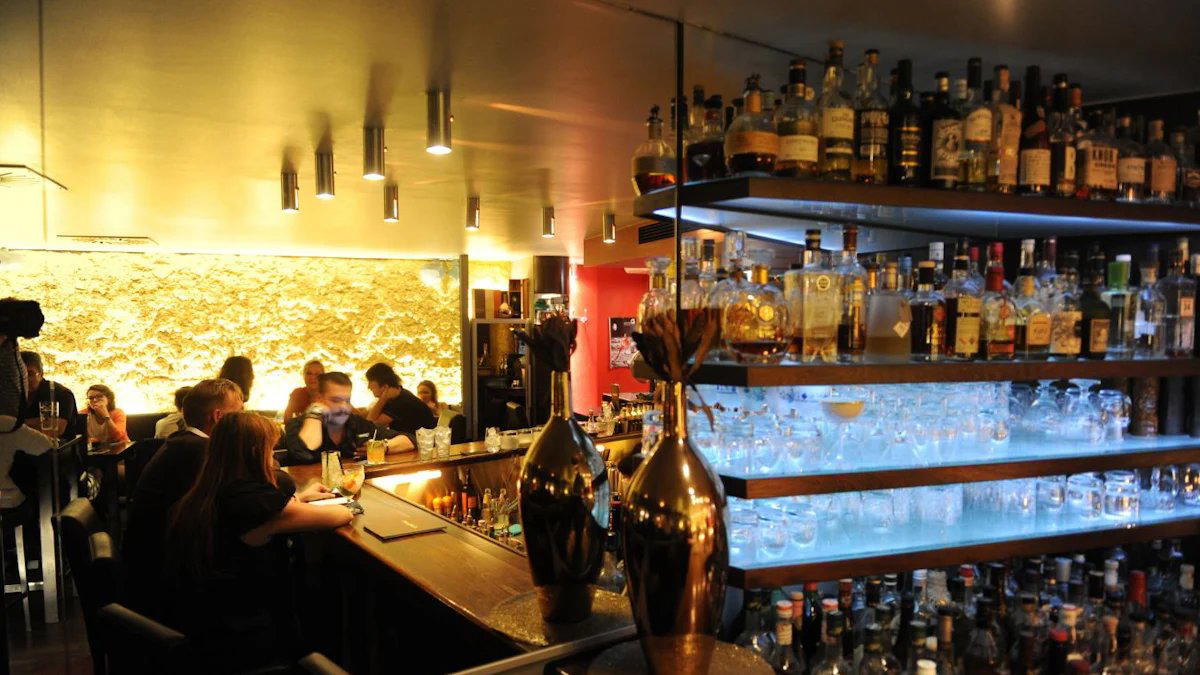
Giesinger Bräustüberl occupies a direct position in Munich's drinking and eating culture: a neighbourhood brewery tap on Martin-Luther-Straße in the Giesing district, where the beer is brewed on-site and the food menu follows the logic of what belongs beside it. In a city where formal fine dining and tourist-facing beer halls split most of the attention, this kind of local Bräustüberl represents something more specific to how Munich residents actually eat and drink.
Pearl is the En Primeur Club membership app — saves, bookings, and concierge access live there. Same editors, same standards.
- Address
- Martin-Luther-Straße 2, 81539 München, Germany
- Phone
- +498955062184
- Website
- giesinger-braeu.de
- Directions
- Get directions
 Saves & bookings on Pearl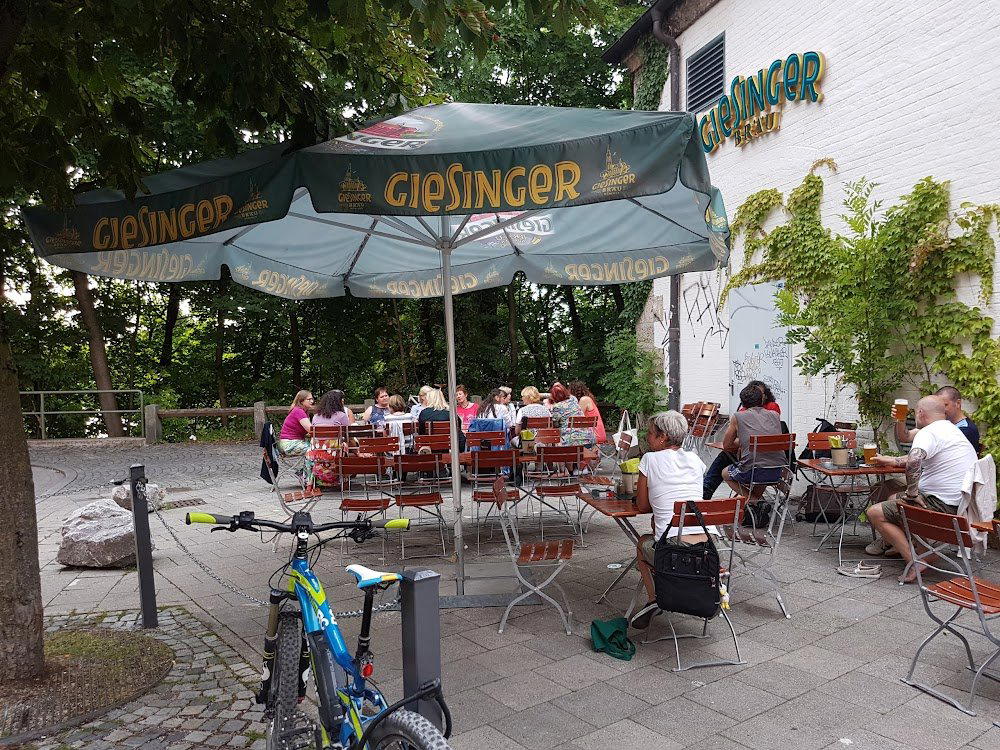
What a Giesing Address Tells You About the Beer
Munich's beer culture has always operated on geography. The great historic breweries, Augustiner, Hofbräu, Paulaner, built their identities around central addresses and large-format halls designed for volume. The city's newer brewing generation took a different path, establishing smaller production facilities in residential districts and attaching modest tap rooms where the beer could be sold close to where it was made. Giesing, a working-class neighbourhood in Munich's southern reaches, has become one of the more credible locations for this kind of operation. Giesinger Bräustüberl, at Martin-Luther-Straße 2, sits inside that tradition.
The Bräustüberl format is itself an editorial subject. Unlike the city's grand Biergärten or the tourist-facing halls around Marienplatz, a Bräustüberl exists primarily to move product brewed on the same premises. The menu structure follows from that logic: food is present to extend the visit and complement the beer, not to compete with it. This is a different set of priorities from, say, Tantris or Atelier, where the kitchen is the protagonist and the drinks list exists in support. At a Bräustüberl, that hierarchy is inverted, and the menu architecture reflects it honestly.
Menu Architecture: How the Food Follows the Beer
The Bavarian Bräustüberl menu is one of German gastronomy's more disciplined formats. Its structure is determined not by seasonal ambition or kitchen ego but by function: what works alongside unfiltered lager, what holds across a long evening, what a local neighbourhood demographic will order on a Tuesday. Pretzels, Obatzda, cold cuts, warm meat dishes with gravy, and starchy sides form the core vocabulary. These are not compromises. They are the correct answer to the question the beer is asking.
This stands in deliberate contrast to Munich's fine-dining tier, where menus at places like Alois - Dallmayr Fine Dining and Tohru in der Schreiberei are structured around tasting sequences, wine pairing, and multi-hour formats. The Bräustüberl menu makes no such claims. Its brevity and repetition across seasonal cycles is the point. What you read on the menu tells you something about who the venue considers its guest: someone who lives nearby, knows what they want, and is not looking to be surprised.
Germany's most celebrated restaurant menus, at Schwarzwaldstube in Baiersbronn, Aqua in Wolfsburg, or Vendôme in Bergisch Gladbach, are built on accumulation: courses layered to produce an arc. The Bräustüberl menu works on no such architecture. It is a list of things that pair with beer, priced accessibly, ordered in whatever sequence the guest prefers. That simplicity is structural, not accidental.
The Giesing District and Its Dining Register
Giesing is not a neighbourhood that produces Michelin-chasing restaurants. Its character has been shaped by a working-class history and, more recently, by the gradual arrival of younger Munich residents priced out of Schwabing and Maxvorstadt. The dining register in Giesing leans toward the practical: neighbourhood bars, Turkish and Greek family restaurants, and the occasional craft beer operation. Giesinger Bräu fits that context more accurately than a city-centre address would allow.
This is worth noting for visitors using Munich's fine-dining circuit as their primary orientation. The stretch of serious restaurants in the city's centre, JAN, Atelier, the Michelin-flagged addresses around the Maximilianstrasse axis, operates in a different register entirely. Giesing sits south and east of that cluster, and Giesinger Bräustüberl is not competing with those addresses. It is serving a neighbourhood function that those addresses cannot and do not attempt.
Across Germany, particularly interesting brewery tap rooms often develop in exactly this kind of setting. CODA Dessert Dining in Berlin occupies a similarly specific niche in Neukölln, where neighbourhood character enables a format that a central address would dilute. The principle is consistent: district identity shapes what a venue can credibly be.
Where This Sits in Munich's Wider Drinking Culture
Munich's beer culture is sometimes flattened into the Oktoberfest-and-beer-hall narrative, but the city's actual drinking geography is more varied. The Bräustüberl format represents the residential, low-ceremony end of a spectrum that runs through neighbourhood Wirtshäuser, garden beer venues attached to historic breweries, and, at the formal end, restaurants where beer is curated alongside a serious kitchen program. Giesinger Bräustüberl operates in the lower-ceremony zone of that spectrum without apology.
For visitors whose Munich itinerary already includes a table at JAN or a reservation in the fine-dining circuit, an evening at a Bräustüberl provides useful calibration. The contrast is instructive: Munich's restaurant culture does not exist only at the tasting-menu level, and understanding the Bräustüberl format, its food logic, its pricing structure, its relationship to the beer produced on the same site, produces a more complete picture of how the city actually eats. Our full Munich restaurants guide maps the full range, from the Bräustüberl tier through to the city's Michelin-recognised addresses.
Germany's brewery tap room tradition has an international comparable set worth understanding. American comparisons like Lazy Bear in San Francisco represent the chef-driven communal dining format; European comparisons like Le Bernardin in New York City represent the opposite pole of formality. The Bräustüberl sits at neither extreme. It is a functional, specific, place-rooted format that has survived in Munich because the city's drinking culture still has room for venues that serve a neighbourhood rather than a destination audience.
Planning Your Visit
The table below places the restaurant in context against Munich venues across different tiers.
| Venue | Price Tier | Format | Booking Required | Primary Audience |
|---|---|---|---|---|
| The restaurant | Low (brewery tap) | Bavarian Bräustüberl | Not typically | Local neighbourhood |
| Tantris | €€€€ | Modern French tasting | Essential, weeks ahead | Fine-dining destination |
| Alois - Dallmayr Fine Dining | €€€€ | Creative tasting menu | Essential | Fine-dining destination |
| JAN | €€€€ | Creative tasting menu | Essential | Fine-dining destination |
Standing Among Peers
Comparable venues nearby, for context on price, style, and recognition.
| Venue | Cuisine | Price | Notes |
|---|---|---|---|
| Giesinger BräustüberlThis venue — the venue you are viewing | Bavarian Brewery | $$ | Not listed |
| Schinken-Peter | Traditional Bavarian | $$ | Au |
| Dahoam Restaurant | Traditional Bavarian | $$ | Theresienwiese |
| Zum Sollner Hirschen | Classic Bavarian | $$ | Solln |
| Haxengrill | Traditional Bavarian Grill | $$ | Lehel |
| Miss Lilly's | German Cafe with Regional Specialties | $$ | Au |
Continue exploring
More in Munich
Restaurants in Munich
Browse all →
At a Glance
- Lively
- Rustic
- Cozy
- Group Dining
- Casual Hangout
- Open Kitchen
- Beer Program
- Local Sourcing
Current opening hours
- Monday
- Closed
- Tuesday
- 4–11 PM
- Wednesday
- 4 PM–1 AM
- Thursday
- 4 PM–1 AM
- Friday
- 11 AM–1 AM
- Saturday
- 11 AM–1 AM
- Sunday
- Closed
Hours can change for holidays and private events. Last verified .