
Tabelog Bronze #82
Our verdict
Gatagataya puts Kawasaki’s small-counter dining culture into a sharper frame: six seats, creative cooking, teppanyaki technique, and a drinks program built around nihonshu, shochu, and wine. Its Tabelog Award Bronze run and 2025 Tabelog 100 selection place it in a serious Kanagawa bracket, with fish and sake alignment doing much of the editorial work.

Pearl is the En Primeur Club membership app, where members save venues, book tables and use the concierge.
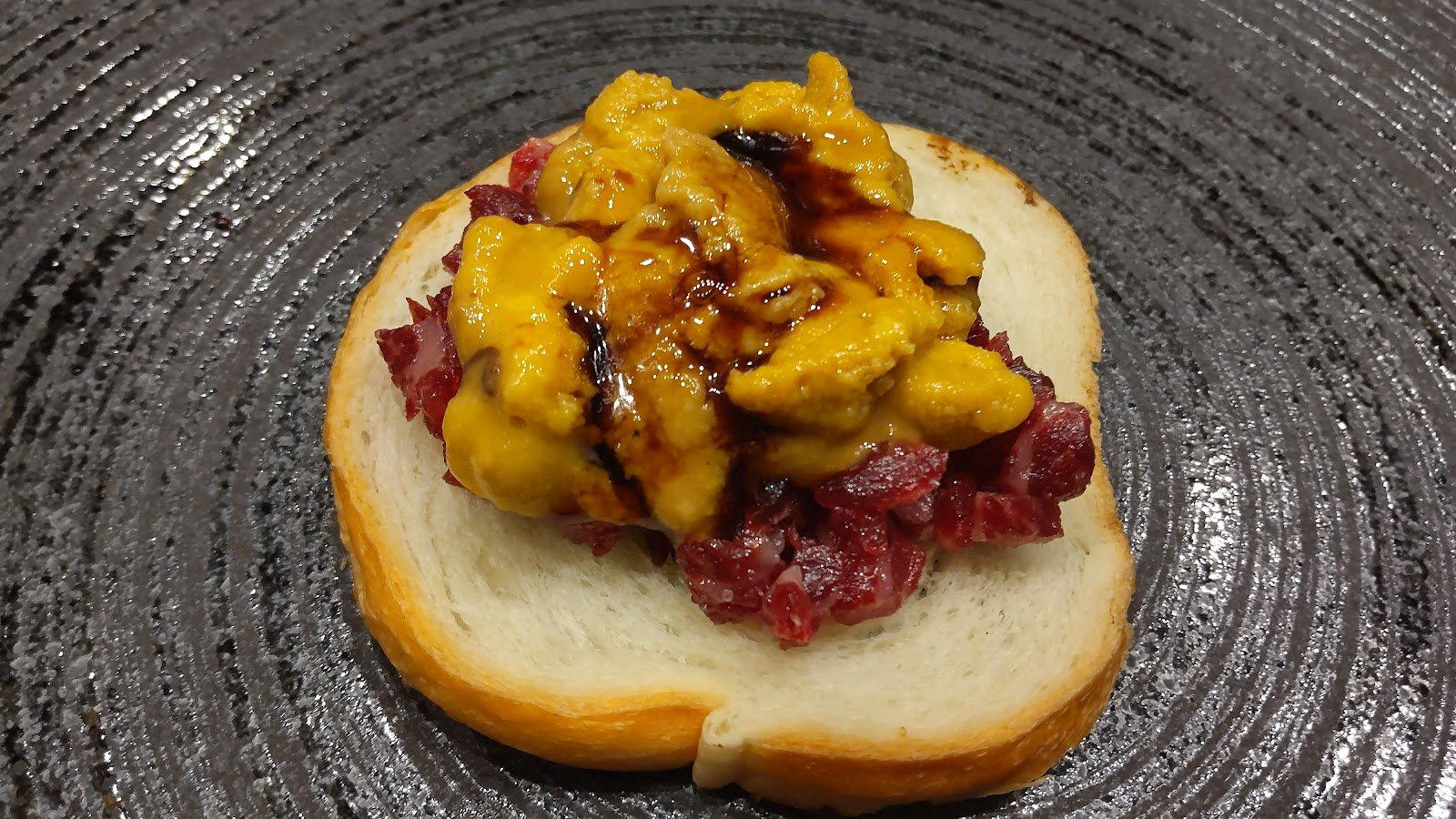
Approaching a six-seat counter in Takatsu changes the scale of dinner. The room is not built for spectacle or table turnover; it is built for watching decisions happen at close range. In Kawasaki, where everyday dining often means ramen shops, curry counters, izakaya chains, and station-side regulars, Gatagataya belongs to a narrower category: small-format creative cooking where the counter is both kitchen and dining room, and where the meal reads through ingredients before it reads through presentation.
The useful way to understand the restaurant is not as a miniature luxury room, but as a Kanagawa answer to a wider Japanese pattern: independent counters that borrow from kappo, izakaya, teppanyaki, and sake-bar culture without submitting fully to any single genre. The category listed as creative and teppanyaki matters because it signals a flexible format rather than a cuisine label. Heat, fish, sake pairing logic, and course sequencing carry more weight than fixed regional identity.
Fish, sake, and the small-counter logic of Kanagawa creative dining
Japanese creative restaurants often split into two camps. One side chases technical tasting-menu polish, the other keeps the grammar of drinking food: salt, smoke, fat, fermentation, and small plates that make sense with alcohol. Gatagataya sits closer to the second camp. Its publicly listed strengths point to fish and drinks, with nihonshu, shochu, and wine all part of the frame. That mix is not decorative; it explains why the food can move between creative cooking and teppanyaki without feeling like a fusion exercise.
Ingredient sourcing becomes the central issue at this scale. A six-seat counter cannot hide behind breadth. Fish selection, seasoning restraint, and temperature control become the meal’s structure, especially when sake is treated as more than an afterthought. Room-temperature aged sake, a style noted in the restaurant’s public description, also changes the food conversation. It rewards umami, oil, smoke, and mineral tones over the bright chill-and-aroma model common in casual sake service.
That makes the restaurant more interesting than a simple special-occasion address. Kawasaki’s stronger everyday dining culture is often price-sensitive and practical: Curry House Delhi, Match Bo Mizonokuchi ten, and KING LION Sri Lanka Restaurant & Bar occupy a lower-cost local rhythm, while a six-seat course counter operates in a different decision set. The comparison is not about superiority. It is about intent. One meal solves the question of where to eat near the station; the other asks for attention, time, and a tolerance for the house’s pacing.
For readers mapping the wider city, Our full Kawasaki restaurants guide gives the broader dining spread, from casual specialists to award-recognised rooms. Nearby and regional alternatives also show how diverse the city’s food map has become: (Shoku) Vietnam, Belmatine, Boulangerie Metier Pa-ku shiti musashi kosugi za ga-den, Buta Boshi, and C'EST UNE BONNE IDEE! each answer a different dining need.
Recognition that points to consistency, not scale
The trust signal here is unusually clear. Gatagataya is listed as a Tabelog Award 2026 Bronze winner, with earlier Bronze recognition in 2025, 2022, 2021, 2020, 2019, 2018, and 2017, and it was selected for Tabelog 100 Innovative / Creative Cuisine in 2025. For a compact counter outside central Tokyo, that pattern matters. Awards for small restaurants can be noisy in a single year; repeated recognition suggests that the format has held its line across changing dining fashions.
The Tabelog score around the 4-point mark also places it in rarefied Japanese user-rating territory, particularly for a restaurant with so few seats. Tabelog scoring tends to be conservative, and incremental differences above the high 3s carry real weight among Japanese diners. The practical reading is simple: this is a specialist counter with a reputation built by repeat assessment, not by scale, hotel backing, or international branding.
Chef’s identity is less important than the operating grammar. A chef’s choice course, counter-only intimacy, fish emphasis, and drinks focus tell the reader more than a personal mythology would. In Japan, this kind of room often depends on the relationship between procurement and improvisation: what is bought, how it is held, when it is cooked, and what drink makes the plate make sense. The result is a meal better suited to adults who enjoy close-quarters dining than to groups seeking flexibility.
Where it fits in a Tokyo-adjacent itinerary
Kawasaki is often treated as connective tissue between Tokyo and Yokohama, but its dining culture rewards a more exact reading. Mizonokuchi and Takatsu have a local evening rhythm that differs from Ginza’s ceremony or Shibuya’s trend cycle. A counter such as this works because it does not need a destination-dining district around it. It belongs to the Japanese habit of serious rooms appearing in residential or commuter areas, where regulars, train access, and compact real estate support specialist formats.
That position also makes it a useful counterpoint to other Japan and Japan-influenced listings. For regional context beyond Kawasaki, compare the different forms of specialization at -Grilled beef Sukiyaki- KAMAKURA TANUKIAN 鎌倉 たぬき庵 in Kamakura. 鮪と炭火焼き うお炭 秋葉原店 in Tokyo.cafe in Osaka.know in Kumamoto, [Curry Senmon Ten] Maruyama Kyoju. in Sapporo, and [ki:] in Kyoto. Outside Japan, sake-led formats such as Jōdo Saké Bar in Los Angeles and Japanese comfort specialists such as Onigiri Time in Pasadena show how differently the same cultural references travel.
The editorial recommendation is narrow by design: choose this for a focused adult dinner where fish, sake, and counter proximity are the point. Do not choose it for menu browsing, children, private-room comfort, or a broad à la carte evening. Kawasaki has plenty of easier meals; this is for the diner who understands why six seats can make sourcing, timing, and restraint feel more consequential.
For planning around the city rather than a single dinner, see Our full Kawasaki hotels guide, Our full Kawasaki bars guide, Our full Kawasaki wineries guide, and Our full Kawasaki experiences guide.
Frequently asked questions
Can I bring kids to Gatagataya?
The house asks that children refrain from coming so adults can enjoy drinks at their own pace. That policy sits alongside the six-seat counter in Kawasaki and the reservation-only format.
Is Gatagataya formal or casual?
It reads as compact and relaxed rather than formal, with six counter seats, no credit cards, and an 18:00-onwards dinner service. The 500 yen charge and chef's choice course keep the experience tightly structured.
When is Gatagataya open?
Hours at Gatagataya: ■Business hoursFrom 18:00 onwards■Closed onSundays, Wednesdays, public holidays, and occasional temporary closures. Please check gatagataya.com for updates.
Where exactly is Gatagataya?
Gatagataya is located in Kawasakiwasaki.
What has Gatagataya built its reputation on?
The clearest marker is recognition: Tabelog Bronze awards in 2026, 2025, 2022, 2021, 2020, 2019, 2018, and 2017, plus selection for Tabelog Innovative/Creative Cuisine "Tabelog 100" 2025. Its fish-focused cooking and sake emphasis complete the picture.
Can Gatagataya handle vegetarian requests?
Gatagata Ya is described as fish-focused and currently offers only a chef's choice course, so vegetarian requests need careful advance handling. The six-seat counter and reservation-only format make early communication important.
How It Stacks Up
Comparable venues nearby, for context on price, style, and recognition.
| Venue | Cuisine | Price | Awards | Notes |
|---|---|---|---|---|
| GatagatayaThis venue (the venue you are viewing) | Creative Japanese Sake Pairing | $500+ | Tabelog Bronze #82 | Not listed |
| Sawaishi | Premium Sumibi Yakiniku Horumon | $100–150 | Tabelog Silver #118 | Nakahara-ku |
| 炭火焼肉ホルモンさわいし | Charcoal Grilled Yakiniku & Horumon | $100–150 | Not listed | 中原区新城 |
| Sushi Fukuhara | Aged Sushi Omakase Counter | $100–150 | Tabelog 100 #81 | Takatsu-ku |
| FUJIMORI Saginuma ten | Japanese Bakery Café | $10–20 | Tabelog 100 #16 | Saginuma |
| Ramen Marusen | Traditional Ramen Shop | $10–20 | Tabelog 100 #27 | Musashi-Kosugi |
Recognition history
Dated appearances from independent guides and award organizations, with the underlying list record or original source where available.
Tabelog Bronze #82
Tabelog
Full recognition history (3 entries)
Tabelog Bronze
Tabelog
Tabelog 100 #63 · No. 63
Tabelog · Tabelog 100 - Innovative / Creative cuisine - 2025
Continue exploring
More in Kawasaki
Restaurants in Kawasaki
All restaurants in Kawasaki →


Bars in Kawasaki
Browse all →



Details
- Intimate
- Relaxed
- Sophisticated
- Special Occasion
- Date Night
- Sake Program
- Sake
Current opening hours
- Monday
- 6–11 PM
- Tuesday
- 6–11 PM
- Wednesday
- Closed
- Thursday
- 6–11 PM
- Friday
- 6–11 PM
- Saturday
- 6–11 PM
- Sunday
- Closed
Hours can change for holidays and private events. Hours as of .
Spacious and relaxed atmosphere ideal for savoring sake in a quiet, captivating setting.