On Rue Paradis in Marseille's 6th arrondissement, Frangine occupies a stretch of the city where neighbourhood bistro culture and contemporary dining coexist without ceremony. The address places it within walking distance of the residential core that feeds the city's most grounded restaurant scene, making it a reference point for understanding how Marseille eats when it isn't performing for tourists.
Pearl is the En Primeur Club membership app — saves, bookings, and concierge access live there. Same editors, same standards.
- Address
- 225 Rue Paradis, 13006 Marseille, France
- Phone
- +33465955971
- Website
- franginemarseille.fr
- Directions
- Get directions
 Saves & bookings on Pearl
Rue Paradis and the 6th: Where Marseille Eats Without Performing
There is a version of Marseille that exists almost entirely for visitors: the Vieux-Port theatrics, the bouillabaisse set menus priced for cruise passengers, the terraces angled toward the water. The 6th arrondissement, where Rue Paradis runs south through a grid of Haussmann-era apartments and local commerce, is not that version. This is the part of the city where Marseillais actually live, and where the restaurant scene that serves them operates on different terms entirely. Frangine, at 225 Rue Paradis, sits inside that context rather than apart from it. It is a modern French bistronomique restaurant in Marseille's 6th arrondissement, with charcoal grilling and an average spend of about $35 per person.
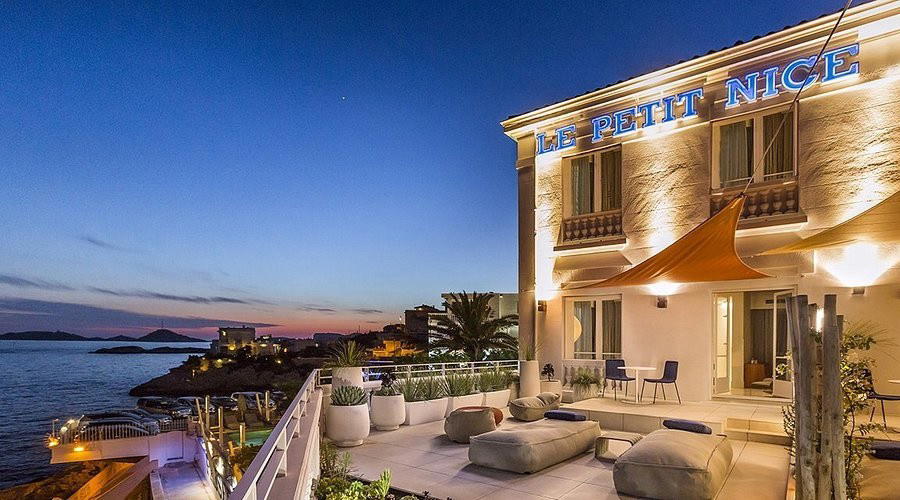
The address matters because in Marseille, unlike Paris, arrondissement identity carries real culinary weight. The 1st and 7th pull in the destination diners chasing tasting menus and Michelin validation. Operations like AM par Alexandre Mazzia and Le Petit Nice anchor that tier of the city's dining, and they price and format accordingly. The 6th runs a different calculation. The neighbourhood's core clientele is professional, repeat, and locally rooted. Restaurants here compete on consistency and relationship rather than on spectacle or seasonal press attention.
The Neighbourhood Frame: What the 6th Arrondissement Tells You
Rue Paradis is one of the 6th's commercial spines, running from the area around the Préfecture down toward the residential blocks south of the Castellane district. The street itself mixes independent retail, café terraces, and neighbourhood restaurants in proportions that reflect the arrondissement's character: dense enough to feel urban, settled enough to feel local. Dining on this stretch tends toward the approachable end of the Marseille market, without the self-conscious minimalism of some newer openings or the heritage weight of the city's established seafood institutions.
That positioning is neither a limitation nor an accident. Across France, the restaurants that sustain neighbourhood credibility over years are rarely the ones making one noise in any given season. They are the ones that understand the difference between a room full of regulars and a room full of tourists, and that build a format around the former. The French bistro tradition has always operated this way, from the bouchons of Lyon to the zinc-counter addresses of Paris's outer arrondissements. In Marseille, that tradition absorbs Mediterranean inflection: olive oil over butter, fish over beef, provençal herb registers over northern French richness. Frangine's location puts it in a position to draw on all of that without needing to announce it.
For comparison across the broader Provence dining corridor, the contrast with destination-oriented formats is instructive. La Table du Castellet in Le Castellet operates within a resort architecture that requires a different kind of journey, physical and psychological, from its guests. The Rue Paradis address asks for neither. You arrive by foot, by tram, or from the apartment building two blocks away.
The Marseille Bistro Tier: Editorial Context
Marseille's restaurant market has consolidated around a recognisable tier structure over the past decade. At the leading, a handful of addresses compete for national and international recognition, with Une Table, au Sud and the aforementioned Michelin-starred houses representing the city's fine dining argument. In the middle, a more interesting negotiation happens between modern bistro formats, Mediterranean-inflected neighbourhood restaurants, and the kind of address that defies easy categorisation. Alivetu operates in a related register, as does 1860 Le Palais, each drawing on the city's coastal and provençal identity from slightly different angles.
Frangine enters this middle tier from a neighbourhood base rather than a destination-dining brief. That is a specific choice, even if it reads as the absence of one. Restaurants that anchor themselves in residential arrondissements rather than tourist-facing districts are making a statement about their intended relationship with the city. They are betting on repeat custom, on word-of-mouth that moves through local networks, and on a format that rewards familiarity.
Across France's major dining cities, this category is under pressure from rising rents and the homogenising pull of social-media visibility, which rewards photogenic novelty over quiet consistency. In Marseille specifically, the pressure runs in two directions: upward toward the prestige tier occupied by operations with the profile of Mirazur in Menton or Flocons de Sel in Megève along the French fine dining axis, and outward toward the tourist economy of the Vieux-Port and the waterfront. Addresses on Rue Paradis resist both pulls by geography alone.
Planning a Visit: Practical Orientation
Rue Paradis is accessible from multiple points in central Marseille. The Castellane metro station on Line 1 places you within a short walk of the 225 address, and the arrondissement is walkable from much of the city's residential core. For visitors staying in the 6th or the adjacent 8th, the restaurant is effectively on foot. The restaurant is recommended for reservations and is open Tuesday through Friday from 12 to 2 PM and 7:30 to 10 PM, Saturday from 7:30 to 10 PM, and closed Monday and Sunday. This applies to seasonal closures and reservation requirements alike, both of which vary considerably across Marseille's bistro tier depending on the time of year.
For readers building a longer southern France itinerary, Frangine's neighbourhood positioning makes it a practical anchor for an evening that prioritises local atmosphere over destination theatre. The major institutional addresses of French gastronomy, from Paul Bocuse in Collonges-au-Mont-d'Or to Troisgros in Ouches, Bras in Laguiole, Auberge de l'Ill in Illhaeusern, Les Prés d'Eugénie in Eugénie-les-Bains, Georges Blanc in Vonnas, and further afield Alléno Paris au Pavillon Ledoyen, Le Bernardin in New York, and Lazy Bear in San Francisco represent different moments in a dining itinerary. Frangine on Rue Paradis represents something those addresses cannot: an evening that reads as part of how a city lives rather than as a set piece staged for outside observers.
Cuisine-First Comparison
Comparable venues nearby, for context on price, style, and recognition.
| Venue | Cuisine | Price | Notes |
|---|---|---|---|
| FrangineThis venue — the venue you are viewing | Modern French Bistronomique with Charcoal Grilling | $$$ | Not listed |
| Toma | Modern French-Mediterranean Bistronomic | $$$ | Opera |
| Maison Bohème | Provençal Bistro with Mediterranean Influences | $$ | Castellane |
| Chicoulon | French Bistronomic | $$ | Opera |
| La Piscine | Modern French Mediterranean Bistro | $$ | Hotel De Ville |
| Tumulte | Seafood & Vegetarian Bistro | $$$ | Notre Dame Du Mont |
Continue exploring
More in Marseille
Restaurants in Marseille
Browse all →
Bars in Marseille
Browse all →
Hotels in Marseille
Browse all →
At a Glance
- Cozy
- Warm
- Modern
- Retro
- Date Night
- Group Dining
- Casual Hangout
- Open Kitchen
- Terrace
- Extensive Wine List
- Local Sourcing
Current opening hours
- Monday
- Closed
- Tuesday
- 12–2 PM, 7:30–10 PM
- Wednesday
- 12–2 PM, 7:30–10 PM
- Thursday
- 12–2 PM, 7:30–10 PM
- Friday
- 12–2 PM, 7:30–10 PM
- Saturday
- 7:30–10 PM
- Sunday
- Closed
Hours can change for holidays and private events. Last verified .
Warm and bright room with nostalgic retro decor featuring tiled walls, cane chairs, and a lively wood-fired kitchen atmosphere.