
1 Michelin Star
Our verdict
Behind wrought-iron railings on Rue de Forbin, Belle de Mars delivers Mediterranean-inflected modern cuisine at a price point that makes it one of the more accessible serious tables in Marseille. Michel Marini and Kim-Mai Bui, both alumni of kitchens including William Ledeuil and Gérald Passedat, hold a 2024 Michelin Plate and cook with herbs they forage themselves, producing dishes that are precise without being showy.

Pearl is the En Primeur Club membership app, where members save venues, book tables and use the concierge.
The menu
What to order
- Seared squid with salmorejo sauce
- Wild seabass in fig leaves
- Poulpe with apple and radish
- Lotte with squid ink purée
Where the Meal Has a Rhythm of Its Own
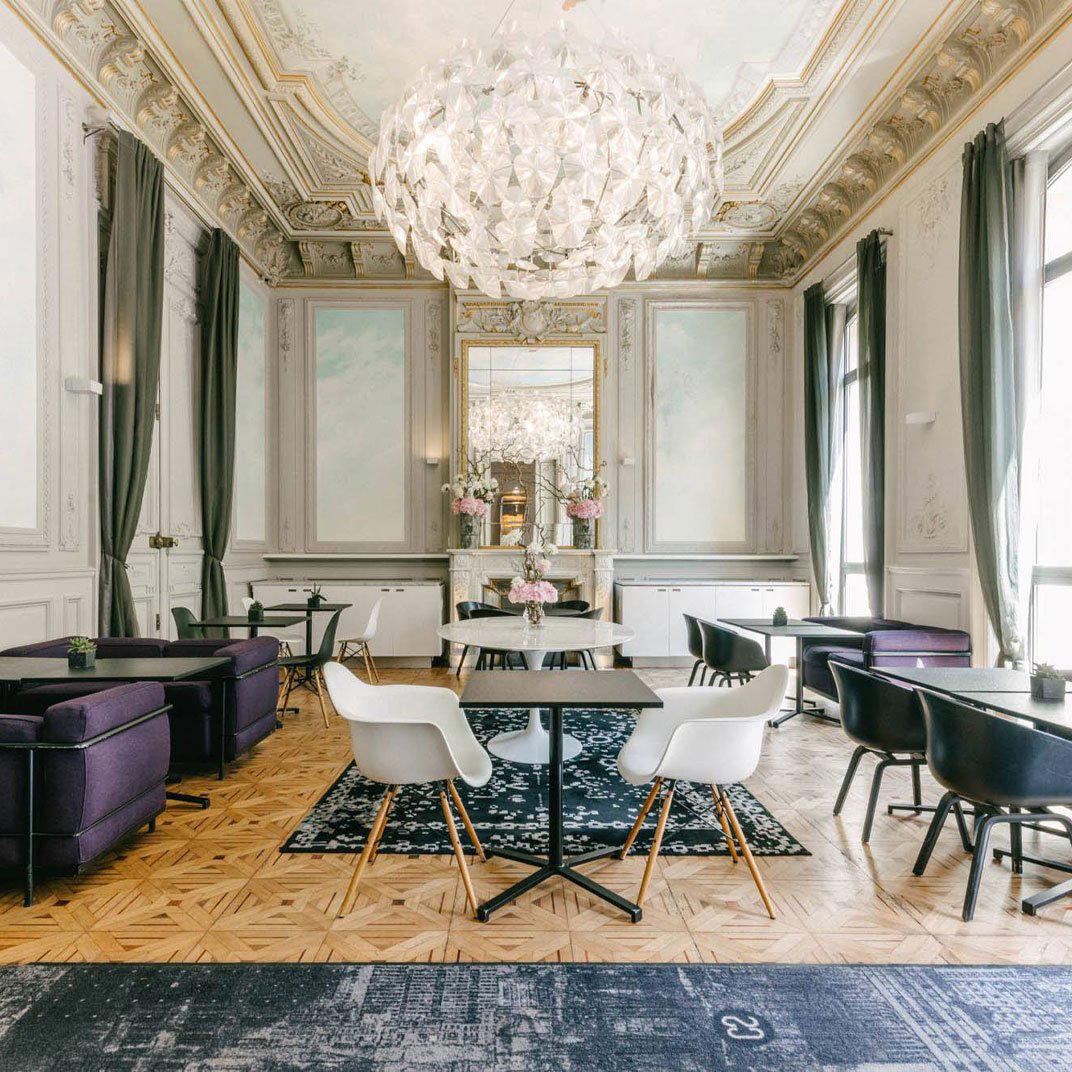
The approach to Belle de Mars sets a particular tone. Wrought-iron railings frame the entrance on Rue de Forbin, in Marseille's second arrondissement, and what lies beyond them reads immediately as deliberate restraint: white walls, parquet floors, wooden chairs and tables arranged without theatrical excess. The open kitchen is visible from the dining room, which shapes the meal before a single plate arrives. In restaurants where the kitchen is the centrepiece rather than a backdrop, the pacing tends to follow suit: attentive but unhurried, with a sense that each course is placed when it's ready, not when a timer says so.
This matters in Marseille, a city that has historically prized its own culinary rhythms over imported fine-dining conventions. The city's leading tables have generally resisted the pressured formality that characterises grand Parisian rooms, favouring instead a directness that suits both the climate and the character of its residents. Belle de Mars operates squarely in that tradition, at a price point (€€) that keeps it accessible relative to the city's higher tier, where restaurants like Une Table, au Sud and Les Trois Forts occupy the €€€€ bracket.
The Credentials Behind the Counter
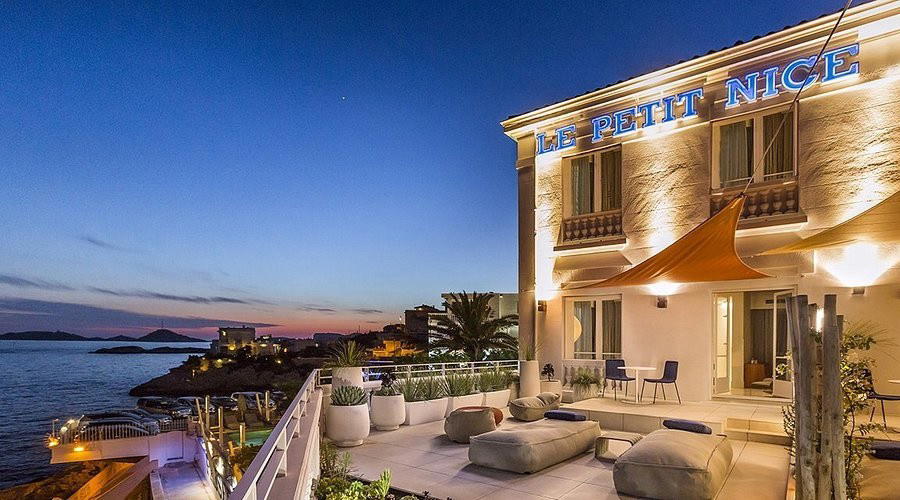
Modern cuisine kitchens that produce food with genuine lightness and Mediterranean character tend to draw from a specific lineage. The alumni networks of William Ledeuil, Christophe Moret, and Gérald Passedat represent some of the more technically demanding training grounds in contemporary French cooking: Ledeuil's Ze Kitchen Galerie work is built on precise broth construction and Asian-inflected herbaceous layers; Passedat's Le Petit Nice, a three-Michelin-star address in Marseille itself, has long defined the city's highest register of seafood cooking. Michel Marini and Kim-Mai Bui trained across all three of these kitchens, a constellation of experience that positions them within a specific competitive tier of French cooking, one that values subtlety over spectacle.
That background connects Belle de Mars to a broader lineage of French culinary rigour. The category includes Alléno Paris au Pavillon Ledoyen in Paris, Flocons de Sel in Megève, and further afield, Mirazur in Menton, each representing a strand of modern French cuisine that prizes clarity of flavour over accumulation of technique. The Michelin Plate awarded in 2024 signals that the guide's inspectors consider the kitchen consistent and the cooking well-executed, even if not yet at starred level.
A Cooking Style Built Around the Mediterranean Pantry
The Mediterranean spin that defines Belle de Mars's menu is not an aesthetic choice so much as a sourcing discipline. Marini and Bui pick their herbs themselves, which in practice means the aromatic register of the cooking is narrower, fresher, and more specific than in kitchens that purchase standard herb bundles through suppliers. This kind of self-sourcing signals an investment in the ingredient as the starting point for flavour, rather than technique applied to a neutral base.
The dishes on record illustrate the approach: lightly seared squid with salmorejo sauce positions a local Mediterranean catch against a cold Andalusian tomato preparation, a pairing that works through contrast of temperature and acidity rather than richness. Wild seabass cooked in fig leaves draws on a technique that adds aromatic bitterness and a faint herbaceous steam to the fish without masking its texture. These are not complicated constructions. They are the product of restraint applied with precision, and they sit comfortably within the broader movement in Mediterranean modern cuisine that prizes legibility: the diner should understand what they are eating and why it tastes the way it does.
Dessert approach, low in sugar and described as highly addictive by the Michelin record, follows the same logic. Sweetness as a crutch is replaced by intensity through fruit acidity, dairy fat, or texture contrast. This is increasingly a signature of kitchens trained in the French tradition but cooking with southern European ingredients, where the leading desserts arrive as a relief rather than an afterthought.
Placing Belle de Mars in the Marseille Scene
Marseille's restaurant scene divides more clearly by price and ambition than by cuisine type. At the upper end, three-star rooms such as Le Petit Nice anchor the formal fine-dining tier. A layer below, starred restaurants including Une Table, au Sud operate with refined menus and corresponding price expectations. Then there is a middle tier of serious tables that hold Michelin recognition without stars, priced accessibly but cooking with genuine skill: this is where Belle de Mars sits, alongside places like La Mercerie and Būbo.
For a city of Marseille's scale, this middle tier is where some of the most consistent cooking happens. The pressure of investor expectation and Michelin star maintenance is absent, and kitchens with serious credentials can cook the food they want to cook. Les Bords de Mer represents the seafood-focused strand of this tier; Belle de Mars occupies the Mediterranean-modern strand, where the sea is one ingredient among many rather than the entire premise.
Internationally, the approach at Belle de Mars has parallels in how some Nordic kitchens have handled their own regional identity. Frantzén in Stockholm and its Dubai extension, FZN by Björn Frantzén, operate at a very different price tier, but share the discipline of treating regional produce as the fixed point around which technique bends, rather than the reverse. The same logic applies at Bras in Laguiole and Troisgros in Ouches, two French houses that have long argued for rootedness over abstraction. Belle de Mars makes the same argument at a fraction of the price.
Planning a Visit
Belle de Mars is located at 56 Rue de Forbin, in Marseille's second arrondissement, placing it in the north of the city centre close to the old port district. Reservations are advisable given the kitchen's following; the dining room's understated format suggests a limited number of covers rather than a large-capacity room. There are no hours listed in public records at time of writing, so confirming service times directly before visiting is recommended.
For a broader picture of where Belle de Mars sits in the city's offer, our full Marseille restaurants guide maps the scene across price tiers and cuisine types. Those planning a longer stay can also consult our Marseille hotels guide, our bars guide, our wineries guide, and our experiences guide for a complete view of the city.
Frequently asked questions
What should I eat at Belle de Mars?
The kitchen's strongest ground is Mediterranean produce handled with precision and minimal intervention. Dishes on record include lightly seared squid with salmorejo sauce and wild seabass cooked in fig leaves, both of which reflect the cooking's preference for flavour through contrast and aromatics rather than richness. The desserts are notably low in sugar, leaning on intensity and texture instead. Given that Marini and Bui source and pick their own herbs, any dish built around fresh aromatic elements will reflect the kitchen's clearest identity. The 2024 Michelin Plate recognises overall consistency, so the approach holds across the menu rather than concentrating in one or two signature preparations. For context on how Belle de Mars fits within the wider Marseille dining picture, see Auberge de l'Ill in Illhaeusern as one reference point for the classical French grounding that informs the kitchen's technique, even as the flavour direction moves south.
What It’s Closest To
A quick snapshot of similar venues for side-by-side context.
| Venue | Cuisine | Price | Awards | Notes |
|---|---|---|---|---|
| Belle de MarsThis venue (the venue you are viewing) | Modern Mediterranean Fine Dining | $50–100 | 1 Michelin Star | Not listed |
| AM par Alexandre Mazzia | Avant-Garde French with African Influences | $300–500 | 3 Michelin Stars · La Liste Top Restaurants | French, Creative |
| Une Table, au Sud | Modern Provençal Fine Dining | $100–150 | 1 Michelin Star · Star Wine List | Modern Cuisine |
| Chez Fonfon | Traditional French Seafood & Bouillabaisse | $50–100 | Michelin Plate | French Bistro, Seafood |
| Chez Etienne | Marseillaise Pizza | $20–30 | Not listed | Provencal |
Recognition history
Dated appearances from independent guides and award organizations, with the underlying list record or original source where available.
Michelin 1 Star
Michelin
Full recognition history (3 entries)
Michelin 1 Star
Michelin
Michelin Plate
Michelin
Continue exploring
More in Marseille
Restaurants in Marseille
All restaurants in Marseille →
Bars in Marseille
All bars in Marseille →

Details
- Elegant
- Minimalist
- Intimate
- Sophisticated
- Quiet
- Date Night
- Special Occasion
- Celebration
- Open Kitchen
- Standalone
- Natural Wine
- Sommelier Led
- Local Sourcing
- Farm To Table
- Prix Fixe
- Tasting Menu
- Natural Wine
- Regional Wines
- Pescatarian Friendly
- Allergy Accommodating
- Vegetarian Friendly
Current opening hours
- Monday
- 12:15–1:30 PM, 7:30–9:15 PM
- Tuesday
- 12:15–1:30 PM, 7:30–9:15 PM
- Wednesday
- 12:15–1:30 PM
- Thursday
- 12:15–1:30 PM, 7:30–9:15 PM
- Friday
- 12:15–1:30 PM, 7:30–9:15 PM
- Saturday
- Closed
- Sunday
- Closed
Hours can change for holidays and private events. Hours as of .
Warm lighting on white walls with parquet floors and wooden furnishings; understated elegance with an open-plan kitchen visible to diners; pleasantly low music creating an intimate, refined atmosphere.