Ferro e Farinha

50 Top Pizza World Best Pizza #31
Our verdict
On Rua Maria Quitéria in Ipanema's noble quadrilateral, Ferro e Farinha operates at the more considered end of Rio's pizza scene. Under chef Sei Shiroma, the menu revolves around a wood-fired oven that anchors everything from multiple dough formats to a fregola with octopus that competes with the city's serious seafood tables. Creative, oven-centric, and worth the detour from Leblon or Botafogo.

Pearl is the En Primeur Club membership app — saves, bookings, and concierge access live there. Same editors, same standards.
- Address
- R. Maria Quitéria, 107 - Ipanema, Rio de Janeiro - RJ, 22410-040, Brazil
- Phone
- +55 21 97214-0460
- Hours
- Mon–Thu 6 PM–12 AMFri–Sat 6 PM–1 AMSun 6 PM–12 AM
- Website
- ferroefarinha.com.br
- Directions
- Get directions
The menu
What to order
- Lucky Star pizza
- Octopus carpaccio with oyster mayonnaise
- Garlic bread on wood oven
- Tiramisu
- Chocolate fondant
The Address and What It Signals
Ipanema's noble quadrilateral is a compact grid bounded by the beach and the lagoon, where real estate prices and restaurant rents both run high. A pizzeria here is not a casual neighbourhood fallback. It occupies the same streets as some of Rio's more considered dining addresses, and Ferro e Farinha, at Rua Maria Quitéria 107, sits a short walk from Praça Nossa Senhora da Paz, a square that functions as an informal social anchor for the neighbourhood's evening foot traffic. The location communicates intent before you read a single menu description.
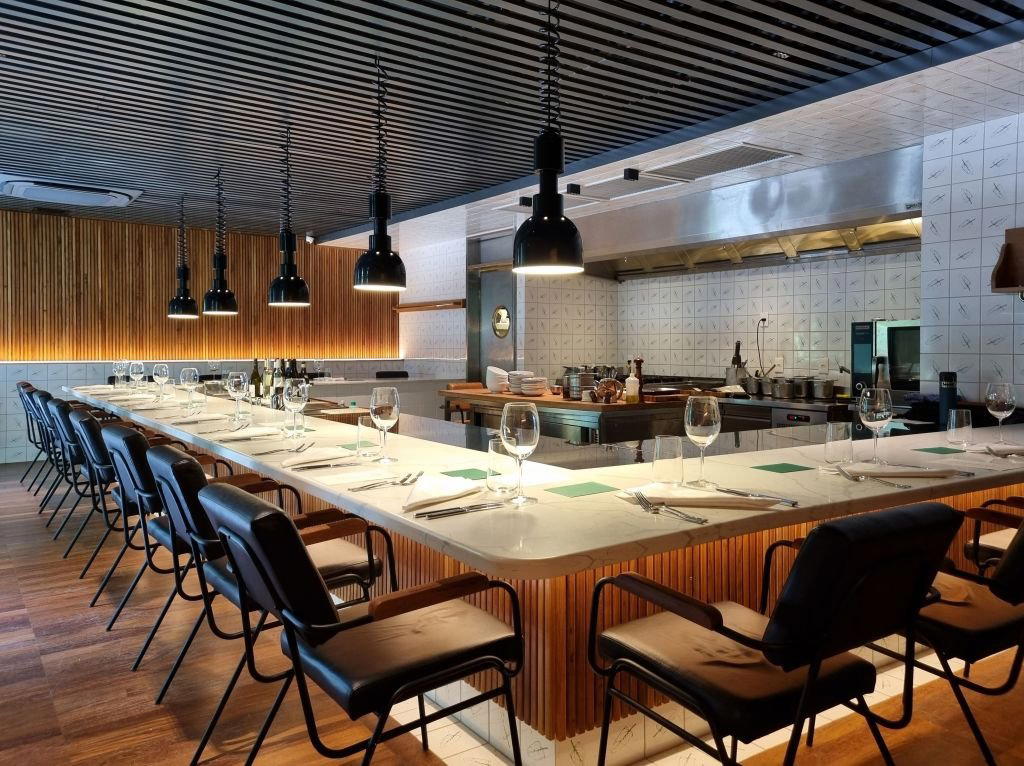
A Room Built Around the Oven
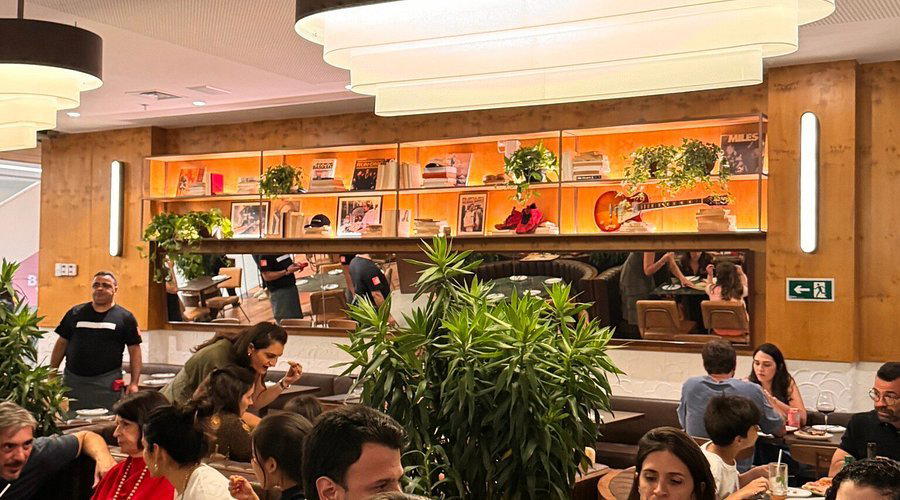
The spatial logic of Ferro e Farinha follows a model that serious pizza-focused restaurants have adopted in Naples, Rome, and now in Brazilian cities with enough of a pizza culture to support it: the oven is not a back-of-house utility but the architectural centre of the experience. In rooms organised this way, sightlines tend to open toward the fire, and the rhythm of service connects visibly to what is happening at the hearth. The effect on how a meal feels is measurable. Watching the dough enter and leave the oven calibrates your sense of timing, and the smell of fired crust is present from the moment you sit down rather than arriving only with the plate. At Ferro e Farinha, that physical arrangement reinforces the menu's broader argument: that every dish on the table has a relationship with heat, crust, and the Maillard reactions specific to wood or gas fire at high temperature.
The room's character connects to a strand of contemporary Brazilian restaurant design that resists the maximalist impulse. Rather than layering references or deploying statement furniture, these interiors tend to let the operational hardware, the oven, the open pass, the counter, carry the visual weight. Whether the space is spare or warm depends on finish choices, but the structural decision to centre the oven organises everything else.
What the Menu Is Actually Doing
Across South America's most serious pizza cities, Buenos Aires and São Paulo hold the longest institutional histories, but Rio's approach has always been more informal, more improvisational, less bound to Italian-immigrant orthodoxy. Ferro e Farinha operates at the intersection of technical discipline and that Rio tendency to deviate from convention. The dough receives the kind of attention that places the restaurant inside the quality-first cohort: multiple dough formats are available, which signals a kitchen that treats fermentation and hydration as variables worth controlling rather than as fixed givens. A Margherita on a well-made base is the calibration point, the dish that tells you whether everything else is grounded. Here, it reportedly holds.
The more revealing part of the menu extends beyond pizza. The fregola with octopus functions as an appetiser that would carry its weight on the menu of a dedicated seafood restaurant. Fregola, the toasted Sardinian semolina pasta, requires precise hydration and timing to avoid the twin failures of graininess and mush; when it works with octopus, the pairing produces a depth that neither ingredient achieves alone. That this appears at a pizzeria in Ipanema says something about what chef Sei Shiroma is attempting: a menu where the oven is the through-line, and every category, starters, mains, desserts, responds to its logic.
Desserts, less frequently the site of ambition at pizza-focused restaurants, maintain the standard set earlier in the meal. This kind of consistent register across courses is harder to achieve than it looks, and its presence here pushes Ferro e Farinha into a different competitive position than the neighbourhood's more casual pizza options.
Rio de Janeiro's Broader Dining Context
Rio's fine dining tier is anchored by tasting-menu restaurants like Lasai (two Michelin stars, regional Brazilian) and Oteque (one Michelin star, modern Brazilian), and by Italian-format addresses including Oro (two Michelin stars, contemporary Italian-Brazilian) and Cipriani. Ferro e Farinha sits outside that tier in terms of format and price register, but it shares with those restaurants a seriousness about sourcing and execution that separates it from volume-driven competitors. Casa 201, with its Michelin-starred French orientation, and Ferro e Farinha are operating in entirely different registers, but both reflect the principle that Ipanema and its immediate surroundings can support restaurants with a genuine editorial point of view.
The comparison with Italian-inflected restaurants matters here. Pizza, at its most technically considered, draws from the same tradition as the broader Italian canon. The difference at Ferro e Farinha is that the Italian reference is filtered through a Rio sensibility that produces combinations described as provocative and never predictable. This places it closer to what Oro does with Italian-Brazilian hybridity, even if the formats and price points differ sharply.
Further afield in Brazil, restaurants like D.O.M. in São Paulo, Manga in Salvador, and Manu in Curitiba represent the country's appetite for restaurants that work seriously within a defined culinary logic. Ferro e Farinha belongs to that tendency, applied to pizza and oven-cooking rather than to the fine-dining tasting format. Internationally, the contrast is equally informative: where Le Bernardin in New York City applies similar through-line discipline to seafood, or Atomix to Korean progression, Ferro e Farinha applies it to fire and fermentation at a lower price point and a more accessible format.
Planning Your Visit
Ferro e Farinha is at Rua Maria Quitéria 107 in Ipanema, within walking distance of the beach and the neighbourhood's main commercial streets. Ipanema is well-served by the Metrô (General Osório station on Line 1 places you a few blocks away), and taxis and rideshare services connect easily from Leblon, Botafogo, and the centro. Given the concentration of evening diners in this part of Ipanema, arriving early or booking ahead is advisable, particularly on weekends when the square nearby draws foot traffic that extends into the surrounding restaurants. The menu's range from a classic Margherita through to more complex oven-routed dishes means the room accommodates solo diners at the counter and groups working through the full menu with equal ease. For those spending time across the city's dining scene, our full Rio de Janeiro restaurants guide covers the broader landscape, alongside dedicated guides to hotels, bars, wineries, and experiences in Rio. Elsewhere in Brazil, Castelo Saint Andrews in Gramado, Mina in Campos do Jordão, and Orixás North Restaurant in Itacaré round out a picture of how seriously the country's regional dining circuit has developed.
Frequently asked questions
Is Ferro e Farinha a family-friendly restaurant?
The format works well for families. A pizza-centred menu with shared dishes suits groups of varied ages, and the price register sits below Rio's fine-dining tier. The address on Rua Maria Quitéria in Ipanema puts the restaurant within easy walking distance of the neighbourhood's main streets and the beach.
What's the vibe at Ferro e Farinha?
The room reflects the considered end of Ipanema rather than the louder beach-bar register. Energy is present but the focus stays on the food, consistent with a kitchen that builds its entire menu, from pizza to dessert, around a single oven. Chef Sei Shiroma's approach is deliberate and personal, which sets the tone.
Is Ferro e Farinha Michelin-listed?
Ferro e Farinha has received recognition including: In the heart of the noble quadrilateral of Ipanema, just a few steps from Nossa Senhora da Paz square, Ferro e Farinha is a pizzeria that knows how to amaze. Here, pizza is a bold and personal interpretation of Italian tradition: orthodox i….
What dish is Ferro e Farinha famous for?
The fregola with octopus is the dish most cited by regular visitors. At a restaurant whose identity is built around dough and fire, a Sardinian pasta appetiser that matches the depth of a dedicated seafood kitchen signals how far the menu extends beyond pizza. Order it before anything else.
Same-City Peers
| Venue | Cuisine | Price | Awards | Notes |
|---|---|---|---|---|
| Ferro e FarinhaThis venue — the venue you are viewing | Modern Neapolitan Pizza | $30–50 | 50 Top Pizza World Best Pizza #31 | Not listed |
| Lasai | Modern Brazilian Fine Dining | Not listed | 2 Michelin Stars · World's 50 Best #28 | Regional Brazilian, Modern Cuisine |
| Oteque | Modern Seafood Fine Dining | $100–150 | 1 Michelin Star · World's 50 Best #38 | Modern Brazilian, Modern Cuisine |
| Oro | Brazilian Vanguard Fine Dining | Not listed | 2 Michelin Stars · La Liste Top Restaurants | Contemporary Italian, Brazilian, Modern Italian |
| Lilia | Modern Brazilian Creative | $20–30 | Michelin Plate | Italian, Brazilian |
| Casa 201 | Modern French with Brazilian Ingredients | $150–200 | 1 Michelin Star | French |
Recognition history
Dated appearances from independent guides and award organizations, with the underlying list record or original source where available.
50 Top Pizza World Best Pizza #31
50 Top Pizza
Continue exploring
More in Rio de Janeiro
Restaurants in Rio de Janeiro
Browse all →
Bars in Rio de Janeiro
Browse all →
Details
- Lively
- Modern
- Trendy
- Elegant
- Date Night
- Casual Hangout
- Group Dining
- Celebration
- Open Kitchen
- Live Music
- Standalone
- Craft Cocktails
- Beer Program
- Local Sourcing
- A La Carte
- Small Plates
- Craft Cocktails
- Wine
- Beer
- Vegetarian Friendly
Current opening hours
- Monday
- 6 PM–12 AM
- Tuesday
- 6 PM–12 AM
- Wednesday
- 6 PM–12 AM
- Thursday
- 6 PM–12 AM
- Friday
- 6 PM–1 AM
- Saturday
- 6 PM–1 AM
- Sunday
- 6 PM–12 AM
Hours can change for holidays and private events. Last verified .
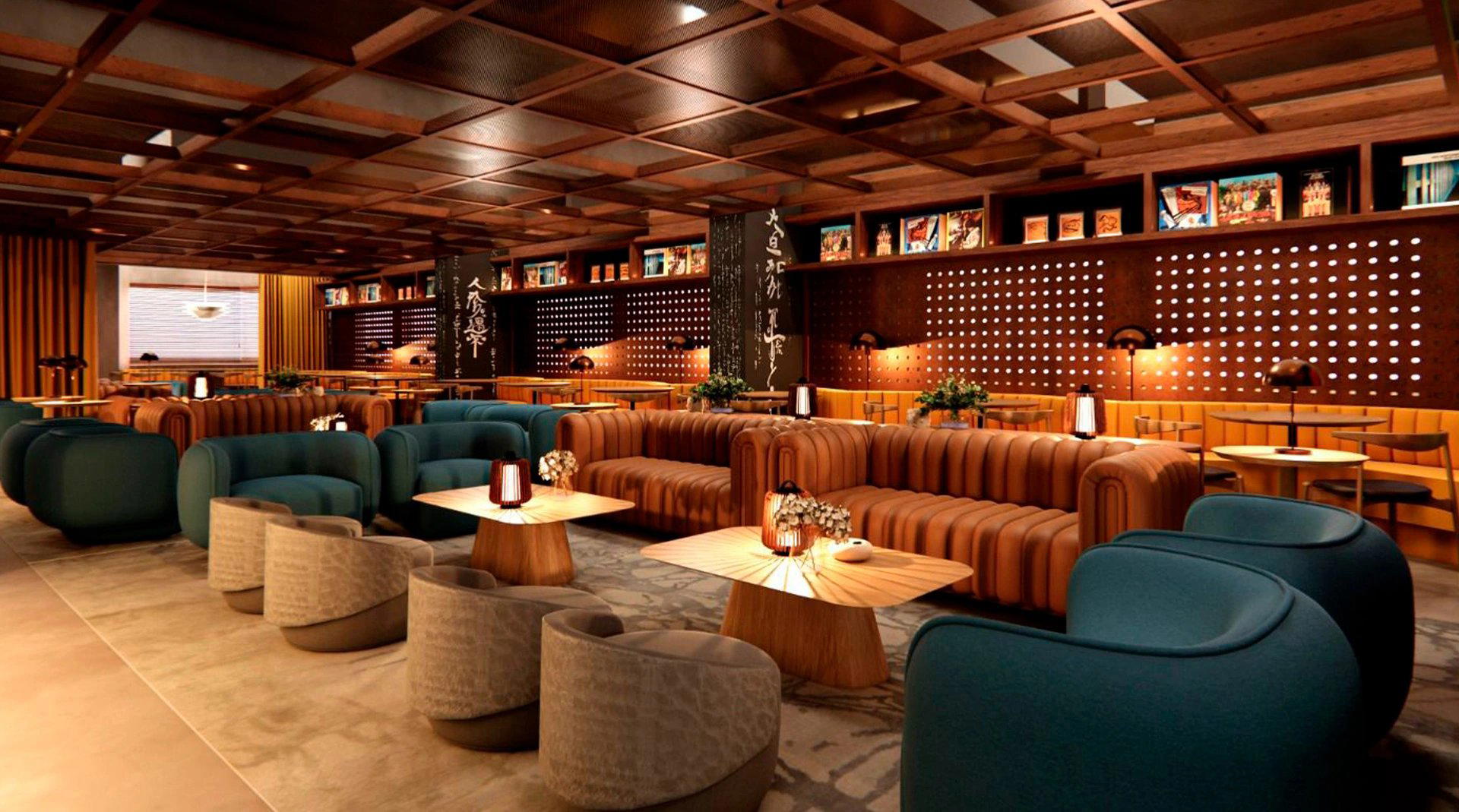
Modern, dimly-lit interior with wood-fired oven visible in dining area; lively atmosphere with DJ entertainment Thursday-Saturday at some locations; intimate seating with close table proximity.