The 2025 recognition positions it at the upper tier of Paraty's small but serious hospitality scene, where production craft and local ingredient culture carry more weight than scale.

Pearl is the En Primeur Club membership app, where members save venues, book tables and use the concierge.
Paraty's Colonial Architecture and the Productions Behind It
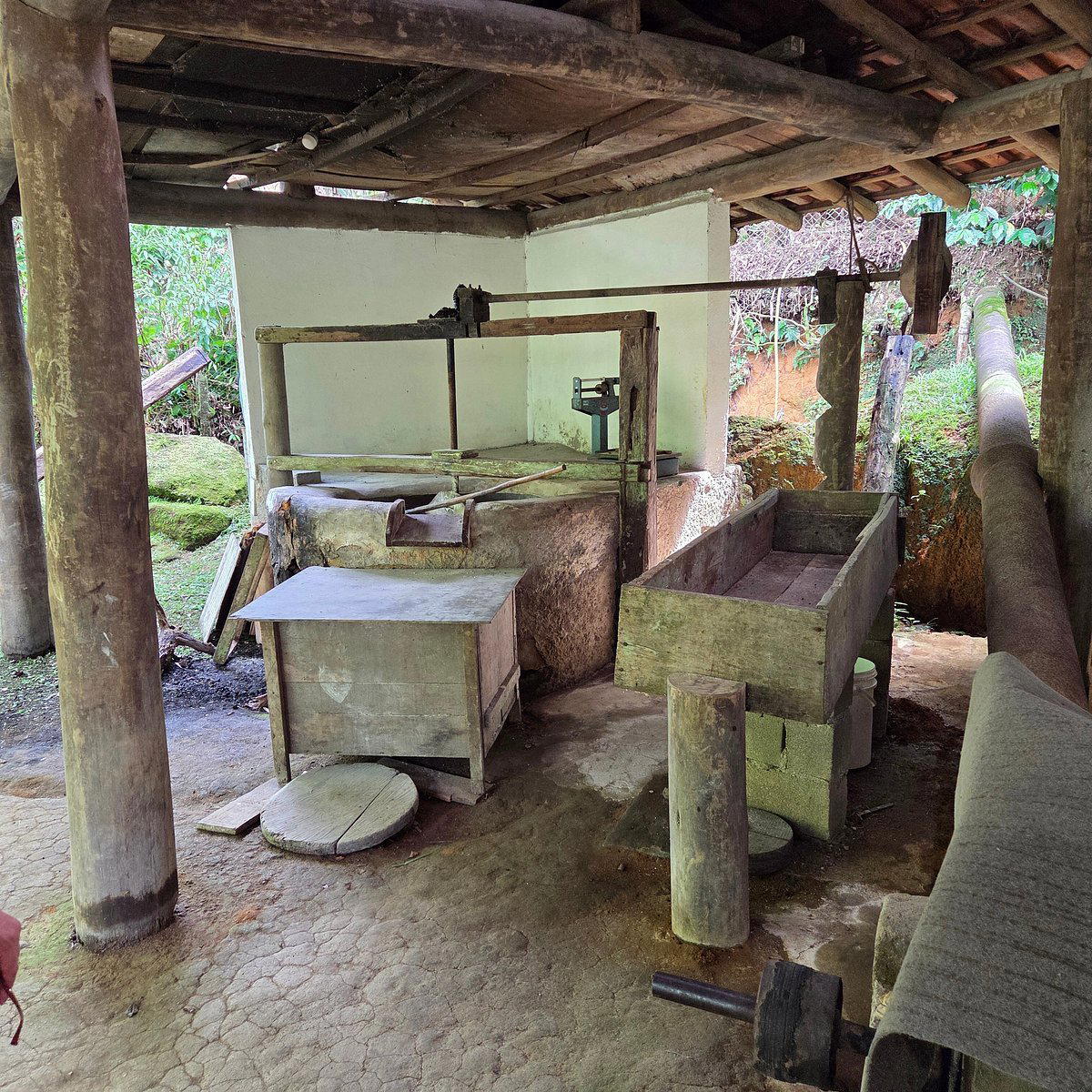
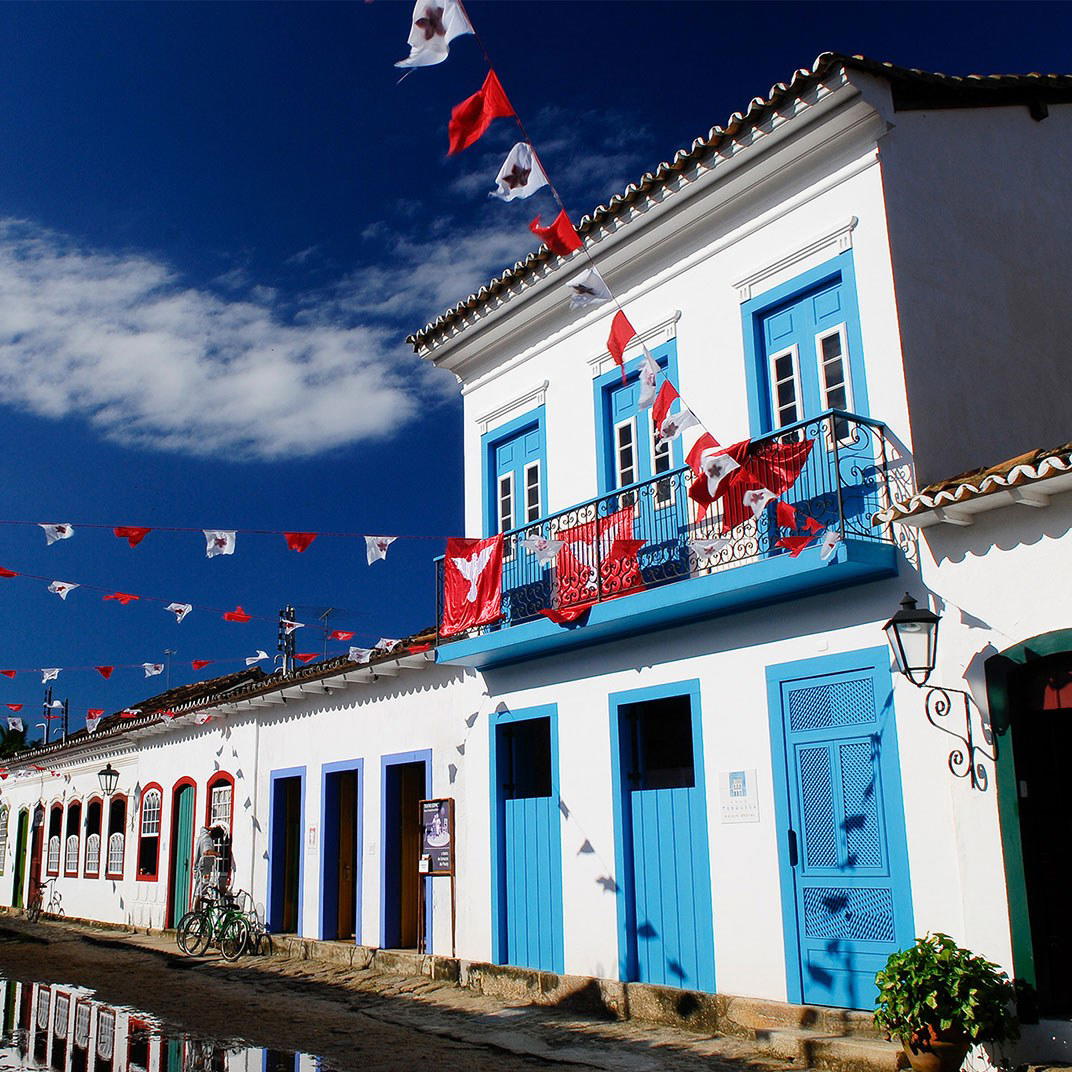
Paraty occupies a particular position in Brazilian cultural geography. The cobblestone streets of its historic centre, protected as a UNESCO World Heritage site since 2019, form one of South America's most intact colonial urban grids. The town's relationship with production runs deep: for three centuries, it functioned as one of Brazil's primary cachaça-producing regions, with sugarcane mills operating along its rivers and feeding a trade that shaped the country's agricultural and social history. That legacy of craft production, rooted in place, is the context that gives Engenho D'Água its significance in 2025.
The word engenho is not decorative. It refers specifically to the old sugarcane mills that defined this region's economy from the colonial period onward, the same infrastructure that made Paraty synonymous with cachaça production long before the spirit became a subject of international spirits criticism. Venues that take that name seriously are making a claim about continuity, not just aesthetics.
In the context of the region's craft production scene, that distinction matters. Paraty's cachaça producers range from industrial operations targeting broad distribution to small-batch artisanal producers whose output is measured in hundreds of litres per year, priced and allocated accordingly.
It places Engenho D'Água in a different conversation from the tourist-facing cachaça tasting stops that line Paraty's historic centre, where volume and accessibility are the primary metrics.
Comparable award-tier producers in other regions show how this tier typically signals a commitment to terroir-driven production. At Albert Boxler in Niedermorschwihr, for example, the Alsace producer's recognition rests on site-specific expression and limited release discipline. In Paso Robles, Adelaida Vineyards draws its credibility from elevation and limestone-driven terroir, with production decisions subordinated to the site. The logic is transferable: award-tier recognition in craft production almost always traces back to a consistent relationship between place and process.
The Paraty Production Tradition in Wider Perspective
Brazil's cachaça geography is poorly understood outside the country, even among spirits professionals who would readily map mezcal's sub-regions or Cognac's crus. Paraty sits in the state of Rio de Janeiro, separated from the major cachaça-producing regions of Minas Gerais by terrain and tradition. Paraty cachaça (sometimes labelled parati) is historically alembic-distilled from freshly pressed sugarcane juice, aged in native Brazilian wood casks, and tied to artisanal methods that pre-date the industrial standardisation of the 20th century.
The distinction between Paraty's tradition and the broader Brazilian category is roughly analogous to the difference between single malt Scotch production in small Highland distilleries and blended Scotch at industrial scale, or between grower Champagne and the major houses. Craft, place, and method define the premium tier; volume and consistency define the mass category. Engenho D'Água operates within the artisanal tradition.
The nearby Alambique Paratiana represents a parallel point of reference within the same town, illustrating how Paraty has developed a small but serious cluster of craft producers whose combined output is shaping how the region's cachaça is understood by specialists. That clustering dynamic, where serious producers reinforce each other's credibility by proximity, is familiar from wine regions: it occurs in Monforte d'Alba, where Aldo Conterno and its peers have collectively anchored Barolo's upper tier, and in Rutherglen, where All Saints Estate operates alongside other historic producers to sustain the region's fortified wine identity.
What to Expect: Format and Approach
The format at these types of sites typically involves guided engagement with the production space, tasting across the range with attention to wood ageing and distillation method, and the opportunity to purchase limited-output expressions not easily found in retail channels.
For visitors building a Paraty itinerary around craft production, Engenho D'Água fits logically alongside the wider network of artisanal producers in the region. Our full Paraty restaurants guide maps the broader dining and production scene for visitors planning multiple stops. The town is compact enough that most production sites and dining venues are accessible on foot from the historic centre, though the address coordinates for Engenho D'Água suggest a location slightly outside the central cobblestone grid, consistent with the space requirements of working sugarcane mills.
Planning Your Visit
This is not unusual for artisanal producers in the region: Paraty's craft producers often operate on schedules tied to production cycles, harvest seasons, and local festivals rather than fixed retail hours. The Festival Literário Internacional de Paraty (FLIP), held annually in July, brings significant visitor numbers to the town and tends to compress booking availability across all serious venues. Visiting outside peak festival periods generally allows for more considered engagement with smaller producers.
Paraty is accessible by road from Rio de Janeiro (approximately four hours) and São Paulo (approximately five hours), with bus services connecting to both cities. The town's position on the Costa Verde, between the two major urban centres, makes it a natural stop on a Rio-São Paulo itinerary rather than a standalone destination requiring dedicated routing.
For comparison with how award-tier producers in other regions handle access and allocation, the Napa Valley model is instructive: at Accendo Cellars in St. Helena and Alpha Omega Winery in Rutherford, the award tier correlates with appointment-based access rather than open-door walk-in. The same pattern appears in Oregon, where Adelsheim Vineyard in Newberg structures visits around scheduled tastings. In Arroyo Grande, Alban Vineyards takes a similar approach with its Rhône-focused production. Treating Engenho D'Água with the same advance-planning logic as these producers is the appropriate frame.
Continue exploring
More in Paraty
Wineries in Paraty
All wineries in Paraty →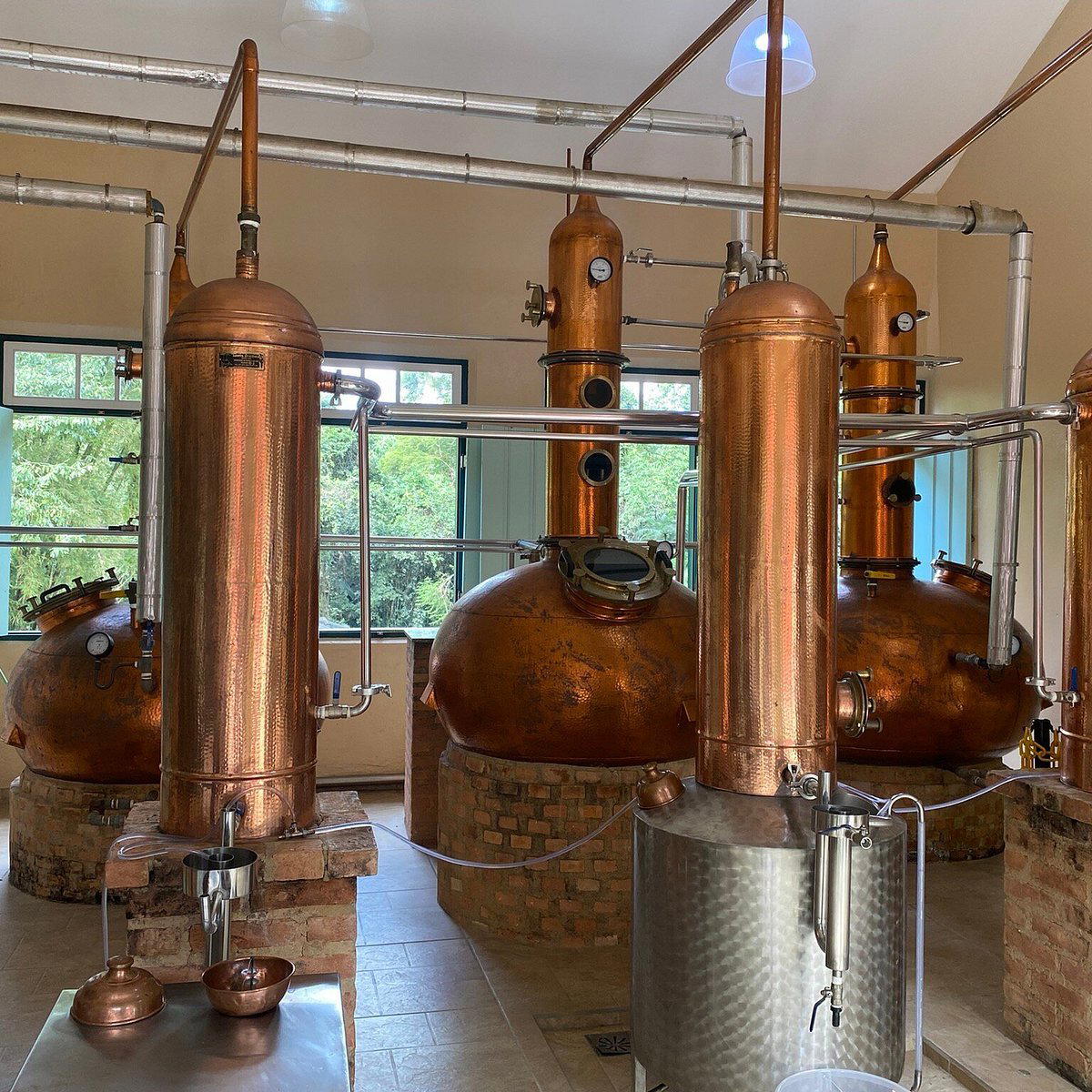
Restaurants in Paraty
Browse all →
Details
- Rustic
- Historic
- Intimate
- Wine Education
- Historic Building
- Guided Tasting
- Portuguese
Simple, artisanal setting focused on quality production and welcoming guided tastings.