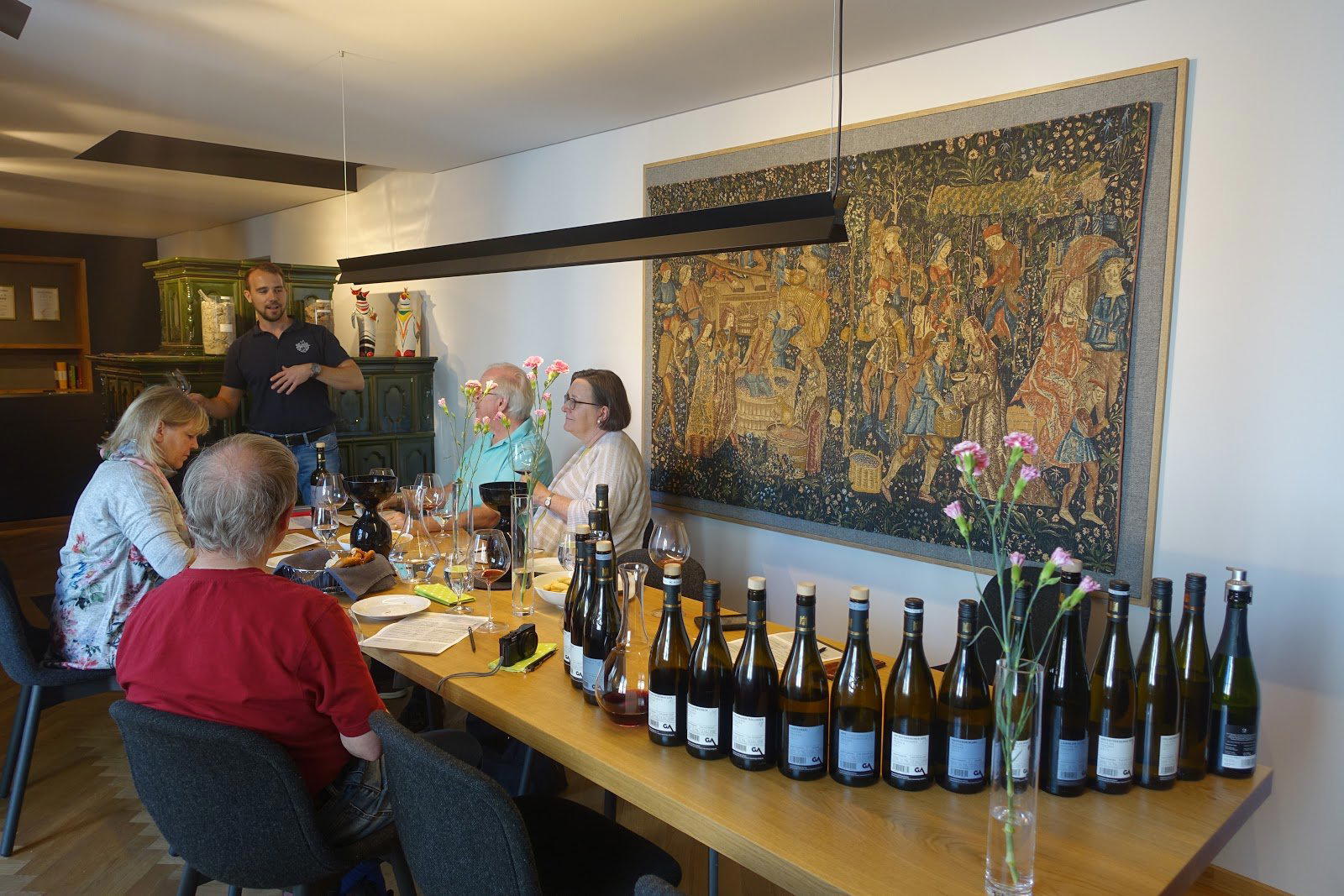
Feinkost Böhm occupies a storied address on Kronprinzstraße in central Stuttgart, positioning it within the city's established fine-food tradition rather than its newer wave of tasting-menu restaurants. For occasions that call for something more considered than a casual dinner, the address carries the kind of accumulated reputation that Stuttgart's serious dining scene rewards over time.
Pearl is the En Primeur Club membership app — saves, bookings, and concierge access live there. Same editors, same standards.
- Address
- Kronprinzstraße 6, 70173 Stuttgart, Germany
- Phone
- +4949711227560
- Website
- feinkost-boehm.de
- Directions
- Get directions
 Saves & bookings on Pearl
Stuttgart's Fine-Food Tradition and Where Feinkost Böhm Fits
Stuttgart's dining character has always been shaped by two competing pulls: the influence of Baden-Württemberg's agricultural abundance and the city's industrial prosperity, which created a consumer class with serious expectations for the table. The result is a food culture that values substance over spectacle, and a restaurant scene where the older, category-defining establishments hold ground alongside newer tasting-menu formats. Feinkost Böhm, on Kronprinzstraße in the city centre, belongs to the former tradition: a fine-food address rooted in the kind of accumulated civic reputation that takes decades rather than a single season to establish.
That address matters. Kronprinzstraße sits at the heart of Stuttgart's retail and commercial core, and a fine-food establishment on that street occupies a different position from, say, a destination restaurant requiring a taxi to the city's hillside districts. The accessibility is part of the occasion logic: this is a place where a significant meal begins with a direct walk rather than a production.
The Occasion-Dining Case in a City of Serious Restaurants
Stuttgart is a more competitive dining city than it appears from outside Germany. Speisemeisterei operates at the creative end of the market with a multi-course format and the price point to match. Délice holds recognition in the creative tier, while Der Zauberlehrling occupies a distinctive creative position at the €€€ bracket. At the modern cuisine end, Hegel Eins and 5 represent the contemporary direction. Feinkost Böhm's position in this environment is not as a tasting-menu competitor but as something older and differently purposeful: the kind of address that works for occasions requiring formality without performance, or for a meal that needs to feel grounded in a city's actual culinary character rather than its aspirational one.
For milestone celebrations, anniversary dinners, or meals where the host needs the room to carry the occasion rather than the kitchen's theatre to do it, the fine-food delicatessen and restaurant format has a specific logic. The food anchors the event; the setting provides the frame. Across Germany, this model has a long track record precisely because it doesn't compete on novelty. You can compare this approach to what drives bookings at Waldhotel Sonnora in Dreis or Vendôme in Bergisch Gladbach: in each case, the accumulated reputation of the address provides a kind of social guarantee that a newer venue cannot offer.
Baden-Württemberg's Larder and What It Means at the Table
The region surrounding Stuttgart is one of Germany's most productive for premium ingredients. The Black Forest provides game and mushrooms; the Swabian highlands yield dairy and lamb; the Neckar valley and its environs have a wine culture anchored in Trollinger and Lemberger that operates largely outside international export markets. A fine-food establishment in this city has access to a supply chain that would be the envy of comparable addresses in northern Germany. The Feinkost category, in this context, is not about importing premium goods from elsewhere but about curating what the region already produces at a serious level.
This regional depth is what separates the better Stuttgart food addresses from the purely cosmopolitan. Germany's three-Michelin-star circuit, which includes addresses like Schwarzwaldstube in Baiersbronn just 90 kilometres south-west, draws heavily on this same larder. The difference is format: Schwarzwaldstube is a destination requiring a journey; a central Stuttgart address is the occasion you build around the city itself.
Planning a Meal: What the Address Suggests
The restaurant's location at Kronprinzstraße 6 places it within walking distance of Stuttgart's main rail hub, making it accessible from across the region without a car. For visitors arriving for a single occasion dinner, that logistical simplicity is worth factoring in: Stuttgart Hauptbahnhof is the gateway for regional trains from the surrounding wine towns and spa villages of Baden-Württemberg, and the central location means a meal here can anchor a broader city visit without requiring complex transport planning.
For diners, the usual recommendation is to plan ahead; reservations are recommended, and the price tier is 4, or about USD 60 per person. For diners comparing options at the higher end of Stuttgart's market,
Stuttgart in the Wider German Fine-Dining Picture
Germany's fine-dining circuit is geographically dispersed in a way that distinguishes it from, say, France's Paris-heavy concentration. Serious destination meals happen in Wolfsburg (Aqua), in Grassau (ES:SENZ), in Piesport (Schanz), and in Perl (Victor's Fine Dining by Christian Bau). Munich has JAN; Hamburg has Restaurant Haerlin; Berlin has format experimenters like CODA Dessert Dining. Stuttgart sits within this dispersed map as a city with genuine culinary depth that operates largely below the international radar, which is part of why its established addresses carry the weight they do locally.
For international visitors accustomed to the dense recognition circuits of cities like New York (where Le Bernardin benchmarks the top tier) or San Francisco (where Lazy Bear operates its communal fine-dining format), a Stuttgart fine-food institution represents a different kind of value: not a brand that travels globally, but an address that tells you something about the city you are actually in.
How It Stacks Up
Comparable venues nearby, for context on price, style, and recognition.
| Venue | Cuisine | Price | Notes |
|---|---|---|---|
| Feinkost BöhmThis venue — the venue you are viewing | Swabian-German Fine Dining with Mediterranean Influences | $$$$ | Not listed |
| Rotenberger Weingärtle | Modern Swabian | $$$ | Obertuerkheim |
| Sansibar by Breuninger | Modern German with Seafood Influences | $$$ | Gablenberg |
| Speisekammer West | Seasonal Swabian with Organic Focus | $$ | Heslach |
| Wirtshaus Hasen | Traditional Swabian Gasthaus | $$ | Gaisburg |
| Plenum - Stuttgart | Modern Regional German with Swabian Influences | $$ | Gablenberg |
Continue exploring
More in Stuttgart
Restaurants in Stuttgart
Browse all →
Bars in Stuttgart
Browse all →


Hotels in Stuttgart
Browse all →

At a Glance
- Elegant
- Sophisticated
- Cozy
- Business Dinner
- Special Occasion
- Date Night
- Open Kitchen
- Extensive Wine List
- Local Sourcing
Welcoming urban oasis with friendly, competent service amid a bustling delicatessen atmosphere.