On the eleventh floor of Gems Sakae in Nagoya's Naka Ward, 雪月花たなかさとる occupies the tier of Nagoya dining where kaiseki tradition meets refined contemporary sensibility. The name itself, evoking snow, moon, and flowers, signals a kitchen attuned to seasonal rhythm and Japanese poetic convention. For visitors tracking the intersection of regional produce and considered technique, this Sakae address warrants attention.
Pearl is the En Primeur Club membership app — saves, bookings, and concierge access live there. Same editors, same standards.
- Address
- Japan, 〒460-0008 Aichi, Nagoya, Naka Ward, Sakae, 3 Chome−9−2 Gems Sakae, 11F
- Phone
- +81522118829
- Website
- setsugekka-tanakasatoru.jp
 Saves & bookings on Pearl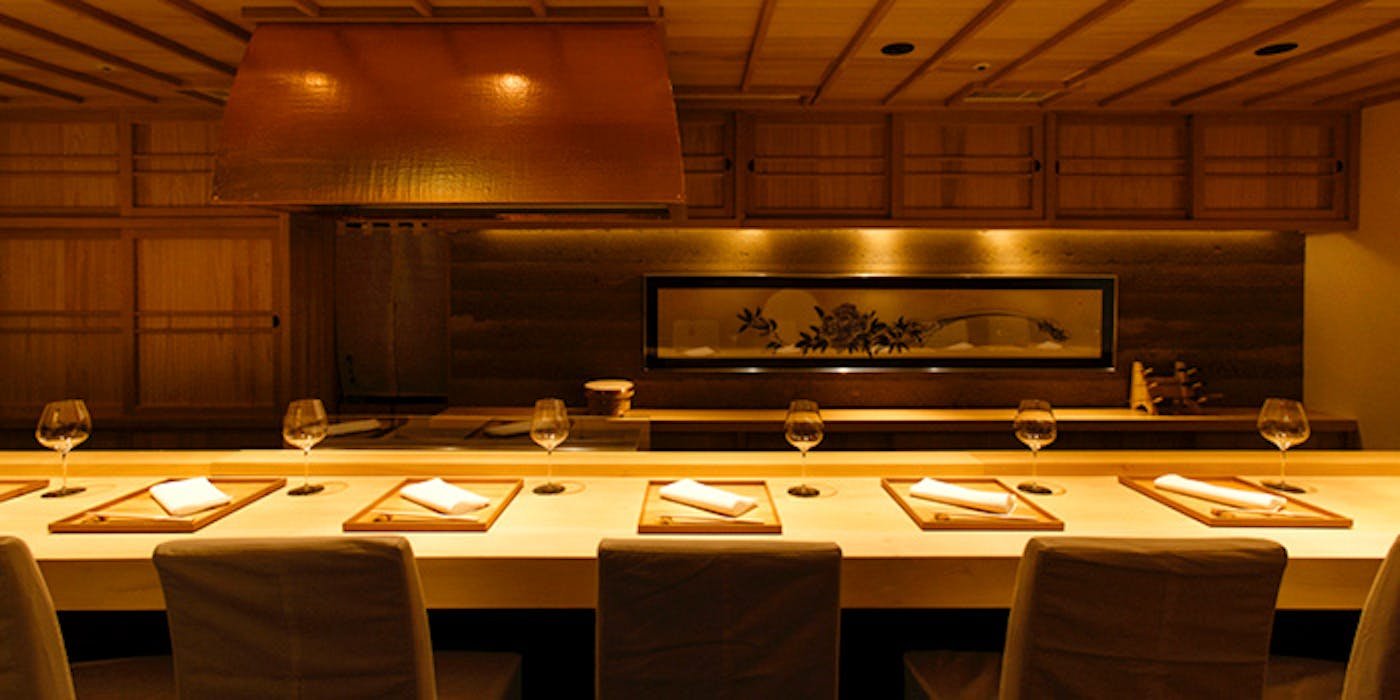
Sakae at Elevation: What the Eleventh Floor Signals
Nagoya's Sakae district has long functioned as the city's commercial and dining centre, dense with tower restaurants that range from casual chain outposts to serious specialist kitchens. The eleventh floor of Gems Sakae, a mid-rise building on 3-chome in Naka Ward, sits at the upper end of that vertical dining spectrum: high enough to separate from street-level noise, positioned in a building that skews toward destination dining rather than passing trade. In Japanese restaurant culture, tower placement at this altitude tends to signal a kitchen that expects its guests to seek it out rather than stumble in. That expectation shapes everything from service pacing to the likely format of the meal.
The name 雪月花たなかさとる draws from the classical Japanese phrase setsugetsubana, snow, moon, flowers, a centuries-old aesthetic concept that frames natural beauty as inseparable from seasonal passage. It is a deliberate reference, and in the context of a Nagoya dining room, it positions the kitchen firmly within the kaiseki or kaiseki-adjacent tradition where the calendar governs the menu more than any fixed signature. Restaurants that name themselves after this concept are rarely making a casual choice: they are signalling that the progression of seasons, not a static chef's vision, is the organizing principle of what arrives at the table.
The Intersection of Local Produce and Imported Technique
Aichi Prefecture, of which Nagoya is the capital, produces an unusually diverse range of ingredients for a region often overshadowed by the agricultural profiles of Kyoto or Hokkaido in food journalism. Hatcho miso, fermented for two or more years in cedar vats and significantly more intense than the pale varieties common in Tokyo, originates in nearby Okazaki and defines the broader Nagoya-meshi culinary identity. Mikawa Bay, directly south of the city, supplies shellfish, eel, and seasonal fish. The agricultural hinterland provides vegetables, including the burdock root and lotus that appear across regional cuisine.
The editorial tension in Nagoya's upper dining tier is how kitchens handle this indigenous material: whether they treat it through strictly traditional preparations, or apply technique borrowed from French, Italian, or global-contemporary practice to reframe what local produce can do. This is the same negotiation visible at places like HAJIME in Osaka, where classical French discipline meets Japanese seasonal logic, or at akordu in Nara, which builds a European framework around deeply local Yamato ingredients. In Nagoya, the comparable question is whether a kitchen uses Aichi's distinct pantry as a point of pride or simply as a sourcing convenience.
Restaurants operating under an aesthetic name as loaded as setsugetsubana tend to take that question seriously. The name commits the kitchen to a seasonal discipline that, by implication, requires close engagement with what local suppliers are producing at any given moment. A menu built around snow in winter, blossoms in spring, and the harvest moon in autumn is a menu that cannot be static, and a menu that cannot be static is a menu deeply dependent on regional sourcing relationships. That dependency, when managed well, is precisely where local ingredients and refined technique intersect to produce something that generic fine dining cannot replicate.
For comparison, the cross-cultural technique dynamic is visible across Japan's serious restaurant tier. Harutaka in Tokyo applies precision and restraint to Edomae sushi traditions; Gion Sasaki in Kyoto works kaiseki within the city's strict seasonal codes; Goh in Fukuoka brings French training to Kyushu's ingredient wealth. Each represents a regional answer to the same fundamental question about what technique should do with place.
Nagoya's Upper Dining Tier: Where 雪月花たなかさとる Sits
Nagoya operates in an interesting gap within Japan's fine dining conversation. It is the country's fourth-largest city by population and a significant industrial and commercial hub, yet it receives less international dining attention than Osaka, Kyoto, or Fukuoka. That gap has two effects: it keeps certain restaurants off the international reservation circuit, and it sustains a local dining culture that is less performance-oriented than comparable venues in cities where foreign visitors dominate the clientele.
The Sakae dining scene includes a range of specialist kitchens. Atsuta Horaiken is the reference address for hitsumabushi, the city's eel-over-rice preparation with a documented history stretching back to the Meiji era. The Italian presence in Nagoya is stronger than many visitors expect: Bacio, cucina Wada, and Cucina Italiana Gallura each represent different points on the spectrum from traditional Italian to hybrid Japanese-Italian. Chez Kobe anchors the French side. Against that backdrop, a kitchen operating under an explicitly Japanese aesthetic framework and a seasonally rotating premise occupies a distinct position in the city's restaurant geography.
Atomix in New York City and Le Bernardin in New York City both demonstrate, in different ways, how rigorous technique and sourcing discipline can coexist at the summit of a city's dining tier.
Know Before You Go
Address: Gems Sakae 11F, 3-9-2 Sakae, Naka Ward, Nagoya, Aichi 460-0008, Japan
District: Sakae, Naka Ward, central Nagoya, well-connected by subway (Sakae Station on the Higashiyama and Meijo lines)
Booking: Reservations are recommended
Walk-ins: Given the tower location and likely format, advance reservations are advisable; the kitchen's seasonal menu structure suggests limited covers per service
Pricing: Pricing: About $80 per person
Hours: Mon-Sat 5-10 PM; Sun closed
Cuisine Context
Comparable venues nearby, for context on price, style, and recognition.
| Venue | Cuisine | Price | Notes |
|---|---|---|---|
| 雪月花たなかさとるThis venue — the venue you are viewing | Premium Wagyu Yakiniku | $$$ | Not listed |
| Sakana To Nihonshu Atarayo | Creative Seafood Izakaya with Sake | $$$ | Naka |
| Tempura Yokoi | Traditional Tempura Restaurant | $$$ | Moriyama |
| Senkun'an | Japanese Teppanyaki Steakhouse | $$$ | Meitō |
| Umi no Hi | Seafood-focused Japanese Izakaya | $$$ | Naka |
| Yadorigi | Casual Edomae Sushi Counter | $$$ | Kita |
Continue exploring
More in Nagoya
Restaurants in Nagoya
Browse all →
At a Glance
- Elegant
- Sophisticated
- Intimate
- Date Night
- Business Dinner
- Special Occasion
- Private Dining
- Sake Program
Current opening hours
- Monday
- 5–10 PM
- Tuesday
- 5–10 PM
- Wednesday
- 5–10 PM
- Thursday
- 5–10 PM
- Friday
- 5–10 PM
- Saturday
- 5–10 PM
- Sunday
- Closed
Hours can change for holidays and private events. Last verified .
Elegant and sophisticated atmosphere with high-end design by internationally prominent designer.