
Senkun'an places Nagoya steak and teppanyaki in a quieter, more residential register than the city-centre grill counter. Its repeated Tabelog 100 selections for Steak and Teppanyaki, including the EAST 2025 list, give it a clear reputation signal in a category where heat control, room format, and beef sourcing carry the conversation.
Pearl is the En Primeur Club membership app — saves, bookings, and concierge access live there. Same editors, same standards.
- Address
- 愛知県名古屋市名東区猪子石1-2701
- Phone
- +81527743848
- Website
- tabelog.com
 Saves & bookings on Pearl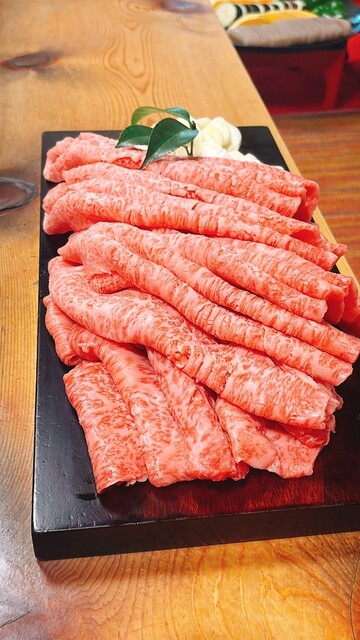
Approaching the Inokoishi side of Meito-ku, Nagoya shifts away from station-front density into a more residential rhythm: lower buildings, quieter streets, and restaurants that rely less on passing trade than on purpose. That setting matters for steak and teppanyaki. In Japan, the genre often splits between theatre at the iron plate and private-room discretion, and the latter tells a different story about how diners use beef restaurants for family meals, celebrations, and business rather than quick spectacle.
Senkun'an belongs to that second register. Its reputation is not built around a chef persona or a heavily publicised tasting-menu narrative, but around recognition in a narrowly defined category: Tabelog 100 for Steak and Teppanyaki EAST in 2025, with earlier selections in 2024, 2022, and 2021. In a field where many restaurants compete on provenance claims and counter intimacy, repeated category selection is the useful signal. It places the restaurant inside the serious steak-and-teppanyaki conversation without requiring the diner to treat it like a Tokyo trophy counter.
Private-room teppanyaki in a city that often eats by occasion
Nagoya’s dining culture has a practical streak. The city can support precise specialist rooms, but it also values restaurants that work for multi-generation meals, formal hosting, and repeat local use. That is why a 60-seat steak and teppanyaki restaurant with private rooms reads differently here than it would in Ginza or Kitashinchi. Scale is not automatically a weakness; in this category, it can indicate a house built for planned occasions rather than counter scarcity.
The format also separates it from the low-spend everyday side of Nagoya dining. Compare the city’s casual breadth, from baguette rabbit and coffee Kajita to Minami Indo Katei Ryori Karnataka, where the appeal lies in modest budgets and repeat neighbourhood use. Steak and teppanyaki occupy another tier, one where the room, pacing, and ability to host a group become part of the value proposition. Kitchen NOMU sits in a different casual-restaurant bracket, while 本郷おけい鮨 points toward the city’s specialist sushi lane. Senkun'an is not competing with those meals; it is competing for the evening when beef, privacy, and ceremony are the point.
That distinction is important for visitors who read Nagoya through its famous casual foods and miss the city’s quieter premium rooms. Teppanyaki here is less about flash than controlled hospitality: the meal has to accommodate drinkers, non-drinkers, older guests, children, and diners who want a celebratory setting without a rigid fine-dining script. The listed drinks, sake, shochu, and wine, reinforce that broad Japanese steakhouse vocabulary rather than a single-minded wine-pairing model.
Recognition matters more than mythology in the steak category
Steak restaurants in Japan can be hard to read from the outside. Menus change, beef terminology can be opaque to visitors, and social media often rewards visible marbling over cooking discipline. Awards and category lists become useful not because they replace judgement, but because they filter a crowded field into restaurants that have sustained attention beyond a single viral dish. Tabelog’s Steak and Teppanyaki 100 list is particularly relevant because it assesses within the category rather than against sushi, kaiseki, French, or ramen.
The restaurant’s Tabelog score of 3.64 is another signal to interpret carefully. On that platform, higher numbers in specialist Japanese dining often move slowly, and category selection can carry more meaning than the headline score alone. The stronger point is continuity: recognition across multiple years suggests a restaurant that has remained visible in the steak-and-teppanyaki field through more than one awards cycle. For a visitor choosing one premium beef meal in Nagoya, that continuity is more persuasive than a louder room with a thinner track record.
The practical character of the space also suits the reputation. Private rooms are listed across multiple party sizes, and the restaurant is marked as non-smoking indoors, with ashtrays outside in the garden and entrance areas. Children are welcome, including babies and preschoolers, and strollers are accepted. Those details matter in Japan’s premium dining context, where acclaimed rooms can be inhospitable to families or larger groups even when the cooking is serious. Here, the hospitality model is broader without abandoning the steakhouse category.
For readers mapping a full Nagoya trip, this is the kind of address to place alongside the city’s other specialist choices rather than treat as a standalone trophy. Start with Our full Nagoya restaurants guide, then cross-check drinking, hotels, and cultural planning through Our full Nagoya bars guide, Our full Nagoya hotels guide, Our full Nagoya wineries guide, and Our full Nagoya experiences guide. For broader Japan and Japanese-leaning dining references, compare the different registers at -Grilled beef Sukiyaki- KAMAKURA TANUKIAN 鎌倉 たぬき庵 in Kamakura, . 鮪と炭火焼き うお炭 秋葉原店 in Tokyo, .cafe in Osaka, .know in Kumamoto, (Shoku) Vietnam in Kawasaki, [Curry Senmon Ten] Maruyama Kyoju. in Sapporo, Jōdo Saké Bar in Los Angeles, and Onigiri Time in Pasadena. Within Nagoya’s internal network, 1022, 451, Aaron, Alan. and All Day Dining Montmartre show how widely the city’s restaurant map stretches beyond one cuisine or price band.
Who this meal is for
The clearest case for Senkun'an is the diner who wants Nagoya steak with reputation behind it, but not the narrowness of a tiny counter. The room format makes sense for families, celebrations, and groups that need privacy; the repeated Tabelog 100 selections make sense for diners who want evidence before committing to a premium beef meal. This is not the address for a casual first bite after arriving in the city. It is better treated as a planned steak-and-teppanyaki booking, especially for travellers who want Nagoya’s quieter premium dining culture rather than another central-city restaurant built for speed.
Cost and Credentials
Comparable venues at the same tier.
| Venue | Cuisine | Price |
|---|---|---|
| Senkun'anThis venue — the venue you are viewing | Meitō, Japanese Teppanyaki Steakhouse | $$$ |
| Motoi | Chikusa, Modern Kyoto Kaiseki Omakase | $$$ |
| Yakitori Shige Higashizakura | Higashi, Nagoya Cochin Yakitori Omakase | $$$ |
| Gyutei | Higashi, High-end Wagyu Yakiniku | $$$ |
| Shutei Nawa | Higashi, Japanese Izakaya Seafood | $$$ |
| Chiba Izumi | Higashi, Yakitori Omakase | $$$ |
Recognition history
Dated appearances from independent guides and award organizations, with the underlying list record or original source where available.
Tabelog 100 #54 · No. 54
Tabelog · Tabelog 100 - Steak / Teppanyaki - EAST - 2025
Continue exploring
More in Nagoya
Restaurants in Nagoya
Browse all →
At a Glance
- Quiet
- Classic
- Cozy
- Intimate
- Date Night
- Business Dinner
- Special Occasion
- Standalone
- Sake Program
- Beer Program
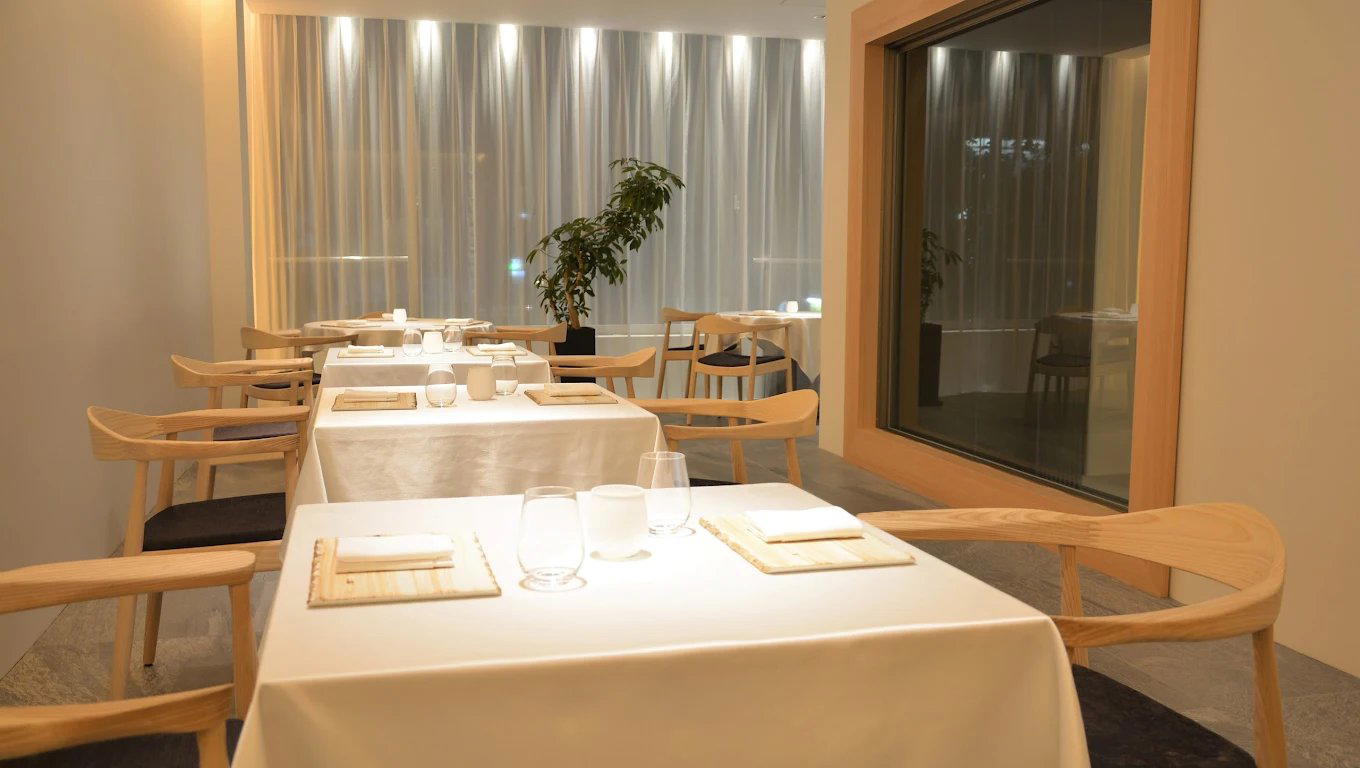
Quiet, serene, and traditionally Japanese, with a secluded feel that suits a refined, low-key meal.