A traditional Swabian Landgasthof in St. Johann, Failenschmid Landgasthof Hirsch represents the kind of deeply rooted regional inn that anchors rural Baden-Württemberg's food culture. The cooking draws on local agricultural traditions rather than metropolitan trends, placing it in a category distinct from Germany's urban fine-dining circuit. For travellers passing through the Swabian Alb, it offers a grounded alternative to the region's more celebrated destinations.
Pearl is the En Primeur Club membership app — saves, bookings, and concierge access live there. Same editors, same standards.
- Address
- Parkstraße 2, 72813 St. Johann, Germany
- Phone
- +497122828710
- Website
- failenschmid.de
- Directions
- Get directions
 Saves & bookings on Pearl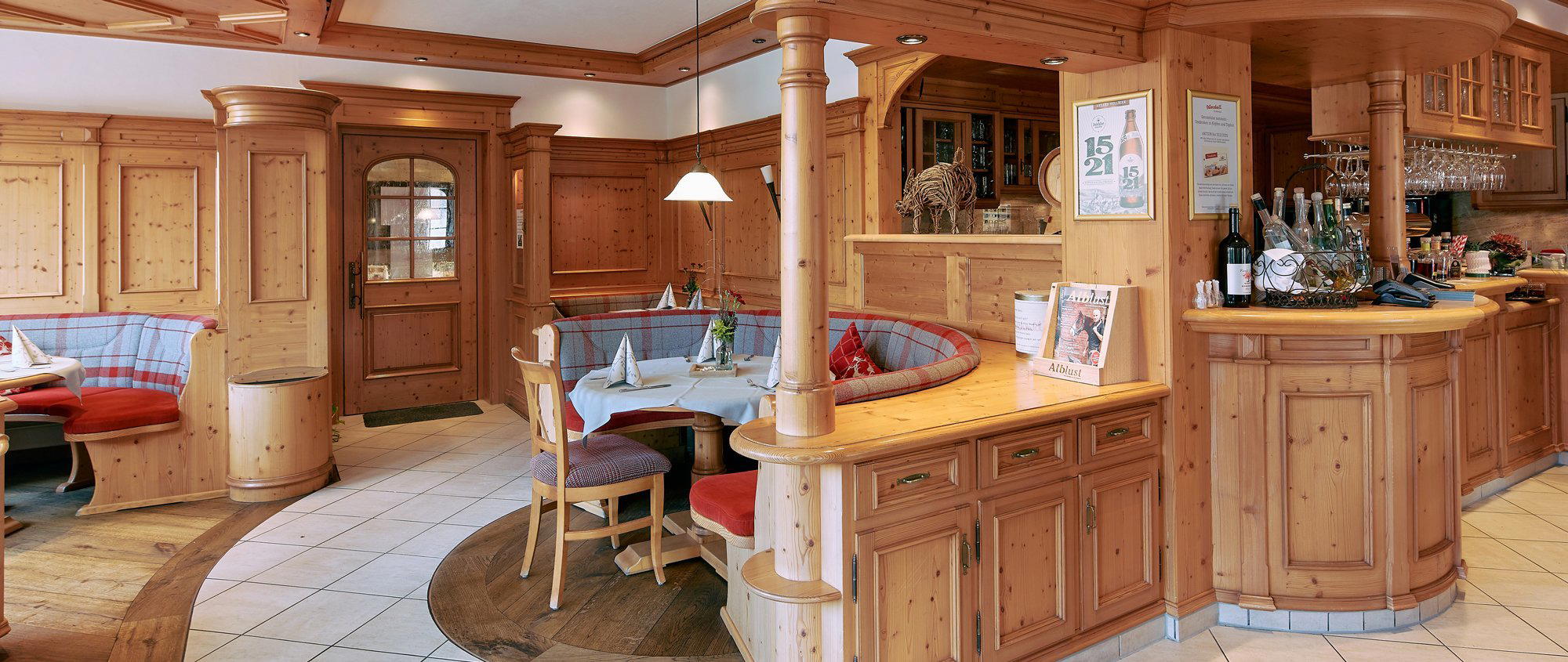
Where the Swabian Alb Sets the Table
Approaching a Landgasthof in rural Baden-Württemberg carries a particular set of expectations: low-beamed ceilings, the faint smell of woodsmoke, a kitchen that treats the surrounding landscape as its primary supplier. Failenschmid Landgasthof Hirsch, on Parkstraße in St. Johann, fits squarely within that tradition. The building signals its purpose before you reach the door. This is an inn that has served the local community through generations of agricultural rhythms and seasonal harvests.
St. Johann itself sits in the Swabian Alb, a plateau region in Baden-Württemberg characterised by rolling meadows, beech forests, and a farming culture that has historically produced some of southern Germany's most direct and honest food. That geographical specificity matters when you are trying to understand what a Landgasthof here is actually doing. It is not competing with Schwarzwaldstube in Baiersbronn or the urban ambition of JAN in Munich. It occupies a different register entirely, one where the measure of quality is fidelity to place rather than ambition toward abstraction.
The Landgasthof Tradition and Why It Still Matters
Germany's Landgasthof culture occupies a specific and increasingly pressured position in the country's hospitality history. These inns, typically family-run and tied to their immediate agricultural surroundings, once formed the backbone of rural German food culture. As population moved toward cities and as fine dining consolidated around metropolitan centres, from Aqua in Wolfsburg to Vendôme in Bergisch Gladbach, the traditional country inn faced structural pressure. Those that survived did so by maintaining genuine relationships with local producers, resisting the temptation to reposition toward a broader, more tourist-facing identity.
The Landgasthof format, at its most functional, is built on a short supply chain. Meat from farms within a few kilometres, seasonal vegetables from the kitchen garden or a neighbouring grower, game from local forests in autumn. That sourcing model is not a marketing position; it is an economic and logistical reality shaped by geography. In the Swabian Alb, where the terrain limits what can be grown and raised, the kitchen's vocabulary is shaped accordingly. This is the opposite of the creative menus at places like CODA Dessert Dining in Berlin, where the sourcing serves a concept. Here, the concept serves the sourcing.
What the Ingredient-Led Kitchen Looks Like in Practice
Swabian cuisine is built on a set of preparations that have evolved to take full advantage of what the region's farms and forests yield. Spätzle, Maultaschen, roast meats, and freshwater fish from the Alb rivers represent the base grammar. A kitchen working within this tradition does not need to innovate to justify its existence; it needs to execute with consistency and to use ingredients that carry the character of the region. The difference between a Landgasthof doing this well and one that has lost its way is almost always visible in the sourcing: the colour of the egg yolk in the Spätzle dough, the fat distribution in the pork, the firmness of the trout.
For travellers more accustomed to the tasting-menu format at destinations like Schanz in Piesport or Waldhotel Sonnora in Dreis, the Landgasthof proposition requires a recalibration of expectations. The measure here is not novelty or technical refinement. It is whether the kitchen has the discipline to let ingredients speak without intervention, and whether the sourcing relationships are close enough to make that possible. That discipline defines this category across Baden-Württemberg.
St. Johann in the Context of Regional Dining
St. Johann is not a dining destination in the way that the Black Forest or the Moselle Valley function for food-focused travellers. It does not draw the kind of international visitor traffic that supports high-volume wine tourism. What it has is a coherent local food culture tied to the agricultural character of the Swabian Alb, and a small number of establishments that have maintained a serious relationship with that culture. For travellers using St. Johann as a base for hiking or cycling the Alb, or passing through on a longer route through Baden-Württemberg, the Landgasthof circuit here offers something qualitatively different from the urban dining available at Restaurant Haerlin in Hamburg or GästeHaus Klaus Erfort in Saarbrücken.
The regional comparison worth making is with other Alb towns rather than with Germany's fine-dining map. In that context, an inn on Parkstraße in St. Johann competes on the same terms as its neighbours: the quality of the bread, the sourcing of the meat, and the consistency of a kitchen that has been cooking the same dishes long enough to have earned genuine confidence. Those standards, applied honestly, place a well-run Landgasthof in legitimate editorial company alongside rural destinations like Bagatelle in Trier or L.A. Jordan in Deidesheim, even if the price point and format are entirely different.
Internationally, the Landgasthof tradition finds analogues in establishments like Lazy Bear in San Francisco, which also draws on a communal, ingredient-forward ethos, though executed in a different cultural register. The commonality is a refusal to separate what is cooked from where it comes from.
Planning a Visit
Failenschmid Landgasthof Hirsch is located at Parkstraße 2 in St. Johann, a town in the Reutlingen district of Baden-Württemberg. St. Johann is accessible by regional rail with connections via Reutlingen, and by road from the B312 corridor running through the Alb. Reservations are recommended, and the inn's hours are Tuesday 11 AM to 3 PM, Thursday through Sunday 11 AM to 9 PM, with Monday and Wednesday closed. Dress expectations align with the format: practical, clean, and comfortable rather than formal.
Travellers interested in tracing the broader arc of German regional cooking from this kind of grounded, source-led Landgasthof to the more technically ambitious end represented by venues like ES:SENZ in Grassau, Ösch Noir in Donaueschingen, or Jante in Hanover will find that the contrast clarifies what each end of the spectrum is doing well. At Victor's Fine Dining by Christian Bau in Perl or Le Bernardin in New York City, technique mediates between ingredient and plate. At a Landgasthof in the Swabian Alb, the ingredient arrives almost unmediated. Both approaches require rigour; they simply place it at different points in the process.
In Context: Similar Options
Comparable venues nearby, for context on price, style, and recognition.
| Venue | Cuisine | Price | Notes |
|---|---|---|---|
| Failenschmid Landgasthof HirschThis venue — the venue you are viewing | Traditional German Hearty Cuisine | $$ | Not listed |
| Gaststätte Krone | Traditional Swabian German | $$ | Altstadt (Old Town) |
| Schönbuch Bräu | Swabian Brauhaus | $$ | Gablenberg |
| 100 Grad Restaurant | Modern Regional German | $$ | Ulm |
| Weinstube Zur Kiste | Traditional Swabian German | $$ | Gablenberg |
| schuh's Restaurant | Regional German | $$ | Eggenstein-Leopoldshafen |
Continue exploring
More in St Johann
Restaurants in St Johann
Browse all →
Bars in St Johann
Browse all →
Hotels in St Johann
Browse all →

At a Glance
- Rustic
- Cozy
- Classic
- Family
- Casual Hangout
- Standalone
- Local Sourcing
Current opening hours
- Monday
- Closed
- Tuesday
- 11 AM–3 PM
- Wednesday
- Closed
- Thursday
- 11 AM–9 PM
- Friday
- 11 AM–9 PM
- Saturday
- 11 AM–9 PM
- Sunday
- 11 AM–9 PM
Hours can change for holidays and private events. Last verified .
Rustic wooden interior creating a cozy, welcoming atmosphere for traditional dining.