
A Michelin-starred address on the Swabian Alb, Restaurant 1950 holds consecutive one-star recognition for 2024 and 2025 under chef Chetan Shetty, whose background brings an unusual cross-cultural dimension to regional German cuisine. At the upper end of the price range, it sits among a small group of destination restaurants drawing serious diners to rural Baden-Württemberg. See our full guide to dining in Hayingen for further context.
Pearl is the En Primeur Club membership app — saves, bookings, and concierge access live there. Same editors, same standards.
- Address
- Aichelauer Str. 6, 72534 Hayingen, Germany
- Phone
- +49 7383 94980
- Website
- speisekartenweb.de
- Directions
- Get directions
 Saves & bookings on Pearl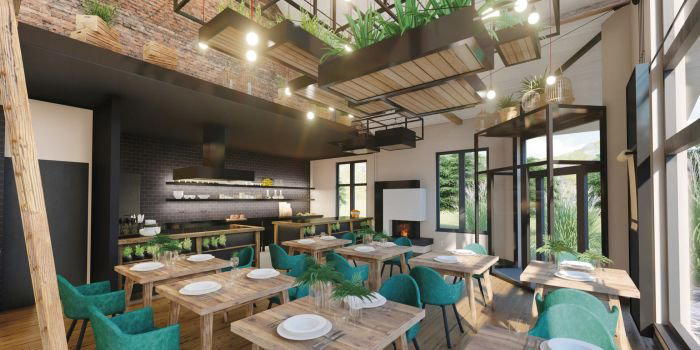
The Swabian Alb does not announce itself. The plateau rises quietly from the plains of Baden-Württemberg, its villages compact and self-contained, its restaurants unlikely to appear on the radar of travellers whose mental map of German fine dining begins and ends with Munich or Hamburg. That invisibility is partly geographical and partly cultural: the region has never marketed itself aggressively, and the restaurants that have earned serious recognition here tend to be found by those who already know to look. Restaurant 1950, on Aichelauer Strasse in Hayingen, belongs firmly to that pattern. It is a one-star restaurant in Hayingen, Germany, by chef Chetan Shetty, with a price point of about $160 per person. It occupies a price tier, four symbols, the upper bracket in Germany's independent dining scene, shared by reference-point addresses like Schwarzwaldstube in Baiersbronn and Vendôme in Bergisch Gladbach, yet it operates at a remove from the circuits that feed those rooms with international visitors.
A Rural Stage for Serious Cooking
Germany's fine dining geography has always been more dispersed than France's or Japan's. Starred restaurants appear in small towns, in converted farmhouses, in spa hotels at the end of single-track roads. The pattern reflects both the country's federal structure and the appetite of German diners for destination travel within their own borders: driving two hours for a Michelin-starred meal is not considered eccentric. Restaurant 1950 fits that model, drawing guests to Hayingen rather than waiting for Hayingen to generate passing trade.
The Chef and the Cross-Cultural Dimension
In German regional cuisine at the starred level, the default biographical arc tends to run through European classical kitchens: French training, a spell at a three-star house, then a return to a home region with a French-influenced technique applied to local produce. Chef Chetan Shetty's trajectory introduces a different reference set. An Indian-origin chef working in the regional cuisine category in rural Swabia represents a combination that does not fit neatly into the standard narrative, and the interest of Restaurant 1950's position in the German dining scene is partly that it resists easy categorisation. The regional cuisine designation is a formal one, it signals a commitment to local sourcing and place-specific cooking, but how that commitment is expressed varies enormously depending on who is doing the cooking and what other traditions they bring to the table. Comparable questions about how chefs with non-European backgrounds work within European regional frameworks are being asked in kitchens across Germany, from JAN in Munich to ES:SENZ in Grassau. The answer, when it works, tends to produce cooking that is more analytically interesting than the category label alone suggests.
The Michelin star recognitions in 2024 and 2025 confirm that the approach has registered with the guide's inspectors as coherent and consistent. Michelin's one-star category in Germany covers a wide range: from technically rigorous classical houses to more experimental formats like CODA Dessert Dining in Berlin. Retention across two consecutive years carries more weight than a first award, as it indicates the kitchen is not coasting on an opening-year impression.
Regional Cuisine at the Premium End
The regional cuisine category in German fine dining sits in a productive tension. On one side, there is the locavore commitment: sourcing from the immediate agricultural hinterland, working with seasonal rhythms that are more compressed at altitude, respecting produce hierarchies that predate modern supply chains. On the other, there is the expectation that a four-symbol price point brings: technical execution, a coherent menu architecture, service calibrated to the format. The Swabian Alb offers specific larder advantages, game, dairy, grain, foraged material from the plateau's limestone terrain, and a kitchen that understands how to translate those advantages into tasting-menu logic will always have more interesting material to work with than one relying on generic premium sourcing.
That broader regional context connects the restaurant to a set of German addresses where place-specific cooking has earned serious recognition without requiring the kind of metropolitan infrastructure that supports three-star kitchens. Schanz in Piesport, Waldhotel Sonnora in Dreis, and Victor's Fine Dining by Christian Bau in Perl all demonstrate that Germany's most consequential dining is spread across the map rather than concentrated in its largest cities. Restaurant Haerlin in Hamburg and Aqua in Wolfsburg represent the urban end of that distribution; the restaurant sits at the rural extreme, which is not a disadvantage in a country where destination dining culture is genuinely embedded.
The Hayingen Context
Hayingen is a small municipality on the Swabian Alb, east of Reutlingen, with a population that would not suggest it as an obvious address for premium dining. But the Alb has a history of producing serious food addresses in unlikely postal codes, and the presence of a consecutively starred restaurant here follows a pattern visible elsewhere on the plateau and in adjacent rural Baden-Württemberg. Visitors arriving specifically for the restaurant will want to consider the broader options the area offers. The restaurant ROSE (Organic) in Hayingen offers an alternative dining reference point in the same locality.
Planning a Visit
The restaurant sits at the four-symbol price tier, placing it among Germany's more serious dining commitments. At that level, advance reservation is advisable; rooms of this type in rural settings tend to operate with limited covers, and Michelin recognition in consecutive years generates demand that outpaces capacity. Advance reservation is essential. The address, Aichelauer Str. 6, 72534 Hayingen, is accessible by car, and visitors combining the meal with a wider exploration of the Swabian Alb will find the drive through the plateau worthwhile on its own terms. The restaurant is open Thursday through Sunday, 6 to 11 PM, and closed Monday through Wednesday.
How It Stacks Up
Comparable venues nearby, for context on price, style, and recognition.
| Venue | Cuisine | Price | Awards | Notes |
|---|---|---|---|---|
| Restaurant 1950This venue — the venue you are viewing | Modern German Bio Fine Dining | $$$$ | Michelin 1 Star | Not listed |
| ROSE | Organic Farm-to-Table German | $$ | Bib Gourmand | Ehestetten |
| Esszimmer im Oberschwäbischen Hof | Modern Fine Dining with South German Influences | $$$$ | Michelin 1 Star | Schwendi |
| Hirsch | Classic Swabian Fine Dining | $$$ | Michelin 1 Star | Sonnenbühl-Erpfingen |
| Gasthof Krone | Classic German Michelin-Starred | $$$ | Michelin 1 Star | Waldenbuch |
| KUNO 1408 | Modern Franconian Fine Dining | $$$$ | Michelin 1 Star | Würzburg City Centre |
Recognition history
Dated appearances from independent guides and award organizations, with the underlying list record or original source where available.
Michelin 1 Star
Michelin
Michelin 1 Star
Michelin
Michelin 1 Star
Michelin
Continue exploring
More in Hayingen
Restaurants in Hayingen
Browse all →
Bars in Hayingen
Browse all →
Hotels in Hayingen
Browse all →

At a Glance
- Romantic
- Intimate
- Modern
- Cozy
- Elegant
- Date Night
- Special Occasion
- Open Kitchen
- Extensive Wine List
- Local Sourcing
- Organic
Current opening hours
- Monday
- Closed
- Tuesday
- Closed
- Wednesday
- Closed
- Thursday
- 6–11 PM
- Friday
- 6–11 PM
- Saturday
- 6–11 PM
- Sunday
- 6–11 PM
Hours can change for holidays and private events. Last verified .
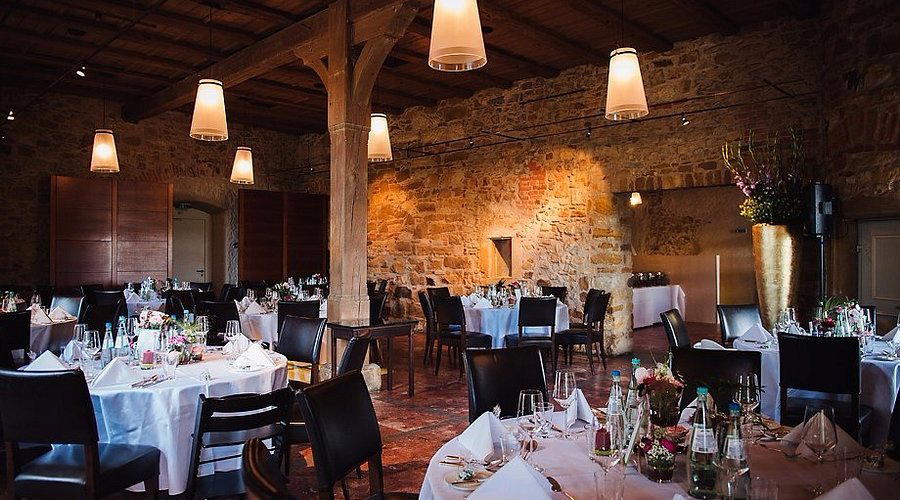
Modern and attractive dining area with high ceilings, hanging herb boxes, open kitchen, and a convivial 'living room' atmosphere.