
Tabelog 100 #37
Our verdict
Situated on Sennichicho in central Kagoshima, エ ヌゥ occupies a quieter register within the city's dining scene — a neighbourhood address that rewards those who seek out the less-publicised tier of Japanese regional dining. Kagoshima's culinary identity runs deep on Kurobuta pork, Satsuma tradition, and black vinegar, and エ ヌゥ positions itself within that local fabric rather than against it.

Pearl is the En Primeur Club membership app — saves, bookings, and concierge access live there. Same editors, same standards.
- Address
- 9-19 Sennichicho, Kagoshima, 892-0843, Japan
- Phone
- +81992953937
- Hours
- Mon–Wed 12–1 PM, 6:30–9 PMThu 12–1:30 PM, 6–9:30 PMFri–Sun 12–1 PM, 6:30–9 PM
- Website
- et-nou.com
- Directions
- Get directions
- Booking
- Book on TableCheck
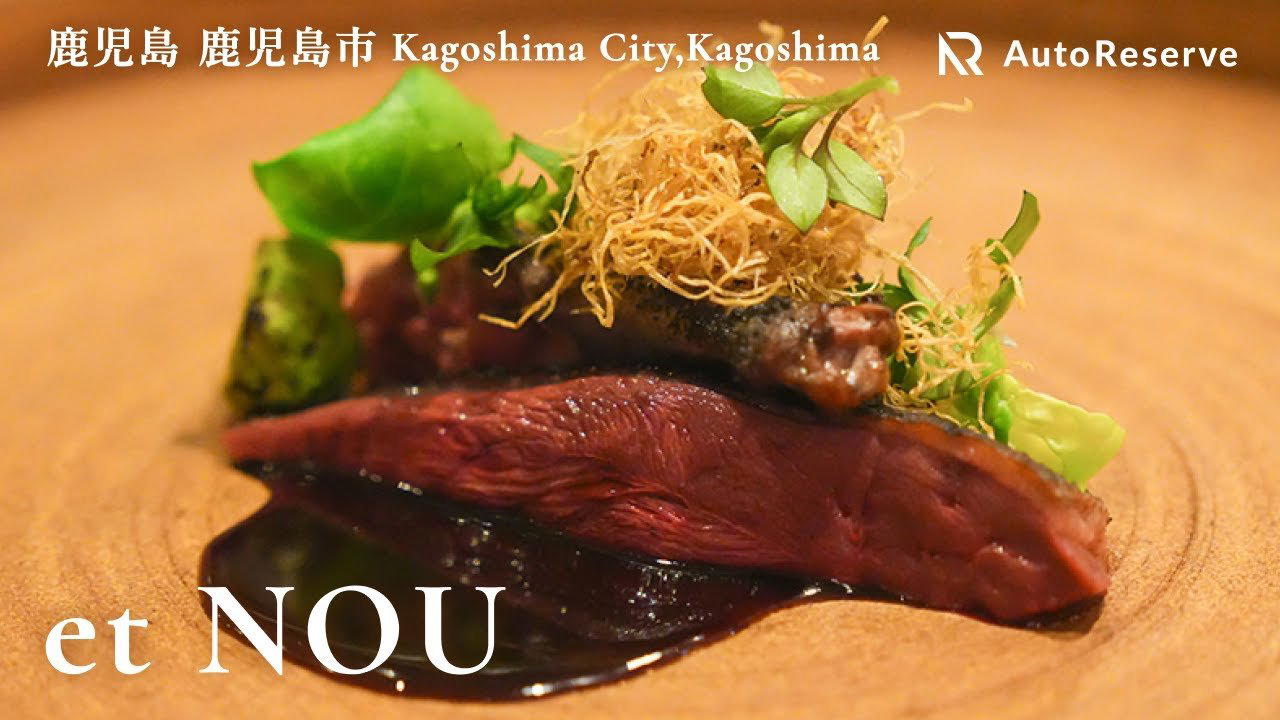
The menu
What to order
- Ummaka_pork
- Cauliflower_mousse
- Water_squid_pasta
- Izumi_venison_steak
Sennichicho and the Quieter Side of Kagoshima Dining
Kagoshima's restaurant map divides roughly into two registers. The first is the well-signposted tier: the kappo rooms and kaiseki counters that draw visitors who have done their research, places like Kumasotei and Myoken Ishiharaso Shokusai Ishikura, where the format is clear and the credentials are stated. The second register is less legible from the outside — neighbourhood addresses on streets like Sennichicho that function primarily for locals and that require either a recommendation or deliberate curiosity to find. エ ヌゥ, at 9-19 Sennichicho, sits in that second register.
Sennichicho itself is a working commercial street in central Kagoshima, close enough to the Tenmonkan district to feel urban, but without the foot traffic of that entertainment corridor. Streets of this kind in Japanese cities tend to house a specific category of dining room: the kind that does not need to attract passing trade because its clientele already knows where it is. That structural position, in a city of Kagoshima's size and culinary self-confidence, is worth understanding before you arrive.
Kagoshima's Culinary Identity as Context
To assess any restaurant in Kagoshima properly, it helps to understand what the city's dining tradition is actually built on. Kagoshima is Satsuma country, and that heritage is specific: Kurobuta pork from Berkshire-cross heritage breeds raised in Kagoshima Prefecture, sweet potato-based shochu that anchors the drinking culture, black vinegar produced in the Kirishima region, and seafood pulled from the waters around the Satsuma Peninsula and the island chain extending south toward Okinawa. These ingredients define the regional larder and provide the raw material against which any kitchen in the prefecture is, consciously or not, measured.
Japan's regional dining scene has developed an interesting dynamic over the past decade. Prefectural capitals outside the main culinary circuits — Osaka, Tokyo, Kyoto, have built increasingly confident dining rooms that operate primarily within their local ingredient logic rather than importing metropolitan style. Kagoshima follows this pattern. Where Gion Sasaki in Kyoto or HAJIME in Osaka operate at the apex of their cities' nationally recognised hierarchies, Kagoshima's strongest rooms tend to operate within a more contained frame, serving a city whose food culture is serious but whose dining scene is less internationally mediated. That context shapes what a restaurant like エ ヌゥ is trying to do and for whom.
A Street-Level Address in a City That Rewards Patience
The neighbourhood format matters here. In Kagoshima, as in many Japanese regional cities, the most consistent dining experiences are often not the ones with the clearest digital presence. A room on a street like Sennichicho is likely to operate on reservations rather than walk-ins, to have a fixed or semi-fixed menu aligned to what is available locally that week, and to price accordingly for a local clientele rather than inflating for tourists. This is a meaningfully different operating model from the more internationally pitched dining rooms in the city.
For comparison, consider how the kaiseki and sushi formats play out across Kagoshima's stronger addresses. Meizan Kimiya operates within the sushi tradition, with the disciplined counter format that genre requires. KAI occupies a different position in the local scene. Nana Kamado approaches the region's ingredients from its own angle. Each of these represents a legible format with a defined proposition. A neighbourhood room on Sennichicho operates slightly differently, the proposition is less stated, the format more contingent on relationship and context, and the experience accordingly more variable but potentially more genuine to how the city actually eats.
This dynamic appears across Japanese regional dining. In Fukuoka, rooms like Goh balance local identity with wider recognition. In Nara, akordu brings an international frame to a deeply traditional food city. In Kagoshima, the pull is more often toward the interior of the local culture rather than outward toward the international dining circuit.
What to Expect From This Part of the City
Arriving at a restaurant in this part of Kagoshima's centre means arriving in a neighbourhood that functions on a human scale. The streets around Sennichicho are navigable on foot from the Kagoshima-Chuo area, and the surrounding blocks carry the rhythm of daily commercial life rather than tourist activity. That physical context tends to set expectations correctly: this is not a destination-dining address in the way that rooms in our full Kagoshima restaurants guide sometimes are. It is, instead, part of the city's tissue.
Japan's regional dining rooms at this level often share a set of operational characteristics worth knowing. The menu is typically decided by the kitchen rather than the guest; the ingredient sourcing is local and seasonal almost by default; and the drink list is likely to lean on local shochu and regional sake rather than imported wine programmes. These are not constraints, they are the conditions that produce the specificity that makes regional Japanese dining worth the travel in the first place. The same logic applies at very different price and prestige tiers: from the counter rooms of Harutaka in Tokyo down to the quieter neighbourhood rooms of cities like Kagoshima.
For those building a wider itinerary across Japan's regional dining rooms, it is useful to note that restaurants in this neighbourhood tier rarely appear in international awards systems, not because the cooking fails to merit attention, but because those systems tend to concentrate on rooms with the staff and infrastructure to support international press relationships. The absence of a documented awards record for a room on Sennichicho tells you almost nothing about the cooking.
Planning a Visit
Visitors planning to eat at エ ヌゥ should approach it the way any serious neighbourhood address in Japan rewards being approached: with a reservation made well enough in advance, no strong preconceptions about format, and a willingness to eat what the kitchen is working with that week. Kagoshima is served by Kagoshima-Chuo Shinkansen station, connecting south Kyushu to Fukuoka and onward to Osaka and Tokyo, which makes the city reasonably accessible as part of a broader Japan itinerary. The Sennichicho address sits within walking distance of the central city, making logistics direct once you are in Kagoshima. Contact and booking details should be confirmed locally, as operational information for rooms in this tier is not always maintained through international booking platforms.
Frequently asked questions
Where do I go for エ ヌゥ?
エ ヌゥ is located at 9-19 Sennichicho, Kagoshima, 892-0843, Japan, Kagoshima.
How does エ ヌゥ's location on Sennichicho compare to Kagoshima's more prominent dining districts?
Sennichicho sits in the city's central but low-profile commercial fabric, away from the more heavily trafficked restaurant clusters that draw visitors on shorter itineraries. In Kagoshima, as in most Japanese regional cities, that kind of address typically signals a room that relies on repeat local custom rather than foot traffic or tourism proximity. For a visitor spending two or more days in the city, the street is easy to reach from the central tram network, placing エ ヌゥ within a practical orbit of the city's main accommodation areas.
What's the must-try dish at エ ヌゥ?
Specific menu details for エ ヌゥ are not catalogued in verified public sources, so singling out one dish would be conjecture. What guides expectations is the regional context: Kagoshima's dining tradition is built on kurobuta pork, Satsuma chicken, and locally sourced coastal produce, and neighbourhood rooms in Sennichicho tend to work closely with those ingredients. Arriving open to the kitchen's current focus is the more reliable approach than arriving with a fixed order in mind.
Should I book エ ヌゥ in advance?
A reservation is the sensible move for any serious neighbourhood dining room operating in Kagoshima's quieter commercial streets. Rooms at this address tier in Japanese regional cities typically run small covers, and walk-in availability is not something to rely on. Contact ahead of travel — even if the window is short — to confirm both availability and any format details particular to the room.
The Essentials
Comparable venues nearby, for context on price, style, and recognition.
| Venue | Cuisine | Price | Awards | Notes |
|---|---|---|---|---|
| エ ヌゥThis venue — the venue you are viewing | Modern French with Japanese influences | $100–150 | Tabelog 100 #37 | Not listed |
| Nana Kamado | Authentic Japanese Cuisine | $30–50 | Not listed | Takamibaba, Authentic Japanese Cuisine |
| Sushi Dokoro Kimiya | Edomae Sushi Omakase Counter | $50–100 | Tabelog 100 #70 | Not listed |
| Sushisho Nomura | Kagoshima-Style Omakase Sushi | $30–50 | Tabelog Silver #132 | Matsubaracho, Kagoshima-Style Omakase Sushi |
| SENTI.U | Modern Italian with Local Kagoshima Ingredients | $100–150 | Tabelog Bronze #397 | Kanoya, Modern Italian with Local Kagoshima Ingredients |
| Umeya | Kagoshima Shabu-Shabu & Local Cuisine | $50–100 | Tabelog 100 #54 | Tenmonkan/Bayside, Kagoshima Shabu-Shabu & Local Cuisine |
Recognition history
Dated appearances from independent guides and award organizations, with the underlying list record or original source where available.
Tabelog 100 #37 · No. 37
Tabelog · Tabelog 100 - French - WEST - 2025
Continue exploring
More in Kagoshima
Restaurants in Kagoshima
Browse all →
Hotels in Kagoshima
Browse all →
Wineries in Kagoshima
Browse all →
Details
- Sophisticated
- Elegant
- Intimate
- Cozy
- Date Night
- Business Dinner
- Special Occasion
- Chefs Counter
- Open Kitchen
- Sake Program
- Extensive Wine List
- Local Sourcing
- Omakase
Current opening hours
- Monday
- 12–1 PM, 6:30–9 PM
- Tuesday
- 12–1 PM, 6:30–9 PM
- Wednesday
- 12–1 PM, 6:30–9 PM
- Thursday
- 12–1:30 PM, 6–9:30 PM
- Friday
- 12–1 PM, 6:30–9 PM
- Saturday
- 12–1 PM, 6:30–9 PM
- Sunday
- 12–1 PM, 6:30–9 PM
Hours can change for holidays and private events. Last verified .
Sophisticated yet unpretentious interior with a comfortable, high-quality atmosphere ideal for relaxed evenings.