


2 Michelin Stars · Tabelog Bronze #63
Our verdict
Ensui places Tokyo’s high-end Japanese cooking in a compact, social register: counter seats, private-room intimacy, charcoal, dashi, sake, shochu and wine rather than ceremony for its own sake. Recognition from The Tabelog Award 2026 Bronze, Tabelog 100 Japanese cuisine TOKYO 2025 and Opinionated About Dining confirms its position in the city’s serious kappo-adjacent conversation.

Pearl is the En Primeur Club membership app — saves, bookings, and concierge access live there. Same editors, same standards.
- Address
- Japan, 〒153-0061 Tokyo, Meguro City, Nakameguro, 1 Chome−5−12 ATRIO1F
- Phone
- +81 3-5860-7530
- Hours
- Mon–Sat 5–11 PMSun Closed
- Website
- nihonryori-ensui.com
- Directions
- Get directions
- Booking
- Book on Omakase
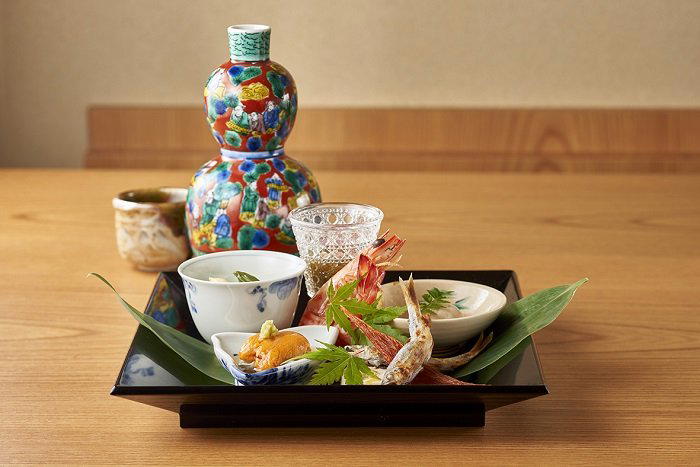
The menu
What to order
- Crab in crab shell
- Abalone
- Shark fin hot pot
Approaching a small Tokyo restaurant of this type, the signal is rarely theatrical. The room does not need scale. The interest is in proximity: a close, attentive setting, a quieter rhythm for the table, and a format built around the cadence of the evening rather than a parade of isolated luxury markers. Ensui belongs to that compact end of Tokyo dining, where restraint, conversation and sequence carry more weight than spectacle.
Tokyo’s dining culture is often split too neatly between highly formal rooms and more casual places for an easy evening. The more interesting middle ground is intimate, composed, and social enough to make the flow of the meal part of its structure. In that lane, Ensui reads as a polished small-room experience, not a loose, purely casual stop and not a rigid ceremonial room. The name itself suggests contrast and balance, a useful shorthand for the kind of meal that depends on clarity, timing and attention.
Restraint and timing define the social counter
The house idea can be understood through foundations that run through Tokyo dining more broadly. The most persuasive small restaurants often rely less on display than on control: sequence, atmosphere and the way each moment leads into the next. Ensui is best read in that tradition, where the quietest element can be the technical center of the meal. That matters in Tokyo because ambitious dining can become feature-chasing; here, the more persuasive argument is control of rhythm, focus and atmosphere.
The room’s compact character sharpens that point. A small restaurant makes the meal closer to a guided evening than a conventional restaurant sitting. Counter-style dining in Tokyo is not just about watching technique. It changes the social temperature: the kitchen’s pace, the timing of the meal, and the conversation across a narrow room shape how the experience is understood. Ensui’s format therefore sits closer to an adult, focused meal with serious intent than to a silent, grand-form tasting room.
Recognition has followed that positioning. Ensui appears in Opinionated About Dining’s 2026 coverage, which gives it a signal beyond ordinary local discovery. That kind of attention places it among Tokyo restaurants that draw interest from diners looking beyond default itineraries, but the format remains small-scale in spirit, rewarding guests who care about pacing and detail over grand-room energy.
Where it sits among Tokyo's intimate rooms
Tokyo has a deep bench of restaurants operating between highly formal dining and more relaxed small-room cooking. In seriousness and intent, Ensui can be considered alongside Akiyama, TEN-MASA, Higashiyama Muku, Oryori Ichiho and Hibinoryori Viola, each of which gives travelers a different way to think about intimate Tokyo dining. The distinction is not simply spend. It is the expectation that a meal will be closely paced and built around the restaurant’s judgment rather than an à la carte grazing session.
That makes it useful for travelers who want the intimacy of Tokyo’s smaller dining rooms without giving up the precision associated with the city’s more formal restaurants. Drinks can be a natural part of this style when the meal is paced with care. The better reader decision is not “casual or formal,” but “social, kitchen-led meal or ceremony-led tasting.” Ensui belongs to the former, with enough recognition to reassure diners who do not want to gamble on a purely local room.
The kitchen-led nature of the room belongs in the discussion as a credential, not as the whole story. Tokyo is full of intimate restaurants where personality can overshadow the meal itself. The stronger measure here is whether the restaurant’s organizing idea produces a coherent grammar for the evening. The format suggests it can: clarity, pacing, close attention and the table operating as one conversation rather than separate acts.
How to plan the evening without misreading the format
This is not the right choice for a sprawling group that wants a loose, order-as-you-go night. It suits pairs, small parties and diners comfortable with a kitchen-led meal. Allergies and ingredients to avoid should be handled before the meal because intimate restaurants of this kind often work around a set structure. Guests should also be mindful of fragrance and the shared atmosphere of the room: subtle aromas, cooking and conversation are part of the experience.
Families should read the format carefully. A compact, adult-leaning restaurant is usually better suited to older, restaurant-literate children than to a flexible family dinner. Dress should be considered, the tone should be respectful, and the evening should be approached as a controlled, focused meal rather than a casual drop-in. These details reinforce the same point: the experience is compact, composed and adult in tone.
For further Tokyo context, compare this kind of intimate restaurant with other Tokyo dining rooms working in a similarly focused register. Broader planning sits in Our full Tokyo restaurants guide, with adjacent city coverage in Our full Tokyo hotels guide, Our full Tokyo bars guide, Our full Tokyo wineries guide and Our full Tokyo experiences guide. For a wider dining map beyond the capital, use regional guides generically rather than treating unrelated restaurants in other cities as direct comparisons to Ensui.
Frequently asked questions
What part of town is Ensui in?
Tokyo.
Comparable venues nearby, for context on price, style, and recognition.
| Venue | Cuisine | Price | Awards | Notes |
|---|---|---|---|---|
| EnsuiThis venue — the venue you are viewing | Modern Japanese Kaiseki | $100–150 | 2 Michelin Stars · Tabelog Bronze #63 | Not listed |
| Tempura Motoyoshi | Michelin-Starred Tempura Omakase | $150–200 | 2 Michelin Stars · Tabelog 100 #48 | Shibuya |
| Tempura Ginya | Michelin-Starred Tempura Omakase | $300–500 | 1 Michelin Star · Tabelog 100 #38 | Minato |
| Nishiazabu Sushi Shin | Edomae Omakase Sushi | $200–300 | 2 Michelin Stars | Minato |
| Ginza Kojyu | Kaiseki | $200–300 | 2 Michelin Stars · La Liste Top Restaurants | Chūō |
| PRISMA | Modern Italian Fine Dining | $300–500 | 2 Michelin Stars · Tabelog Silver #106 | Minato |
Recognition history
Dated appearances from independent guides and award organizations, with the underlying list record or original source where available.
Michelin 2 Stars
Michelin
Opinionated About Dining Top Restaurants in Japan Recommended
Opinionated About Dining
Tabelog Bronze #63
Tabelog
Full recognition history (8 entries)
Opinionated About Dining Top Restaurants in Japan Ranked #504
Opinionated About Dining
Tabelog 100 #64 · No. 64
Tabelog · Tabelog 100 - Japanese cuisine - TOKYO - 2025
Michelin 1 Star
Michelin
Opinionated About Dining Top Restaurants in Japan Ranked #478
Opinionated About Dining
Opinionated About Dining Top Restaurants in Japan Recommended
Opinionated About Dining












Details
- Elegant
- Sophisticated
- Intimate
- Minimalist
- Date Night
- Special Occasion
- Chefs Counter
- Open Kitchen
- Sake Program
- Sommelier Led
- Local Sourcing
- Omakase
- Counter Dining
- Sake
- Shochu
- Wine
Current opening hours
- Monday
- 5–11 PM
- Tuesday
- 5–11 PM
- Wednesday
- 5–11 PM
- Thursday
- 5–11 PM
- Friday
- 5–11 PM
- Saturday
- 5–11 PM
- Sunday
- Closed
Hours can change for holidays and private events. Last verified .
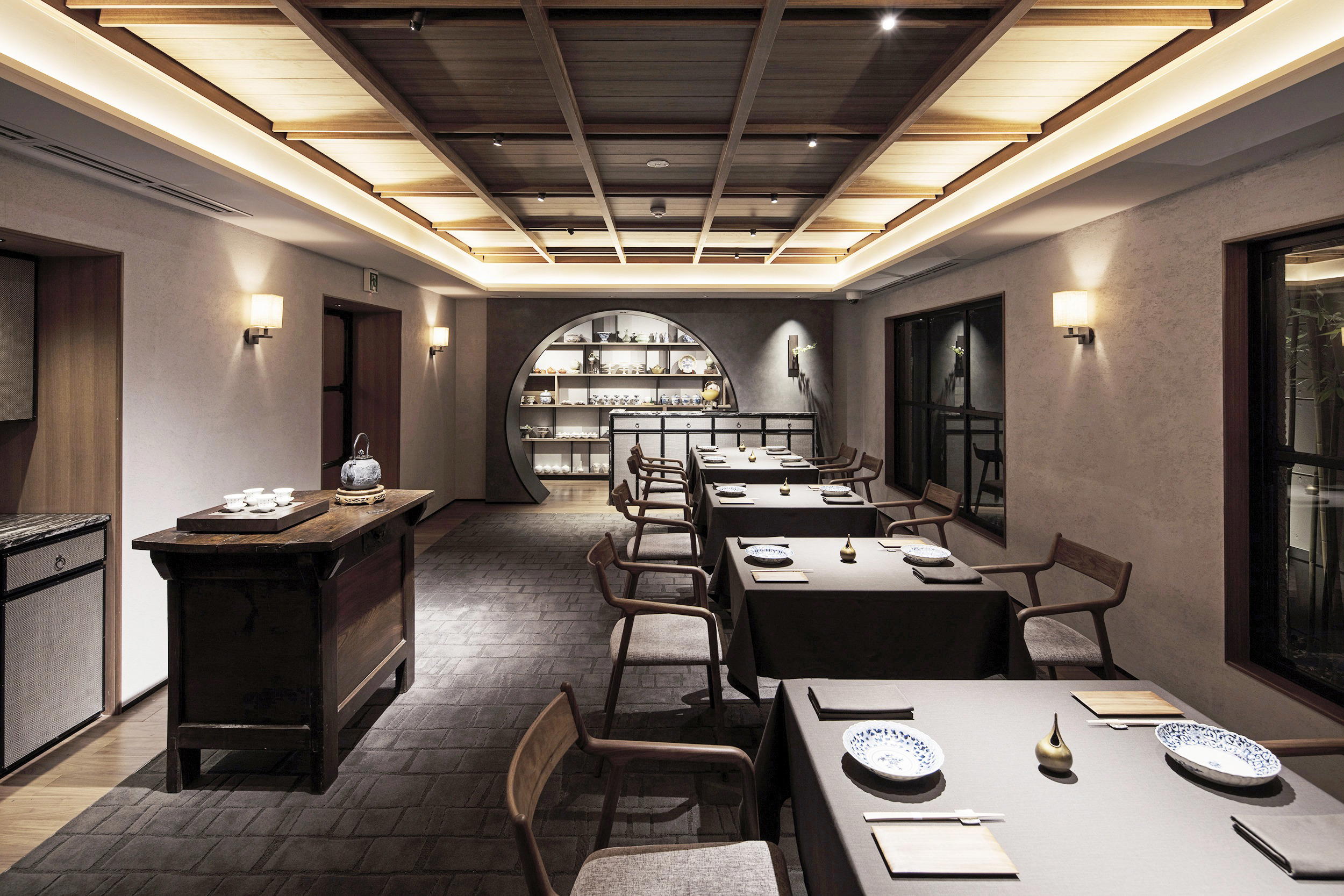
Softly-lit, simple and elegant interior with relaxing space and counter seating.