Our verdict
En Boca sits in Karuizawa, the mountain resort town that draws Tokyo's most food-literate travellers seeking something quieter than the city's Michelin circuit. Visitors researching Karuizawa's restaurant options should book well in advance, particularly during the summer and autumn peak seasons.
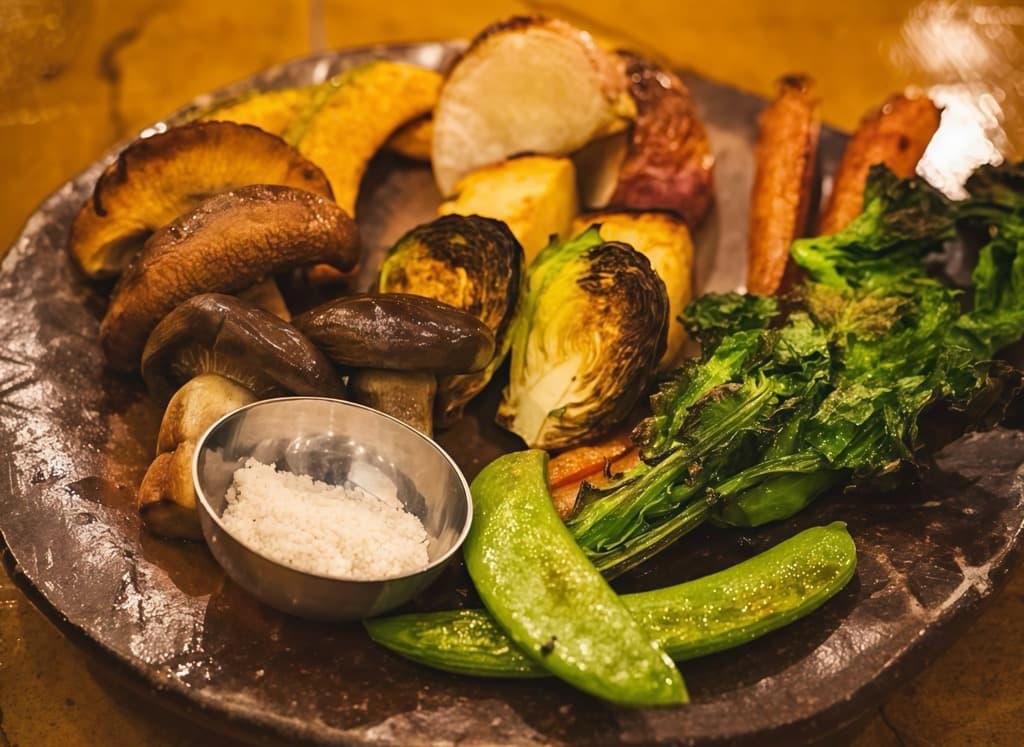
The menu
What to order
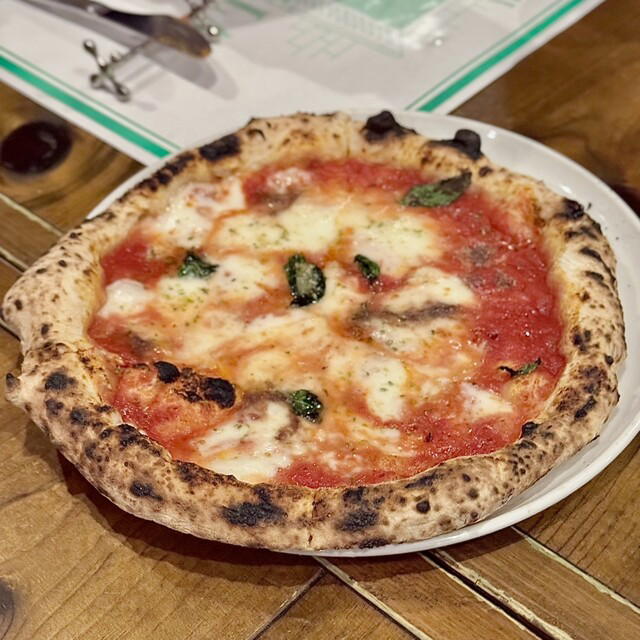
- Nozawana and shiso pizza
- Seaweed and mozzarella pizza
Karuizawa's Quiet Dining Ambition
There is a particular kind of restaurant that survives in Japanese resort towns not by volume but by reputation passed between people who already know. Karuizawa, roughly 70 minutes from Tokyo by shinkansen on the Hokuriku line, has long functioned as the country's most storied mountain escape, a place where the Meiji-era elite built summer villas and where Tokyo residents still retreat when the city's density becomes too much. That history has produced a dining scene with unusual character: small, often booked-out, and oriented toward a clientele that knows what it wants. En Boca operates inside that context.
The town sits at roughly 1,000 metres in Nagano Prefecture, and the altitude shapes everything from the produce calendar to the pace of service. Restaurants here do not operate on the same logic as Tokyo's high-visibility omakase counters, which compete on Michelin recognition and press attention. In Karuizawa, the competition is quieter and the reward is more specific. The travellers who eat well here tend to have done their research before boarding the train at Tokyo Station.
The Cultural Frame: Western Cooking in a Japanese Mountain Town
The name En Boca, derived from Spanish, signals an orientation toward European cooking traditions inside a Japanese resort setting. That pairing is less unusual than it might appear from the outside. Japan's relationship with Western culinary technique goes back more than a century, and the country's French and Spanish-influenced restaurants have developed into a distinct domestic tradition, neither purely European nor entirely Japanese in expression. Restaurants like HAJIME in Osaka and akordu in Nara represent how seriously Japan has absorbed and reinterpreted European culinary structures, with results that now sit alongside rather than below their European counterparts.
In a smaller market like Karuizawa, a European-influenced restaurant operates with a different set of pressures. The clientele skews toward the seasoned Tokyo diner on a weekend escape, bringing urban expectations to a rural setting. That dynamic tends to push kitchen standards upward rather than allowing for resort-town complacency. The leading restaurants in towns like Karuizawa are often tighter, more personal, and more consistent than their urban equivalents, precisely because there is nowhere to hide behind a busy service or a dense competitor set. For a broader sense of how the town's dining options compare, the full Karuizawa restaurants guide maps the scene in detail.
Where En Boca Sits in the Local Picture
Karuizawa's restaurant scene is not large, and each venue occupies a distinct position within it. Bakery & Restaurant Sawamura draws the broadest audience, with a format that spans casual daytime eating and more considered evening meals. Kawakami-an represents the town's traditional Japanese strand, while Restaurant Naz pushes into innovative territory with a more contemporary format. Sajiro Caffe occupies the lighter, daytime-friendly end of the spectrum. En Boca's Spanish-derived name positions it somewhere between the European bistro tradition and the kind of ingredient-led cooking that has become the default language of serious small restaurants across Japan.
That positioning matters because it defines the type of diner En Boca is most likely drawing. A visitor choosing between the town's options who has already eaten at Harutaka in Tokyo or Gion Sasaki in Kyoto is operating with a calibrated reference point. En Boca belongs to a different register, one that is more accessible and less ceremony-dependent, but that does not make it a lesser choice. It makes it a different one, suited to the pace of a Karuizawa weekend rather than the focused ritual of a Tokyo tasting counter.
Japan's Wider European Dining Conversation
The presence of European-influenced restaurants in Japanese resort and secondary cities is not a regional accident. Across the country, places like Bistro Ange in Toyohashi and Birdland in Sakai demonstrate how thoroughly European cooking traditions have been absorbed into the Japanese restaurant fabric outside the major urban centres. These are not imitation restaurants; they are expressions of a genuine domestic conversation with French, Spanish, and Italian culinary structures, informed by Japanese ingredient standards and service culture.
That conversation has international reference points too. The European-Japanese axis has produced some of the world's more interesting hybrid cooking, and restaurants working in that register in any city now operate with an implicit awareness of what is possible at the category's outer edge, places like Le Bernardin in New York City for technique-driven precision or Atomix in New York City for the kind of Korean-inflected contemporary cooking that has redefined what fusion means in a serious context. En Boca's reach is narrower and more local, but it exists inside the same long cultural argument about what European cooking becomes when Japanese sensibility shapes it.
Elsewhere in Japan, restaurants across a range of regional cities are asking similar questions: Goh in Fukuoka, 一本木 石川制 in Nanao, 夕仙山乃 in Sapporo, 湖畔庵 in Takashima, and 羽根屋 in Nishikawa Machi each represent regional dining ambition operating at a remove from the Tokyo or Osaka spotlight.
Planning a Visit
Karuizawa's peak seasons run from July through August and again during the autumn foliage period in October, when demand across the town's better restaurants is highest and booking windows compress accordingly. The shinkansen connection from Tokyo Station makes a day visit viable, but the town rewards an overnight stay, particularly for those combining dinner with the town's architecture and forest trails. Visitors planning a broader Nagano itinerary should treat En Boca as one anchor in a considered sequence rather than a standalone destination.
Frequently asked questions
Is En Boca suitable for children?
En Boca operates in Karuizawa's quieter dining tier, where restaurants survive on reputation rather than volume. That atmosphere tends to suit older children comfortable with a sit-down, unhurried meal, though the European cooking orientation may narrow appeal for younger diners.
What kind of setting is En Boca?
En Boca sits within Karuizawa's compact restaurant scene, a resort town that draws a Tokyo weekend crowd accustomed to considered, low-key dining. The name itself signals a European frame inside a Japanese mountain setting, a pairing that defines the room's register. Expect something closer to a destination-neighbourhood bistro than a resort canteen.
How does En Boca compare to other restaurants in Karuizawa?
Karuizawa's dining scene is small enough that each venue occupies a distinct position. Where Bakery & Restaurant Sawamura draws broad foot traffic, En Boca's European-inflected identity places it in a narrower, more deliberate category, the kind of restaurant passed between people who already know. Its Spanish-derived name signals a commitment to Western cooking traditions that sets it apart from the town's Japanese-cuisine majority.
What do regulars order at En Boca?
What is clear from the venue's positioning in Karuizawa is a European cooking orientation, which typically anchors menus around seasonal produce and classical technique. Asking staff for the current kitchen focus is the most reliable approach on arrival.
Pricing, Compared
| Venue | Cuisine | Price | Awards | Notes |
|---|---|---|---|---|
| En BocaThis venue (the venue you are viewing) | Wood-Fired Vegetable Pizza | Not listed | Not listed | Not listed |
| Restaurant Naz | Innovative Japanese with Nordic Techniques | $300–500 | La Liste Top Restaurants · Tabelog Gold #18 | Innovative |
| Sajiro Caffe | Nepalese-Indian Curry Cafe | $10–20 | Not listed | Not listed |
| Kawakami-an | Authentic Shinshu Soba & Duck Specialties | $20–30 | Not listed | Not listed |
| Bakery & Restaurant Sawamura | Japanese-Style Western Bakery & Cafe | $30–50 | Not listed | Not listed |
Continue exploring
More in Karuizawa
Restaurants in Karuizawa
All restaurants in Karuizawa →
Hotels in Karuizawa
All hotels in Karuizawa →
Wineries in Karuizawa
Browse all →
Details
- Rustic
- Cozy
- Scenic
- Date Night
- Special Occasion
- Open Kitchen
- Terrace
- Garden
- Sake Program
- Local Sourcing
- Garden
- A La Carte
- Wine
- Sake
- Vegetarian Friendly
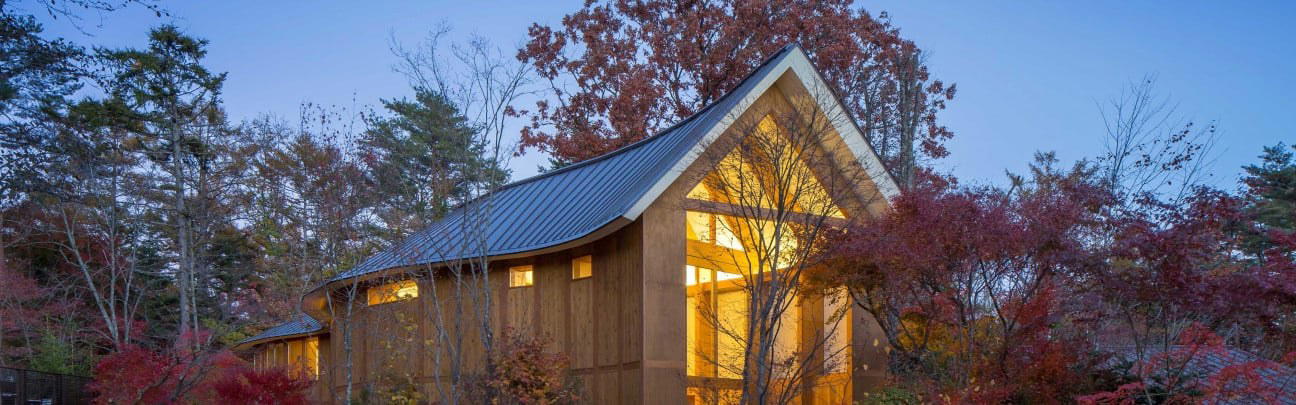
Relaxing and stylish atmosphere in a beautiful wooden house with open terrace, offering a warm, produce-led hospitality.