
A six-seat counter in Minamiaoyama places DK in Tokyo’s compact, high-price Italian tier, where room design and service rhythm matter as much as the cooking. Its Tabelog Italian TOKYO 100 selection for 2025, fish-led focus, wine orientation, and simultaneous-course format make it a precise choice for diners who prefer small-format restaurants over large-room dining.
Pearl is the En Primeur Club membership app — saves, bookings, and concierge access live there. Same editors, same standards.
- Address
- 102 4 Chome-3-23 Minamiaoyama, Minato City, Tokyo 107-0062, Japan
- Phone
- +81 3-6438-9089
- Website
- omakase.in
 Saves & bookings on Pearl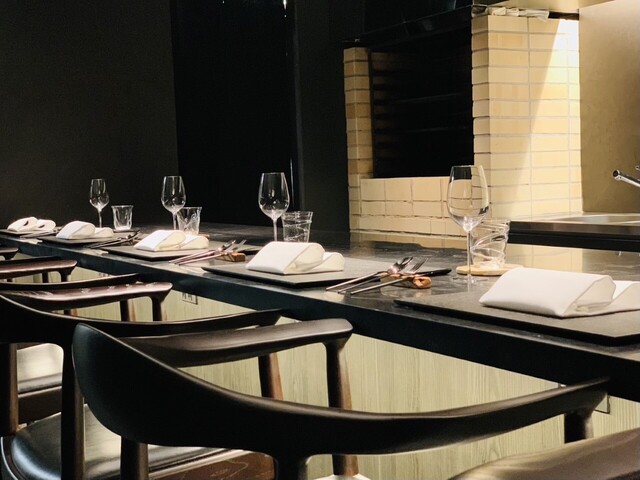
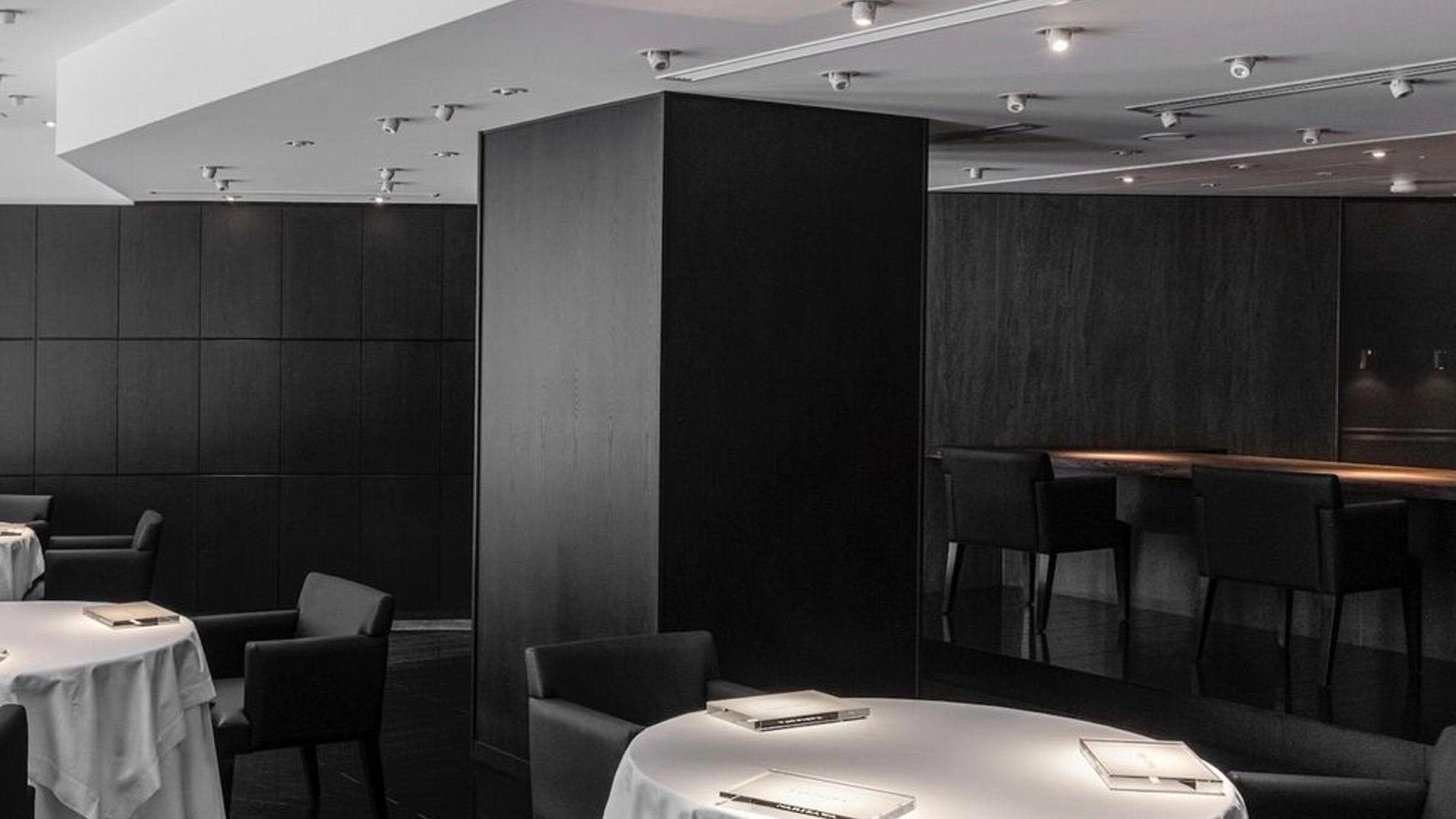
Minamiaoyama has a particular quiet: low façades, controlled lighting, and restaurants that reveal little until the door opens. The counter format suits that mood. In Tokyo’s premium Italian scene, the room often filters the experience before the food arrives, separating larger, occasion-driven dining rooms from micro-restaurants built around sequence, pacing, and a close view of the pass. DK is in the latter camp, with six counter seats and a dinner format that begins as synchronized course service rather than a loose à la carte evening.
That container matters. A six-seat counter changes the social contract of Italian dining in Tokyo: the kitchen is no distant production space, wine service has less room to hide, and tempo becomes part of the experience. The city has long absorbed Italian technique into Japanese dining habits, but smaller counter rooms sharpen that exchange. Fish-led cooking, wine as the principal drink language, and courses running beyond two and a half hours place this address closer to Tokyo’s intimate tasting-counter culture than to the trattoria model many travelers associate with Italian food.
A six-seat counter moves Italian dining into Tokyo's tasting-room register
The strongest argument for DK is not scale; it is compression. Six seats force decisions. There is no crowd energy to mask weak pacing, no large dining room to dilute sequence, and no private-room theater to shift attention from the counter. In a city where sushi, kappo, tempura, and yakitori have trained diners to read craft at close range, Italian cooking can feel newly disciplined in the same architectural frame.
The 2025 Tabelog Italian TOKYO 100 selection gives the restaurant a clear public credential, but the more useful signal is its position within Tokyo’s Italian category. The price tier sits well above casual pasta-and-wine addresses and enters a bracket where diners compare the evening with other tasting-led rooms. EWIG brings Austrian reference points into Tokyo’s European dining conversation; Hakuun represents the city’s high-end Japanese register; Tanakada Nishiazabuten works from the izakaya side of premium informality. DK occupies a narrower lane: Italian category, counter scale, fish emphasis, wine focus.
That lane is increasingly relevant in Tokyo. European restaurants are no longer judged only by fidelity to source cuisine. Diners ask how convincingly a room handles Japanese product, how tightly courses are edited, and whether the space supports concentration rather than ceremony. A small counter can make Italian dining feel less like imported repertoire and more like a Tokyo format using Italian grammar.
Fish, wine, and Minamiaoyama restraint define the decision
The cuisine is listed as Italian, with a stated emphasis on fish and wine. That tells experienced diners more than a long menu description would. In Tokyo, fish-led Italian usually means dialogue with Japanese sourcing expectations rather than reliance on heavy meat courses or broad regional nostalgia. The scale also suggests wine pairing and bottle choices carry unusual weight, because a counter restaurant has fewer moving parts and little tolerance for generic service.
Minamiaoyama reinforces that reading. This part of Minato is not neon Tokyo dining. It rewards precision, discretion, and edited rooms. Nearby Aoyama and Gaienmae often draw guests comfortable with premium pricing but less interested in theatrical luxury. A compact restaurant here must justify itself through focus, not spectacle.
For travelers mapping Tokyo through food, the address shows a different side of the city’s Italian scene. Ginza and Roppongi often carry international fine-dining associations; Ebisu and Nakameguro can read more casual or wine-bar driven; Aoyama supports restaurants where fashion, architecture, and dining overlap without a large-room statement. DK fits that pattern: controlled scale, high spend, and a format rewarding diners who like watching a meal assemble in front of them.
How to place it in a Tokyo dining itinerary
This is a restaurant for a narrow brief: small counter, Italian framework, fish-forward cooking, and long-form dinner. It is less suited to travelers seeking a sprawling menu, private-room dining, or a quick introduction to Tokyo eating culture. The better comparison is with other compact, purpose-built rooms where timing and proximity define the experience. In that sense, it shares more with Tokyo’s counter traditions than with broader European restaurant categories.
Travelers building a broader Tokyo plan should use it as one precise dinner, not a general-purpose reservation. For a contrasting casual route, EP Club’s Tokyo restaurant coverage ranges from . 鮪と炭火焼き うお炭 秋葉原店 and 12/10 Shinjuku ten to 124. KAGURAZAKA (Yakitori), 2D Cafe, and 3 Chome no Curry Ya San. The broader city index helps sequence neighborhoods: Our full Tokyo restaurants guide sits alongside Our full Tokyo hotels guide, Our full Tokyo bars guide, Our full Tokyo wineries guide, and Our full Tokyo experiences guide.
For Japan-wide context, the contrast sharpens against destination-specific dining: -Grilled beef Sukiyaki- KAMAKURA TANUKIAN 鎌倉 たぬき庵 in Kamakura.cafe in Osaka.know in Kumamoto, (Shoku) Vietnam in Kawasaki, [Curry Senmon Ten] Maruyama Kyoju. in Sapporo, and [ki:] in Kyoto show how differently format, price, and local habit shape a meal across the country. Overseas Japanese-adjacent comparisons, Jōdo Saké Bar in Los Angeles and Onigiri Time in Pasadena, sit in a separate diaspora register, useful mainly as evidence of how far Japanese dining languages travel from their original context.
The verdict is simple: choose DK when the room itself is part of the reason for dinner. The six-seat counter, 2025 Tabelog Italian TOKYO 100 recognition, fish orientation, and wine focus make it a serious Minamiaoyama option for diners who value concentration over breadth. Tokyo has many ways to spend heavily on dinner; this one is for people who want the meal reduced to a counter, a sequence, and the discipline of a small room.
Snapshot
Comparable venues by cuisine and category.
| Venue | Cuisine | Price | Notes |
|---|---|---|---|
| DKThis venue — the venue you are viewing | Wood-fired Italian Omakase by Hasegawa Group | $$$$ | Not listed |
| Oyamadai Yamada | Wood-fired Pizza Kappo Counter | $$$$ | Setagaya |
| Kagero+ | Innovative Italian with French Wine Focus | $$$$ | Nishiazabu |
| アルマーニ / リストランテ | Modern Italian with Japanese Seasonal Influences | $$$$ | Chūō |
| レガーロ | Modern Italian with Japanese Ingredients | $$$$ | Shibuya |
| アンティカ・オステリア・デル・ポンテ | Modern Milanese Fine Dining | $$$$ | Chiyoda |
Recognition history
Dated appearances from independent guides and award organizations, with the underlying list record or original source where available.
Tabelog 100 #65 · No. 65
Tabelog · Tabelog 100 - Italian - TOKYO - 2025














At a Glance
- Intimate
- Elegant
- Cozy
- Date Night
- Special Occasion
- Business Dinner
- Solo
- Chefs Counter
- Open Kitchen
- Design Destination
- Standalone
- Corkage Allowed
Current opening hours
- Monday
- Closed
- Tuesday
- 6–9 PM
- Wednesday
- 6–9 PM
- Thursday
- 6–9 PM
- Friday
- 6–9 PM
- Saturday
- 6–9 PM
- Sunday
- Closed
Hours can change for holidays and private events. Last verified .
An intimate six-seat counter with a calm, refined atmosphere, where guests share a synchronized dinner around the glow, aroma, and gentle heat of a live wood fire.