
Antica Osteria del Ponte brings a storied Milanese lineage to the 36th floor of the Marunouchi Building in central Tokyo. The restaurant represents one of the more considered transplants of northern Italian fine dining in Japan, positioned at the upper tier of the city's European restaurant scene alongside peers such as L'Effervescence and Sézanne. For those tracking where serious Italian cooking has taken root in Tokyo, this address warrants attention.
Pearl is the En Primeur Club membership app — saves, bookings, and concierge access live there. Same editors, same standards.
- Address
- Japan, 〒100-0005 Tokyo, Chiyoda City, Marunouchi, 2 Chome−4−1 Marunouchi Building, 36F
- Phone
- +81352204686
- Website
- antica-osteria-del-ponte.com
- Directions
- Get directions
 Saves & bookings on Pearl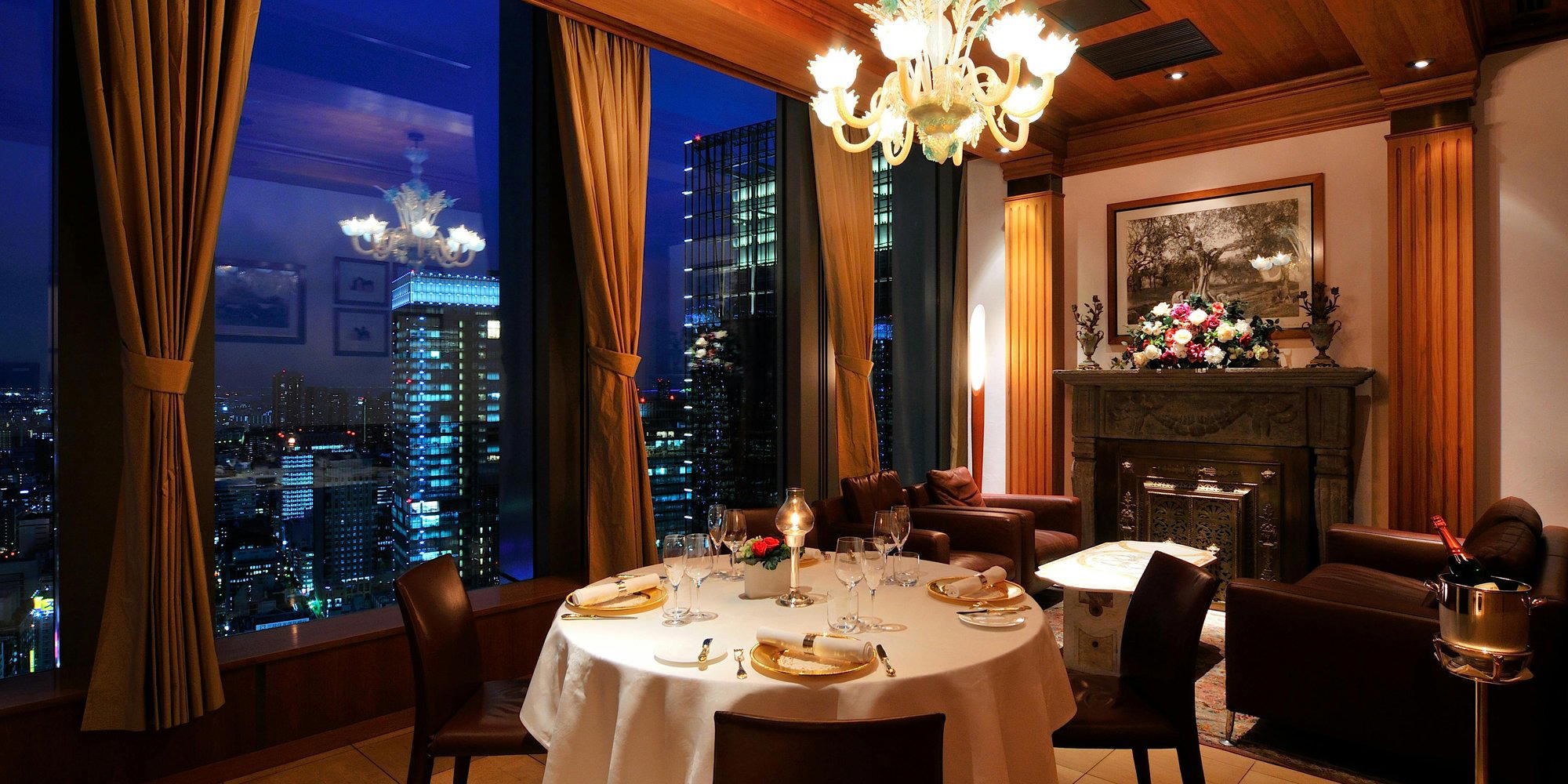
A Milanese Institution Translated to Tokyo's Skyline
Italian fine dining in Tokyo has a longer and more complicated history than most visitors expect. The city absorbed French culinary technique through formal training pipelines decades ago, but serious regional Italian cooking arrived later and has always occupied a smaller, more specialised corner of the market. Today, a handful of addresses operate at a tier where the kitchen's lineage, the sourcing philosophy, and the wine list carry as much weight as the room itself. Antica Osteria del Ponte, occupying the 36th floor of the Marunouchi Building in Chiyoda, is a Tokyo restaurant serving Modern Milanese Fine Dining at about $250 per person. It draws its identity from one of Lombardy's most decorated restaurant names.
The original Antica Osteria del Ponte opened outside Milan in Cassinetta di Lugagnano, earning three Michelin stars under chef Ezio Santin during its peak years, a credential that placed it among the reference points for northern Italian cuisine in the late twentieth century. That lineage matters not as biography but as a signal of the kitchen grammar the Tokyo outpost inherits: a restrained, product-led approach shaped by the Lombard tradition of letting ingredient quality carry the plate rather than technique obscure it. In a city where European fine dining often bends toward theatrical plating or Franco-Japanese fusion, that orientation is a positioning choice with real consequences for the menu.
Where the Food Comes From, and Why That Shapes the Menu
Northern Italian cooking, at its serious end, is inseparable from ingredient provenance. Lombardy's culinary tradition is built on the quality of its dairy, its risotto rice from the Po Valley, its lake fish, and its aged meats rather than on complex spice combinations or labour-intensive preparations. Translating that philosophy to Tokyo requires a dual sourcing strategy: importing certain Italian products where substitution would compromise the dish, and identifying Japanese producers whose outputs are compatible in quality if not identical in character.
Tokyo restaurants working at this level have found that Japan's premium produce networks are sophisticated enough to support ingredient-led European cooking. The country's domestic wagyu, specialty vegetables, and coastal seafood can hold their own beside imported European staples, and kitchens that understand both traditions can move between them without the menu losing coherence. The question for any serious Italian restaurant in Tokyo is where to draw that line, and how transparently to communicate the sourcing decisions to guests.
That transparency has become a marker of credibility in Tokyo's fine dining tier. Restaurants that can explain where a specific fish came from, or why they chose a particular rice, occupy a different conversation from those that simply present the plate. For a kitchen working in the Antica Osteria del Ponte tradition, one shaped by a founding philosophy of ingredient primacy, that explanatory capacity is embedded in the approach, not added as a marketing layer.
The Setting: Marunouchi's High-Floor European Dining Cluster
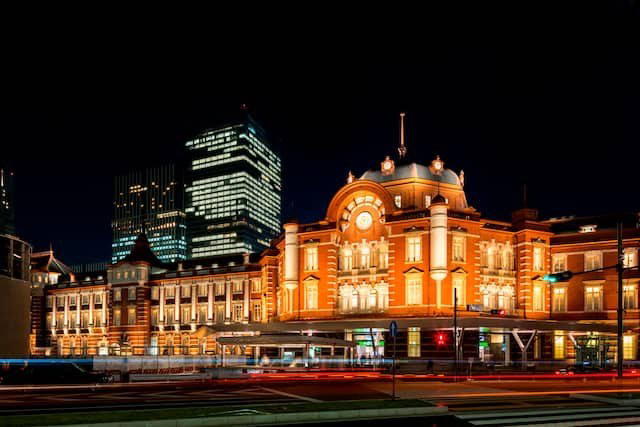
The Marunouchi Building address places Antica Osteria del Ponte inside one of Tokyo's most commercially dense dining concentrations. The 36th floor position separates it physically and experientially from street-level restaurants in the same building, a format that Tokyo has used effectively to give European fine dining rooms a visual remove from the city's density without relocating to quieter residential neighbourhoods. The trade-off is a more corporate adjacency than the smaller side-street addresses that Tokyo's neighbourhood-led restaurants favour.
That setting aligns the restaurant with a specific segment of Tokyo's European dining audience: business dinners, occasion meals for Marunouchi-area professionals, and visitors staying in the central hotels of Chiyoda and Ginza who want formal European cooking without travelling to Minami-Aoyama or Ebisu. For comparison, Sézanne at Four Seasons Marunouchi occupies a similar geographic logic, anchoring high-end French cooking to the same business district. RyuGin and Harutaka draw from the same central Tokyo audience but operate in Japanese culinary registers that attract a different booking profile.
Beyond Tokyo, the pattern of European fine dining transplants operating in premium tower locations appears across Japan's major cities. HAJIME in Osaka and Gion Sasaki in Kyoto demonstrate how seriously Japan's secondary cities have built their own high-end dining infrastructure, while smaller regional addresses, akordu in Nara, Goh in Fukuoka, and more localised spots like 一本杉川島 in Nanao, 古小山乃 in Sapporo, 湖辺庵 in Takashima, and 羽根屋 in Nishikawa Machi, show how deeply ingredient-led cooking has taken root far outside the capital. Birdland in Sakai and Bistro Ange in Toyohashi illustrate the regional French and European dining scenes that have developed independent of Tokyo's fine dining hierarchy.
Internationally, the challenge of transplanting a European culinary legacy to a foreign city is not distinctive to this address. Le Bernardin in New York City represents the French seafood tradition translated and sustained across decades in an American context, while Atomix in New York City demonstrates the reverse movement, Korean fine dining finding a precise, high-credibility audience in Manhattan. Crony in Tokyo occupies a related space in the innovative French register. All of these cases turn on the same question: how much of the source tradition survives the transplant, and what new context does the host city introduce?
Know Before You Go
- Address: Marunouchi Building, 36F, 2-4-1 Marunouchi, Chiyoda, Tokyo 100-0005
- Access: Tokyo Station (Marunouchi South Exit) is the closest major station, with direct covered access to the Marunouchi Building
- Price tier: Positioned at the upper end of Tokyo's European fine dining market, consistent with a multi-course formal Italian menu at this level
- Booking: Reservations are essential
- Dress code: Formal
In Context: Similar Options
Comparable venues nearby, for context on price, style, and recognition.
| Venue | Cuisine | Price | Notes |
|---|---|---|---|
| アンティカ・オステリア・デル・ポンテThis venue — the venue you are viewing | Modern Milanese Fine Dining | $$$$ | Not listed |
| リストランテ ダ・ニーノ | Authentic Sicilian | $$$$ | Minato |
| Fileja | Pasta Omakase | $$$$ | Chiyoda |
| サローネ トウキョウ | Contemporary Italian Ristorante | $$$$ | Chiyoda |
| L'appartamento di NAOKI | Wood-fired Italian tasting counter | $$$$ | Chūō |
| tens. | Italian with handmade pasta | $$$$ | Minato |
Recognition history
Dated appearances from independent guides and award organizations, with the underlying list record or original source where available.
Tabelog 100 #23 · No. 23
Tabelog · Tabelog 100 - Italian - TOKYO - 2025








At a Glance
- Elegant
- Sophisticated
- Romantic
- Scenic
- Date Night
- Business Dinner
- Celebration
- Special Occasion
- Panoramic View
- Private Dining
- Historic Building
- Standalone
- Extensive Wine List
- Sommelier Led
- Local Sourcing
- Skyline
Current opening hours
- Monday
- 11:30 AM–3 PM, 5:30–10 PM
- Tuesday
- 11:30 AM–3 PM, 5:30–10 PM
- Wednesday
- 11:30 AM–3 PM, 5:30–10 PM
- Thursday
- 11:30 AM–3 PM, 5:30–10 PM
- Friday
- 11:30 AM–3 PM, 5:30–10 PM
- Saturday
- 11:30 AM–3 PM, 5:30–10 PM
- Sunday
- 11:30 AM–3 PM, 5:30–10 PM
Hours can change for holidays and private events. Last verified .
Bright, gracious dining room with refined Italian décor and antique furnishings, overlooking Tokyo Station and Tokyo Sky Tree with sophisticated, intimate lighting.