

Michelin Plate
Our verdict
DepTH brianza sits inside Azabudai Hills and holds consecutive Michelin Plate recognition (2024, 2025) for its approach to Italian cuisine filtered through Japanese ingredients and technique. Chef Okuno's work operates in the space where classical Italian structure meets domestic Japanese produce, producing a menu that reads as neither fusion nor replica.

Pearl is the En Primeur Club membership app, where members save venues, book tables and use the concierge.
The menu
What to order
- Truffled Egg and Mushroom Crepe
- Shrimp and Scallop Ravioli
- Smoked Whale with Cheese
- Aged Beef with Hinoki Smoke
Italian Cooking in Tokyo, and What the City Does to It
Tokyo now hosts one of the densest concentrations of serious Italian restaurants outside Italy itself. The city's relationship with Italian cuisine runs deeper than novelty: decades of Japanese chefs training in Lombardy, Tuscany, and Piedmont, then returning to apply classical technique to local produce, have produced a distinct Tokyo-Italian register that sits apart from the European original without disowning it. That register tends toward restraint in seasoning, sharper attention to ingredient provenance, and a willingness to substitute Japanese products where they outperform their Italian counterparts in freshness or season. DepTH brianza, located on the second floor of a residential tower within the Azabudai Hills complex in Minato City, operates squarely inside that tradition, while pushing at its edges.
Azabudai Hills, completed in late 2023, consolidated a stretch of central Tokyo that had long been a quiet diplomatic quarter into something more deliberately international in character. The development brought with it a wave of restaurant openings positioned at the mid-to-upper tier of the market, and DepTH brianza arrived as part of that first cohort. The address places it within easy reach of Roppongi and Toranomon, two neighbourhoods that together host a significant share of Tokyo's serious Western-cuisine dining. In that geography, the restaurant occupies a specific niche: Michelin Plate recognition in consecutive years (2024 and 2025), a price range that reads at ¥¥¥ rather than the ¥¥¥¥ tier occupied by peers such as Crony or PRISMA, and a concept rooted in a named Italian region rather than a pan-Italian or generically Mediterranean approach.
The Brianza Reference and What It Signals
Brianza is a sub-region of Lombardy, north of Milan, associated with restrained cooking, good risotto, and a version of Italian cuisine less theatrical than the south but technically demanding in its own way. Naming a Tokyo restaurant after it is a specific act of positioning. It announces an allegiance to northern Italian sensibility, disciplined, seasonal, ingredient-led, rather than to the bolder flavours of Campania or Sicily that translate more immediately to international audiences. Among Tokyo's Italian houses, that northern orientation is shared by Aroma Fresca, which has held Michelin recognition for years and operates in a similar register of technical seriousness. The name also carries a secondary meaning in this context: Chef Okuno's given name translates into Japanese as 'okuyuki,' meaning depth, making the restaurant's title a bilingual statement about both place and practitioner.
Where the Menu Departs from Convention
The working premise at DepTH brianza is that Italian culinary structure, the sequencing of antipasto, primo, secondo, the logic of emulsification and reduction, the role of fat as a carrier of flavour, can serve as a framework for Japanese ingredients without requiring those ingredients to behave like their Italian equivalents. This is a different proposition from fusion, which typically involves mixing two cuisines in a single dish. It is closer to what cenci in Kyoto and, in a different register, akordu in Nara pursue: a genuine structural commitment to a foreign tradition applied to a domestic larder. The approach requires not only culinary skill but a particular kind of conceptual confidence, the willingness to let a dish be read as Italian even when the central ingredient is Japanese.
Michelin's Plate designation, awarded in both 2024 and 2025, signals that the execution meets a threshold of technical competence and coherence. The Plate sits below Star level but represents a deliberate Michelin recommendation rather than simply an entry in the guide. For a restaurant at the ¥¥¥ price point, it positions DepTH brianza in a mid-tier that is increasingly competitive in Tokyo's Italian dining sector. Restaurants at this price bracket, unlike their ¥¥¥¥ counterparts such as Gucci Osteria da Massimo Bottura Tokyo, must make a strong case for value through ingredient quality and cooking precision rather than through spectacle or brand association.
Service and the Front-of-House Contract
In Tokyo's serious dining tier, the relationship between kitchen and floor is often the deciding variable in how a meal registers. Technically accomplished cooking can read as cold or inaccessible without a front-of-house capable of communicating the logic behind the menu. At restaurants where the cuisine involves cross-cultural translation, as it does here, where Japanese ingredients are being served inside Italian structures, the service team carries an additional interpretive responsibility. Guests unfamiliar with either Brianza cuisine or the specific Japanese products being used need some navigation of what they are eating and why. This is not simply about hospitality in the conventional sense; it is about whether the concept lands as intended.
Among Tokyo's Italian addresses, this collaborative dynamic between kitchen and floor is handled with particular sophistication at places like Principio and AlCeppo, where the front-of-house functions as an extension of the chef's culinary argument.
DepTH Brianza in the Wider Tokyo Italian Conversation
Tokyo's Italian dining scene is broad enough to contain genuine internal distinctions. There are restaurants that treat Italy as source material for nostalgia, producing faithful replicas of regional dishes for an expatriate or Japanese audience seeking the familiar. There are restaurants that use Italian vocabulary to dress up something fundamentally Japanese. And there is a smaller group that treats Italian cuisine as a living tradition worth engaging with critically, absorbing its discipline, testing its limits, and producing something that could only have been made in Tokyo. DepTH brianza's stated position, and the Michelin recognition that supports it, suggests it belongs in the third category.
For comparison across Japanese cities, the Italian-influence tradition is handled in quite different registers by restaurants like HAJIME in Osaka and Goh in Fukuoka, both of which engage with Western technique but from a kaiseki-adjacent foundation rather than a specifically Italian one. The pure Italian-in-Japan proposition, where the cuisine's structure is taken seriously on its own terms, remains a Tokyo-dominant phenomenon, and DepTH brianza sits near the sharper end of that category.
Readers building a broader Japan itinerary around serious dining should also consider 1000 in Yokohama and 6 in Okinawa for regional contrast, and Gion Sasaki in Kyoto for the kaiseki counterpoint to this kind of cross-cultural Italian work. For Italian fine dining outside Japan entirely, 8½ Otto e Mezzo Bombana in Hong Kong provides a useful regional reference point for how the cuisine translates at the three-Michelin-star level in Asia.
For more options across Tokyo's restaurant, bar, hotel, and experience categories, see our full Tokyo restaurants guide, our full Tokyo bars guide, our full Tokyo hotels guide, our full Tokyo wineries guide, and our full Tokyo experiences guide.
Know Before You Go
- Cuisine: Italian, with Japanese ingredients and a Lombardy-Brianza structural reference
- Price range: ¥¥¥
- Awards: Michelin Plate 2024, Michelin Plate 2025
- Location: Azabudai 1-chome, Minato City, Tokyo, Azabudai Hills Residence Tower A, 2F
- Nearest reference points: Roppongi, Toranomon
- Booking: Contact details not currently listed; check the Azabudai Hills directory for current reservation access
- Hours: Not confirmed, verify before visiting
Frequently asked questions
Is DepTH brianza suitable for children?
At the ¥¥¥ price point in a concept-driven Italian setting in Tokyo, DepTH brianza sits in a category where the experience is structured around a tasting format and a specific culinary argument. That kind of dining tends to work better for adults or older teenagers with patience for a multi-course progression. It is not a casual family restaurant. If travelling with younger children in Tokyo, the ¥¥¥ bracket offers more flexible formats elsewhere in the city. For this particular address, an adults-focused dinner booking makes more practical sense.
Is DepTH brianza better for a quiet night or a lively one?
The Azabudai Hills setting and the restaurant's positioning, Michelin Plate recognition, ¥¥¥ pricing, a concept-led Italian menu, point toward the quieter, more focused end of the Tokyo dining spectrum. This is not the address for a large group dinner with high noise tolerance. The cuisine requires some attention to read properly, and the service dynamic described above depends on a degree of conversational exchange between floor and guest. It is more suited to a dinner where the food is the event than to one where the food is a backdrop. Tokyo's livelier Italian options exist at lower price points and without the conceptual weight.
What do people recommend at DepTH brianza?
With no confirmed signature dishes in the public record, specific dish recommendations cannot be verified. Chef Okuno's stated approach, applying Italian structure to Japanese ingredients, suggests that seasonal Japanese produce will appear throughout the menu in ways that shift with availability. The most reliable approach is to order whatever the current menu offers without attempting to replicate a specific dish read about elsewhere, since the menu is designed to move. For reference on how this Italian-Japanese register is handled at peer addresses, [Aroma Fresca](https://www.enprimeurclub.com/restaurants/aroma-fresca-tokyo-restaurant) and [Principio](https://www.enprimeurclub.com/restaurants/principio-tokyo-restaurant) offer useful comparisons within Tokyo's Italian tier.
Cuisine-First Comparison
| Venue | Cuisine | Price | Awards | Notes |
|---|---|---|---|---|
| DepTH brianzaThis venue (the venue you are viewing) | Innovative Italian with Japanese Ingredients | $200–300 | Michelin Plate | Not listed |
| Harutaka | Edo-Style Omakase Sushi | $200–300 | 3 Michelin Stars · World's 50 Best #76 | Sushi |
| RyuGin | Modern Kaiseki | $500+ | 3 Michelin Stars · World's 50 Best #41 | Kaiseki, Japanese |
| L'Effervescence | Modern French with Japanese Influences | $200–300 | 3 Michelin Stars · World's 50 Best #69 | French |
| HOMMAGE | Modern French with Japanese Influences | $150–200 | 2 Michelin Stars · World's 50 Best #78 | Innovtive French, French |
| MAZ | Innovative Peruvian-Japanese Fusion | $150–200 | 2 Michelin Stars · World's 50 Best #28 | Innovative |
Recognition history
Dated appearances from independent guides and award organizations, with the underlying list record or original source where available.
Michelin Plate
Michelin
Opinionated About Dining Top Restaurants in Japan Recommended
Opinionated About Dining
Full recognition history (4 entries)
Michelin Plate
Michelin
Michelin Plate
Michelin
Continue exploring
More in Tokyo
Restaurants in Tokyo
All restaurants in Tokyo →
Bars in Tokyo
All bars in Tokyo →





Details
- Intimate
- Elegant
- Sophisticated
- Date Night
- Celebration
- Special Occasion
- Business Dinner
- Open Kitchen
- Chefs Counter
- Private Dining
- Extensive Wine List
- Sommelier Led
- Local Sourcing
- Farm To Table
- Tasting Menu
- Prix Fixe
- Wine
- Sake
- Vegetarian Friendly
- Vegan Options
- Gluten Free Options
- Allergy Accommodating
Current opening hours
- Monday
- 5–11 PM
- Tuesday
- Closed
- Wednesday
- Closed
- Thursday
- 5–11 PM
- Friday
- 5–11 PM
- Saturday
- 12–3 PM, 6–11 PM
- Sunday
- 12–3 PM, 6–10 PM
Hours can change for holidays and private events. Hours as of .
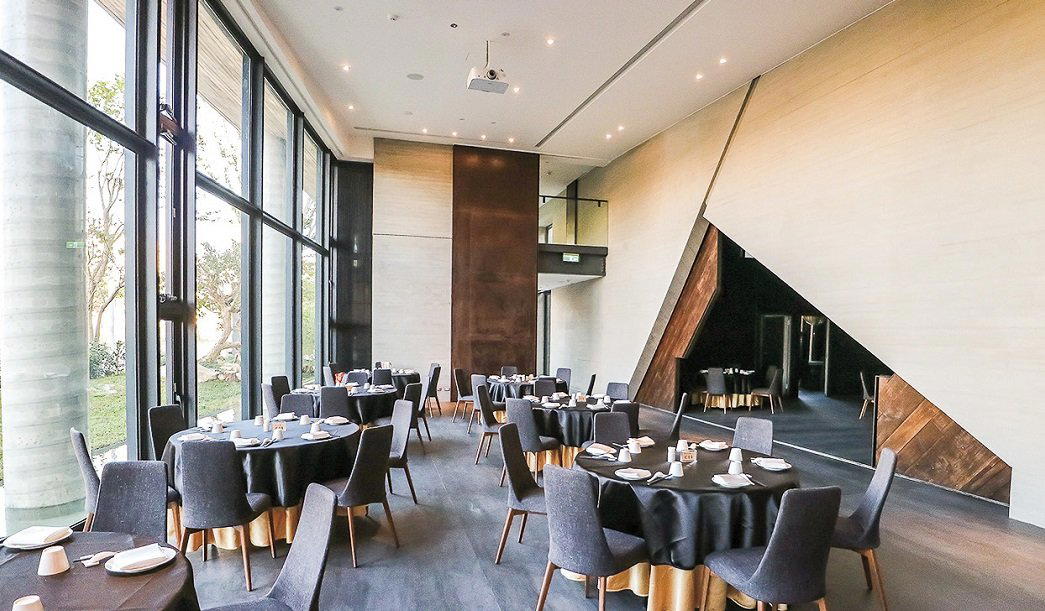
Refined, mansion-like interior with a special intimate atmosphere; warm hospitality creates a relaxing and comfortable dining experience with opportunities to observe Chef Okuno at work.