Hiroshima's Sixth Floor and What Happens to Okonomiyaki Up There The building at Minami-ku Matsubaracho 10-1 is not the kind of address that announces itself. Hiroshima Full Focus Building rises from a district that sits south of the...
 Discover on Pearl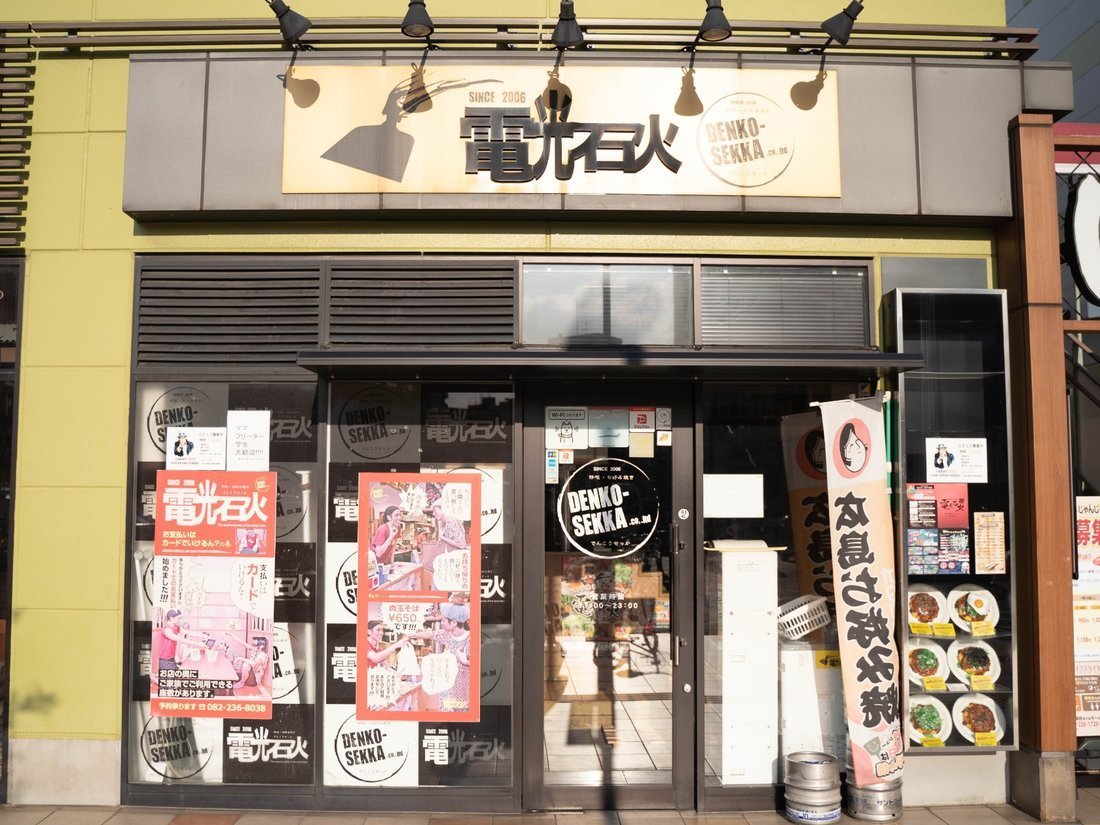
Hiroshima's Sixth Floor and What Happens to Okonomiyaki Up There
The building at Minami-ku Matsubaracho 10-1 is not the kind of address that announces itself. Hiroshima Full Focus Building rises from a district that sits south of the bullet-train crowds, functional rather than scenic, and the elevator ride to the sixth floor does little to prepare you for what the city's okonomiyaki tradition looks like when it is taken seriously. Denko Sekka occupies that floor, and the name itself — lightning flash, in translation — suggests speed and precision rather than ceremony. That combination of setting and name frames the experience before anything lands on the griddle.
Okonomiyaki is not street food that happened to move indoors. In Hiroshima, it is a distinct culinary tradition with its own construction logic: layers built on the teppan rather than folded, noodles incorporated rather than omitted, sourcing choices that shift the final character of the dish as meaningfully as technique does. Understanding where the city's better practitioners sit within that tradition requires understanding what they are sourcing, and why the ingredient chain matters more than most visitors expect.
The shortlist, unlocked.
Hard-to-book tables, cellar releases, and concierge-planned trips.
Get Exclusive Access →What Hiroshima Okonomiyaki Actually Requires
The Hiroshima style separates itself from Osaka's version at the structural level. Rather than mixing all ingredients into a batter, the Hiroshima cook builds in sequence: a thin crepe base, a mound of raw cabbage, protein, yakisoba or udon noodles, and a final egg layer, the whole stack compressed and turned on a flat iron plate. The cabbage volume is substantial , far larger than it appears before cooking , and its quality determines the dish's texture in a way that shortcuts cannot fix. Growers in the Hiroshima and wider Chugoku region supply much of what the city's teppan kitchens use, and proximity matters: cabbage that travels less arrives with more moisture and structural integrity, which affects how the layers compress and how the final stack holds its form when cut.
Oysters are a separate entry point into Hiroshima's sourcing geography. Hiroshima Prefecture accounts for the majority of Japan's oyster production, a dominance built on the sheltered inland sea conditions of the Seto Naikai. When oysters appear on an okonomiyaki or as a standalone teppan item in the city, the distance from water to plate is often measured in hours rather than days. That proximity creates a different starting point than oyster programs at comparable teppan destinations in Tokyo or Osaka, where Hiroshima oysters sometimes arrive, but through longer supply chains. Venues like Harutaka in Tokyo operate in a city where sourcing distance for local shellfish is simply a different equation.
The Teppan Tradition and Where Denko Sekka Sits Within It
Hiroshima's okonomiyaki scene has a tiered structure that visitors from outside Japan rarely map accurately. At the base, tourist-facing shops near Hondori or the Peace Memorial area operate on volume and accessibility. The middle tier comprises neighbourhood institutions with decades of repeat clientele and consistent sourcing relationships. Above that sits a smaller group of addresses where the cooking takes on a more deliberate character , tighter ingredient selection, more controlled technique, positioning that assumes the diner is paying attention. Denko Sekka occupies the upper portion of that range, in a building location that self-selects for guests who sought it out rather than stumbled upon it.
For comparison, the trajectory of Japanese cooking at the highest technical levels , across kaiseki at Gion Sasaki in Kyoto, or the innovative French-Japanese synthesis at HAJIME in Osaka , reflects a broader national commitment to sourcing precision that extends downward into regional traditions. Hiroshima's better teppan kitchens are part of that same discipline applied to a more democratic format. The dish is affordable and widely available; the sourcing and technique are not uniform across all who make it.
Elsewhere in western Japan, the sourcing-first approach shows up in different formats. Goh in Fukuoka draws on Kyushu's agricultural and marine resources for its kaiseki program; akordu in Nara applies European technique to Yamato ingredients. The logic is consistent: regional identity in Japanese cooking depends on what is grown or caught nearby, not just on what style the kitchen claims. Our full 広島市 restaurants guide maps this pattern across more of the city's dining options.
Atmosphere and Physical Setting
Sixth-floor teppan dining in a mid-rise office-adjacent building produces a specific atmosphere: the city at eye level rather than below, a contained room rather than a sprawling floor, the griddle as the functional center of the space. In Hiroshima's better okonomiyaki rooms, the counter format allows the cook's work to be visible in full, which is part of the point. Watching the cabbage mound reduce under heat, the layers form, and the final stack take shape is not incidental to the experience , it is the experience, the craft made legible in real time. The name Denko Sekka (lightning flash) implies something about pace: this is not slow food in the European sense, but it is not rushed in the way that high-turnover tourist shops operate either. The speed is purposeful.
For those comparing the setting against Hiroshima's other considered dining options, Takotsubo represents the kaiseki end of the city's spectrum. The two formats serve different moments and different levels of formality, but both reflect Hiroshima's capacity to produce cooking that merits attention beyond the obvious tourist circuit.
Planning Your Visit
Denko Sekka sits at Minami-ku Matsubaracho 10-1, sixth floor of Hiroshima Full Focus Building. The address is most efficiently reached from Hiroshima Station, which places it within reasonable distance of the shinkansen network connecting to Osaka, Kyoto, and Tokyo. Hiroshima itself is a two-stop journey from Shin-Osaka on the Nozomi. Visitors arriving from further afield should account for the station's south exit orientation when navigating toward Matsubaracho. Booking practices, hours, and pricing are not confirmed in EP Club's current data record for this venue; verifying current availability directly before travel is advisable, particularly for weekend evenings when the city's better teppan addresses fill faster than the broader tourist dining circuit might suggest. The sixth-floor location means walk-in traffic is lower than street-level venues, which cuts both ways: less casual footfall, but also less buffer capacity if the room fills.
For context on what comparable Japanese regional cooking looks like at various price points elsewhere in the country, Aji Arai in Oita, Amegen in Saga, and aki nagao in Sapporo each demonstrate how regional sourcing logic plays out in different prefectures. Akakichi in Imabari and Abon in Ashiya offer further reference points for western Honshu dining. Further afield, affetto akita in Akita, Ajidocoro in Yubari District, Amaki in Aichi, and anchoa in Kanagawa round out the national picture of how Japanese kitchens at the considered tier handle their sourcing decisions. At the international level, Le Bernardin in New York City and Lazy Bear in San Francisco illustrate how sourcing-led philosophy operates in Western fine-dining formats for those building cross-market comparisons.
Frequently Asked Questions
- Is Denko Sekka good for families?
- Hiroshima okonomiyaki is a format that generally suits mixed-age groups: the teppan counter is visible and engaging, the food is familiar in construction, and the price point at most okonomiyaki venues in the city sits well below kaiseki or omakase tiers. That said, EP Club does not hold confirmed data on Denko Sekka's seating configuration, children's options, or pricing, so families should verify current conditions directly. In a city where the Peace Memorial area draws significant family tourism, the Minami-ku location means a deliberate trip rather than a convenient stop between sights.
- What is the atmosphere like at Denko Sekka?
- The sixth-floor setting in a commercial building in Minami-ku produces a quieter, more self-contained atmosphere than street-level tourist-district addresses. Hiroshima's upper-tier okonomiyaki rooms tend toward the counter format where the cook's work is central to the room's dynamic , less background noise, more attention on what is happening on the griddle. Without confirmed award recognition in EP Club's current data, it is difficult to benchmark the ambiance precisely against credentialed peers, but the address and building context suggest a venue oriented toward regulars and deliberate visitors rather than passing trade.
- What dish is Denko Sekka famous for?
- Denko Sekka operates in Hiroshima's okonomiyaki tradition, which means the layered teppan pancake , built in sequence on a flat iron plate, incorporating noodles and local ingredients , is the format's primary expression. Hiroshima Prefecture's oysters are among the most locally sourced proteins available in the city, and Seto Naikai-harvested shellfish appears at many of the city's teppan addresses. EP Club does not hold confirmed menu data for Denko Sekka specifically, so particular dishes should be verified before visiting.
- How far ahead should I plan for Denko Sekka?
- EP Club does not hold confirmed booking data for Denko Sekka, including whether reservations are accepted or required. In Hiroshima's dining context, the city sees concentrated tourist volumes around the Peace Memorial and Miyajima routes, which can create pressure on well-regarded dining addresses during peak seasons (spring cherry blossom and autumn foliage periods particularly). For any venue operating at the considered tier in a tourist-heavy city, planning at least two to three weeks ahead for weekend visits is a reasonable baseline , confirming current policy directly is the necessary first step.
- Why does Denko Sekka's location in Minami-ku matter for understanding the venue?
- Hiroshima's culinary addresses split between the central tourist circuit around Naka-ku , Hondori, the Peace Memorial district , and quieter locations that draw a more local or deliberate clientele. Minami-ku, anchored by Hiroshima Station, functions as a transit node rather than a dining destination in its own right, which means a sixth-floor address there self-selects for guests who researched the venue specifically. That geography is a reliable signal about the kitchen's orientation: venues that survive away from tourist foot traffic typically do so on repeat local business and a product that justifies the effort of the trip.
Fast Comparison
These are the closest comparables we have in our database for quick context.
| Venue | Cuisine | Price | Awards | Notes |
|---|---|---|---|---|
| Denko Sekka (電光石火) | This venue | |||
| HAJIME | French, Innovative | ¥¥¥¥ | Michelin 3 Star | French, Innovative, ¥¥¥¥ |
| Harutaka | Sushi | ¥¥¥¥ | Michelin 3 Star | Sushi, ¥¥¥¥ |
| L'Effervescence | French | ¥¥¥¥ | Michelin 3 Star | French, ¥¥¥¥ |
| RyuGin | Kaiseki, Japanese | ¥¥¥¥ | Michelin 3 Star | Kaiseki, Japanese, ¥¥¥¥ |
| Crony | Innovative, French | ¥¥¥¥ | Michelin 2 Star | Innovative, French, ¥¥¥¥ |
Need a table?
Our members enjoy priority alerts and concierge-led booking support for the world's most difficult tables.
Get Exclusive AccessThe shortlist, unlocked.
Hard-to-book tables, cellar releases, and concierge-planned trips.
Get Exclusive Access →