Denc, Dik & Cunningham
Our verdict
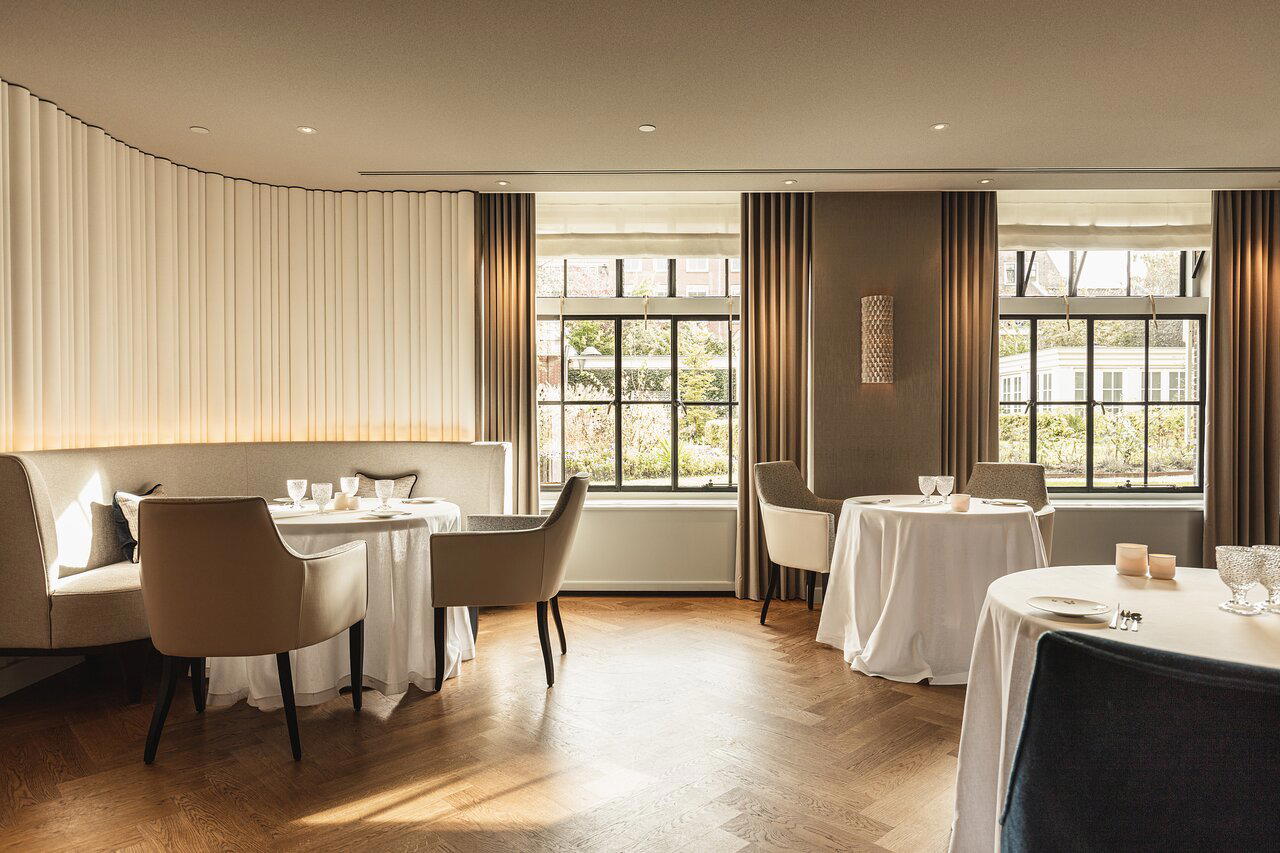
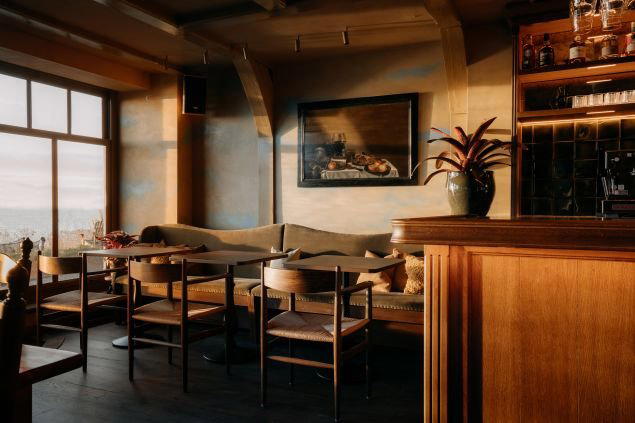
On a quiet stretch of Kerkstraat in Amsterdam's canal belt, Denc, Dik & Cunningham occupies a space where the interplay between kitchen, floor, and cellar is treated as a discipline in itself. The restaurant positions itself within Amsterdam's mid-to-upper dining tier, where collaborative service models are reshaping how the city's serious tables operate. Reservations are advised.

Pearl is the En Primeur Club membership app, where members save venues, book tables and use the concierge.

The menu
What to order
- Game Menu
- Dark Chocolate Soufflé
- Sea Bass with Anchovies and Caviar
Where the Canal Belt Gets Serious About Collaboration
Kerkstraat is not the address Amsterdam's dining press reaches for first. The street runs parallel to the Prinsengracht through the southern canal belt, lined with neighbourhood businesses and the occasional specialist shop, without the obvious dining-destination signage of the Spiegelkwartier or the Pijp. That relative quietness is part of the context for Denc, Dik & Cunningham: a restaurant that rewards the kind of guest who books with intent rather than stumbles in from a canal-side stroll.
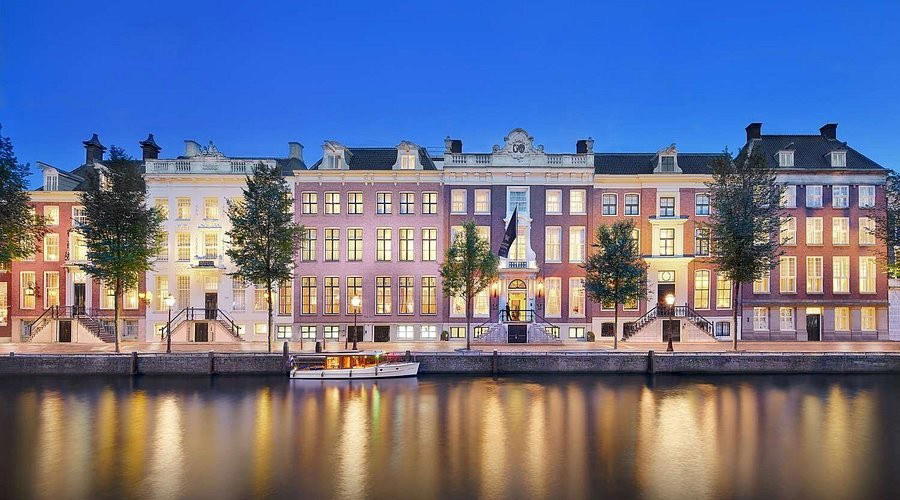
The address at number 377 places the restaurant in a stretch of the canal belt where the built environment is Georgian in its restraint, narrow facades, tall windows, a street scale that keeps the focus internal. What happens inside a room like this depends almost entirely on how the team behind it chooses to use the space, and at this address, the operative word is team.
The Collaborative Model in Amsterdam's Upper Dining Tier
Amsterdam's serious dining scene has spent the past decade sorting itself into two broad camps. One is the single-auteur restaurant, where a named chef's vision dominates every decision from plate to interior. The other, smaller, more disciplined, and increasingly the model that attracts sustained critical attention, is the collaborative format, where the relationship between kitchen, sommelier, and front-of-house is the actual product, not a supporting element.
The distinction matters more than it might appear. At restaurants like Ciel Bleu or Spectrum, the creative and service architecture is elaborately layered, with separate identities for the kitchen program and the floor. At Flore and Vinkeles, the house identity is strongly tied to a culinary perspective that leads. Denc, Dik & Cunningham sits in a different position: the name itself signals something structural. Three names on the door implies three accountable voices, which is either a statement of intent or a description of how the place actually runs, ideally both.
In the Dutch dining tradition, this kind of named partnership has precedent at the highest level. De Librije in Zwolle built its reputation partly through the visible pairing of culinary and hospitality leadership. Inter Scaldes in Kruiningen operates with a similar sense that the dining room and the kitchen are co-equal concerns. At this level, the sommelier and front-of-house lead are not interpreters of someone else's vision, they are originators.
What the Collaborative Format Actually Delivers
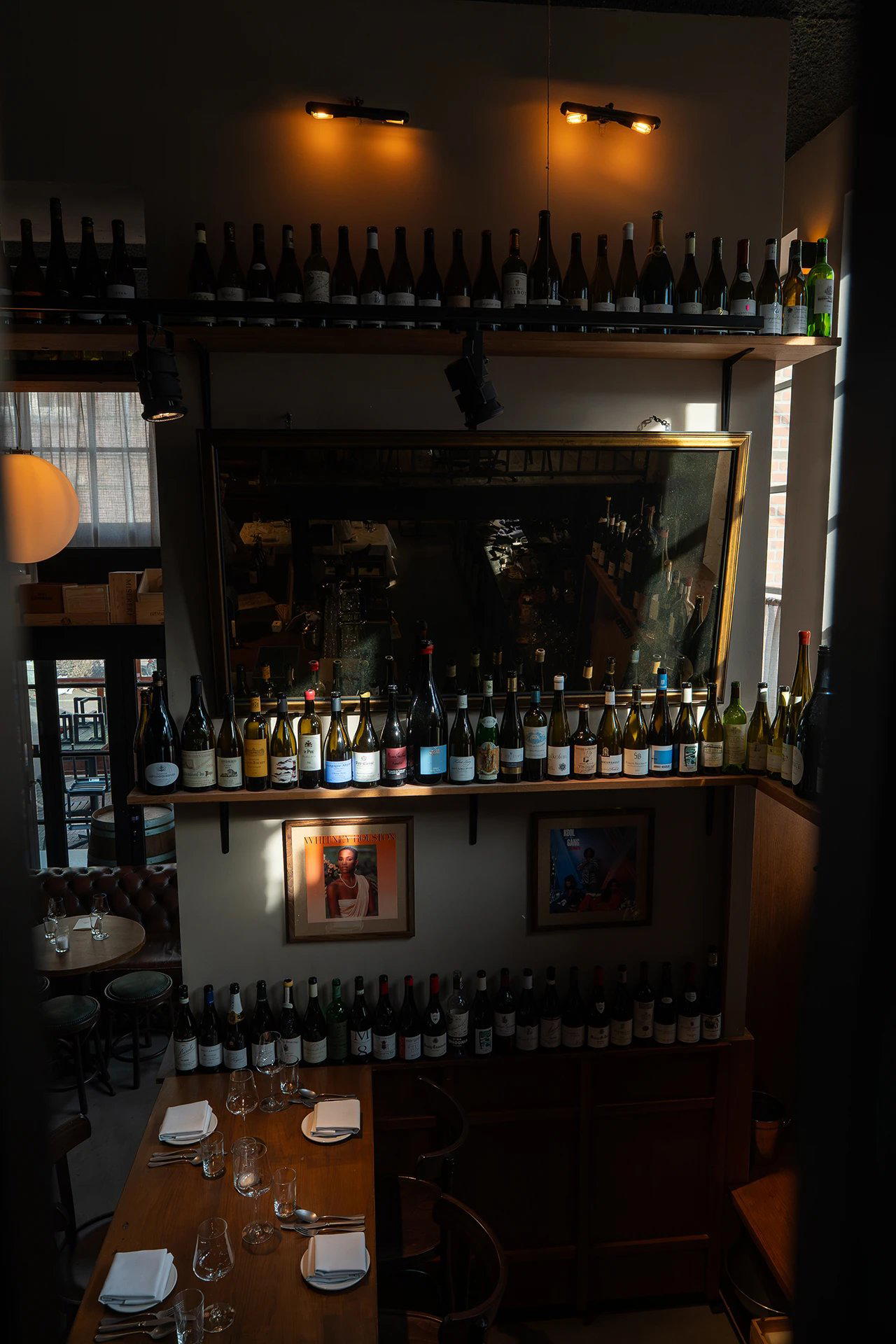
The practical expression of a collaborative service model tends to show up in three places: the wine program, the pacing of service, and the quality of conversation between the table and the floor. In the standard auteur-led restaurant, the sommelier's role is to support the chef's menu choices. In a genuinely collaborative room, the wine program has its own creative logic, and the pairing conversation moves in both directions, the kitchen responds to what the cellar is interested in, not only the reverse.
This dynamic has found varied expression across the Dutch restaurant circuit. De Nieuwe Winkel in Nijmegen operates a program where the plant-based kitchen drives the pairing challenge, forcing the sommelier into genuinely original territory. Brut172 in Reijmerstok has built a reputation in part through the coherence between its food philosophy and its cellar curation. At a smaller scale, De Groene Lantaarn in Staphorst demonstrates how a tightly resourced team can produce a dining experience that feels complete rather than segmented.
At Kerkstraat 377, the implication of three named principals is that no single department is subordinated to another. Whether that produces a more balanced experience for the guest depends on execution, on whether the collaboration is genuinely felt in the room or simply stated on the signage.
Amsterdam Context: Where This Sits in the City's Dining Architecture
Amsterdam's mid-to-upper dining tier is more competitive than its size suggests. The city has a Michelin footprint that punches above its population weight, and the concentration of serious tables in a relatively small geographic area means guests are making comparative decisions regularly. Bistro de la Mer represents the classic-format end of the €€€ bracket. The farm-forward operators, BAK, De Kas, occupy a distinct register. Bolenius sits at the intersection of Modern Dutch and creative cuisine with a more formal architectural frame.
Denc, Dik & Cunningham's position in this field is shaped by its address, its naming structure, and its apparent orientation toward collaborative service rather than chef-driven spectacle. That places it in a different conversation than the city's tasting-menu flagships, and closer to the kind of restaurant where the guest's relationship with the floor team is a meaningful part of the value proposition.
The broader Dutch circuit offers useful comparison points for what this kind of restaurant can achieve. De Lindenhof in Giethoorn and De Lindehof in Nuenen both operate in smaller markets with strong service identities. Tribeca in Heeze and De Treeswijkhoeve in Waalre show how regional Dutch dining has developed its own authority outside the capital. De Bokkedoorns in Overveen, a short distance from Amsterdam, demonstrates how proximity to the city shapes a restaurant's competitive positioning without requiring it to play by the city's rules.
In a global frame, the collaborative restaurant model has produced some of the more compelling experiences in recent years. Lazy Bear in San Francisco built its identity through collective creative ownership. Le Bernardin in New York City has long demonstrated how a sustained kitchen-and-floor partnership produces consistency at the highest level. These are different scales and different ambitions, but the underlying principle, that the leading dining experiences emerge from genuine collaboration rather than hierarchy, is the same.
For a full picture of where Denc, Dik & Cunningham sits within the wider Amsterdam dining circuit, see our full Amsterdam restaurants guide.
Know Before You Go
| Address | Kerkstraat 377, 1017 HW Amsterdam, Netherlands |
|---|---|
| Neighbourhood | Southern Canal Belt (between Prinsengracht and Utrechtsestraat) |
| Booking | |
| Price Range | Not confirmed, contact the venue for current menu pricing |
| Hours | Not confirmed, verify directly before visiting |
| Getting There | Tram lines serving Utrechtsestraat and Prinsengracht stops are the closest public transport options |
Frequently asked questions
Where is Denc, Dik & Cunningham in Amsterdam?
Denc, Dik & Cunningham is located at Kerkstraat 377, 1017 HW Amsterdam, Netherlands, Amsterdam.
Is Denc, Dik & Cunningham a good choice for a dinner in Amsterdam's canal belt without the tourist-facing crowds?
Kerkstraat 377 sits in the southern canal belt, parallel to the Prinsengracht, a stretch that Amsterdam's dining press covers less frequently than the Jordaan or Leidseplein corridors. That lower visibility means the room draws a more local-facing crowd than restaurants in higher-traffic neighbourhoods. For visitors who want a serious dinner in Amsterdam without the proximity to tourist circuits, the address works in their favour.
What's the must-try dish at Denc, Dik & Cunningham?
The menu specifics at Denc, Dik & Cunningham are not published in advance, which is consistent with the collaborative, seasonally responsive format the restaurant operates on Kerkstraat in Amsterdam. The stronger approach is to arrive without fixed expectations and let the service team guide the order. That posture suits the kitchen's working method better than arriving with a single target dish in mind.
Can I walk in to Denc, Dik & Cunningham?
Walk-in availability at Kerkstraat 377 depends on the day and the season, and the restaurant does not publish real-time table availability online. Amsterdam's mid-to-upper dining tier fills quickly on Thursday through Saturday evenings, so contacting the venue directly in advance is the practical approach. A spontaneous visit midweek carries better odds than arriving on a weekend without prior contact.
What's Denc, Dik & Cunningham best at?
The case for Denc, Dik & Cunningham rests on its collaborative service structure, which distributes authorship across the team rather than centering a single named chef. In Amsterdam's dining scene, where single-auteur restaurants dominate press attention, that format produces a different kind of consistency: the experience does not depend on whether one person is in the building. Kerkstraat is a quieter address than the Jordaan or De Pijp, which keeps the room less performative than comparable spots.
A Tight Comparison
Comparable venues nearby, for context on price, style, and recognition.
| Venue | Cuisine | Price | Awards | Notes |
|---|---|---|---|---|
| Denc, Dik & CunninghamThis venue (the venue you are viewing) | French-Mediterranean with Local Dutch Influences | $50–100 | Not listed | Not listed |
| George W.P.A. | French-New York Brasserie | $30–50 | Not listed | Vondelpark Oost, French-New York Brasserie |
| Amstel Restaurant | French Brasserie with Mediterranean Influences | Not listed | Not listed | Sarphatistrook, French Brasserie with Mediterranean Influences |
| Avalon Wijn & Spijs | Wine-Paired Fine Dining | Not listed | Star Wine List | Schinkelbuurt Zuid, Wine-Paired Fine Dining |
| Café Pigalle | French-Mediterranean Brasserie | $30–50 | Not listed | Amsterdam Zuidoost, French-Mediterranean Brasserie |
| Red | French Steakhouse with Lobster | $50–100 | Not listed | Spiegelbuurt, French Steakhouse with Lobster |