On Plaza Mayor, Madrid's most theatrically charged square, DCorazon occupies a position that few restaurants in the city can claim: a terrace address where the setting does as much work as anything on the plate. The kitchen draws on the Spanish creative tradition, placing it in a comparable set that rewards visitors who treat location and menu architecture together as a single argument for an evening in Centro.
Pearl is the En Primeur Club membership app — saves, bookings, and concierge access live there. Same editors, same standards.
- Address
- Pl. Mayor, 30, Centro, 28012 Madrid, Spain
- Phone
- +34910695743
- Website
- restaurantedcorazon.com
- Directions
- Get directions
 Saves & bookings on Pearl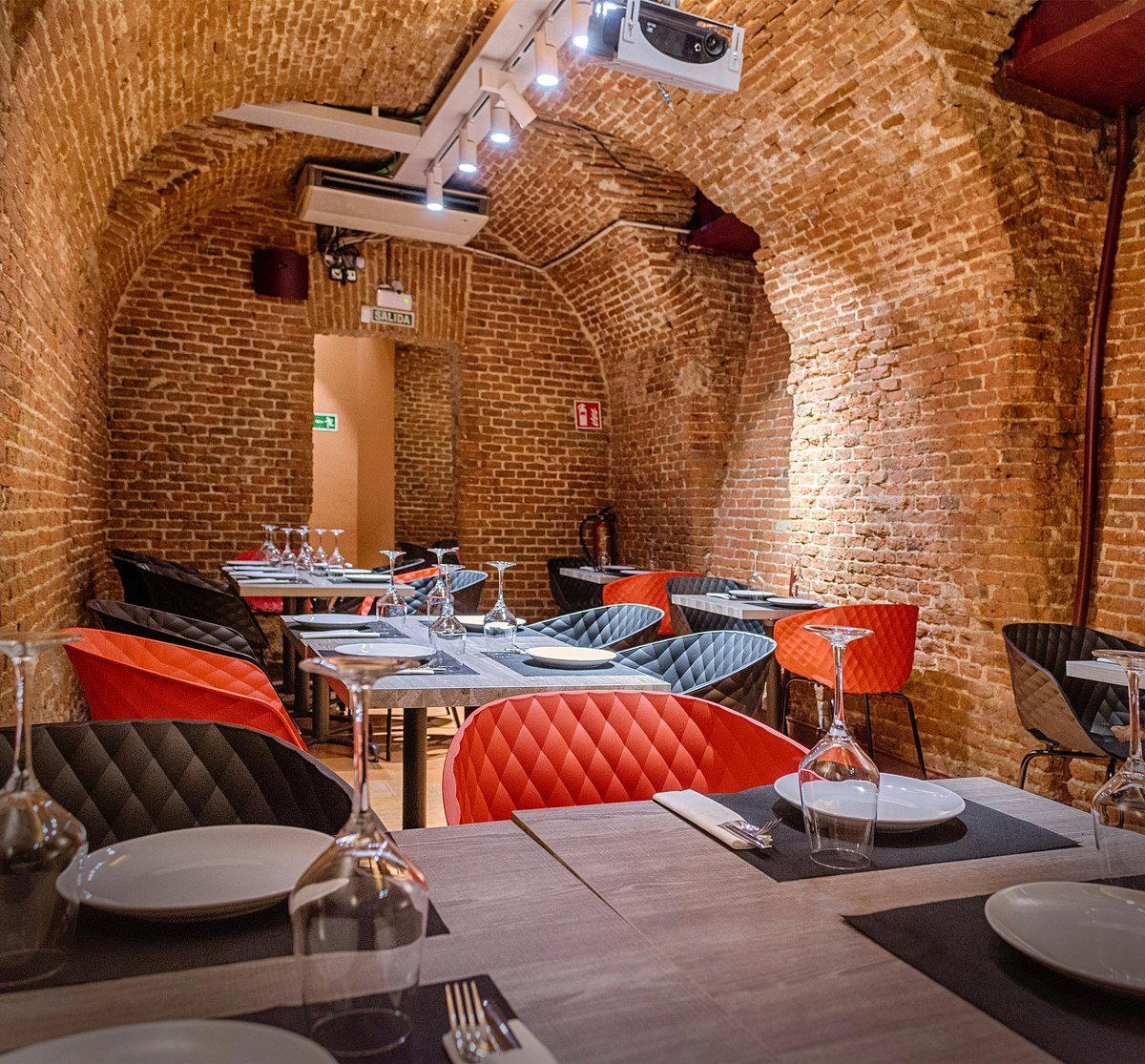
A Square That Sets the Terms
Plaza Mayor is one of those spaces that refuses to be background. The 17th-century arcades, the uniform ochre facades, the geometry of the central square: everything about it asserts itself before a fork is lifted. Restaurants that operate here are, in a sense, staging a conversation between their menus and one of Europe's most self-confident public spaces. DCorazon, a Spanish fusion restaurant in historic caves at Pl. Mayor, 30, Centro, 28012 Madrid, Spain, takes that conversation seriously. The terrace faces into the square directly, which means the physical approach to dining here is inseparable from the experience of Madrid at its most formally theatrical.
That setting matters as editorial context, not just as atmosphere. In Madrid's dining scene, a distinction has opened between kitchens that compete purely on technique and those that fold location into their overall proposition. DCorazon sits in the second group, where the Plaza Mayor address functions as part of the offer in a way that a basement room in Salamanca or a tower-floor table in Azca simply cannot replicate.
Menu Architecture and What It Signals
One telling thing about any Spanish restaurant in the creative tradition is how the menu is sequenced: whether it moves from the cold and the cured through to fat-rich mains and structured desserts, or whether it abandons that architecture for something more fragmentary and course-agnostic. Kitchens aligned with Spain's broader avant-garde movement, from the three-Michelin-starred DiverXO at the progressive extreme to the more classically grounded Coque, have each staked out clear positions on that structural question.
DCorazon's menu architecture reflects the Centro address in a practical sense: a plaza restaurant with significant tourist footfall has to work across a wider range of expectations than a destination-only counter. That commercial reality tends to produce menus that are legible without being simplistic, where Spanish product identity anchors dishes that carry enough technique to satisfy the more experienced diner. The result is a menu that reads as an entry point into the creative Spanish tradition rather than a specialist deep cut, which positions it differently from the tasting-menu-only format of DSTAgE or the research-driven provocation of Mugaritz in Errenteria.
That positioning is not a weakness. The Spanish creative tradition has always included a tier of restaurants that translate serious technique into formats accessible beyond the committed gastronome. Paco Roncero and Deessa occupy adjacent spaces in Madrid's broader market, each calibrated for an audience that wants rigour without the opacity of a fully experimental programme.
Where DCorazon Sits in the Madrid Picture
Madrid's dining map has expanded considerably over the past decade. The neighbourhood diversity of serious kitchens has widened, and the question of where to eat has become complex for first-time and returning visitors alike. Centro, by contrast, has remained a mixed proposition: tourist density keeps rents high and expectations varied, which means fewer high-ambition kitchens choose to open here than in Salamanca, Justicia, or Chamberí.
DCorazon's choice to operate on Plaza Mayor therefore represents a deliberate bet that the address compounds value rather than diluting it. The same logic has worked internationally: restaurants positioned at genuinely significant landmarks, from celebrated brasseries beside major museums to terrace restaurants on historic squares across southern Europe, often carry a premium that is partly architectural. Diners are paying for a specific version of a city, not just a meal. For Madrid, Plaza Mayor is as direct an expression of that bargain as the city offers.
That does not place DCorazon in the same competitive frame as the three-Michelin-starred rooms that define Spain's international reputation. El Celler de Can Roca in Girona, Quique Dacosta in Dénia, Arzak in San Sebastián, Martin Berasategui in Lasarte-Oria, Aponiente in El Puerto de Santa María, and Azurmendi in Larrabetzu are destination restaurants that require planning, travel, and significant investment. DCorazon is something structurally different: a terrace address in the capital's most visited square, intended to capture the evening of a visitor who wants the city's creative food tradition in a format that does not demand advance booking months out or a specific tasting-menu commitment.
The relevant comparison is more local. Against Centro's broader terrace and casual dining options, DCorazon's creative ambition reads as a differentiator. Against the city's full-commitment tasting rooms, its Plaza Mayor address and accessibility read as the pitch. DCorazon is recommended for a casual evening meal at an accessible price point. Both frames are legitimate; the choice between them depends on what a given evening in Madrid is meant to deliver.
Spanish Creative Tradition: The Broader Context
Spain's creative cooking movement has always been more plural than its Basque and Catalan headlines suggest. Madrid has developed its own strand, less anchored to a single regional product identity and more responsive to the city's cosmopolitan supply chain. Kitchens here draw on Galician seafood, Castilian game, Andalusian vegetables, and Levantine citrus without owing allegiance to any single terroir. That pluralism produces a particular kind of menu architecture: product-forward but not product-constrained, technically ambitious but not technique-first.
This is the tradition DCorazon operates within, however its kitchen resolves the specific tensions. The question that distinguishes restaurants at this level from each other is not whether they use good Spanish product, but how they sequence and frame it. Does the menu build toward a single climactic dish, or does it distribute weight evenly across courses? Does acidity arrive early as a palate-sharpener or late as a cut through richness? Those structural choices are where a kitchen's identity lives, and they are the right questions to ask about any table in this tier.
For broader context across Spain's creative kitchens, the work coming out of Cocina Hermanos Torres in Barcelona, Ricard Camarena in València, and Atrio in Cáceres illustrates how differently the same national tradition resolves when anchored to different regions and different product identities. DCorazon, operating in the capital without a single regional anchor, represents the Madrid version of that plurality.
Planning a Visit
Plaza Mayor addresses bring their own logistics. The square is pedestrianised, which affects arrival by car or taxi. Evening service, particularly in the warmer months when terrace seating is in demand, rewards advance planning. Le Bernardin in New York City and Lazy Bear in San Francisco offer reference points for how different markets resolve the tension between location prestige and kitchen ambition.
| Venue | Format | Price Tier | Location Type |
|---|---|---|---|
| DCorazon | Creative Spanish, terrace | €€ | Plaza Mayor, Centro |
| DiverXO | Progressive Asian-Creative | €€€€ | Destination, NH Collection hotel |
| Coque | Spanish Creative | €€€€ | Almagro, Salamanca-adjacent |
| DSTAgE | Modern Spanish Creative | €€€€ | Justicia |
| Paco Roncero | Creative | €€€€ | Gran Vía |
The Quick Read
Comparable venues nearby, for context on price, style, and recognition.
| Venue | Cuisine | Price | Notes |
|---|---|---|---|
| DCorazonThis venue — the venue you are viewing | Sol, Spanish Fusion in Historic Caves | $$ | Not listed |
| Taberna La Carmencita | Not listed | $$ | Chueca, Traditional Spanish Taberna Classics |
| Gallobúho | Justicia, Modern Spanish Tapas | $$ | Not listed |
| TASCA SUPREMA | Chueca, Traditional Madrid Tavern | $$ | Not listed |
| Restaurante Adrede | Jeronimos, Traditional Spanish Tapas | $$ | Not listed |
| El Rincón de Cruz Blanca | Pacifico, Traditional Spanish Tapas | $$ | Not listed |
Continue exploring
More in Madrid
Restaurants in Madrid
Browse all →
Bars in Madrid
Browse all →
Hotels in Madrid
Browse all →

At a Glance
- Historic
- Cozy
- Lively
- Casual Hangout
- Group Dining
- Brunch
- Terrace
- Historic Building
- Craft Cocktails
- Street Scene
Current opening hours
- Monday
- 12–11:30 PM
- Tuesday
- 12–11:30 PM
- Wednesday
- 12–11:30 PM
- Thursday
- 12–11:30 PM
- Friday
- 12–11:30 PM
- Saturday
- 11 AM–11:30 PM
- Sunday
- 12–11 PM
Hours can change for holidays and private events. Last verified .
Cozy cellar atmosphere with vaulted ceilings and lively terrace vibe.