
On Calle de la Libertad in Madrid's Chueca district, Taberna La Carmencita is one of the city's oldest continuously operating taverns, a reference point for the unhurried, ritual-driven pace of traditional madrileño dining. The room itself does much of the storytelling: tiled walls, dark wood, and the accumulated atmosphere of more than a century of lunches. For those tracking Spanish dining heritage rather than trend cycles, this address is foundational.
Pearl is the En Primeur Club membership app — saves, bookings, and concierge access live there. Same editors, same standards.
- Address
- C. de la Libertad, 16, Centro, 28004 Madrid, Spain
- Phone
- +34915310911
- Website
- tabernalacarmencita.es
- Directions
- Get directions
 Saves & bookings on Pearl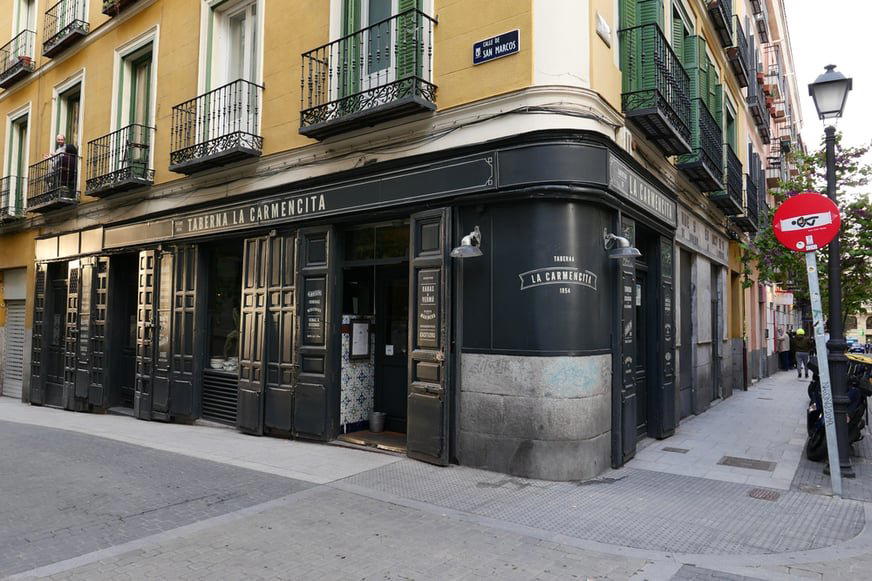
The Room Before the Meal
There is a particular discipline to entering a place like Taberna La Carmencita. The room on Calle de la Libertad, in the heart of Chueca, operates at a frequency that takes a moment to tune into, tiled walls worn to a particular warmth, wooden fittings that carry the weight of accumulated decades, and a pace of service that insists you slow down before you order anything. This is not affectation. It is the architectural argument of a tavern that has been shaping how Madrid eats since the 19th century, and the physical environment makes that argument before a single dish arrives.
Madrid's traditional taberna format occupies a distinct position in the city's dining hierarchy. The taberna tradition sits outside that progression entirely, operating on continuity rather than innovation as its primary credential.
The Ritual of the Madrileño Meal
Understanding La Carmencita requires understanding what the taberna meal is and how it functions socially. The traditional madrileño midday meal is not a transaction, it is a structured passage through time. It begins with something to drink while decisions are made unhurriedly, moves through shared plates before settling into a main course, and concludes with conversation that extends well past the point at which the food has been cleared. The rhythm is built into the format of the room and the expectations of the staff. A table that turns quickly is not the goal; a table that eats well is.
This pacing distinguishes the taberna experience from the contemporary tasting menu format, where the kitchen controls the tempo. Here, the pace is negotiated between the table and the room. That negotiation is itself part of the dining ritual, knowing when to order the next round, when to ask for the menu, when to let the conversation run long. For visitors more accustomed to the compressed efficiency of lunch in other European capitals, this can require a deliberate recalibration. The taberna rewards it.
Spanish dining culture more broadly has always built ritual into the structure of the day. The institution of the menú del día, the tradition of the aperitivo hour, the extended sobremesa after lunch, these are not casual habits but codified customs that shape how dining rooms are designed, staffed, and timed. La Carmencita's longevity owes something to how faithfully the room embodies these codes. Institutions elsewhere in Spain operate on similar principles: Arzak in San Sebastián and El Celler de Can Roca in Girona both carry multigenerational weight, though in different registers. The taberna is the more democratic expression of the same cultural insistence on eating as a serious, unhurried activity.
What the Kitchen Represents
La Carmencita's kitchen belongs to the casera tradition, home-style cooking applied to a public dining room. This is a specific culinary register that sits apart from both the avant-garde and the technically driven. Cocido madrileño, the city's definitive one-pot dish of chickpeas, meat, and vegetables served across multiple courses, is the canonical reference point for this style of cooking. Huevos rotos, croquetas, seasonal stews: the vocabulary is familiar, the execution is the differentiator, and in a kitchen with this kind of continuity, the recipes carry institutional memory rather than personal invention.
Across Spain, the casera register has produced some of the country's most respected kitchens. Aponiente in El Puerto de Santa María and Azurmendi in Larrabetzu have moved far from it into highly conceptual territory, but both cite the regional home kitchen as a reference point. Martin Berasategui in Lasarte-Oria and Quique Dacosta in Dénia operate at the technical extreme. La Carmencita represents the other pole: the accumulated weight of a recipe book that has not needed to reinvent itself because the original arguments were sound.
For context beyond Spain, the closest analogues in the international fine-dining conversation are places like Le Bernardin in New York City, which has maintained a singular focus on classical technique for decades, or Atomix in New York City, which has built its reputation on disciplined Korean culinary tradition rather than trend-chasing. The through-line is commitment to a defined tradition over time. Ricard Camarena in València, Mugaritz in Errenteria, Atrio in Cáceres, and Cocina Hermanos Torres in Barcelona each occupy their own defined positions within Spanish dining, none of which overlap with what La Carmencita does.
Chueca and the Address
Calle de la Libertad sits inside Chueca, a neighbourhood that has cycled through several identities over the past century and now operates as one of Madrid's most energetically mixed districts, high foot traffic, dense restaurant and bar provision, a social mix that runs from long-term residents to visitors arriving specifically for the neighbourhood's reputation. Within that context, La Carmencita's presence on the street functions as a kind of anchor: a reminder that the neighbourhood's current energy sits on top of a much older urban layer.
The taberna's location in Chueca also places it within easy reach of the broader Centro dining circuit, where the competition for lunch trade is significant. The fact that an address of this age holds its position in a neighbourhood that changes as quickly as Chueca is itself a data point about the durability of the format and the loyalty it generates. For the full picture of what Madrid's dining scene now offers across registers, our full Madrid restaurants guide maps the city from traditional tabernas through to its highest-decorated creative kitchens.
Planning a Visit
The taberna format at its most traditional is a lunch institution, and La Carmencita is best understood as a midday destination rather than a late-dinner option. Madrid's lunch service typically runs from 2pm and extends well into the afternoon, with kitchens closing later than in most European cities. Arriving close to the opening of service tends to allow one unhurried experience; later arrivals during peak periods can find the room at full capacity and the pace compressed accordingly.
Reservations are advisable for weekend lunch, when the neighbourhood traffic is highest and the room operates at full draw. Weekday lunch allows more flexibility. The address, Calle de la Libertad 16, Centro, 28004 Madrid, is walkable from Gran Vía and Chueca metro stations.
Comparison Snapshot
Comparable venues nearby, for context on price, style, and recognition.
| Venue | Cuisine | Price | Notes |
|---|---|---|---|
| Taberna La CarmencitaThis venue — the venue you are viewing | Traditional Spanish Taberna Classics | $$ | Not listed |
| Il Tavolo Verde | Organic Spanish Cafe | $$ | Recoletos |
| Ana la Santa | Modern Spanish Tapas | $$ | Barrio de las Letras |
| La Vaquería Montañesa | Traditional Spanish Mediterranean Market Cuisine | $$ | Almagro |
| El 5 de Tirso | Modern Madrid Tapas | $$ | Lavapies |
| La Ventita del Foodie by AYANTO | Authentic Canarian Tapas & Gourmet Products | $$ | Ibiza |
Recognition history
Dated appearances from independent guides and award organizations, with the underlying list record or original source where available.
Macarfi 7 Food Rating
Macarfi
Continue exploring
More in Madrid
Restaurants in Madrid
Browse all →
Bars in Madrid
Browse all →
Hotels in Madrid
Browse all →

At a Glance
- Classic
- Rustic
- Cozy
- Historic
- Well Known
- Casual Hangout
- After Work
- Historic Building
- Organic
- Local Sourcing
Current opening hours
- Monday
- 12:30–5 PM, 8 PM–12:30 AM
- Tuesday
- 12:30–5 PM, 8 PM–12:30 AM
- Wednesday
- 12:30 PM–12:30 AM
- Thursday
- 12:30 PM–12:30 AM
- Friday
- 12:30 PM–1 AM
- Saturday
- 12:30 PM–1 AM
- Sunday
- 12:30 PM–12:30 AM
Hours can change for holidays and private events. Last verified .
Historic tavern with floral-patterned tiles, wood and zinc bar, blending 19th-century charm with contemporary design elements.