
A neighbourhood tasca on Calle de Argensola in Madrid's Alonso Martínez quarter, Tasca Suprema operates in the tradition of the city's mid-century taberna, where marble counters, ambient noise, and wine poured from the bottle define the experience as much as the food. The address places it squarely in Chueca-adjacent territory, a district where casual and serious dining coexist with less friction than almost anywhere else in the capital.
Pearl is the En Primeur Club membership app — saves, bookings, and concierge access live there. Same editors, same standards.
- Address
- C. de Argensola, 7, Centro, 28004 Madrid, Spain
- Phone
- +34913080347
- Website
- latascasuprema.com
- Directions
- Get directions
 Saves & bookings on Pearl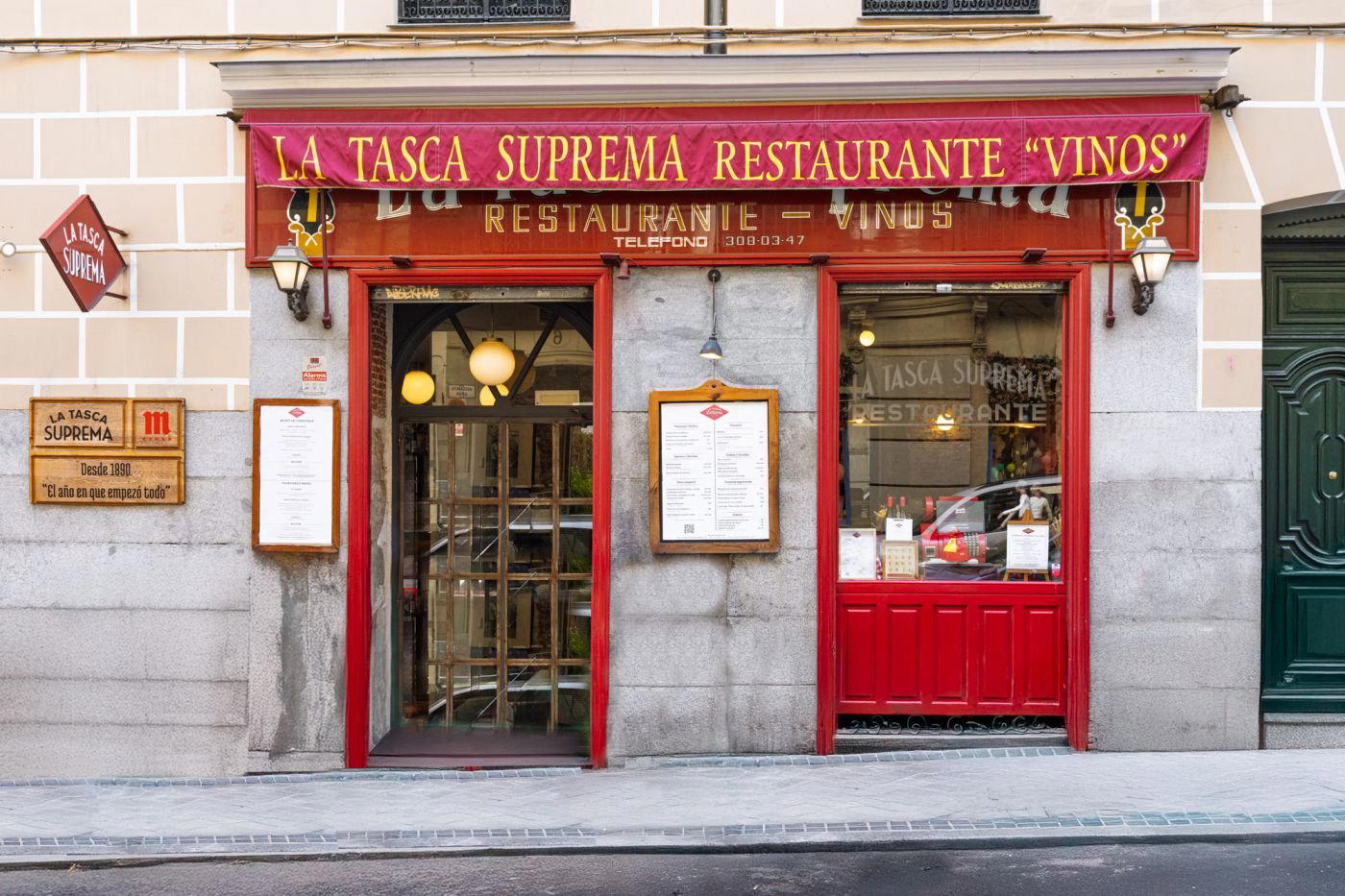
The Room Before the Meal
There is a particular quality of light that older Madrid tascas seem to share: something amber, diffused through years of accumulated patina on tile and wood, warm enough to soften the edges of a long lunch but clear enough that you can read the handwritten specials without squinting. Calle de Argensola sits in one of the capital's more coherent residential grids, a few blocks east of Alonso Martínez metro station, where the density of neighbourhood bars and modest restaurants has remained relatively stable even as adjacent Chueca and Malasaña absorbed successive waves of concept-driven openings. Tasca Suprema occupies number seven on that street, and the address alone positions it within a specific Madrid tradition: the stand-alone neighbourhood room that serves the local population first and the wider city second.
Madrid's taberna culture has deep structural roots. Unlike the pintxo bars of San Sebastián or the market-adjacent counters of Barcelona, the traditional Madrid tasca operates as a general-purpose social room, a place designed to absorb multiple hours and multiple purposes simultaneously. Lunch crowds overlap with wine-and-vermouth crowds; solitary diners and large parties share the same room without the enforced segmentation of a tasting-menu format. That acoustic openness, often described as noise but more accurately understood as the sound of a room functioning as intended, is as much a part of the proposition as the food. Walking into a well-run tasca at the height of a Saturday lunch service is a specific sensory experience: the clatter of ceramic on marble, the smell of olive oil at high heat and dried chilli and something briny from a conserva tin being opened behind the bar.
Where It Sits in the Madrid Dining Map
The city's highest-profile addresses, DiverXO with its three Michelin stars, Coque in its grand tasting-menu format, and Deessa at the Mandarin Oriental, occupy a tier defined by multi-hour commitment, advance booking windows measured in months, and price points that sit well above the European average for formal dining. DSTAgE and Paco Roncero extend that creative-tasting tier further. The neighbourhood tasca operates on an entirely different logic: lower formality, higher frequency, and a relationship with its immediate geography that tasting-menu restaurants, by design, cannot replicate.
Spain's broader fine-dining circuit extends far beyond Madrid. El Celler de Can Roca in Girona and Mugaritz in Errenteria represent the country's most internationally discussed addresses; Arzak in San Sebastián, Azurmendi in Larrabetzu, and Martin Berasategui in Lasarte-Oria anchor the Basque Country's dominant position in the national hierarchy. Coastal operations like Aponiente in El Puerto de Santa María and Quique Dacosta in Dénia draw international visitors for single-meal pilgrimages. Ricard Camarena in València, Cocina Hermanos Torres in Barcelona, and Atrio in Cáceres each hold their own distinct positions within that national map. The Madrid tasca does not compete on that axis, and that is precisely the point. The tasca serves a function no tasting room can: daily use by people who live nearby.
The Sensory Register of a Neighbourhood Room
The physical character of the Alonso Martínez neighbourhood matters to the experience. The streets around Calle de Argensola are residential without being quiet, the kind of district where the pavement is busy at midday, where the green-grocer and the wine shop and the bar exist in close proximity. The approach to a tasca in this part of Madrid is part of the meal: the smell of coffee and morning bread giving way to the first lunch smells around one in the afternoon, the particular quality of spring and early autumn light in this part of the city, when the temperature sits at a point that makes outdoor tables genuinely useful rather than aspirational. Madrid spring, running from late March through May, and the early weeks of October represent the two periods when the city's neighbourhood eating culture operates at its most comfortable pitch. Summer compresses the midday window significantly as temperatures climb; January and February send the outdoor dimension indoors but intensify the interior atmosphere by necessity.
Inside a room of this type, the sensory information is layered and immediate. The smell of high-heat olive oil registers at the door. Cast iron and clay casseroles carry both heat and sound to the table. The ambient noise in a small Madrid dining room during a Friday lunch is not background: it is the medium through which the meal is experienced. Contrast this with the soundscape at, say, Le Bernardin in New York City or Atomix in New York City, both of which have built considerable reputations partly on the disciplined management of the sensory environment. The Madrid tasca tradition inverts that priority entirely. The noise and compression are not bugs to be engineered out; they are what the room is.
Planning Your Visit
Calle de Argensola 7 is a ten-to-twelve minute walk from Gran Vía metro station and a few minutes from Alonso Martínez on lines 4, 5, and 10, making the address easily reachable from most central Madrid hotels without requiring a taxi. Tasca Suprema is recommended for reservations and follows regular opening hours of Mon to Thu 1 to 4:30 PM and 8 to 11 PM, Fri and Sat 1 to 11:30 PM, and Sun 1 to 4:30 PM. The same applies to walk-in availability: smaller rooms in this part of the city can fill quickly from a regular local clientele, especially at the prime Friday and Saturday lunch windows.
Comparable Spots
Comparable venues nearby, for context on price, style, and recognition.
| Venue | Cuisine | Price | Notes |
|---|---|---|---|
| TASCA SUPREMAThis venue — the venue you are viewing | Traditional Madrid Tavern | $$ | Not listed |
| Restaurante Adrede | Traditional Spanish Tapas | $$ | Jeronimos |
| Cafetería Restaurante Alfonso XI | Traditional Spanish Cafeteria | $$ | Jeronimos |
| Casa Castaña | Traditional Spanish Tapas | $$ | Sol |
| Restaurante Urbieta 13 | Modern Spanish Tapas | $$ | Pacifico |
| Restaurante Jarritus | Traditional Spanish Tapas | $$ | Guindalera |
Recognition history
Dated appearances from independent guides and award organizations, with the underlying list record or original source where available.
Macarfi 7 Food Rating
Macarfi
Continue exploring
More in Madrid
Restaurants in Madrid
Browse all →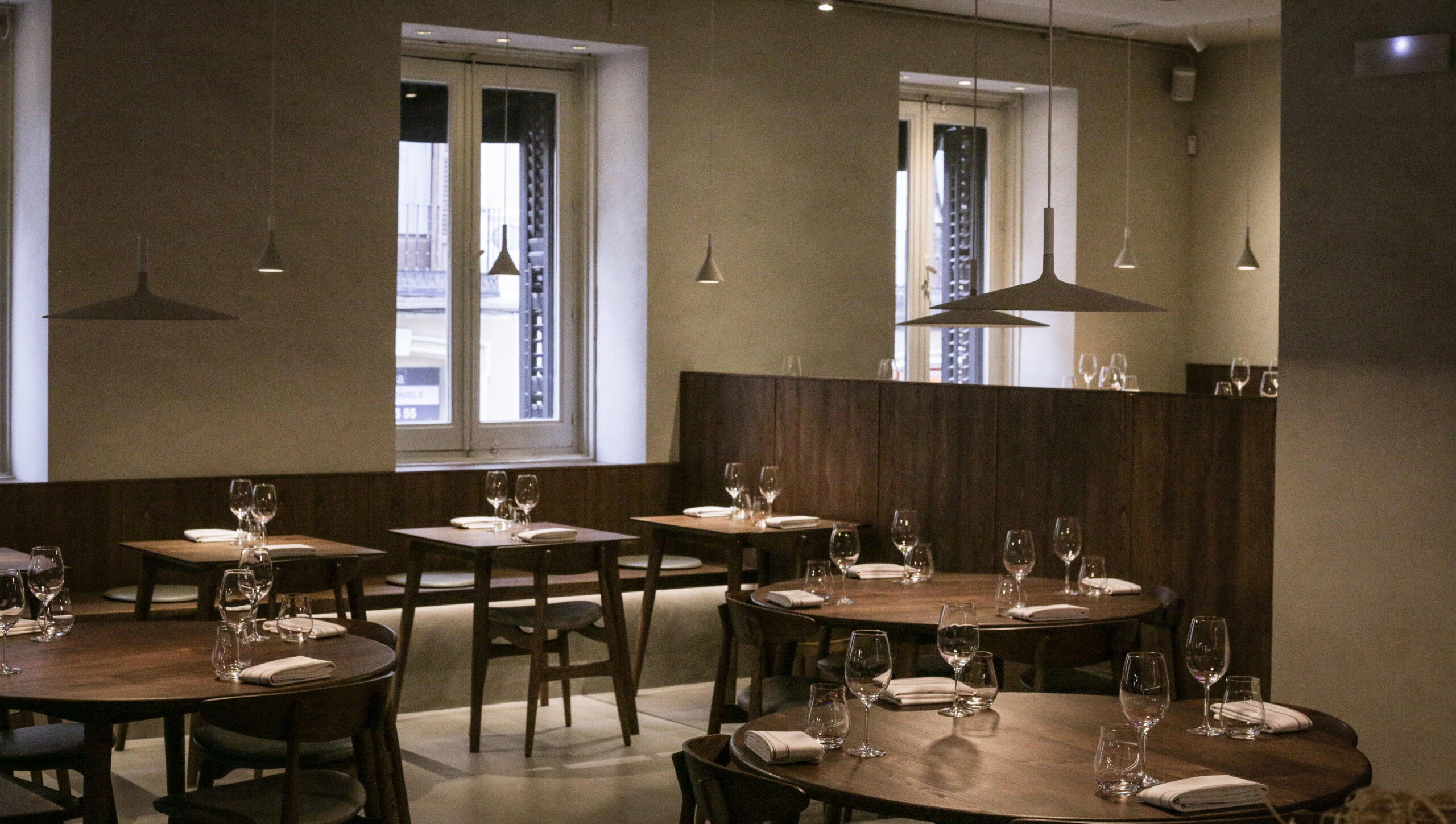
Bars in Madrid
Browse all →
Hotels in Madrid
Browse all →

At a Glance
- Classic
- Cozy
- Intimate
- Casual Hangout
- Group Dining
- Historic Building
Current opening hours
- Monday
- 1–4:30 PM, 8–11 PM
- Tuesday
- 1–4:30 PM, 8–11 PM
- Wednesday
- 1–4:30 PM, 8–11 PM
- Thursday
- 1–4:30 PM, 8–11 PM
- Friday
- 1–11:30 PM
- Saturday
- 1–11:30 PM
- Sunday
- 1–4:30 PM
Hours can change for holidays and private events. Last verified .
Cozy tavern atmosphere with wood-heavy decor, mosaic bar counter, marble tables, and checked tablecloths, evoking a traditional gathering place.