Our verdict
DAST Restaurant occupies a residential address in Vienna's 18th district, Währing, placing it at a remove from the inner-city dining circuit. The restaurant operates in a neighbourhood where ambitious cooking is less expected, which defines much of its character. For visitors working through Vienna's serious dining options, DAST represents the city's quieter, outer-ring alternative to the established Innere Stadt names.

Pearl is the En Primeur Club membership app, where members save venues, book tables and use the concierge.

Vienna's 18th District and What It Means for a Restaurant's Identity
Most of Vienna's recognised fine dining sits close to the Ringstraße or the first few districts: the park setting of Steirereck im Stadtpark, the polished rooms of Konstantin Filippou, the creative ambition of Amador. These are addresses that signal intent before a guest sits down. DAST Restaurant, at Schulgasse 85 in the 18th district of Währing, operates in a different register entirely. Währing is a residential district: tree-lined streets, Gründerzeit apartment blocks, local butchers and bakeries rather than hotel lobbies and concierge desks. A restaurant that sets up here is not chasing the tourist circuit or the business-lunch crowd. It is making a different kind of argument about where good food can and should happen.
That geographic positioning is not incidental. Across European cities, a pattern has emerged where ambitious independent restaurants anchor themselves in residential outer districts precisely to escape the economics and expectations of central locations. Higher rents in the centre push concepts toward volume; outer districts allow for a more considered pace. Vienna has seen this in several neighbourhoods, and Währing's position, reachable but not obvious, puts DAST in that category of restaurants you find because you looked, not because you walked past.
The Währing Setting: Approaching Schulgasse 85
Schulgasse is a quiet street. The name references the Gymnasium buildings that anchor this part of the district, and the surrounding blocks are largely residential, with the occasional neighbourhood café or specialist shop. Arriving at DAST, a visitor is not walking through a dining district or past competing restaurants. The isolation is part of the experience: the venue does not share a block with bars or other evening options, which concentrates attention on the meal itself.
This kind of neighbourhood setting tends to self-select a particular type of guest. People who make the journey to an outer-district address in Vienna on a weekday or weekend evening have usually done the research. They are not there by accident. That dynamic shapes the room: the expectation, shared between kitchen and table, is that the occasion matters.
Vienna's restaurant culture has historically been shaped by the coffee house tradition and the Beisl, the informal neighbourhood tavern. The city's more ambitious cooking exists in dialogue with both, whether openly referencing Austrian culinary tradition like Mraz and Sohn in Brigittenau, or departing from it more completely. A Währing address situates DAST closer to the Beisl end of that cultural geography, even if the cooking reaches further. The tension between an informal neighbourhood location and serious culinary intent is one that defines many of the most interesting restaurant openings across European cities right now.
Vienna's Outer-District Dining in Context
The concentration of Vienna's decorated restaurants in the central districts is not unusual for a European capital, but it does mean that outer-district restaurants operate with less structural support from the dining ecosystem around them. There is no spillover from hotel guests or theatre audiences; the kitchen has to generate its own reasons for the trip. Doubek is another example of Vienna cooking that finds its footing outside the immediate centre, and the comparison is instructive: both represent a strand of the city's food culture that is less visible in press coverage but often more embedded in how locals actually eat.
Across Austria more broadly, serious cooking is not confined to Vienna at all. Restaurants like Döllerer in Golling an der Salzach, Obauer in Werfen, and Landhaus Bacher in Mautern an der Donau have built sustained reputations in small towns and rural settings, demonstrating that Austrian dining culture does not require a capital city address to carry weight. The same logic applies within Vienna's districts: location outside the centre is not a limitation but a choice with its own implications for audience, pace, and expectation.
In the Alpine and western regions, restaurants including Gourmetrestaurant Tannenhof in Sankt Anton am Arlberg, Stüva in Ischgl, Restaurant 141 by Joachim Jaud in Mieming, and Schwarzer Adler in Hall in Tirol operate in destination formats where the journey itself is understood as part of the proposition. DAST's Währing address is a different kind of destination dynamic: it is within the city but requires deliberate navigation, and that small friction filters its audience in ways that shape the room.
For those tracking the full range of Austria's serious cooking, further names worth noting include Kräuterreich by Vitus Winkler in Sankt Veit im Pongau, Ois in Neufelden, and Taubenkobel in Schützen am Gebirge, each operating in the outer-district or small-town register that DAST shares in spirit if not in geography.
Planning a Visit
The 18th district is accessible by U-Bahn (line U6 to Währinger Strasse-Volksoper, then tram) and by tram lines running along Währinger Strasse. Journey time from the first district is typically 15 to 20 minutes by public transport. The neighbourhood has limited late-night options nearby, so DAST functions leading as a destination in itself rather than part of a longer evening across multiple stops.
For context on how DAST's logistics compare with peer Vienna restaurants, see the table below. For a broader view of the city's dining, the EP Club full Vienna restaurants guide covers the range from central Michelin-decorated rooms to outer-district independents. Internationally, the format of the deliberate, outer-neighbourhood restaurant with serious cooking intent appears in cities including New York, where Le Bernardin holds its midtown anchor, and San Francisco, where Lazy Bear operates in the Mission District on its own terms.
| Venue | District / Location | Price Range | Booking Notes |
|---|---|---|---|
| DAST Restaurant | 18th district (Währing) | Not confirmed | |
| Steirereck im Stadtpark | 3rd district (Stadtpark) | €€€€ | Books well in advance |
| Mraz and Sohn | 20th district (Brigittenau) | €€€€ | Books ahead; outer district |
| Amador | 1st district (Innere Stadt) | €€€€ | Central; books in advance |
Frequently asked questions
What should I eat at DAST Restaurant?
Do I need a reservation for DAST Restaurant?
What has DAST Restaurant built its reputation on?
Can DAST Restaurant accommodate dietary restrictions?
Is DAST Restaurant suitable for a special-occasion dinner in Vienna?
Cost and Credentials
| Venue | Cuisine | Price | Awards | Notes |
|---|---|---|---|---|
| DAST RestaurantThis venue (the venue you are viewing) | Modern Austrian Tapas | $20–30 | Not listed | Not listed |
| Steirereck im Stadtpark | Modern Austrian Fine Dining | $200–300 | 3 Michelin Stars · World's 50 Best #33 | Creative |
| Konstantin Filippou | Modern Fish-Led Fine Dining | $200–300 | 2 Michelin Stars · La Liste Top Restaurants | Modern European, Modern Cuisine |
| Mraz & Sohn | Contemporary Austrian Fusion | $150–200 | 2 Michelin Stars · La Liste Top Restaurants | Modern Austrian, Creative |
| Silvio Nickol Gourmet Restaurant | Modern Austrian Fine Dining | $300–500 | 2 Michelin Stars · La Liste Top Restaurants | Modern Cuisine |
| APRON | Modern Austrian Fine Dining | $150–200 | 1 Michelin Star · Falstaff Restaurant - 95 Falstaff Points | Austrian, Creative |
Continue exploring
More in Vienna
Restaurants in Vienna
All restaurants in Vienna →
Bars in Vienna
All bars in Vienna →
Hotels in Vienna
All hotels in Vienna →
Details
- Cozy
- Intimate
- Date Night
- Casual Hangout
- Group Dining
- Small Plates
- Set Menu
- Vegetarian Friendly
Current opening hours
- Monday
- Closed
- Tuesday
- Closed
- Wednesday
- Closed
- Thursday
- Closed
- Friday
- Closed
- Saturday
- Closed
- Sunday
- Closed
Hours can change for holidays and private events. Hours as of .
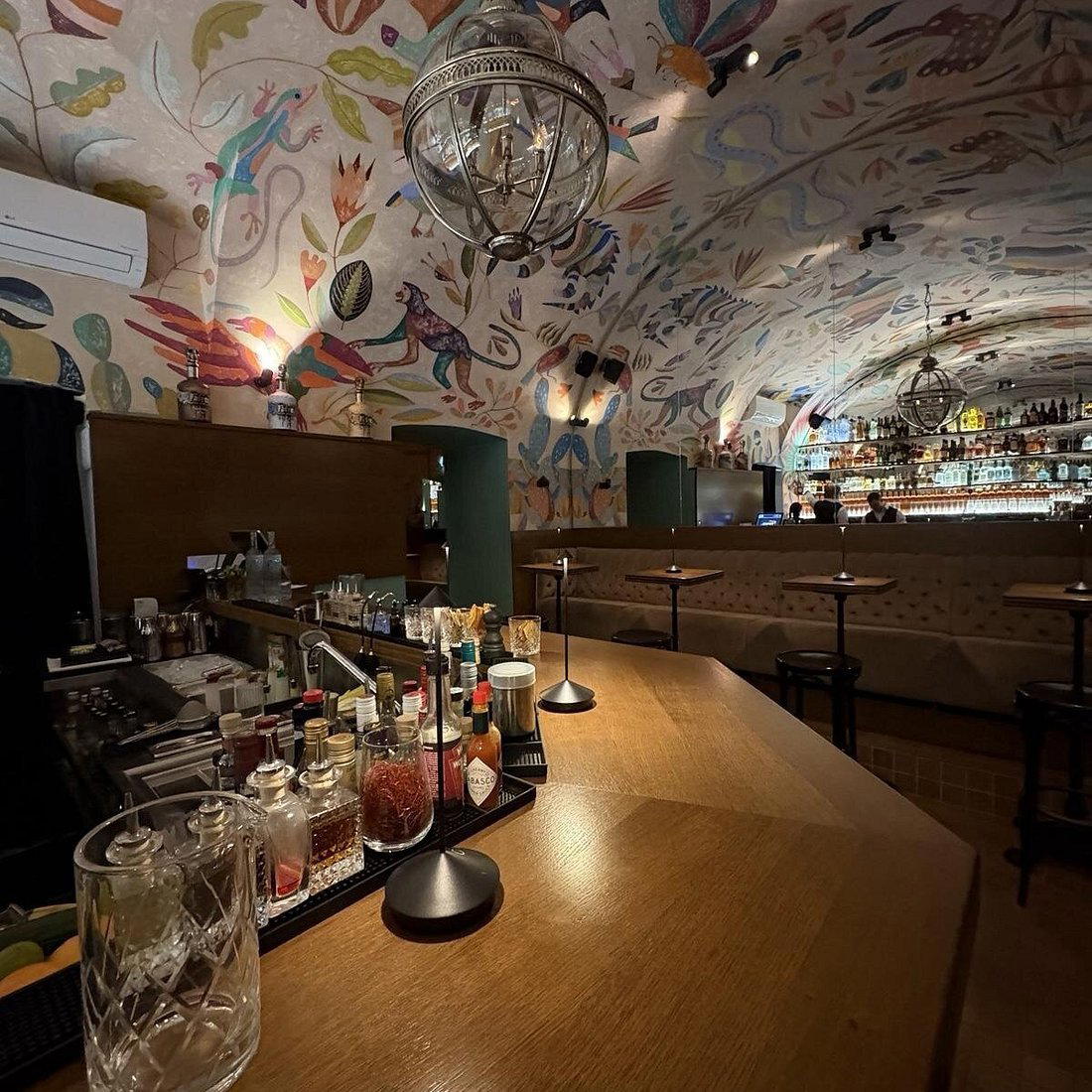
Charming basement room with whitewashed vaulted ceilings creating a cozy, intimate atmosphere.