Located within Sorano Hotel in Tachikawa, DAICHINO RESTAURANT occupies a position inside one of western Tokyo's most architecturally considered hospitality projects. The restaurant sits at the intersection of a hotel dining program and the city's growing ambition as a cultural destination beyond central Tokyo. Specific menu format and pricing details are best confirmed directly with the hotel.
 Discover on Pearl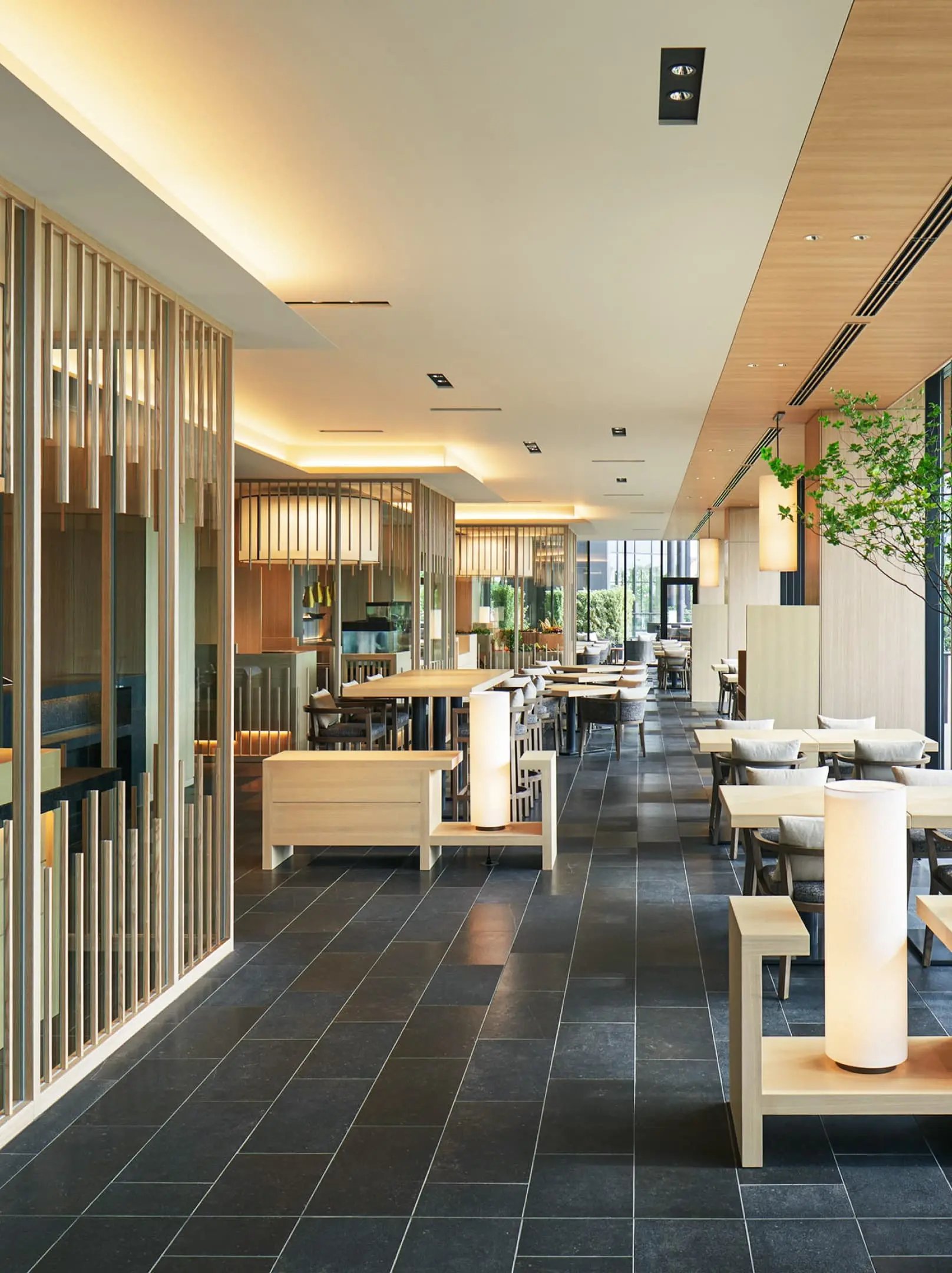
Western Tokyo and the Hotel Dining Shift
Tachikawa sits roughly 37 kilometres west of central Tokyo, and for most of the postwar era it was understood primarily as a transport junction and commercial hub rather than a dining destination. That framing has shifted considerably over the past decade, partly through urban redevelopment around the Faret Tachikawa public art district and partly through the arrival of Sorano Hotel, which brought a level of architectural and hospitality ambition to the city that previously had no local anchor. DAICHINO RESTAURANT operates within that hotel, and its significance is leading read through that lens: it is the kind of restaurant that could only exist because a broader infrastructure decision was made to treat Tachikawa as a place worth investing in at a higher register. For context on the wider dining options across the city, see our full 立川市 restaurants guide.
Hotel dining in Japan has a particular cultural weight. Unlike the suspicion that attached itself to hotel restaurants in Europe and North America through much of the late twentieth century, Japanese hotel dining rooms have historically maintained serious culinary credentials. The tradition runs from the grand imperial hotel dining rooms of the Meiji and Taisho eras through to the contemporary luxury property boom, where hotels like the Aman Tokyo or the Hoshinoya properties have used food programming as central to their identity rather than as ancillary revenue. Sorano Hotel, positioned on the edge of Showa Memorial Park and designed around wellness and sky-facing architecture, belongs to that more considered strand of Japanese hospitality. DAICHINO RESTAURANT inherits that positioning.
The shortlist, unlocked.
Hard-to-book tables, cellar releases, and concierge-planned trips.
Get Exclusive Access →The Cultural Architecture of Place-Specific Dining
One of the more interesting trends in Japanese fine dining over the past fifteen years is the extent to which restaurants have become expressions of their specific location rather than generic luxury offerings transplanted from one city to another. The kaiseki tradition was always rooted in this logic, with menus built around seasonal ingredients that could only be understood in relation to a specific geography and time of year. Contemporary Japanese dining, even where it draws on French or international technique, has absorbed this sensibility. Restaurants like Gion Sasaki in Kyoto and HAJIME in Osaka operate as arguments about what their respective cities mean at a particular culinary moment. akordu in Nara makes a similar case for a city that most visitors treat as a day trip rather than a dining destination in its own right.
DAICHINO RESTAURANT, located at the address 緑町3-1 W1 within Sorano Hotel, is participating in a version of that same argument for Tachikawa. The hotel's positioning around Showa Memorial Park and its architectural relationship with sky and open space creates a context that is genuinely different from what a central Tokyo dining room would offer. Whether the kitchen exploits that difference through sourcing, through menu design, or through the physical experience of the dining room itself is a question that specific menu data, currently unavailable in the public record, would answer more precisely.
Reading the Peer Set
To understand where DAICHINO RESTAURANT likely sits in the broader Japanese dining conversation, it is worth mapping the terrain it occupies. The most formally ambitious Japanese restaurants cluster in Tokyo, Kyoto, and Osaka, with the Michelin universe providing the clearest external ranking. At the apex, counters like Harutaka in Tokyo operate within the sushi omakase tradition, where seat count, booking lead time, and Michelin recognition combine to define the competitive tier. French-influenced innovative cooking at the level of HAJIME represents a different but equally formal register. Below that apex, a large and genuinely interesting middle tier of hotel dining rooms, neighbourhood kaiseki counters, and regional restaurants does substantial work. Across Japan's regions, venues like Goh in Fukuoka, Abon in Ashiya, and affetto akita in Akita demonstrate that serious culinary ambition is not confined to the three major metros.
DAICHINO RESTAURANT's placement within a destination hotel in a city that is neither a major culinary hub nor a tourist-facing cultural centre suggests it is aiming at a specific audience: Sorano Hotel guests, Tachikawa residents with the appetite for considered dining, and visitors using Tachikawa as a base for Showa Memorial Park or the broader Tama region. That is a coherent audience, and a well-executed hotel restaurant serving that audience can carry genuine quality without needing to compete in the same register as, say, Le Bernardin in New York City or the most formal kaiseki rooms in Kyoto. Japan's dining culture has long accommodated this kind of tiered ambition without treating the middle tier as a lesser achievement. For comparison with how other regions handle destination-restaurant formats at different price points, Lazy Bear in San Francisco offers an instructive reference for the communal-table, experience-led approach that has become one of the defining formats of contemporary fine dining outside Japan.
Regional Japan's Dining Intelligence
The broader pattern across Japan's regional dining scene is one of increasing confidence and specificity. Cities and towns that once deferred to Tokyo for culinary validation are increasingly producing restaurants with their own clear identities. Aji Arai in Oita, Ajidocoro in Yubari District, Akakichi in Imabari, aki nagao in Sapporo, Amaki in Aichi, Amegen in Saga, and anchoa in Kanagawa all represent aspects of this regional diversification. Tachikawa, sitting at the western edge of the Tokyo metropolitan area, occupies an unusual position in this geography: it is administratively part of Tokyo but culturally distinct from the central wards, with its own civic infrastructure and a population that is not primarily oriented around the dining scenes of Minato, Shibuya, or Shinjuku.
For those interested in the Chinese culinary tradition as it intersects with Japanese dining culture, Chen Kenichi Mapo Tofu Restaurant (陳建一麻婆豆腐店) represents a different strand of the conversation, one rooted in the domestication of Sichuan technique within Japan over several decades.
Planning a Visit
DAICHINO RESTAURANT is located within Sorano Hotel at 緑町3-1 W1, Tachikawa, Tokyo 190-0014. Tachikawa Station, served by the JR Chuo Line from Shinjuku in approximately 35 to 40 minutes, places the hotel within a short walk. For visitors travelling from Osaka or Kyoto by shinkansen, the logical approach is via Tokyo Station and then the Chuo Line westbound. Because specific booking methods, hours of operation, pricing, and current menu format are not confirmed in publicly available records at time of publication, direct contact with Sorano Hotel is the appropriate first step for any reservation inquiry. Hotel dining rooms at properties of this type typically offer both à la carte and set menu formats, but confirming which applies here, and what the current price tier reflects, requires verification with the venue directly.
The shortlist, unlocked.
Hard-to-book tables, cellar releases, and concierge-planned trips.
Get Exclusive Access →Frequently Asked Questions
Price Lens
A fast peer set for context, pulled from similar venues in our database.
| Venue | Price | Awards | Notes |
|---|---|---|---|
| DAICHINO RESTAURANT | This venue | ||
| HAJIME | ¥¥¥¥ | Michelin 3 Star | French, Innovative, ¥¥¥¥ |
| Harutaka | ¥¥¥¥ | Michelin 3 Star | Sushi, ¥¥¥¥ |
| L'Effervescence | ¥¥¥¥ | Michelin 3 Star | French, ¥¥¥¥ |
| RyuGin | ¥¥¥¥ | Michelin 3 Star | Kaiseki, Japanese, ¥¥¥¥ |
| Crony | ¥¥¥¥ | Michelin 2 Star | Innovative, French, ¥¥¥¥ |
Need a table?
Our members enjoy priority alerts and concierge-led booking support for the world's most difficult tables.
Get Exclusive AccessThe shortlist, unlocked.
Hard-to-book tables, cellar releases, and concierge-planned trips.
Get Exclusive Access →