On the seventh floor of Granduo Tachikawa, Chen Kenichi Mapo Tofu Restaurant brings one of Chinese cuisine's most technically demanding dishes into a Tokyo suburban shopping complex. The restaurant sits within a dining tradition built on Sichuan peppercorn sourcing and generational technique, positioning it well outside the generic mall-food tier. For residents of western Tokyo, it represents serious Chinese cooking without a trip to the city centre.
 Discover on Pearl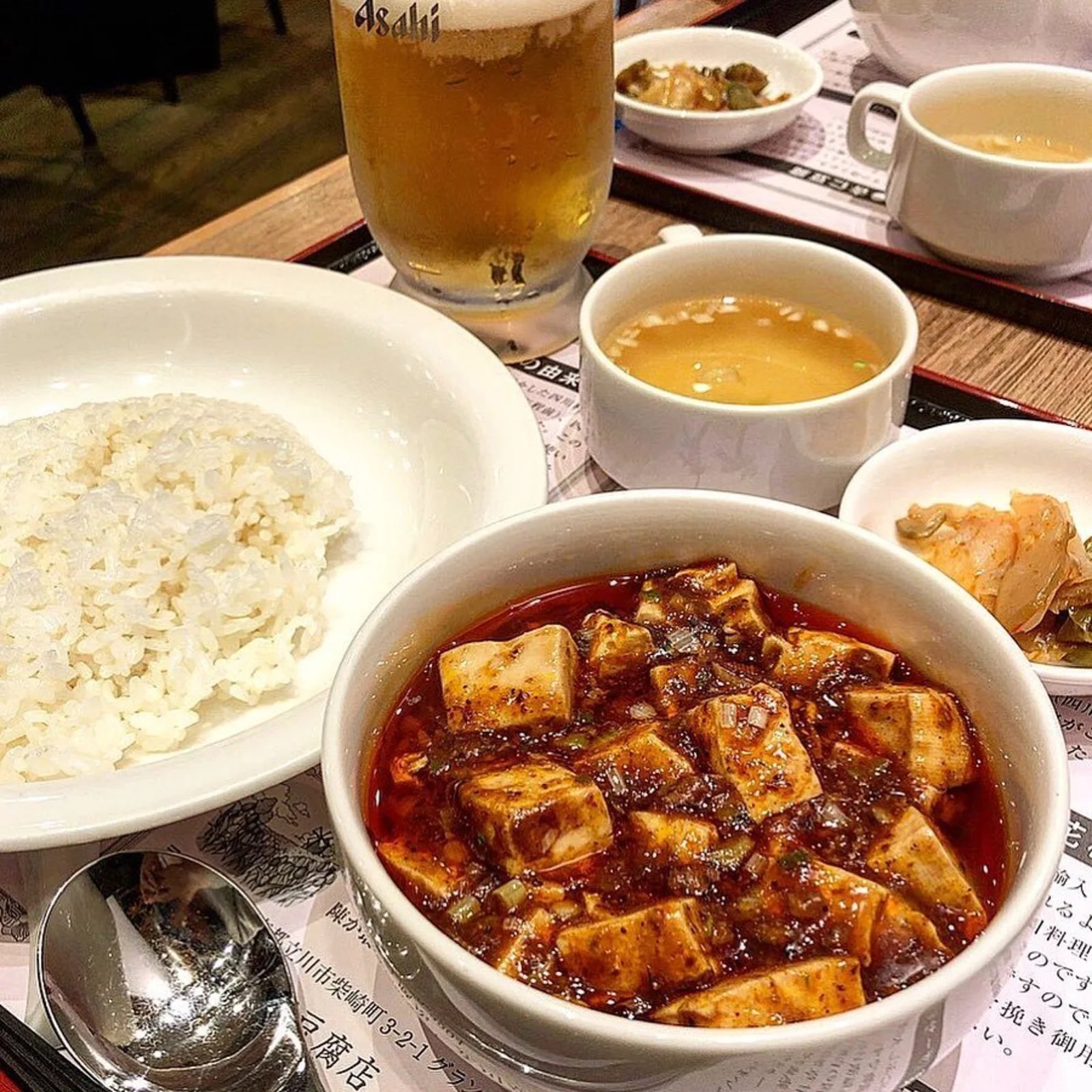
Sichuan on the West Side: What Mapo Tofu Looks Like at This Tier
Department store restaurant floors in Japan occupy a peculiar position in the dining hierarchy. They are neither the anonymous food courts of commuter hubs nor the destination counters of Ginza or Shinjuku's upper floors, but a middle register where serious kitchens occasionally choose accessibility over prestige address. The seventh floor of Granduo Tachikawa, a major commercial complex directly above Tachikawa Station in western Tokyo, belongs to this category, and Chen Kenichi Mapo Tofu Restaurant (陳建一麻婆豆腐店) is among the reasons food-minded visitors to the area do not simply default to the centre city.
The approach from the station escalators puts you in the middle of a full dining floor, with the ambient sound of a busy suburban retail environment rather than the hushed corridor of a standalone destination. What shifts the register here is the cuisine itself: mapo tofu, the Sichuan preparation built on the interaction between fermented black bean paste, doubanjiang, Sichuan peppercorn, and silken tofu, is one of the few dishes in Chinese cooking where ingredient provenance is not a marketing add-on but a functional variable. The numbing heat of the dish, known in Chinese as ma la, depends on peppercorn quality in ways that a diner can assess without specialist knowledge. You taste the sourcing.
The shortlist, unlocked.
Hard-to-book tables, cellar releases, and concierge-planned trips.
Get Exclusive Access →The Ingredient Logic Behind Mapo Tofu
Sichuan peppercorn is not a single commodity. It grows across several regions in Sichuan province and neighbouring areas, with variation in the intensity and character of the hydroxy-alpha-sanshool compound responsible for the distinctive mouth-numbing sensation that distinguishes the dish from merely spicy preparations. High-grade peppercorns, harvested at the right stage and stored carefully, produce a clean electric tingle that compounds the heat from chilli rather than simply layering on leading of it. Lower-grade product, or peppercorn that has oxidised in storage, delivers an earthy bitterness without the aromatic lift.
The same logic applies to doubanjiang, the fermented broad bean and chilli paste that forms the flavour base of the dish. Authentic Pixian doubanjiang from Sichuan province is aged for a minimum of one year, with premium versions aged for three years or more, developing a depth of umami that younger or substitute pastes cannot replicate. In Japan, the supply chain for these ingredients has become more sophisticated over the past two decades, with specialist importers serving Chinese restaurants that prioritise authenticity over cost reduction. Restaurants in this tier are the principal beneficiaries of that development.
The Chen Kenichi name is the Japanese iteration of Chen Jianyi, the Beijing-born chef who became a central figure in introducing Sichuan cooking to Japanese audiences through decades of television presence and restaurant work. The restaurant bearing that name operates within a tradition that treats ingredient sourcing as the non-negotiable foundation of the dish rather than a point of differentiation. In that sense, the Tachikawa location participates in a broader project: making a version of mapo tofu in Tokyo's outer wards that holds the same standard as preparations closer to the city's culinary centre.
Tachikawa as a Dining Address
Tachikawa sits roughly 35 minutes by Chuo Line express from Shinjuku, placing it within easy reach of central Tokyo while serving as a regional centre for western Tokyo and Tama area residents. Its dining floor at Granduo connects directly to the station concourse, making it one of the more logistically frictionless restaurant addresses in the greater Tokyo area, especially for visitors arriving from the west or from the airport at Haneda via the Nambu Line connection at Kawasaki. The trade-off is atmosphere: a shopping complex floor does not deliver the focused quiet of a standalone room, and the surrounding tenant mix means the dining experience sits in a louder, more transactional environment than a street-level neighbourhood restaurant.
For context on how Tachikawa compares within the broader Tokyo dining picture, our full 立川市 restaurants guide maps the area's options across cuisines and price points. The western Tokyo corridor has historically been underserved relative to central wards, which makes restaurants at this level more significant to local diners than their physical address might suggest to visitors arriving from overseas.
Elsewhere in Japan, the benchmark for technically serious Chinese cooking in a non-central city context is set by a small number of operators. DAICHINO RESTAURANT represents one data point in that conversation. For those comparing the depth of Japanese fine dining across different traditions, the work being done at Harutaka in Tokyo, Gion Sasaki in Kyoto, and HAJIME in Osaka illustrates how ingredient-sourcing discipline operates at the highest price tiers in Japanese cuisine more broadly. The comparison is not direct, but the underlying logic, that sourcing decisions are legible in the finished dish, holds across all of them.
Planning a Visit
The Granduo Tachikawa location is accessible directly from Tachikawa Station on the JR Chuo Line and the Tama Monorail. Because the restaurant sits within a department store complex, operating hours are tied to the centre's schedule, and the dining floor typically sees its heaviest footfall on weekend afternoons and early evenings when the broader retail traffic peaks. Arriving at opening or towards the later dinner service window tends to produce a calmer experience. Booking availability and current hours are leading confirmed through the Granduo Tachikawa dining floor listings or directly with the complex, as specific reservation policies for this location are not available in public records at time of writing. For additional dining options in the region beyond Tachikawa, akordu in Nara, Goh in Fukuoka, and affetto akita in Akita each demonstrate what ingredient-led cooking looks like in Japan's regional cities, providing useful reference points for understanding how the Chen Kenichi approach sits within a national context.
Frequently Asked Questions
- Is Chen Kenichi Mapo Tofu Restaurant good for families?
- The department store setting within Granduo Tachikawa makes it more accessible for families than many restaurant addresses in central Tokyo, where cover charges and omakase formats can be impractical with children. The western Tokyo location and station-adjacent logistics reduce travel friction. Mapo tofu at this level is a bold, spiced dish, so the suitability depends on the family's tolerance for ma la heat, which is a defining feature rather than an optional add-on at this tier.
- Is Chen Kenichi Mapo Tofu Restaurant better for a quiet night or a lively one?
- The Granduo Tachikawa seventh floor is a retail dining environment, not a destination restaurant with a controlled atmosphere. Expect moderate to high ambient noise levels, particularly on weekends when the complex draws significant foot traffic from the Tachikawa shopping and entertainment district. If the priority is a quiet evening, the format works better on a weekday, or by timing arrival to avoid the peak post-shopping dinner rush.
- What is the signature dish at Chen Kenichi Mapo Tofu Restaurant?
- The restaurant's identity is built around mapo tofu, the Sichuan preparation that requires precise balance between doubanjiang, Sichuan peppercorn, silken tofu, and minced meat. The Chen Kenichi lineage is directly associated with this dish in the Japanese public consciousness, having been a vehicle for introducing Sichuan flavour principles to a mainstream Japanese audience over several decades. The dish's quality is an expression of ingredient sourcing as much as technique, with peppercorn grade and fermented paste provenance both detectable in the finished preparation.
- What is the leading way to book Chen Kenichi Mapo Tofu Restaurant?
- As a restaurant within the Granduo Tachikawa shopping complex, reservations are most reliably arranged through the complex's own dining floor reservation system or by contacting the venue through the Granduo website. Given the Tachikawa area's role as a regional hub for western Tokyo, weekend tables at well-regarded restaurants on this floor can fill quickly, particularly for dinner service. Checking availability in advance is advisable, and the Chuo Line connection from Shinjuku makes a same-day evening visit from central Tokyo direct if the timing is right.
- How does the Chen Kenichi Mapo Tofu Restaurant in Tachikawa relate to the broader Chen Kenichi restaurant group in Japan?
- The Chen Kenichi name is associated with a network of Chinese restaurants across Japan operating under the culinary identity established by Chen Jianyi, the Sichuan-trained chef who became a prominent figure in Japanese television food programming. The Tachikawa location at Granduo is one node in that network, bringing a consistent approach to Sichuan ingredient sourcing and mapo tofu preparation to western Tokyo. For diners familiar with other locations in the group, the Tachikawa outlet represents the same culinary framework applied to a suburban department store format rather than a freestanding city-centre address. Readers interested in further regional comparisons across Japan's serious restaurant tier can explore Aji Arai in Oita, Amaki in Aichi, aki nagao in Sapporo, Ajidocoro in Yubari District, Akakichi in Imabari, Abon in Ashiya, Amegen in Saga, and anchoa in Kanagawa for a broader map of ingredient-driven cooking across the country. International reference points for how sourcing discipline shapes high-tier restaurant identity can be found at Le Bernardin in New York City and Lazy Bear in San Francisco.
Fast Comparison
These are the closest comparables we have in our database for quick context.
| Venue | Cuisine | Price | Awards | Notes |
|---|---|---|---|---|
| Chen Kenichi Mapo Tofu Restaurant (陳建一麻婆豆腐店) | This venue | |||
| HAJIME | French, Innovative | ¥¥¥¥ | Michelin 3 Star | French, Innovative, ¥¥¥¥ |
| Harutaka | Sushi | ¥¥¥¥ | Michelin 3 Star | Sushi, ¥¥¥¥ |
| L'Effervescence | French | ¥¥¥¥ | Michelin 3 Star | French, ¥¥¥¥ |
| RyuGin | Kaiseki, Japanese | ¥¥¥¥ | Michelin 3 Star | Kaiseki, Japanese, ¥¥¥¥ |
| Crony | Innovative, French | ¥¥¥¥ | Michelin 2 Star | Innovative, French, ¥¥¥¥ |
Need a table?
Our members enjoy priority alerts and concierge-led booking support for the world's most difficult tables.
Get Exclusive AccessThe shortlist, unlocked.
Hard-to-book tables, cellar releases, and concierge-planned trips.
Get Exclusive Access →