Our verdict
Chum Chay sits on Friesenwall in Cologne's inner west, operating in a city where plant-forward and Asian-inflected cooking have steadily moved from peripheral to mainstream. The address places it within walking distance of Cologne's denser restaurant corridor, making it a practical anchor for an evening that begins or ends in the Friesenplatz quarter. Cologne diners seeking alternatives to the dominant French and modern German formats tend to land here.

Pearl is the En Primeur Club membership app, where members save venues, book tables and use the concierge.

Friesenwall and the Shift in Cologne's Dining Centre of Gravity
Cologne's restaurant scene has historically organised itself around two poles: the old-city brasserie tradition and a newer wave of modern European fine dining, represented today by addresses like Ox & Klee and La Cuisine Rademacher. Between those poles, a quieter set of neighbourhood-anchored restaurants has built consistent local followings without the awards infrastructure of the city's top tier. Chum Chay at Friesenwall 29 belongs to that middle band, occupying the inner-west quarter where residential density and foot traffic from the Friesenplatz area create a different kind of dining clientele than you find closer to the Rhine.
Friesenwall itself runs along the line of the old city fortifications, and the stretch between Rudolfplatz and Friesenplatz has gradually accumulated a mix of independent restaurants, wine bars, and casual operators that sit outside both the tourist-facing old town and the destination-dining circuit. That positioning matters: the room draws from the neighbourhood rather than from hotel concierge lists, which tends to produce a more regular and returning customer base than venues that depend on occasion dining.
Plant-Forward Cooking in a City Still Dominated by Meat
Cologne's food culture retains a strong affinity for traditional German and Rhenish cooking, where Sauerbraten, Himmel un Ääd, and the Kölsch-accompanied snack format remain reference points even at the higher end of the market. Against that backdrop, restaurants that have built serious menus around vegetables, legumes, and Asian flavour systems occupy a specific and still-developing niche. The city has fewer of them than Hamburg or Berlin, which means the ones that have established credibility tend to hold it with some loyalty.
Chum Chay operates within that niche. The name and address signal a format that isn't aligned with the French brasserie tradition of Le Moissonnier Bistro or the modern European tasting menu approach of La Société, but rather with the growing interest in Asian-inflected vegetable cooking that has become a recognisable current in German city dining over the past decade. That shift has been slower in Cologne than in Berlin, which makes venues that have committed to it early worth tracking.
The Service Dynamic in Restaurants Built Around a Focused Format
In restaurants where the kitchen operates around a tightly defined culinary logic, the relationship between front-of-house and the kitchen becomes structurally important. When a menu is built around ingredients or techniques that require explanation, fermented elements, unfamiliar regional references, produce-led seasonal variation, the floor team carries a share of the interpretive work that in a more conventional format would be absorbed by menu familiarity alone.
This matters practically for the guest: at venues where the service team has genuine knowledge of what the kitchen is producing, the experience of eating unfamiliar food changes significantly. The guest who understands why a dish has been constructed a particular way eats it differently from the guest who receives it without context. Across Germany's stronger independent restaurants, from maiBeck within Cologne to addresses like JAN in Munich or CODA Dessert Dining in Berlin, the front-of-house contribution to translating a kitchen's focus is increasingly recognised as a distinct skill rather than an ancillary one.
At the three-star level, venues like Schwarzwaldstube in Baiersbronn, Aqua in Wolfsburg, or Vendôme in Bergisch Gladbach have built service programmes that are evaluated alongside the kitchen rather than separately. At neighbourhood level, the same dynamic applies with less ceremony: the leading independent restaurants in Cologne's inner-west depend on front-of-house teams who understand the food well enough to guide without overwhelming. That balance is harder to calibrate than it looks, and it is often what separates a restaurant with a following from one that simply has a location.
Booking, Timing, and the Inner-West Quarter
Practically, Friesenwall 29 is accessible from both Rudolfplatz and Friesenplatz, each within a short walk, and the surrounding area has enough adjacent options to make it a sensible anchor for an evening rather than a destination in isolation. The inner-west quarter is denser and more local-facing than the areas directly around the cathedral or the Hohe Strasse retail corridor, which affects how the dining room fills: weekday evenings tend to draw neighbourhood regulars, while weekends pull from a wider city catchment.
For visitors building a Cologne itinerary that spans more than one meal, the Friesenwall address sits comfortably alongside the broader concentration of serious independent restaurants across the inner-west and Belgisches Viertel. Cologne's restaurant infrastructure rewards geographic focus more than ambitious cross-city planning. Our full Cologne restaurants guide maps the city's dining by neighbourhood logic, which is the most useful frame for planning.
For those whose Germany trip extends beyond Cologne, Waldhotel Sonnora in Dreis, Schanz in Piesport, and Victor's Fine Dining by christian bau in Perl anchor the Moselle and Eifel region's fine dining offer, while Restaurant Haerlin in Hamburg and ES:SENZ in Grassau represent different ends of Germany's broader spectrum. For international reference points in plant-forward or produce-driven formats, Le Bernardin in New York City and Lazy Bear in San Francisco illustrate how focused culinary formats can hold long-term critical and audience traction when the kitchen and floor work in alignment.
Planning Your Visit
Frequently asked questions
Should I book Chum Chay in advance?
For independent restaurants in Cologne's inner-west with a neighbourhood following, advance booking is generally the safer approach on weekends and on Thursday evenings, when the area draws from a broader city catchment. EP Club does not have confirmed capacity or booking policy data for Chum Chay, but the Friesenwall address and the venue's position within a competitive local dining corridor suggest that walk-in availability on busier nights is not guaranteed. Booking ahead removes the uncertainty without cost.
Is Chum Chay suitable for vegetarians and vegans visiting Cologne?
Cologne's broader restaurant offer remains weighted toward meat-forward German and European formats, which makes plant-forward independents like Chum Chay a meaningful reference point for visitors with vegetarian or vegan requirements. The venue's positioning on Friesenwall and its name suggest an Asian-inflected, vegetable-centred approach, which aligns with the format that has been most consistently adopted by Germany's plant-forward restaurant operators. EP Club does not have confirmed menu data at this time, so verifying current menu scope with the venue directly before visiting is recommended, particularly for diners with specific dietary requirements.
Peers in This Market
| Venue | Cuisine | Price | Awards | Notes |
|---|---|---|---|---|
| Chum ChayThis venue (the venue you are viewing) | Vegetarian Vietnamese | $20–30 | Not listed | Not listed |
| maximilian lorenz | Modern German Fine Dining | $200–300 | 1 Michelin Star | French Brasserie, Modern Cuisine |
| NeoBiota | Modern European Fine Dining | Not listed | 1 Michelin Star | Modern German, Modern Cuisine |
| ZEN Japanese Restaurant | Modern Japanese Omakase & Sushi | $30–50 | Michelin Plate | Japanese |
| Ox & Klee | Modern European Fine Dining with Six-Sense Concept | $200–300 | 2 Michelin Stars · La Liste Top Restaurants | Modern Cuisine |
| La Cuisine Rademacher | Modern French Fine Dining | $150–200 | 1 Michelin Star | Modern French |
Continue exploring
More in Cologne
Restaurants in Cologne
All restaurants in Cologne →
Bars in Cologne
All bars in Cologne →

Details
- Trendy
- Cozy
- Modern
- Casual Hangout
- Date Night
- Courtyard
- Open Kitchen
- Organic
- A La Carte
- Vegetarian Friendly
- Vegan Options
- Gluten Free Options
Current opening hours
- Monday
- 12–10 PM
- Tuesday
- 12–10 PM
- Wednesday
- 12–10 PM
- Thursday
- 12–10 PM
- Friday
- 12–10 PM
- Saturday
- 12–10 PM
- Sunday
- Closed
Hours can change for holidays and private events. Hours as of .
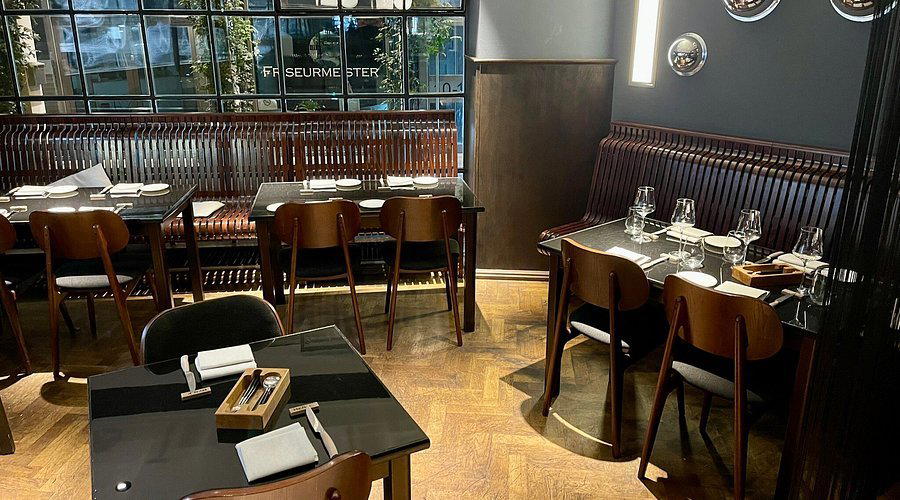
Vietnam-style decor with long dark wooden tables, yellow and red Buddhist-colored walls, Asian roof tiles, basket lamps, and an open street kitchen atmosphere.