Adida occupies a quietly significant address on Lübecker Strasse in Cologne's northern belt, where the dining scene has increasingly rewarded operators willing to commit to a clear editorial point of view. Positioned among a comparable set that includes sustainability-conscious kitchens across Germany's fine dining tier, Adida draws visitors looking for something more considered than the city's conventional brasserie circuit.
Pearl is the En Primeur Club membership app — saves, bookings, and concierge access live there. Same editors, same standards.
- Address
- Lübecker Str. 2, 50668 Köln, Germany
- Phone
- +4922171737464
- Website
- adidavegan.de
- Directions
- Get directions
 Saves & bookings on Pearl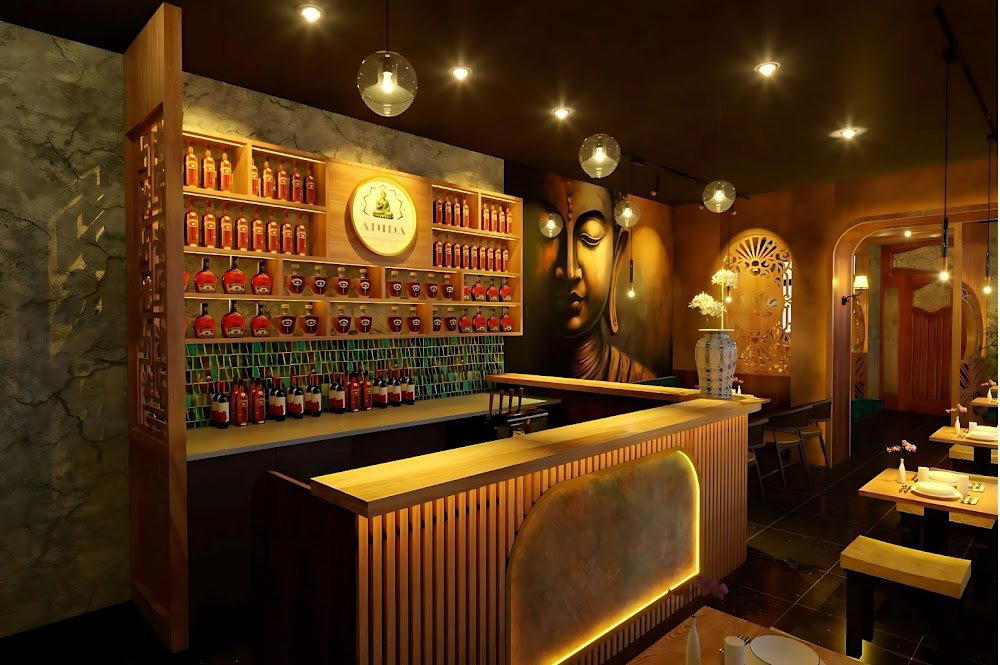
Where Cologne's Northern Quarter Sets Its Own Terms
Adida is a vegan Vietnamese restaurant at Lübecker Str. 2 in Cologne, with. The city's dining conversation tends to orbit the Rhine-facing terraces and the cathedral-adjacent spots that fill review columns year-round, but the addresses that accumulate serious local loyalty often operate at a slight remove from that gravitational pull. Adida, at number two on Lübecker Strasse, sits in that quieter orbit. Arriving here, you are not walking through a lobby designed to impress before you've sat down. The approach is direct, the street-level presence low-key, and the signal to the neighbourhood is that what happens inside will do the work.
That restraint is itself an editorial statement. In a European dining moment where sustainability credentials have moved from footnote to framework, the kitchens that communicate most convincingly tend to do so through environment and sourcing rather than signage. The question worth asking of any restaurant invoking environmental consciousness is whether it changes the cooking, the supply chain, and the physical experience, or whether it remains a marketing layer applied to an otherwise conventional operation. Adida's address, atmosphere, and positioning within Cologne's broader scene invite that question directly.
Sustainability as Structure, Not Afterthought
Germany's fine dining tier has developed one of Europe's more coherent sustainability conversations over the past decade. Kitchens from ES:SENZ in Grassau to CODA Dessert Dining in Berlin have built entire menus around the logic of reduction, fewer ingredients, closer sourcing, less waste, and have found that constraint tends to produce more interesting cooking, not less. The same pattern appears at Schanz in Piesport and in the sourcing frameworks used by kitchens like Aqua in Wolfsburg. When ethical sourcing becomes structural rather than decorative, it changes what appears on the plate and what gets ordered from suppliers each week.
Cologne itself has seen this shift expressed across different price tiers. maiBeck has built a modern cuisine reputation on close supplier relationships, and the French-leaning kitchens such as Le Moissonnier Bistro have long operated within a classical tradition that inherently prizes whole-animal use and seasonal rhythm. What distinguishes the newer generation of sustainability-framed restaurants is the willingness to make waste reduction and ethical sourcing visible in the menu architecture itself, not just in the background operations.
Adida's position on Lübecker Strasse places it in a neighbourhood where rent structures permit the kind of supplier investment that becomes difficult in premium central locations. That geography is not incidental. Many of Germany's most thoughtfully sourced kitchens operate outside the highest-traffic zones precisely because the economics allow it. Waldhotel Sonnora in Dreis and Victor's Fine Dining by christian bau in Perl both demonstrate how distance from major urban centres can become an operational advantage when the priority is ingredient quality over footfall volume.
Cologne's Competitive Set and Where Adida Fits
The city's upper dining tier has consolidated around a recognisable peer group. Ox & Klee anchors the modern cuisine conversation at the four-euro-sign price point, holding Michelin recognition and drawing a national audience. La Cuisine Rademacher operates in the modern French register at the same tier, and La Société has built consistent recognition across both local and travelling audiences. These are the reference points that a new or developing kitchen in Cologne is inevitably read against, whether the comparison is invited or not.
Against that comparable set, a sustainability-framed kitchen on Lübecker Strasse occupies a distinct position. The question is not whether Adida competes with Ox & Klee on technical register or with La Cuisine Rademacher on classical French execution. The more interesting question is whether it builds a coherent identity around the environmental and sourcing commitments that have become a serious differentiator in German dining. JAN in Munich and Schwarzwaldstube in Baiersbronn illustrate the range of ways that commitment can manifest at different formality levels. The pattern suggests that kitchens willing to make that commitment structurally, in sourcing budgets, in menu design, in supplier selection, tend to develop clearer identities than those treating sustainability as an add-on.
For context on the broader German fine dining ecosystem, including kitchens from Restaurant Haerlin in Hamburg to international reference points like Le Bernardin in New York City and Lazy Bear in San Francisco, the trajectory is consistent: the restaurants building particularly durable reputations are those with a clear operational philosophy rather than a collection of good dishes.
Planning a Visit
Adida sits at Lübecker Strasse 2 in Cologne's 50668 postal district, accessible from the central station in under ten minutes by foot or tram. The northern quarter sees less tourist pressure than the Rhine waterfront, which tends to mean easier street access and a local-weighted dining room. Reservations are essential, and the restaurant is open Monday and Wednesday through Sunday from 12 to 11 PM, with Tuesday closed.
A Lean Comparison
Comparable venues nearby, for context on price, style, and recognition.
| Venue | Price | Notes |
|---|---|---|
| AdidaThis venue — the venue you are viewing | $$ | Not listed |
| Chum Chay | $$ | Altstadt/Nord, Vegetarian Vietnamese |
| Cafe 1980 | $$ | Altstadt/Süd, Vietnamese Bánh Mì Cafe |
| Well Being | $$ | Neustadt/Nord, Vegan Vietnamese |
| To80 Vegan | $$ | Neustadt/Süd, Vegan Vietnamese Street Food & Sushi |
| Kuchi Mami | $$ | Altstadt/Nord, Asian Fusion - Japanese Sushi & Thai |
Continue exploring
More in Cologne
Restaurants in Cologne
Browse all →
Bars in Cologne
Browse all →

Hotels in Cologne
Browse all →

At a Glance
- Modern
- Trendy
- Cozy
- Casual Hangout
- Group Dining
- Standalone
Current opening hours
- Monday
- 12–11 PM
- Tuesday
- Closed
- Wednesday
- 12–11 PM
- Thursday
- 12–11 PM
- Friday
- 12–11 PM
- Saturday
- 12–11 PM
- Sunday
- 12–11 PM
Hours can change for holidays and private events. Last verified .
Contemporary casual dining with warm, welcoming service in a modern setting.