
Chuka Soba Yotsuba places a serious ramen counter inside Kawajima’s suburban dining pattern, where car access, family seating, and tightly priced bowls matter as much as reputation. Its Tabelog Ramen EAST 100 selection for 2025 and long run of prior selections put it in a competitive Saitama bracket without moving it into luxury-restaurant territory.
Pearl is the En Primeur Club membership app — saves, bookings, and concierge access live there. Same editors, same standards.
- Address
- 298 Igusa, Kawajima, Hiki District, Saitama 350-0158, Japan
- Phone
- +81 49-297-5192
- Website
- yotsubasoba.com
- Directions
- Get directions
 Saves & bookings on Pearl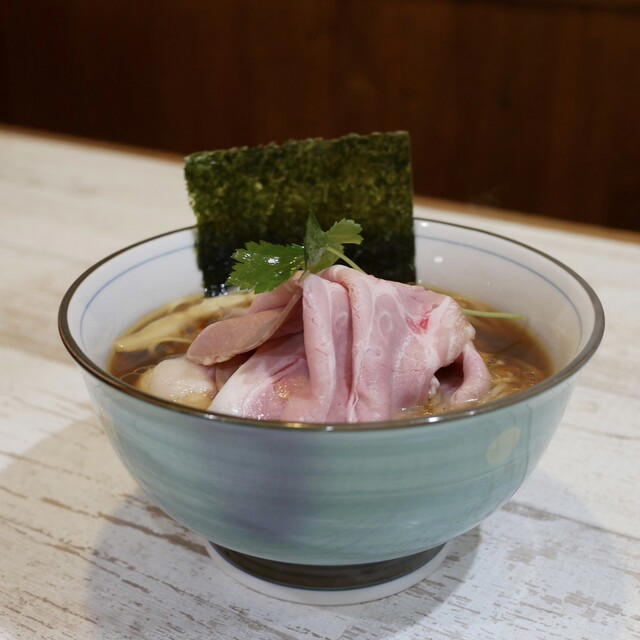
Approaching a ramen shop in Hiki-gun rarely carries the choreography of central Tokyo dining. The cues are more practical: a house-restaurant setting, parking, a ticket machine, and the possibility of waiting outside when the room is full. That framework matters because Saitama ramen culture rewards the shops that can serve regular local traffic and destination diners at the same time, without turning a bowl of chuka soba into a ceremony.
Chuka Soba Yotsuba belongs to that category. The address in Igusa, Kawajima places it outside the dense station-front ramen circuits, yet its selection for Tabelog Ramen EAST 100 in 2025, following appearances from 2017 through 2024, gives it a reputation beyond the immediate neighbourhood. The useful reading is not hype; it is consistency. A ramen shop with this pattern of recognition is being judged against a wide eastern-Japan field, while remaining priced in the everyday ramen band rather than the premium tasting-menu world.
Where Saitama ramen turns sourcing into structure
The menu identity sits around ramen, tsukemen, and sushi, an unusual combination only if viewed through a narrow Tokyo-counter lens. In suburban and semi-rural Japan, specialist dining often grows out of available space, family traffic, and local habits rather than a single-category manifesto. Here, the listed highlight is Yotsuba soba: chuka soba built with medium-thin straight noodles, dashi, and aged soy sauce. Those details point toward balance rather than excess, with broth and tare carrying the argument.
Ingredient sourcing is where this style becomes more than a comfort format. Chuka soba depends on the relationship between soup base, soy seasoning, noodle texture, and garnish restraint; when the soy component is aged, the bowl is asking the diner to pay attention to depth rather than loud seasoning. The genre has moved far from postwar utility food. In Saitama, as in the wider Kanto region, serious ramen shops now compete on dashi clarity, noodle specification, and tare precision while keeping prices within reach for repeat visits.
That price context is essential. In the same broad Hiki-gun and out-of-metro orbit, Hon Teuchi Udon Shoji sits in an even leaner udon price bracket, while Kawagoe Bakery Rakuraku and VANITOY BAGEL KURA TSUKURI HONTEN occupy a similar casual spend band. Burger Cafe Honohono pushes higher at dinner. The ramen comparison is sharper with Chuka Soba Fukamidori, another out-of-metro ramen reference in the JPY 1,000 to JPY 1,999 range. Against that field, Yotsuba reads as a specialist destination that has not abandoned the economics of a local lunch.
A room built for throughput, not theatre
The dining room is large by serious ramen standards: 40 seats, including counter seating, tables, and tatami seating. That mix says a great deal about the intended audience. This is not the eight-seat hush of a chef-facing counter, nor the self-consciously urban ramen bar designed for solo diners moving in silence. It is a regional shop with enough seating variety for families, pairs, and repeat locals, which changes the tempo of the meal.
The ticket-machine sequence also belongs to Japan’s practical ramen grammar. Guests buy a meal ticket before joining the queue; when a wait forms, staff collect tickets outside and confirm party size. The process reduces friction once seats open and keeps ordering decisions away from the counter. For travellers used to reservation-led dining, this can feel blunt, but it is the operating logic behind many high-demand ramen rooms: decide early, wait in order, eat while the bowl is at its intended temperature.
Recognition does not turn the experience into formal dining. The premises are non-smoking, private rooms are unavailable, and payment is cash-based: credit cards, electronic money, and QR code payments are not accepted. Children are explicitly welcome, including babies, preschoolers, and school-age diners, with chairs available for kids and infants. That detail is not incidental. It places the shop in a Japanese suburban dining tradition where serious food and family use are not opposing ideas.
How to fold it into a Hiki-gun food day
For a visitor planning around Hiki-gun rather than Tokyo, the practical calculus is simple: this is a destination meal only if the surrounding day supports it. Bus access runs from Kawagoe Station or Hon-Kawagoe Station toward Ikusa Elementary School, followed by a short walk; there is also bus access from Higashimatsuyama Station. Driving is the more natural mode here, with parking in front of the restaurant and a second lot nearby. The shop closes on Tuesday, and the rhythm favours lunch or the defined evening window on operating days.
The broader area rewards an itinerary built around casual specialists rather than formal restaurant hopping. Asobi and Tamaiya Restaurant broaden the local restaurant map, while Our full Hiki-gun restaurants guide is the better starting point for planning meals by geography. Travellers staying nearby can cross-check Our full Hiki-gun hotels guide, with drinks, wine, and activities mapped separately through Our full Hiki-gun bars guide, Our full Hiki-gun wineries guide, and Our full Hiki-gun experiences guide.
Readers building a wider Japan food route may want contrast rather than repetition. A ramen stop in Saitama sits differently beside -Grilled beef Sukiyaki- KAMAKURA TANUKIAN 鎌倉 たぬき庵 in Kamakura. 鮪と炭火焼き うお炭 秋葉原店 in Tokyo.cafe in Osaka.know in Kumamoto, (Shoku) Vietnam in Kawasaki, [Curry Senmon Ten] Maruyama Kyoju. in Sapporo, [ki:] in Kyoto, and #肉といえば松田 奈良本店 in Kashihara. For a transpacific comparison in Japanese casual formats, Jōdo Saké Bar in Los Angeles and Onigiri Time in Pasadena show how specific categories translate when moved outside Japan.
The editorial case for Chuka Soba Yotsuba is strongest for diners who care about ramen as a sourcing and structure discipline rather than a quick noodle stop. The shop’s repeated Tabelog Ramen EAST 100 recognition supplies the trust signal; the house-restaurant setting, family seating, ticket-machine flow, and everyday pricing explain why that recognition has not stripped the experience of its local function.
A Quick Peer Check
Comparable venues by cuisine and price in the same metro.
| Venue | Cuisine | Price | Notes |
|---|---|---|---|
| Chuka Soba Yotsuba | Classic Japanese ramen & sushi | $$ | Kawajima-cho |
| Tamaiya Restaurant | Seasonal Japanese set menus with local sake | $$ | Ogawa-machi |
| Asobi | Udon and soba noodle shop | $ | Ogawa Town, Hiki District |
| Hon Teuchi Udon Shoji | Traditional Musashino Udon | $ | Kawajima-machi |
| たんたん亭 本店 | Traditional Japanese Ramen | $$ | Hamadayama |
| Yagiya | Traditional Okinawan Soba | $$ | Yaese-cho |
Recognition history
Dated appearances from independent guides and award organizations, with the underlying list record or original source where available.
Tabelog 100 #39 · No. 39
Tabelog · Tabelog 100 - Ramen - EAST - 2025
Continue exploring
More in Hiki-gun
Restaurants in Hiki-gun
Browse all →


Bars in Hiki-gun
Browse all →



Hotels in Hiki-gun
Browse all →



Wineries in Hiki-gun
Browse all →
At a Glance
- Lively
- Cozy
- Solo
- Casual Hangout
- Family
- Group Dining
- Chefs Counter
- Standalone
- Local Sourcing
Current opening hours
- Monday
- 11 AM–3 PM
- Tuesday
- Closed
- Wednesday
- 11 AM–3 PM, 5:30–8:30 PM
- Thursday
- 11 AM–3 PM, 5:30–8:30 PM
- Friday
- 11 AM–3 PM, 5:30–8:30 PM
- Saturday
- 11 AM–3 PM, 5:30–8:30 PM
- Sunday
- 11 AM–3 PM, 5:30–8:30 PM
Hours can change for holidays and private events. Last verified .