
Asobi gives Hiki-gun’s udon culture a rural Saitama frame: wheat noodles, soba alongside them, and a room built for casual local eating rather than ceremony. Its Tabelog Udon EAST 100 selections in 2020 and 2024 place it in a serious noodle conversation, but the appeal is grounded in everyday craft rather than luxury signals.
Pearl is the En Primeur Club membership app — saves, bookings, and concierge access live there. Same editors, same standards.
- Address
- 473-6 Masuo, Ogawa, Hiki District, Saitama 355-0332, Japan
- Phone
- +81 493-74-2778
- Website
- tabelog.com
- Directions
- Get directions
 Saves & bookings on Pearl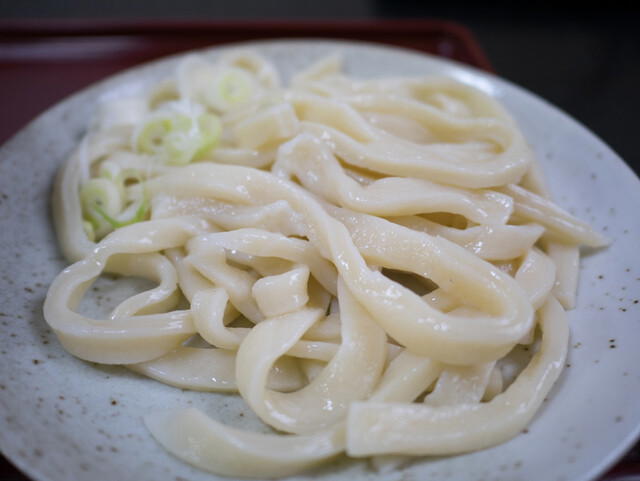
Approaching a noodle shop in Ogawa, the city tempo drops before the meal begins. Hiki-gun is not Tokyo’s counter-driven dining circuit, and that matters: udon here reads less as a metropolitan performance than as a regional staple shaped by wheat, water, and lunch-hour discipline. The room format reinforces that register, with table seating, counter seats, tatami, and sunken seating pointing to a place built for mixed use: solo diners, friends, and small groups eating within the rhythm of a short daytime service.
That setting gives Asobi its editorial weight. Saitama sits inside one of eastern Japan’s deeper wheat-noodle belts, where udon culture is tied to inland agriculture rather than coastal luxury ingredients. In this part of Japan, the noodle itself carries much of the argument. Thickness, pull, chew, and the temperature of the serving format matter more than decorative excess. A shop selected for Tabelog’s Udon EAST 100 in both 2020 and 2024 enters a category where consistency is the credential, not spectacle.
Ogawa's wheat-noodle tradition, served without Tokyo polish
Udon in eastern Japan rewards restraint. The comparison is not with sushi counters or kaiseki rooms, but with craft noodle houses that treat flour handling and broth balance as the core work. Soba appears on the category line here too, which places the kitchen within a broader noodle culture rather than a single-dish novelty format. For diners moving through Saitama, that makes the meal a useful reading of place: inland Japan, daytime eating, and a low-price craft category that can be more revealing than a formal tasting menu.
The sourcing angle is not about a named farm or a chef’s personal manifesto; neither is needed to understand the draw. Wheat noodles are unusually transparent as food. Poor flour handling has nowhere to hide, and good udon makes texture the main event. Hiki-gun’s rural context sharpens that point. A lunch here is less about chasing rarity than paying attention to a staple that has been refined by repetition. The better comparison within the area is the everyday regional table: Tamaiya Restaurant sits in the same local spending band, while Hon Teuchi Udon Shoji gives noodle-focused travellers another Saitama reference point. For a broader map of the area’s dining, use Our full Hiki-gun restaurants guide.
Tabelog’s Hyakumeiten framework is useful here because it favours category specialists rather than only high-spend dining. Selection for the Udon EAST 100 puts Asobi among eastern Japan’s recognised udon addresses, a different kind of trust signal from Michelin stars or international restaurant lists. It says the venue belongs in a craft category where repeatable execution, local following, and noodle-specific assessment carry weight.
A casual room for a serious noodle category
The seating mix says a great deal about the expected meal. Counter seats support solo dining; tables and tatami make the room workable for friends and families; sunken seating adds the familiar Japanese comfort of a longer lunch without turning the experience formal. This is not a hushed luxury format. It is a compact rural restaurant grammar: arrive with the lunch crowd in mind, eat decisively, and judge the kitchen by the noodles rather than by theatrical service.
Within Hiki-gun, that makes the venue more useful to a traveller than a simple detour label suggests. Ogawa is not a dense restaurant district, so a recognised noodle shop changes the shape of a day trip. Pairing a meal with a wider look at the area works better than treating it as a standalone destination. The local rail-and-rural pattern suits travellers who build an itinerary around craft, old-town texture, and slow regional eating rather than late-night dining. For adjacent planning, Our full Hiki-gun hotels guide, Our full Hiki-gun bars guide, Our full Hiki-gun wineries guide, and Our full Hiki-gun experiences guide help frame the rest of the day.
The better national comparison is with Japan’s wider casual-specialist dining culture, where narrow menus and modest rooms can carry serious craft. Chuka Soba Yotsuba shows how Saitama ramen can pull dedicated diners beyond central Tokyo; Asobi occupies the udon side of that same regional logic. Farther afield, the same principle connects to small-format specialists such as (Shoku) Vietnam in Kawasaki, [Curry Senmon Ten] Maruyama Kyoju. in Sapporo, [ki:] in Kyoto, and.cafe in Osaka: modest categories, precise audiences, and food that depends on repetition rather than ceremony.
How to place it in a wider Japan itinerary
For travellers who usually organise Japan around major cities, Hiki-gun asks for a different appetite. The reward is not breadth but specificity: a rural Saitama lunch that puts udon in its proper setting, away from department-store basements and station-mall convenience. The format is also friendly to mixed itineraries because the meal does not require the time commitment of a long tasting menu. That makes it a strong candidate for travellers who care about regional foodways but do not want every meal to become a reservation campaign.
Asobi is better read as part of a national pattern than as an isolated address. Japan’s casual dining depth includes grilled beef specialists such as -Grilled beef Sukiyaki- KAMAKURA TANUKIAN 鎌倉 たぬき庵 in Kamakura, seafood-and-charcoal formats like. 鮪と炭火焼き うお炭 秋葉原店 in Tokyo, meat-led local dining at #肉といえば松田 奈良本店 in Kashihara, and regional independents such as.know in Kumamoto. Outside Japan, Jōdo Saké Bar in Los Angeles and Onigiri Time in Pasadena show how Japanese formats travel, but the Ogawa version is valuable because it remains rooted in its own agricultural and lunch-service context.
The verdict is simple: this is a noodle address for travellers who understand that Japanese food culture is built as much on everyday categories as on luxury counters. The Tabelog Udon EAST 100 recognition supplies the external signal; the Hiki-gun setting supplies the reason to care. Come for udon as regional craft, not for ceremony, and the meal makes sense.
Quick Comparison
Comparable venues by cuisine and price in the same metro.
| Venue | Cuisine | Price | Notes |
|---|---|---|---|
| Asobi | Udon and soba noodle shop | $ | Ogawa Town, Hiki District |
| Hon Teuchi Udon Shoji | Traditional Musashino Udon | $ | Kawajima-machi |
| Tamaiya Restaurant | Seasonal Japanese set menus with local sake | $$ | Ogawa-machi |
| Chuka Soba Yotsuba | Classic Japanese ramen & sushi | $$ | Kawajima-cho |
| つけめん 頑者 新横浜ラーメン博物館店 | Tsukemen (Dipping Ramen) | $ | Shin-Yokohama |
| Seiko Udoku | Soupless Tantanmen Ramen | $ | Uji |
Recognition history
Dated appearances from independent guides and award organizations, with the underlying list record or original source where available.
Tabelog 100 #6 · No. 6
Tabelog · Tabelog 100 - Udon - EAST - 2024
Continue exploring
More in Hiki-gun
Restaurants in Hiki-gun
Browse all →


Bars in Hiki-gun
Browse all →

Hotels in Hiki-gun
Browse all →

Wineries in Hiki-gun
Browse all →
At a Glance
- Cozy
- Rustic
- Solo
- Casual Hangout
- Group Dining
- Standalone
Current opening hours
- Monday
- Closed
- Tuesday
- Closed
- Wednesday
- 11 AM–2 PM
- Thursday
- 11 AM–2 PM
- Friday
- 11 AM–2 PM
- Saturday
- 11 AM–2 PM
- Sunday
- 11 AM–2 PM
Hours can change for holidays and private events. Last verified .
A relaxed, non‑smoking noodle shop with counter, table, tatami, and sunken seating that feels like a cozy, low‑key local favorite suited to solo diners and small groups.