
Akasaka Aono Honten belongs to Tokyo’s old wagashi tradition rather than the city’s tasting-menu economy. Its Tabelog 100 selection for Tokyo Japanese traditional sweets in 2023, take-out format, and long operating history make it a useful stop for understanding how confectionery functions in the capital: precise, portable, seasonal in rhythm, and closer to daily ritual than restaurant theatre.
Pearl is the En Primeur Club membership app — saves, bookings, and concierge access live there. Same editors, same standards.
- Address
- 東京都港区赤坂7-11-9
- Phone
- +81335850002
- Website
- akasaka-aono.com
 Saves & bookings on Pearl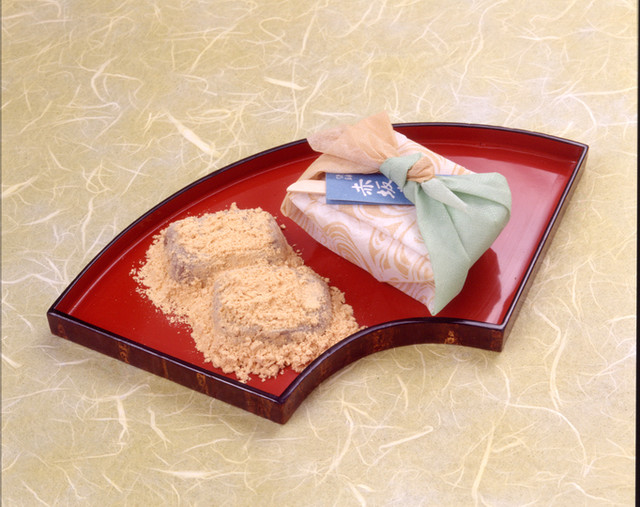
Approaching a Tokyo wagashi shop changes the tempo of eating. The cues are smaller than at a restaurant: a display case, wrapped boxes, customers choosing gifts as carefully as dessert, and the quiet choreography of take-out rather than table service. In Akasaka, that format carries particular weight. This is a district of offices, embassies, hotels, and old residential pockets, where sweets are often bought for apology, thanks, seasonal courtesy, or the end of a meal elsewhere. Akasaka Aono Honten sits inside that tradition, a Japanese confectionery house founded in 1899 and selected for the Tabelog 100 Tokyo Japanese traditional sweets and sweets cafe list in 2023.
Tokyo dining coverage tends to lean toward sushi counters, French rooms, and late-night bars, but wagashi explains another side of the city’s appetite: craft without a long seating, luxury without a tasting menu, and status carried in wrapping as much as in service. The relevant comparison is not a restaurant reservation but the strength of a shop’s confectionery grammar. Akasaka Aono Honten is recorded as a Japanese traditional sweets specialist with take-out service, a two-seat footprint, and a sub-¥1,000 average spend, which places the experience closer to a precise purchase than a drawn-out meal.
Wagashi here is built as a purchase decision, not a dining performance
The menu architecture at a serious wagashi counter is different from a restaurant menu. It is usually read through categories, season, gifting intent, and perishability. Some items are bought for immediate eating, others for presentation, and some require advance ordering. That structure tells the visitor how the genre works: wagashi is as concerned with timing and recipient as it is with appetite.
Akasaka Aono Honten’s format reinforces that logic. Reservations are available, and some products are available only by pre-order, so the sharper move is to think like a local buyer rather than a diner looking for improvisation. The shop’s role is not to stage a long meal; it is to make highly specific sweets available within a retail rhythm. That matters for travellers because Tokyo’s confectionery culture rewards planning. Turning up casually can work for everyday purchases, but pre-order-only items change the decision from browsing to intention.
The Tabelog 100 recognition is useful because it separates the shop from generic souvenir counters. Tabelog’s Hyakumeiten lists are category-specific, and the 2023 Tokyo wagashi selection places the shop in a competitive set defined by Japanese traditional sweets rather than by restaurant luxury. That distinction matters. A sushi counter signals seriousness through seat count, fish sourcing, and omakase pacing; a wagashi shop signals it through lineage, ingredient discipline, seasonal cadence, and whether customers trust it for occasions beyond personal snacking.
Akasaka's confectionery culture sits between office ritual and old Tokyo courtesy
Akasaka is not a single-note dining district. Within the same wider area, a visitor can find formal sushi, French dining, eel specialists, and compact neighborhood counters; the provided comparison set alone ranges from Edomae Sushi Hanabusa to Le temps moelleux and Unagi Akasaka Sekine. Against that backdrop, wagashi plays a quieter but more revealing role. It is not competing for dinner length or wine spend. It is competing for trust.
That trust has practical consequences. Japanese sweets are often purchased for someone else, and the format carries etiquette: packaging, freshness, portioning, and suitability for age or occasion. A shop founded in 1899 carries a different kind of authority from a new dessert cafe, because the category prizes continuity. Longevity alone is not proof of quality, but in wagashi it is a meaningful signal; shops survive by serving repeat local use, not only travel curiosity.
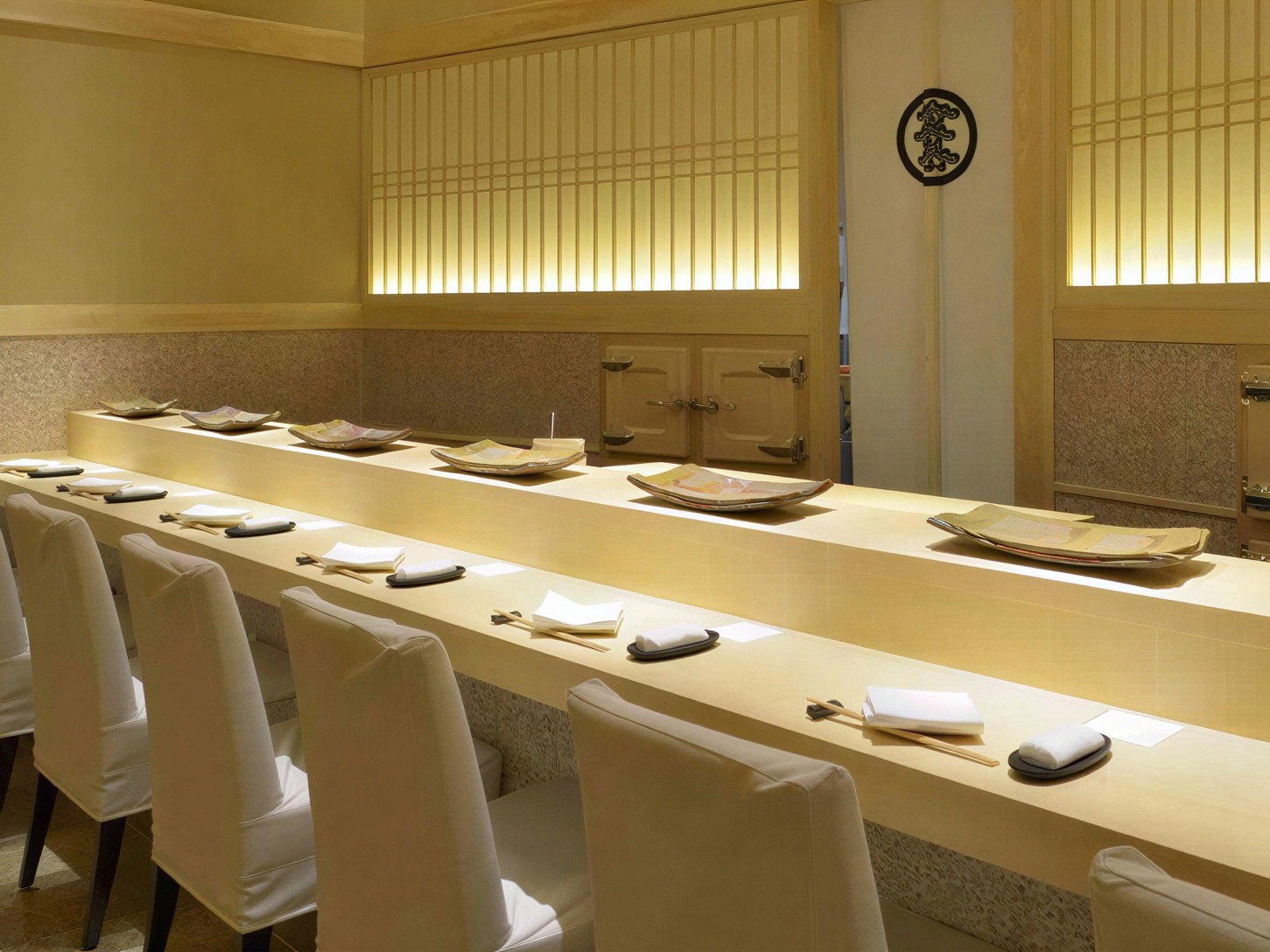
The small seating count also clarifies expectations. This is not a cafe to build an afternoon around. It is better understood as a specialist stop within a broader Akasaka or Nogizaka itinerary, especially for travellers who want a compact encounter with Japanese confectionery without turning it into a formal tea service. The setting makes sense before or after a meal in the area, or as a purchase to carry back to a hotel. Readers mapping a fuller day in the city can pair this kind of stop with broader planning through Our full Tokyo restaurants guide, Our full Tokyo hotels guide, Our full Tokyo bars guide, Our full Tokyo wineries guide, and Our full Tokyo experiences guide.
How to place it in a Tokyo eating day
The cleanest way to use the restaurant is as a punctuation mark, not the main clause. Tokyo rewards those who separate meal formats: sushi for counter pacing, yakitori for smoke and sequence, curry for speed and comfort, wagashi for the city’s older gift economy. In that sense, a confectionery purchase can say more about local manners than another long lunch.
For nearby or same-city contrast, the restaurant map can stretch from. 鮪と炭火焼き うお炭 秋葉原店 and 12/10 Shinjuku ten to 124. KAGURAZAKA (Yakitori), 2D Cafe, and 3 Chome no Curry Ya San. The comparison is not about hierarchy; it is about format. A city becomes legible when a traveller understands why a two-seat wagashi counter, a yakitori room, and a curry specialist answer different needs.
For a wider Japan itinerary, confectionery also helps connect Tokyo to other regional food habits. The same editorial logic can carry onward to -Grilled beef Sukiyaki- KAMAKURA TANUKIAN 鎌倉 たぬき庵 in Kamakura.cafe in Osaka.know in Kumamoto, (Shoku) Vietnam in Kawasaki, [Curry Senmon Ten] Maruyama Kyoju. in Sapporo, and [ki:] in Kyoto. For readers tracing Japanese food culture outside Japan, Jōdo Saké Bar in Los Angeles and Onigiri Time in Pasadena show how portable formats travel, adapt, and sometimes lose the etiquette that gives them meaning at home.
The editorial case for this stop is strongest for travellers who care about structure: what is bought, how it is ordered, and why a sweet shop can matter as much as a dining room. The restaurant is not a place to measure by spectacle. It belongs to a Tokyo category where restraint, habit, and occasion do the serious work.
At-a-Glance Comparison
Comparable venues at a glance for context.
| Venue | Cuisine | Price | Notes |
|---|---|---|---|
| Akasaka Aono HontenThis venue — the venue you are viewing | Traditional Japanese Wagashi Shop | $ | Not listed |
| Taiyaki Hiiragi | Traditional Japanese Taiyaki Shop | $ | Shibuya |
| Inaniwa Udon to Meshi Kaneko Hannosuke Koredo chuuou nihonbashimuro ten | Inaniwa udon and tempura rice bowls | $ | Chūō |
| Ichou no Ki | Japanese shaved ice & sweets cafe (kakigori) | $ | Shinagawa |
| Zehn Coffee | Japanese Kissaten / Coffee Shop | $ | Taitō |
| Gyokueido Hikokuro | Traditional Japanese Wagashi & Dorayaki | $ | Chūō |
Recognition history
Dated appearances from independent guides and award organizations, with the underlying list record or original source where available.
Tabelog 100 #56 · No. 56
Tabelog · Tabelog 100 - Japanese traditional sweets / Japanese sweets cafe - TOKYO - 2023












At a Glance
- Classic
- Quiet
- Well Known
- Cozy
- Family
- Celebration
- Casual Hangout
- After Work
- Solo
- Historic Building
- Standalone
- Local Sourcing
A tiny, non-smoking flagship wagashi shop with only two seats, focused on take-out; the atmosphere is calm and understated, with a strong sense of long-standing tradition and careful, refined packaging suited for gifts.