
Chinese Kyoka Rou belongs to Yokohama’s low-cost, everyday Chinese dining tier rather than the city’s banquet-room tradition. Its 2026 Tabelog 100 Chinese EAST selection, Chinese-and-ramen category overlap, and modest local format place it in the same conversation as serious neighborhood kitchens where rhythm, turnover, and familiar ordering customs matter more than ceremony.
Pearl is the En Primeur Club membership app — saves, bookings, and concierge access live there. Same editors, same standards.
- Address
- 13-5 Mitsukyo, Seya Ward, Yokohama, Kanagawa 246-0022, Japan
- Phone
- +81 45-391-5288
- Website
- tabelog.com
 Saves & bookings on Pearl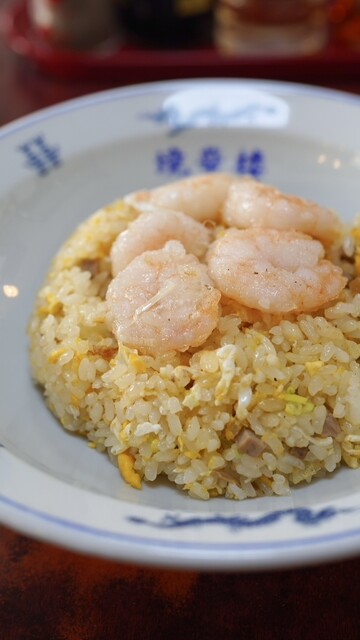
Approaching a Yokohama neighborhood Chinese room is a different ritual from entering the banquet halls of the port city’s famous Chinese quarter. The mood is functional: a compact room, quick decisions, and a menu language shaped by the long Japanese habit of folding Chinese cooking into everyday meals. Chinese Kyoka Rou sits in that register, where Chinese cooking and ramen share the same public imagination, and where a meal is paced by appetite rather than performance.
That distinction matters in Yokohama. The city carries two Chinese dining identities at once. One is ceremonial, tied to destination dining, group meals, and the civic weight of Chinatown. The other is local and repeatable: gyoza, noodles, stir-fries, rice plates, and small-shop efficiency. The second category rarely receives the same travel attention, yet it often says more about how residents eat on an ordinary week. A 2026 Tabelog 100 Chinese EAST selection gives this address a credential inside that less theatrical field, not because it turns the meal into an event, but because it validates a form of cooking built for frequency.
Chinese cooking in Yokohama, stripped back to the neighborhood meal
Japanese-Chinese dining has its own grammar. It is not Cantonese banquet dining, Sichuan specialist dining, or ramen-shop minimalism, though it borrows freely from each. In suburban Kanagawa, the appeal often lies in breadth and speed: a single room can serve as lunch counter, family fallback, and solo dinner stop without changing its tone. The Chinese-and-ramen classification is the tell. It places the kitchen in the chuka tradition, where noodle culture and Chinese home-style standards meet under one roof.
Chinese Kyoka Rou is therefore better read against casual local peers than against polished destination rooms. Silk Road Ryori Budouen occupies a similarly accessible Yokohama price band, while hectopascal operates in a higher spend category. Out-of-metro names such as China Soba Suzuki and Umai Yo Yuchan Ramen show how ramen-adjacent Chinese cooking can travel across different neighborhood economies, but the Yokohama version has its own port-city backdrop. The useful comparison is not luxury versus simplicity. It is how much confidence a kitchen can communicate inside a narrow, everyday format.
The 2026 Tabelog 100 Chinese EAST listing is the strongest public signal here. Tabelog’s Hyakumeiten selections tend to reward restaurants with sustained local approval rather than only formal critical prestige, and that makes the recognition relevant for this kind of address. A place in the Chinese EAST selection puts the restaurant into a regional conversation that reaches beyond Yokohama’s tourist circuits, while the modest dining format keeps the experience grounded in routine rather than ceremony.
The ritual is quick, direct, and built around familiar categories
The meal’s etiquette is simple: decide without turning the table into a seminar, order in categories that make sense to a mixed Japanese-Chinese room, and let the kitchen’s tempo carry the experience. This is not the arena for a long tasting menu or a sommelier-led progression. The pleasure comes from fluency. Regulars in this style of restaurant tend to know whether the day calls for noodles, rice, dumplings, or a shared plate; travelers should read that pattern rather than search for a single trophy dish.
That pacing is part of the cultural value. Yokohama’s more famous dining narratives often lean on port history and cross-border exchange, but the daily meal is where those ideas become practical. Chinese cooking entered Japanese urban life not only through grand restaurants, but through compact shops serving food that is eaten quickly, paid for easily, and repeated without planning. This kind of room preserves that everyday bargain. It rewards diners who treat the meal as a local custom rather than a checklist exercise.
For a wider Yokohama eating map, the useful move is to place this meal beside other tightly focused local formats rather than stack it against luxury dining. 1000 (Yakitori (Grilled chicken skewers)) points to the city’s grilled-skewer rhythm, while Aichun, Ajowan, and Alpenjiro Honten broaden the view of how Yokohama eats outside a single cuisine lane. Anzen Shokudo extends the same point beyond Kanagawa: Japan’s casual dining culture is dense with specialist and hybrid rooms whose value depends on precision at a narrow scale.
How to place it in a Yokohama itinerary
The strongest argument for Chinese Kyoka Rou is not spectacle. It is editorial usefulness. In a city where visitors can easily over-index on Chinatown, this address points to the quieter layer of Chinese cooking absorbed into residential life. That is the layer where a low spend ceiling, a small-seat format, and no-reservation access change the decision-making: the meal suits a focused detour, not a full evening built around ceremony.
Travelers building a broader city plan should treat it as one part of Yokohama’s dining texture rather than the whole story. Our full Yokohama restaurants guide is the natural next reference for meals across the city, while Our full Yokohama hotels guide, Our full Yokohama bars guide, Our full Yokohama wineries guide, and Our full Yokohama experiences guide help place the meal inside a wider stay. For regional contrast, -Grilled beef Sukiyaki- KAMAKURA TANUKIAN 鎌倉 たぬき庵 in Kamakura shifts the register to beef sukiyaki, while (Shoku) Vietnam in Kawasaki shows another nearby city’s casual international dining pattern.
It also belongs in a national comparison of small-format eating.. 鮪と炭火焼き うお炭 秋葉原店 in Tokyo.cafe in Osaka.know in Kumamoto, and [Curry Senmon Ten] Maruyama Kyoju. in Sapporo each represent different ways Japanese cities turn compact restaurants into serious dining references. Outside Japan, Jōdo Saké Bar in Los Angeles and Onigiri Time in Pasadena underline the same export lesson: modest formats can carry culinary identity when the offer is clear and repeatable.
The verdict is concise. The restaurant is for travelers who want Yokohama’s Chinese food culture beyond the obvious postcard version, with a Tabelog 100 Chinese EAST 2026 credential anchoring the choice. The restaurant’s value lies in its disciplined everydayness: a local Chinese-and-ramen room where the ritual is quick, direct, and tied to the way the city actually eats.
The Quick Read
Comparable venues by cuisine and price in the same metro.
| Venue | Cuisine | Price | Notes |
|---|---|---|---|
| Chinese Kyoka RouThis venue — the venue you are viewing | Seya, Casual Chinese & Ramen | $ | Not listed |
| Kinryo | Naka, Traditional Cantonese roast meats | $ | Not listed |
| Banri | Naka, Chinese Dumplings | $$ | Not listed |
| Kasei Rou Yokohama chuukagai shinkan baiten | Not listed | $ | Naka, Traditional Chinese sweets & pork buns shop |
| Ryuho | Not listed | $$ | Naka, Traditional Chinese (Yokohama Isezakicho) |
| Gumyoji Hekan | Minami, Ramen & Soba Izakaya | $ | Not listed |
Recognition history
Dated appearances from independent guides and award organizations, with the underlying list record or original source where available.
Tabelog 100 #79 · No. 79
Tabelog · Tabelog 100 - Chinese cuisine - EAST - 2026










At a Glance
- Lively
- Cozy
- Family
- Casual Hangout
- Solo
- Group Dining
- After Work
- Standalone
Current opening hours
- Monday
- 11:30 AM–7 PM
- Tuesday
- 11:30 AM–7 PM
- Wednesday
- 11:30 AM–7 PM
- Thursday
- 11:30 AM–7 PM
- Friday
- 11:30 AM–7 PM
- Saturday
- 11:30 AM–7 PM
- Sunday
- Closed
Hours can change for holidays and private events. Last verified .
Bright, simple neighborhood Chinese restaurant with spacious but compact seating, a casual family-friendly feel, and the bustling atmosphere typical of a popular local spot near a commuter station.