On a narrow street in Madrid's Centro district, Casa Parrondo occupies a position that says something broader about how the city's mid-tier dining has evolved: rooted in Asturian tradition, but operating within a capital that has absorbed decades of technical influence from Spain's avant-garde kitchens. The result is a table worth understanding before you book, not just a name to add to a list.
Pearl is the En Primeur Club membership app — saves, bookings, and concierge access live there. Same editors, same standards.
- Address
- C. de Trujillos, 9, Centro, 28013 Madrid, Spain
- Phone
- +34915226234
- Website
- casa-parrondo.com
- Directions
- Get directions
 Saves & bookings on Pearl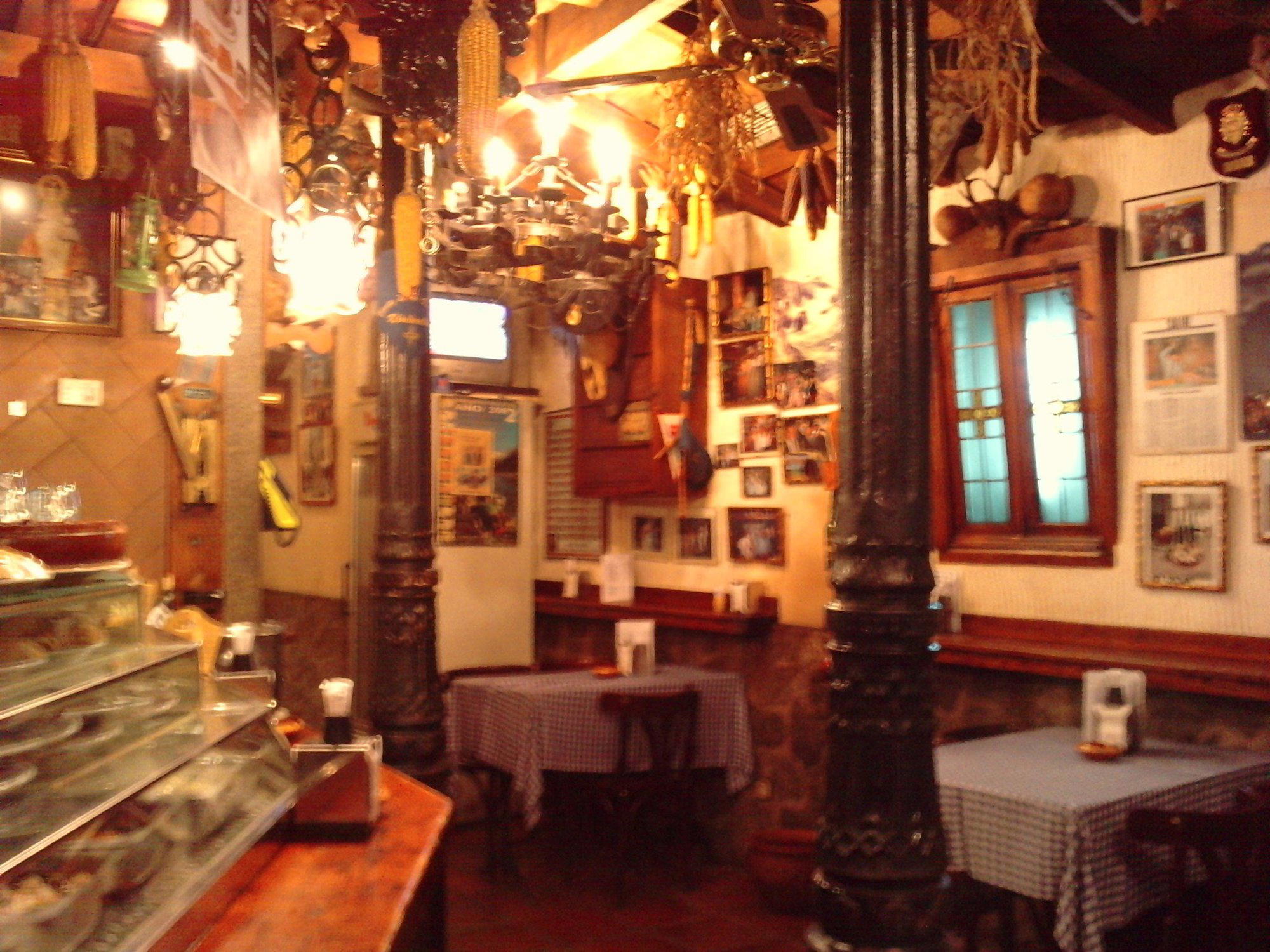
A Street in Centro, and What It Tells You
Calle de Trujillos is not a destination street. It sits in the dense residential-commercial grid of Madrid's Centro, the kind of block where you arrive by intention rather than by accident. That positioning is itself a statement: Casa Parrondo does not rely on foot traffic or tourist overflow from the Gran Vía. The clientele has sought it out. In a city where dining culture runs from the aggressively avant-garde, think DiverXO and its multi-hour theatrical format, to the stubbornly traditional, a neighbourhood address like this one usually signals a specific register: serious kitchen, local following, limited appetite for spectacle.
Madrid's restaurant culture in Centro has long operated as a counterweight to the city's headline venues. While the €€€€ tasting-menu circuit, Coque, Deessa, Paco Roncero, DSTAgE, competes for international attention and Michelin validation, the mid-tier of the capital has quietly absorbed technique from those kitchens and redirected it toward more accessible formats. Casa Parrondo sits in that conversation.
Asturian Cooking in a Madrid Frame
The Asturian kitchen is one of Spain's most coherent regional traditions: wet-climate produce, serious dairy, deep reliance on the sea despite being an inland capital's adopted cuisine, and a culture of preservation and fermentation that predates the modern fermentation revival by generations. In Madrid, Asturian restaurants have historically operated as cultural embassies rather than fine-dining propositions, serving fabada and cider to nostalgic transplants rather than engaging with the city's evolving appetite for technique-driven cooking.
What has shifted in the past decade is the willingness of kitchens drawing on that tradition to apply a more considered technical vocabulary without abandoning the source ingredients. The broader Spanish culinary movement, driven by kitchens like El Celler de Can Roca in Girona, Mugaritz in Errenteria, and Arzak in San Sebastián, demonstrated that indigenous ingredients could carry global technique without losing their regional identity. Casa Parrondo's positioning in Madrid reflects that wider argument applied to Asturian produce: the raw materials do not need to change; the frame around them can.
This intersection of local ingredient integrity and imported technical thinking is especially productive tension in Spanish regional cooking right now. You see the same dynamic at work in Valencia with Ricard Camarena, in the Atlantic south with Aponiente in El Puerto de Santa María, and in Extremadura with Atrio in Cáceres. In each case, the kitchen treats its region as a fixed point and uses technique as a variable. The restaurant operates within that framework, translated to the Asturian canon and relocated to a Madrid address.
What the Format Says About the Offer
A Centro address on a minor street, an Asturian culinary identity, and a format that does not appear to have chased awards or tasting-menu positioning together suggest a specific dining proposition: ingredient-led, probably seasonal in the traditional sense rather than the theatrical one, and pitched at a clientele that knows what it is ordering rather than one being guided through a narrative. Compared to the elaborate production formats of Madrid's top tier, where the dining room is as choreographed as the plate, this represents a different philosophy of hospitality. The meal is the point, not the experience arc around it.
Spain's most technically ambitious kitchens, from Azurmendi in Larrabetzu to Martin Berasategui in Lasarte-Oria to Cocina Hermanos Torres in Barcelona, have increasingly made the experiential frame as deliberate as the cooking itself. The counter-movement, quieter rooms, shorter menus, less theatrical service, has gained real traction in city centres across Spain. The restaurant, from what its address and tradition suggest, belongs in that counter-movement rather than in the spectacle tier. Internationally, that register maps to something like Lazy Bear in San Francisco or the more restrained end of what Le Bernardin in New York City represents: kitchens where confidence is expressed through restraint rather than elaboration.
Reading the Address as Context
For visitors arriving in Madrid with a week and a list, the Centro district functions as a base rather than a destination in itself. The serious dining is distributed across the city: Retiro, Salamanca, Chamberí, and the northern edge all host the headline kitchens. A restaurant on Calle de Trujillos, then, represents something specific for the traveller: a chance to eat well within the residential fabric of the city rather than making an expedition to a landmark address. That has its own value, particularly for a second or third evening when the theatrical format of a full tasting menu is not what the night calls for.
The Ingredient Argument, Applied
Asturian produce has genuine claims on quality: the dairy sector is one of Spain's most developed, the coastline produces shellfish and fish that appear on high-end tables across the country, and the mountainous interior supplies game, charcuterie, and aged cheeses that require no technical enhancement to read as premium. The question for any kitchen working in this tradition, particularly one operating in a capital city with an audience that has eaten at Quique Dacosta in Dénia and worked through the DSTAgE tasting menu, is what the kitchen adds to ingredients that are already doing serious work on their own.
The kitchens that have answered that question most convincingly across Spain tend to add texture, temperature, and precision rather than transformation: they do not obscure the ingredient but make it more exactly itself. Whether the restaurant operates in that mode, or in a more conservative register that lets tradition carry the weight without technical intervention, is a question the kitchen's cooking will answer more clearly than any description of its address.
At-a-Glance Comparison
Comparable venues nearby, for context on price, style, and recognition.
| Venue | Cuisine | Price | Notes |
|---|---|---|---|
| Casa ParrondoThis venue — the venue you are viewing | Traditional Asturian Tapas & Seafood | $$ | Not listed |
| El Café de la Ópera | Traditional Spanish with Opera | $$ | Palacio |
| Malacatín | Traditional Spanish Cocido Madrileño | $$ | Embajadores |
| Paellitas Tradición | Traditional Spanish Paella | $$ | Almagro |
| Llauna | Catalan & Spanish Mediterranean with Wood-Fired Specialties | $$ | Almagro |
| La Canica | Modern Spanish Tapas | $$ | Piovera |
Continue exploring
More in Madrid
Restaurants in Madrid
Browse all →
Bars in Madrid
Browse all →
Hotels in Madrid
Browse all →


At a Glance
- Rustic
- Cozy
- Classic
- Casual Hangout
- Group Dining
- After Work
- Standalone
- Beer Program
- Local Sourcing
Current opening hours
- Monday
- 9 AM–6 PM
- Tuesday
- 9 AM–12 AM
- Wednesday
- 9 AM–12 AM
- Thursday
- 9 AM–12 AM
- Friday
- 9 AM–12 AM
- Saturday
- 9 AM–12 AM
- Sunday
- 9 AM–6 PM
Hours can change for holidays and private events. Last verified .
Warm and familial atmosphere with walls covered in traditional Asturian decorations, family pictures, and rustic touches; feels like dining in a family home rather than a commercial establishment.