
On a narrow street in Madrid's La Latina quarter, Malacatín has held its position as one of the city's most committed purveyors of cocido madrileño for well over a century. The format is fixed, the clientele local, and the cooking rooted in a tradition that predates the modern Spanish restaurant industry. For anyone tracing Madrid's culinary identity back to its origins, this is a foundational stop.
Pearl is the En Primeur Club membership app — saves, bookings, and concierge access live there. Same editors, same standards.
- Address
- C. de la Ruda, 5, Centro, 28005 Madrid, Spain
- Phone
- +34913655241
- Website
- malacatin.com
- Directions
- Get directions
 Saves & bookings on Pearl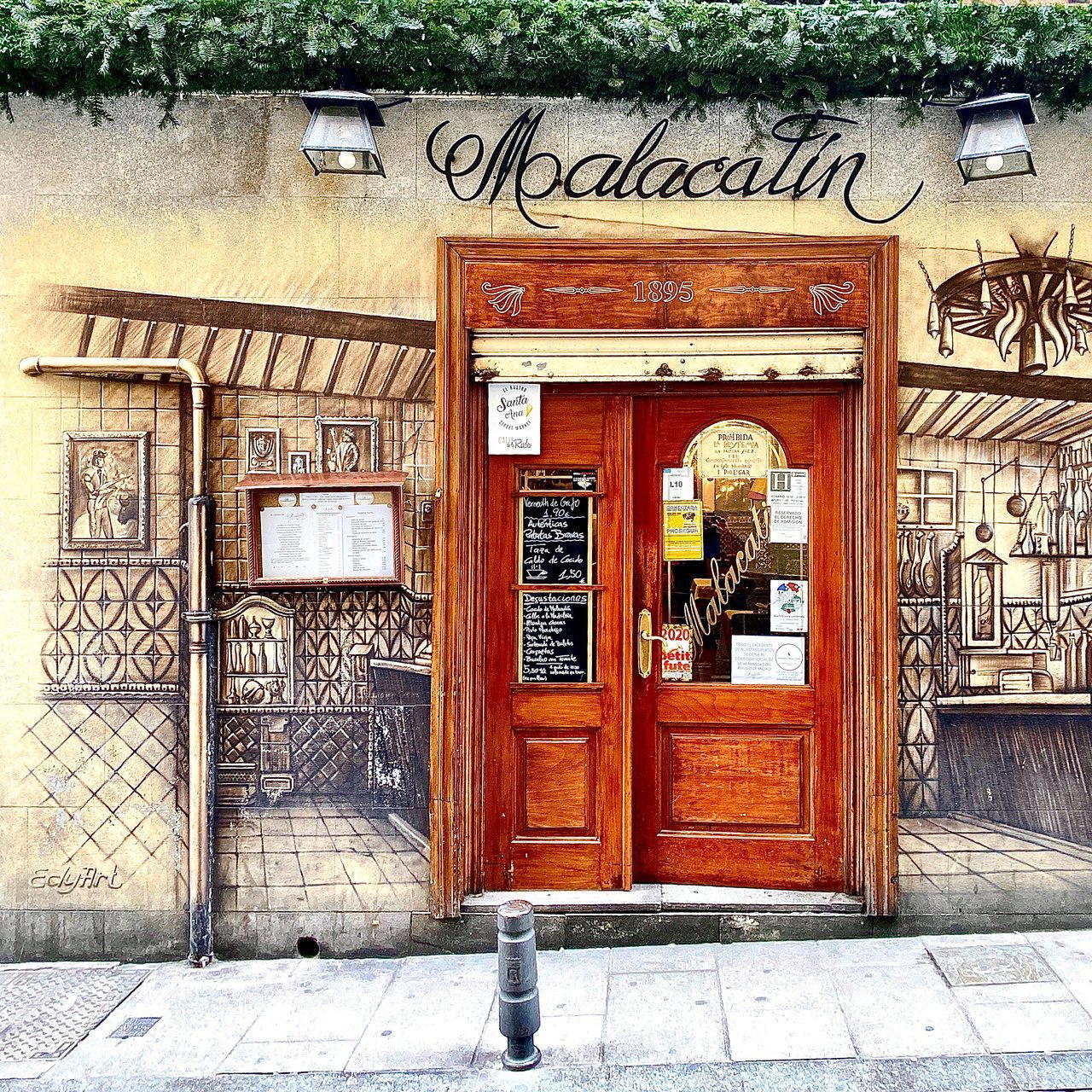
The Room Before the Food
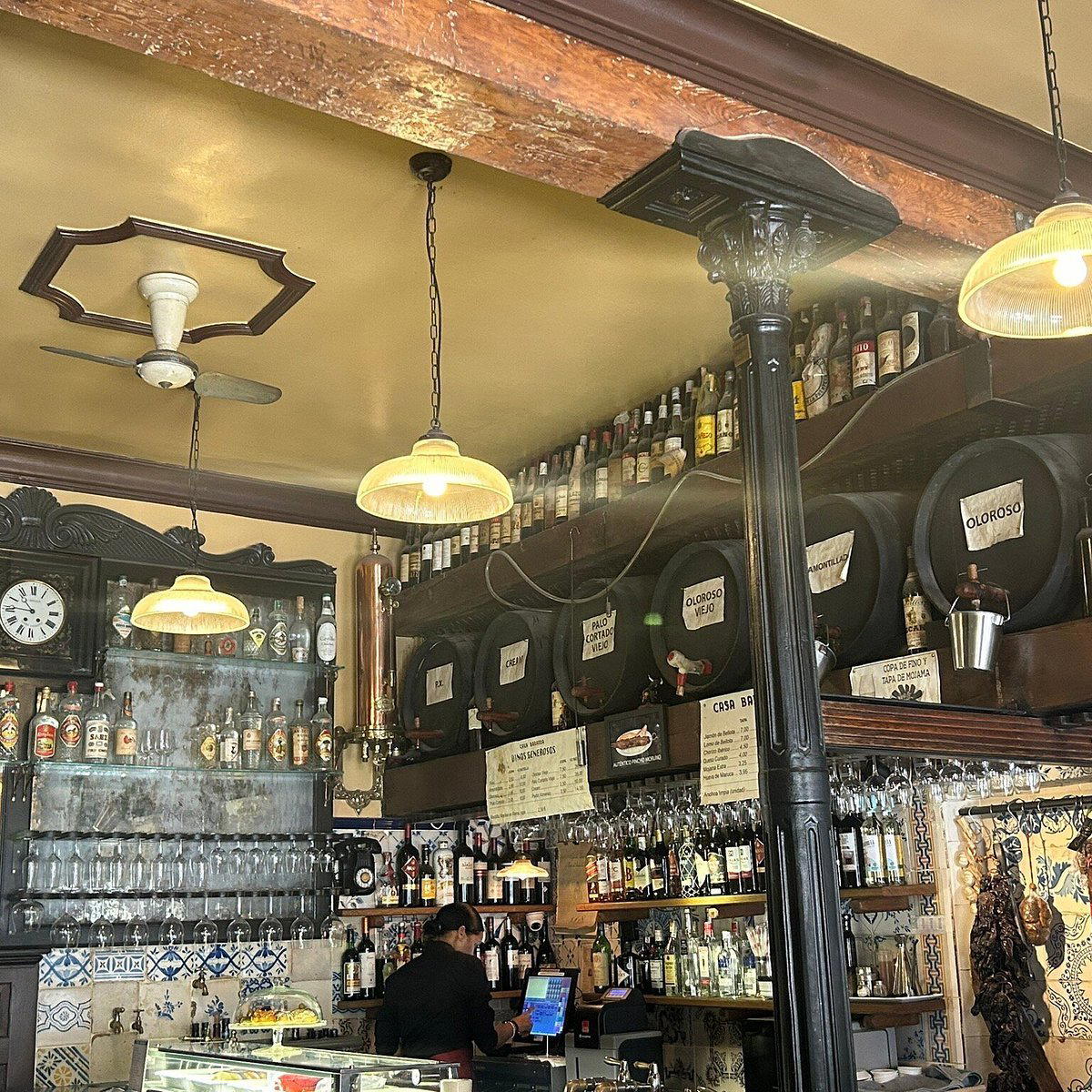
Calle de la Ruda runs through the older, quieter edge of La Latina, a district whose tiled tabernas and market-adjacent streets have been feeding Madrileños since before the Gran Vía was built. Malacatín sits on this street in a room that hasn't been updated for effect: azulejo tiles, dark wood, close-set tables, and the kind of ambient noise that comes from a room that fills early and stays full. There's no design concept here beyond the accumulated habit of generations of diners who come for one thing.
Cocido Madrileño and What It Actually Means
To understand Malacatín, you need to understand cocido madrileño, because the two are effectively inseparable in the city's collective memory. Cocido is Madrid's defining dish: a slow-cooked chickpea stew served in the traditional sequence of three courses, or tres vuelcos, from a single pot. First comes the broth, poured over thin fideos noodles. Then the chickpeas and vegetables. Then the meats: typically morcillo beef, chorizo, morcilla, tocino, and often chicken. The sequence matters. Each phase of the pot tells you something different about the ingredients and the cook's hand.
This style of cooking has deep roots in Sephardic and Moorish culinary traditions that shaped the Iberian Peninsula before the Reconquista, adapted by Christian communities into the pork-heavy version that became the Madrid standard. By the 19th century, cocido madrileño was the city's everyday working meal, cooked in tabernas like this one and eaten by everyone from labourers to minor civil servants. It remains a restaurant format at all, in part because places like Malacatín have maintained the tradition without shortcutting it.
Across most of the Spanish culinary scene, the serious critical attention has moved toward tasting-menu formats and creative technique. Madrid's own high-end restaurant tier, represented by venues like DiverXO, Coque, Deessa, DSTAgE, and Paco Roncero, operates in a completely different register. Malacatín doesn't compete with that tier and makes no attempt to. It competes with time, and the question its presence raises is whether a dish this specific and this labour-intensive can survive in a city whose restaurant economics increasingly favour either fast-casual or luxury-format dining.
Why the Format Survives
The tres vuelcos format is not efficient. The broth requires hours. The chickpeas, sourced from specific growing regions like Castilla-La Mancha or Segovia, must be soaked and cooked slowly to hold their texture. The meats need fat and time. There is no way to accelerate cocido without destroying what makes it worth eating. Restaurants that have tried to modernise it, serving the components deconstructed or on a single plate, find that they've produced something technically similar but experientially different. The sequence is the dish.
Malacatín's continued operation at a time when the format is genuinely endangered in its traditional form makes it a reference point for anyone mapping Madrid's dining heritage. It is the kind of place Spanish food critics mention when explaining what the city's culinary identity actually consists of.
Where It Sits in the Wider Spanish Picture
Spain's restaurant culture has produced particularly technically ambitious cooking of the past three decades, from El Celler de Can Roca in Girona and Arzak in San Sebastián to Mugaritz in Errenteria, Azurmendi in Larrabetzu, and Martin Berasategui in Lasarte-Oria. Further afield, places like Quique Dacosta in Dénia, Aponiente in El Puerto de Santa María, Ricard Camarena in València, Cocina Hermanos Torres in Barcelona, and Atrio in Cáceres represent how thoroughly Spain has built an international fine-dining reputation. None of that erases the parallel tradition that places like Malacatín represent. If anything, the international appetite for Spanish cuisine has sharpened interest in its regional and historical foundations. Visiting travellers who arrive in Madrid having eaten at Michelin-starred counters often find that the cocido table at Malacatín teaches them something the tasting menus don't: what the city actually eats when it's not performing.
For context outside Spain, the closest analogy might be a restaurant in Lyon still executing a proper pot-au-feu by the book, or a trattoria in Rome that hasn't altered its coda alla vaccinara in fifty years. These places exist in a different category from innovation-led restaurants, but they're not lesser for it. They carry a different kind of authority.
Planning Your Visit
Malacatín is on Calle de la Ruda, 5, in the Centro district of Madrid, walking distance from La Latina metro station and the El Rastro market area. Reservations: The room fills on weekends and during the lunch service, which is the primary meal in Spanish dining culture; booking ahead is advisable, particularly for groups. Dress: No formal requirement; neighbourhood casual is the norm. Timing: Lunch is the native context for cocido madrileño and the service to prioritise. Visiting midweek reduces wait times. Budget: At about $30 per person, it sits in the mid-price range for Madrid. For broader orientation, see our full Madrid restaurants guide.
Cuisine and Awards Snapshot
Comparable venues nearby, for context on price, style, and recognition.
| Venue | Cuisine | Price | Notes |
|---|---|---|---|
| MalacatínThis venue — the venue you are viewing | Traditional Spanish Cocido Madrileño | $$ | Not listed |
| Santamaria | Spanish-International Tapas Gastrobar | $$ | Malasana |
| 11 Nudos Madrid | Modern Atlantic & Galician Cuisine | $$ | Chueca |
| La Vaquería Montañesa | Traditional Spanish Mediterranean Market Cuisine | $$ | Almagro |
| El Rincón de Cruz Blanca | Traditional Spanish Tapas | $$ | Pacifico |
| El Urogallo Casa de Campo | Traditional Asturian Spanish | $$ | Casa de Campo |
Recognition history
Dated appearances from independent guides and award organizations, with the underlying list record or original source where available.
Macarfi 6.9 Food Rating
Macarfi
Continue exploring
More in Madrid
Restaurants in Madrid
Browse all →
Bars in Madrid
Browse all →
Hotels in Madrid
Browse all →


At a Glance
- Classic
- Rustic
- Cozy
- Well Known
- Family
- Group Dining
- Historic Building
- Extensive Wine List
Current opening hours
- Monday
- 11 AM–5 PM
- Tuesday
- Closed
- Wednesday
- 11 AM–11 PM
- Thursday
- 11 AM–11 PM
- Friday
- 11 AM–11 PM
- Saturday
- 11 AM–11 PM
- Sunday
- 11 AM–5 PM
Hours can change for holidays and private events. Last verified .
Traditional and cozy with bullfighting decor, warm atmosphere, and bustling energy from packed tables.