In Chamartín's quieter residential grid, Casa Neutrale occupies a position that Madrid's creative dining scene has been moving toward for years: a format where the progression of the meal does the talking. The address places it away from the trophy-restaurant corridor of central Madrid, situating it inside a neighbourhood that rewards those who come specifically for the table rather than the postcode.
Pearl is the En Primeur Club membership app — saves, bookings, and concierge access live there. Same editors, same standards.
- Address
- Pl. de Cataluña, 2, Chamartín, 28002 Madrid, Spain
- Phone
- +34917815279
- Website
- casaneutrale.com
- Directions
- Get directions
 Saves & bookings on Pearl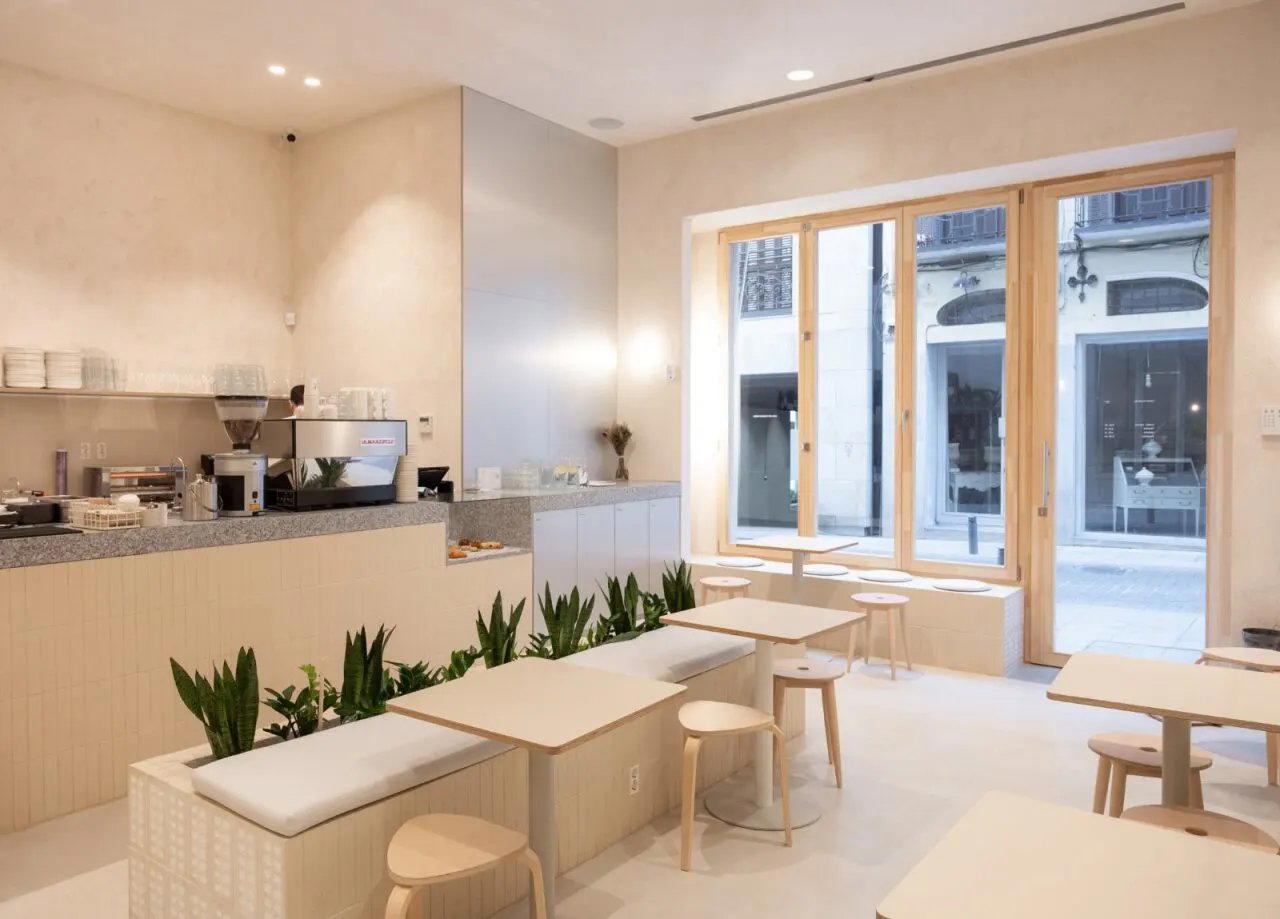
Where Chamartín's Dining Scene Is Heading
Madrid's creative restaurant map has long centred on a handful of marquee addresses: DiverXO pushing progressive Asian-Spanish fusion into genuinely confrontational territory, Coque running its multi-room theatrical sequence, Deessa and DSTAgE working the modern Spanish tasting format at the upper end. What has emerged alongside these established names is a secondary tier of addresses operating with less spectacle and more precision, venues where the architecture of the meal itself carries the experience. Casa Neutrale, on Plaça de Cataluña in Chamartín, sits in that secondary tier.
Chamartín is not the neighbourhood visitors typically associate with destination dining. It is residential, functional, structured around the Bernabéu and the northern business corridors. That context matters because it shapes the kind of diner who arrives at Casa Neutrale: someone with a reservation in hand and a specific reason for being there, rather than a walk-in from a nearby hotel lobby. In a city where the tourist-facing restaurant economy has grown considerably, that filtering effect produces a different room.
The Tasting Progression as the Point
Across Spain's leading creative tables, the multi-course tasting menu has become the dominant format for serious cooking. At places like Quique Dacosta in Dénia, Mugaritz in Errenteria, and El Celler de Can Roca in Girona, the sequencing of courses is itself an editorial act: an argument about flavour, texture, and pacing made across two or three hours. The format demands that each stage justifies its position in the arc rather than existing as a standalone dish. Casa Neutrale operates inside this tradition.
What distinguishes the tasting progression format at this price and scale from the larger theatrical formats is restraint in the production values. Aponiente in El Puerto de Santa María or Azurmendi in Larrabetzu invest heavily in the physical staging of the meal, in the rooms, the service choreography, the mise en scène. Smaller creative addresses in Madrid's residential quarters tend to redirect that investment toward the plate itself. The room becomes quieter, the table more central, and the progression of flavours carries more of the weight.
This is the context in which Casa Neutrale should be read: not as a venue competing with Madrid's most-decorated tasting counters on their own terms, but as part of a movement within Spanish creative dining that prioritises the internal logic of a meal over its external theatrics. Parallel examples exist across Spain's regional capitals. Ricard Camarena in València and Cocina Hermanos Torres in Barcelona demonstrate how serious contemporary Spanish cooking can operate outside the most visible international spotlight while still maintaining clear conceptual identity.
Chamartín as a Dining Address
The neighbourhood framing is worth extending. Plaça de Cataluña in Chamartín sits in a part of Madrid that does not generate much dining coverage in international media. That is partly a function of the area's character: it is not photogenic in the way that Malasaña or Chueca are, and it does not carry the historic gastro-bar density of La Latina. What it does have is a local clientele with consistent expectations and a lower tolerance for the kind of tourist-calibrated cooking that flattens flavours toward the broadly accessible.
That local pressure functions as a quality signal in its own right. Restaurants in residential Madrid succeed or fail on repeat visits and neighbourhood reputation rather than on conversion from hotel concierge recommendations. This is a different operating environment from the central city, and it tends to produce kitchens that cook to satisfy a specific audience rather than to impress a transient one. The same pattern holds in other European cities: addresses that survive in residential districts without the tourism buffer tend to be sharper at the fundamentals.
For visitors to Madrid making a deliberate trip to Chamartín, the practical framing matters. The address is accessible from central Madrid by metro on Line 10, and the neighbourhood does not have the evening street energy that makes a pre-dinner wander worthwhile on its own terms. You go for the table. That clarity of purpose suits the tasting format well.
Where Casa Neutrale Sits in the Spanish Creative Scene
Spain's creative dining infrastructure is among the densest in the world by Michelin star concentration relative to population. The country's northern Basque corridor, anchored by Arzak in San Sebastián and Martin Berasategui in Lasarte-Oria, established the intellectual framework for contemporary Spanish tasting menus in the 1990s. Atrio in Cáceres demonstrates how that framework has spread beyond the obvious regional clusters. Madrid's creative scene is now deep enough that it supports multiple tiers, from the internationally known flagships down to smaller addresses operating at a more local scale.
Casa Neutrale occupies the latter tier. That positioning is not a limitation; it is a mode. Some of the most consistent creative cooking in cities like New York and San Francisco happens in this bracket. Lazy Bear in San Francisco built a significant following through a community-table tasting format that prioritised the meal's social and sequential logic over fine-dining formality. Le Bernardin in New York City demonstrates the other direction: decades of sustained technical precision at the top of its category. Both models depend on the same underlying discipline, which is that the progression of what arrives at the table must make sense as a whole, not just as a collection of individually impressive courses.
In Madrid's current creative dining scene, where Paco Roncero continues to push technical formats and DiverXO operates as an outlier in terms of ambition and price, there is consistent demand for addresses that deliver serious cooking without the full ceremonial apparatus. Casa Neutrale's Chamartín address positions it as one such option. See our full Madrid restaurants guide for broader context on where it fits across the city's tiers.
Know Before You Go
Address: Pl. de Cataluña, 2, Chamartín, 28002 Madrid, Spain
Neighbourhood: Chamartín, northern Madrid residential district
Getting There: Line 10 metro connects Chamartín to central Madrid. The area is not well-suited to pre-dinner browsing; plan to arrive directly for your reservation.
Given the neighbourhood and format, confirm these details at the time of booking.
Phone/Website: Not currently available. Confirm via direct enquiry or local concierge.
How CASA NEUTRALE Madrid compares with similar nearby venues.
| Venue | Cuisine | Price |
|---|---|---|
| Gaytán | Modern Cuisine | €€€€ |
| Tramo | Contemporary | €€ |
Continue exploring
More in Madrid
Restaurants in Madrid
Browse all →
Bars in Madrid
Browse all →
Hotels in Madrid
Browse all →


At a Glance
- Minimalist
- Modern
- Cozy
- Trendy
- Brunch
- Casual Hangout
- Terrace
- Natural Wine
- Local Sourcing
Current opening hours
- Monday
- 9 AM–7 PM
- Tuesday
- 9 AM–7 PM
- Wednesday
- 9 AM–7 PM
- Thursday
- 9 AM–7 PM
- Friday
- 9 AM–7 PM
- Saturday
- 9:30 AM–7 PM
- Sunday
- 9:30 AM–7 PM
Hours can change for holidays and private events. Last verified .
Stripped-back minimalist haven with neutral tones, natural materials, greenery, and welcoming, relaxed atmosphere.
Know Before You Go
- Getting there
- Pl. de Cataluña, 2, Chamartín, 28002 Madrid, Spain