Cafe Berloga
A neighbourhood café on Prospekt Aleksandra Korsunova, Cafe Berloga sits within Veliky Novgorod's quietly developing dining scene, where Russian regional cooking and locally-sourced ingredients define the better addresses. The name, berloga means 'bear's den' in Russian, signals the register: unhurried, grounded, and aimed squarely at a local rather than tourist clientele.
Pearl is the En Primeur Club membership app — saves, bookings, and concierge access live there. Same editors, same standards.
- Address
- проспект Александра Корсунова, 36.1, Veliky Novgorod, Novgorod Oblast, Russia, 173018
- Phone
- +79116225332
- Website
- vk.com
- Directions
- Get directions
 Saves & bookings on Pearl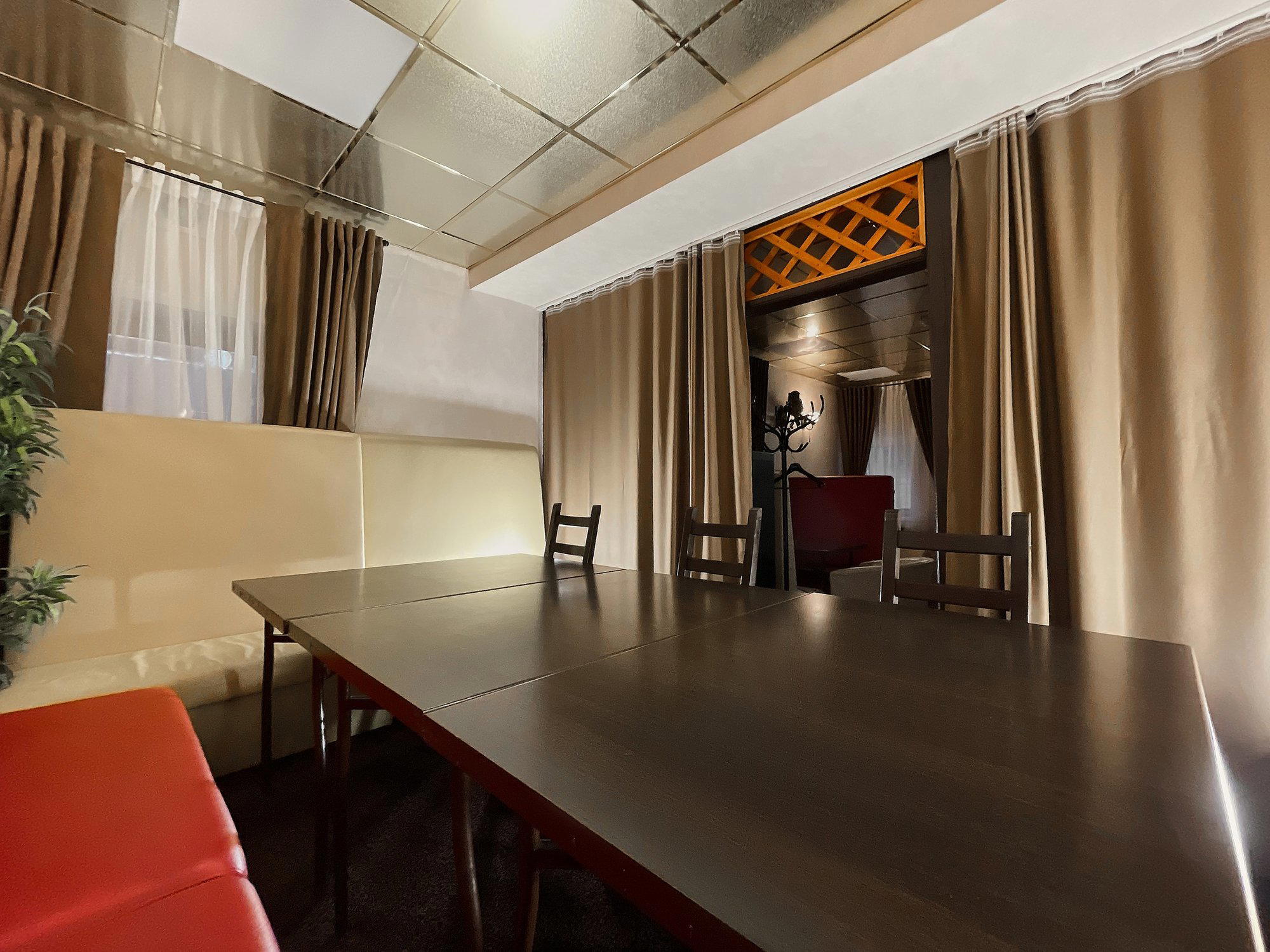
A City That Earns Its Own Dining Scene
Veliky Novgorod occupies an unusual position in the Russian cultural imagination: old enough to predate Moscow as a political centre, small enough to be overlooked by the metropolitan dining press, and sufficiently self-contained to have developed a food culture that answers to its own region rather than to capital trends. The city sits roughly equidistant between Moscow and St Petersburg, but the restaurants that hold ground here draw more from the agricultural rhythms of Novgorod Oblast than from either city's cosmopolitan influences. Mushrooms from the surrounding forests, freshwater fish from the Volkhov River and Lake Ilmen, dairy from local farms, these are the coordinates that shape serious cooking in this part of northwestern Russia.
Cafe Berloga is a Turkish Fast Food Bistro in Veliky Novgorod, Russia, with. That context matters when placing Cafe Berloga. It occupies an address on Prospekt Aleksandra Korsunova, a residential artery well removed from the Kremlin-side tourist corridor. This is not a restaurant angling for passing trade from the Yaroslav's Court historic site. The clientele is local, the location suggests a neighbourhood operation, and the name, berloga translates as 'bear's den', frames expectations clearly: warmth, shelter, something grounded rather than performative.
Where Ingredient Sourcing Defines the Tier
Across Russia's second-tier cities, the clearest dividing line between a forgettable café and a place worth planning around is not the kitchen's technical ambition, it is the honesty of the supply chain. In Veliky Novgorod, the proximity to forest, river, and working farmland gives local operators a genuine advantage over their counterparts in landlocked industrial cities. The question for any café at this address is whether it uses that proximity or defaults to the same wholesale channels that supply undifferentiated kitchens from Pskov to Yaroslavl.
The restaurant names that travel well in the Russian regional dining conversation, places like Barak in Novosibirsk or SEASONS in Kaliningrad, tend to anchor their identity in what arrives at the kitchen door from within a defined radius. At the more celebrated end of the Russian dining spectrum, venues like Twins Garden in Moscow have built significant reputations on hyper-local and estate-grown sourcing. The logic scales down from that top tier: the more honestly a kitchen works with its immediate geography, the more distinctive the result. Cafe Berloga's neighbourhood positioning places it inside that pattern, a local address for a local supply network.
Northwestern Russia's larder is specific enough to be interesting. Late-summer chanterelles and porcini come from forests within easy driving distance of the city. Vendace and perch arrive from river and lake systems that have been fished continuously for centuries. Preservation traditions, salting, pickling, cold-smoking, remain in active use rather than being revived for nostalgic effect. A kitchen that works with those ingredients honestly produces food that carries its geography in every dish, without requiring a lengthy provenance narrative on the menu.
The Neighbourhood Register
The atmospheric pull of a place like Cafe Berloga operates differently from destination restaurants in Moscow or St Petersburg. At Bourgeois Bohemians in St Petersburg or Birch in the same city, the experience is partly constructed for a dining public that treats the restaurant as an event. On Prospekt Aleksandra Korsunova, the operating logic is different. Neighbourhood cafés in Russian regional cities function more like an extension of domestic life, the place where a family marks a birthday without making a production of it, where a table of colleagues gathers midweek, where a solo diner can read without feeling watched.
That register has its own standards. Reliability matters more than surprise. Portion scale and price are expected to reflect the local economy rather than a metropolitan premium. The room, whatever its specific design, needs to communicate approachability without tipping into neglect. These are demanding criteria in a quieter way than the criteria applied to tasting-menu restaurants, and they are the criteria by which a regular clientele actually judges a neighbourhood operation over time.
For visitors to Veliky Novgorod, this framing is useful. The city's established tourist infrastructure clusters around the Kremlin, the St Sophia Cathedral, and the Yaroslav's Court ensemble. The café addresses that lie beyond that corridor operate without tourist-facing curation and without the pricing adjustments that follow visitor traffic. A place like Cafe Berloga, whatever its specific offer, is priced for the people who live on that street, which is a meaningful distinction when you're visiting a Russian regional city and want to eat outside the heritage-site orbit.
Russian Regional Cooking in National Context
The current moment in Russian restaurant culture is weighted heavily toward the question of what 'Russian cuisine' actually means when stripped of Soviet-era standardisation and post-Soviet mimicry of Western formats. Particularly discussed answers to that question come from Moscow, where the ambition and the capital are concentrated. Cafe Pushkin in Moscow represents the imperial-nostalgia strand of that conversation. COCOCO Bistro in St Petersburg represents the modernist-reinterpretation strand. Internationally, the Russian regional sourcing model has a distant analogue in what kitchens like Lazy Bear in San Francisco do with American regional traditions, or what Le Bernardin in New York City represents for classical rigour applied to a single ingredient category.
What happens in cities like Veliky Novgorod is less discussed but not less interesting. The competitive set is local, a handful of cafés and restaurants known to residents, evaluated on consistency rather than spectacle. That environment produces a different kind of quality signal for the people who depend on it weekly.
Elsewhere in the Russian regional picture, Alanskaya Kukhnya in Krasnodar shows what an explicit regional-cuisine identity can do for a restaurant's distinctiveness, and Leo Wine & Kitchen in Rostov demonstrates how the wine-focused format has taken hold outside the major cities. Restaurant Baran-Rapan in Sochi and La Colline in Bolshoye Sareyevo represent the resort-adjacent end of the regional dining spectrum. The restaurant sits at the opposite end of that range: no resort context, no destination-dining framing, just a fixed address in a residential part of a historically significant city.
Planning a Visit
Prospekt Aleksandra Korsunova 36.1 is in the northern residential reaches of Veliky Novgorod, away from the concentrated tourist infrastructure near the Kremlin. Visitors staying near the historic centre should expect a short taxi or ride-share journey to reach it. Arriving in person is the practical approach. Veliky Novgorod is most visited between May and September, when the medieval architecture reads well against open skies. The café's neighbourhood positioning suggests walk-in trade is the norm.
Quick Comparison
Comparable venues nearby, for context on price, style, and recognition.
| Venue | Cuisine | Price | Notes |
|---|---|---|---|
| Cafe BerlogaThis venue — the venue you are viewing | Turkish Fast Food Bistro | $ | Not listed |
| Royal Beach | Modern European Fine Dining | $$$ | Krestovsky Island |
| Jack & Chan | Pan-Asian Fusion | $$ | Nevskiy |
| Kazbek | Authentic Georgian | $$ | Presnensky |
| Rockets & Bishops | American Gastropub with Craft Beer | $$ | Admiralteyskaya |
| Restaurant "Aladasturi" | Georgian Cuisine | $$ | Staraya Derevnya |
At a Glance
- Casual Hangout
Current opening hours
- Monday
- 11 AM–11 PM
- Tuesday
- 11 AM–11 PM
- Wednesday
- 10 AM–11 PM
- Thursday
- 11 AM–11 PM
- Friday
- 11 AM–11 PM
- Saturday
- 11 AM–11 PM
- Sunday
- 11 AM–11 PM
Hours can change for holidays and private events. Last verified .