
Leo Wine & Kitchen has held 75 points on La Liste's global ranking in both 2025 and 2026, making it one internationally recognised address in Rostov-on-Don's modern Russian dining scene. The kitchen works within a Russian Modern framework, pairing ingredient-led cooking with a serious wine program on Ulitsa Maksima Gor'kogo. For a city rarely covered in international food media, that sustained recognition matters.
Pearl is the En Primeur Club membership app — saves, bookings, and concierge access live there. Same editors, same standards.
- Address
- Ulitsa Maksima Gor'kogo, 195, Rostov-on-Don, Rostov Oblast, Russia, 344000
- Phone
- +7 918 554-10-30
- Website
- leowinekitchen.ru
- Directions
- Get directions
 Saves & bookings on Pearl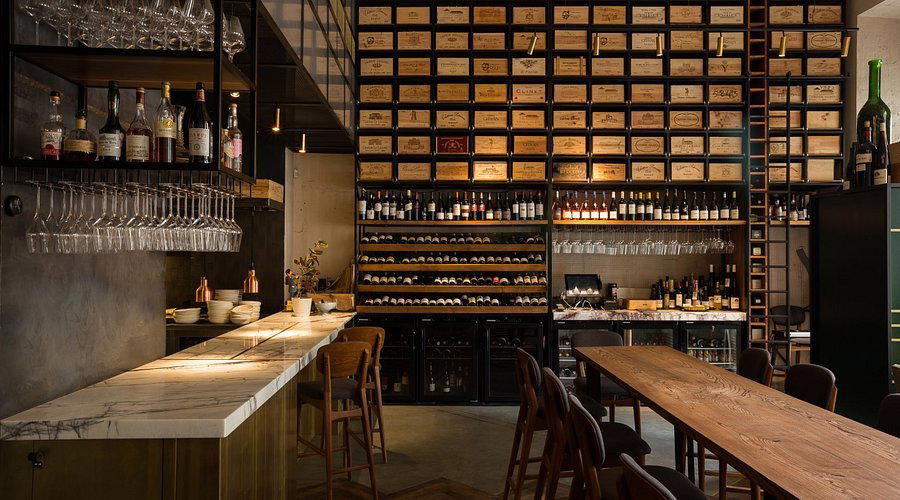
Where Rostov's Modern Russian Cooking Meets the Plate
Ulitsa Maksima Gor'kogo runs through one of Rostov-on-Don's more characterful stretches, and the approach to Leo Wine & Kitchen carries the low-key register that defines serious dining rooms across Russia's regional cities: no spectacle at the entrance, no theatrical signage. The room announces itself through restraint, which in the current Russian Modern idiom is itself a signal. This is a city that sits at the agricultural crossroads of the Don River basin, the Black Sea coast, and the North Caucasus foothills, a geography that puts an unusual depth of raw material within reach of any kitchen paying attention to it.
That sourcing context matters enormously when reading what Russian Modern cooking is trying to accomplish in 2024 and 2025. The genre, which gained its clearest articulation in Moscow restaurants like Уголек (Ugolek) and reached international attention through Twins Garden, is fundamentally an argument about Russian territory: that the country's soil, rivers, forests, and pastures can anchor a contemporary fine-dining vocabulary without leaning on French technique as a crutch. Rostov's position makes that argument easier to sustain than it would be in Moscow or St. Petersburg, where the distance to primary producers is longer and the supply chain more mediated.
Ingredient Geography as Culinary Position
The Don River basin produces some of Russia's most distinctive freshwater fish, including pike perch and carp species that appear on regional menus with a specificity rarely matched in the capital. The Krasnodar region immediately to the south contributes vegetables, grain, and increasingly serious wine production. The North Caucasus adds a further dimension: lamb, dairy, and fermented products with origins in Chechen, Ossetian, and Kabardinian food traditions that sit just across the administrative border. A kitchen in Rostov that sources with discipline has access to a pantry that Moscow restaurants spend considerable effort and cost to replicate.
Russian Modern as a category positions itself explicitly against Soviet-era standardisation and the post-Soviet import dependency of the 1990s and early 2000s. In practice, that means menus built around seasonal availability from named regional producers, preservation and fermentation techniques drawn from pre-Soviet Russian tradition, and a wine list that increasingly includes bottles from the Krasnodar and Rostov wine regions alongside international selections. Leo Wine & Kitchen's name signals that the wine program is not an afterthought, in a city where the surrounding oblast has a legitimate and growing wine culture, that integration carries weight. For context on the broader Rostov wine scene,
La Liste Recognition and What It Signals
A score of 75 points, held consistently across both the 2025 and 2026 editions, places Leo Wine & Kitchen inside a competitive tier that includes regionally significant addresses across Eastern Europe and Russia. The consistency of that score across two consecutive years is the more meaningful data point: it reflects sustained performance rather than a single strong cycle.
Among the broader Russian Modern comparable set, the genre's critical centres remain Moscow and St. Petersburg. Birch in St. Petersburg and Bourgeois Bohemians represent the northern capital's approach, while Moscow concentrates the highest density of internationally ranked addresses. Leo Wine & Kitchen operates in a different register: a regional city with a smaller dining public, less international traffic, and a more direct relationship with its supply geography. That context makes its La Liste placement read differently than the same score would in a capital city.
For readers tracking Russian dining more broadly, the category also includes format experiments like La Colline in Bolshoye Sareyevo and Tsarskaya Okhota in Zhukovka, which take different positions on the tradition-versus-innovation axis. SEASONS in Kaliningrad offers a further regional data point from a city with its own distinct food geography. Leo Wine & Kitchen's position within this wider map is as Rostov's most internationally visible fine-dining address, a role it has held without the media infrastructure that supports equivalent recognition in the capitals.
The Rostov Dining Context
Rostov-on-Don's restaurant scene operates at a different scale than Moscow or St. Petersburg, with fewer internationally profiled addresses and a food culture shaped more by local habit than by destination dining. The city's proximity to the Caucasus and the Black Sea coast gives its everyday food culture a distinct character, grilled meats, freshwater fish, and influences from the large Armenian and Greek communities that have shaped the city historically. Fine dining in this context has to negotiate between that local specificity and the expectations of Russian Modern as a nationally inflected genre.
For visitors building a broader picture of what Rostov offers, the traditional end of the Russian dining spectrum is represented by Онегин Дача (Onegin Dacha), which takes a different position on Russian culinary identity. Our full Rostov restaurants guide maps the wider scene across price points and styles, while the Rostov bars guide, hotels guide, and experiences guide cover the city's broader offer for those spending more than a single meal here.
Planning a Visit
Leo Wine & Kitchen is located at Ulitsa Maksima Gor'kogo, 195, in the Rostov Oblast administrative centre, postcode 344000. Given the restaurant's international recognition and the scale of Rostov's fine-dining public, advance booking for weekend tables is advisable. Reservations are essential, and the restaurant is open daily from 12 to 11 PM.
Comparable Venues
Comparable venues nearby, for context on price, style, and recognition.
| Venue | Cuisine | Price | Notes |
|---|---|---|---|
| Leo Wine & KitchenThis venue — the venue you are viewing | Modern Southern European Seasonal Cuisine | $$$ | Not listed |
| Онегин Дача - Onegin Dacha | Modern Russian Fine Dining | $$$ | Prospekt Chekhova |
| Magnum Wine Bar | European Wine Bar Cuisine | $$$ | District Central (TsAO) |
| Korean BBQ гриль | Korean Table-Top BBQ Grill | $$ | Northwestern District |
| Balkan Gril' | Serbian Grill & Balkan Cuisine | $$ | Tsentralniy (Central District) |
| Palmenya | Mediterranean Seafood | $$$ | City Center |
Recognition history
Dated appearances from independent guides and award organizations, with the underlying list record or original source where available.
La Liste Top Restaurants
La Liste
La Liste Top Restaurants
La Liste
Continue exploring
More in Rostov
At a Glance
- Cozy
- Elegant
- Intimate
- Trendy
- Modern
- Date Night
- Special Occasion
- Business Dinner
- Open Kitchen
- Wine Cellar
- Extensive Wine List
- Natural Wine
- Sommelier Led
- Farm To Table
- Local Sourcing
- Biodynamic
- Natural Wine
Current opening hours
- Monday
- 12–11 PM
- Tuesday
- 12–11 PM
- Wednesday
- 12–11 PM
- Thursday
- 12–11 PM
- Friday
- 12–11 PM
- Saturday
- 12–11 PM
- Sunday
- 12–11 PM
Hours can change for holidays and private events. Last verified .
Laconic and elegant interior with an open kitchen view, creating a cozy yet sophisticated atmosphere that encourages lingering conversation and engagement with the culinary process.